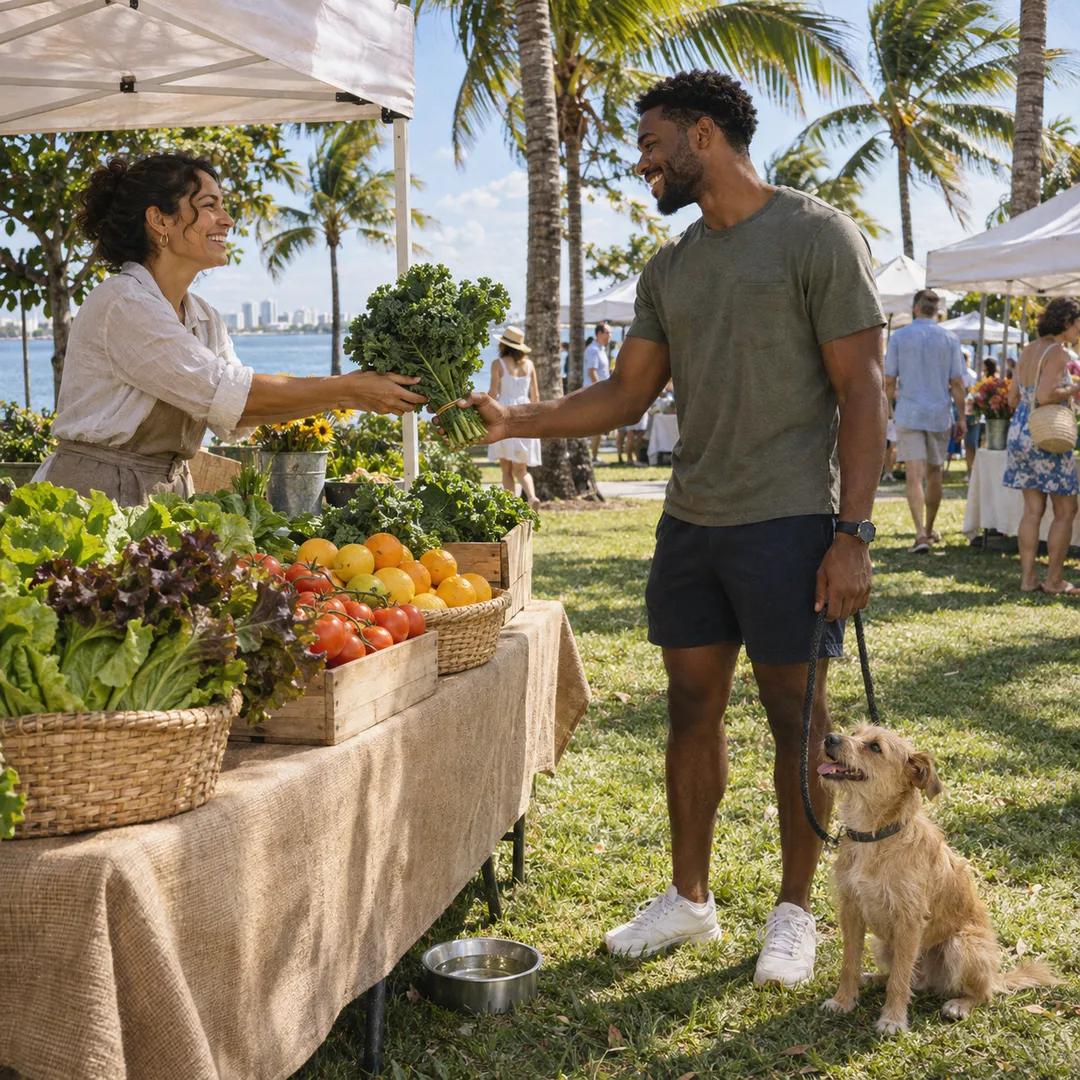
 Upper East Side Winter Farmers Market Picker With a Dog
Weekend Plans
Upper Eastside Weekend Farmers Market Route Planner, Fruit
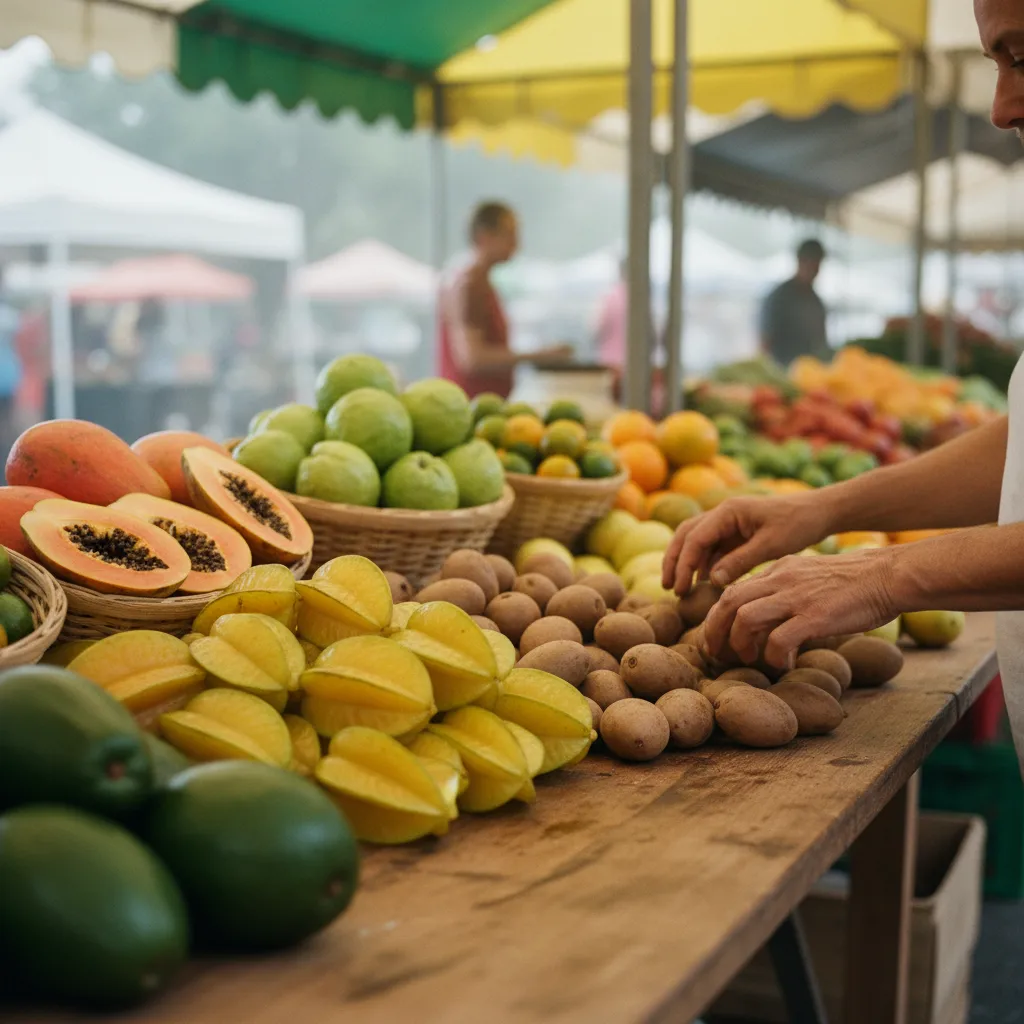
Upper Eastside Farmers' Market is a great place to learn Miami's tropical fruit: taste starfruit, sapodilla and more, then wander the shady Morningside streets.
The Upper Eastside Farmers' Market is a neighborhood market in one of Miami's leafiest districts, and it is one of the best places in the city to learn South Florida's tropical fruit. This weekend farmers market route planner treats the visit as a tasting lesson: what to try, how to tell when it is ripe and how to store it, followed by a slow walk through the Mediterranean Revival streets of Morningside while your haul ripens in the bag.
Why Miami Markets Are a Fruit Lesson
South Florida's warm climate lets growers cultivate fruit that rarely appears in mainstream grocery stores. Small farms in the Redland and Homestead areas south of the city grow mangoes, lychees, avocados, starfruit, sapodilla, mamey, jackfruit, guava, passion fruit and many citrus varieties. Farmers markets are where that bounty reaches city shoppers, often with growers who can explain each fruit in detail.
For newcomers, the choice can be overwhelming. Many fruits look unfamiliar, and knowing when they are ripe is a skill. That is why it helps to approach the market as a class: taste, ask questions and buy small amounts of several fruits rather than a large amount of one.
What to Taste in the Cooler Months
Seasons shift in South Florida, and the cooler months bring a different lineup than summer. In late autumn and winter, look for starfruit, which is crisp and juicy when golden, guavas, fragrant and soft, avocados, the large Florida types that are milder than Hass, and many kinds of citrus, from calamondin to grapefruit. Some growers bring sapodilla, a brown fruit with a sweet, malty flesh.
Summer favorites like mangoes and lychees are usually gone by November, so do not expect them. Instead, enjoy the variety that does appear, and ask farmers what is coming next. Many love to talk about their crops and may even share samples if the market is not too busy.

Reading Ripeness Like a Local
Each fruit has its own signals. Starfruit should be bright yellow with slightly browned ridges. Florida avocados are ripe when they give slightly to gentle pressure, though some stay green. Guavas soften and grow fragrant when ready. Sapodilla should feel soft like a ripe kiwi. Papayas turn from green to yellow-orange.
If you plan to eat fruit later in the week, buy some firm and some ripe, so they mature at different times. Ask the farmer which pieces will be ready today and which in three days. That way you can enjoy the haul gradually, rather than facing a pile of overripe fruit on the kitchen counter.
A Simple Tasting Plan for First-Timers
If you are new to tropical fruit, build a small tasting flight. Pick three or four fruits you have never tried, buy one or two of each and share them with a friend on a bench after shopping. Start with mild flavors like starfruit or a Florida avocado, move to fragrant guava and finish with something rich and sweet, such as sapodilla or a ripe papaya with a squeeze of lime.
Bring a small knife, a cutting board that fits in your bag and a few napkins, since tropical fruit can be messy. Take notes on what you liked so you remember next time. Many shoppers find that one tasting session at the market changes how they cook and snack for the rest of the season.
Storing Tropical Fruit at Home
Most tropical fruits ripen best at room temperature and should only go in the refrigerator once ripe. Keep them out of direct sun and away from heat. Bananas and avocados release ethylene, which speeds ripening of nearby fruit, so separate them if you want to slow things down.
Cut fruit should be refrigerated and eaten within a day or two. Many locals blend extra fruit into smoothies or freeze it for later. Guava and passion fruit pulp freeze well and can be used in drinks or desserts. With a little care, a single market visit can keep your kitchen full of tropical flavor for a week.
A Walk Through Morningside
After the market, take a stroll through Morningside, a historic neighborhood of Mediterranean Revival and Mission-style homes along Biscayne Bay. Streets are shaded by banyans, oaks and royal palms, and many houses have barrel tile roofs, arched windows and lush gardens. It is one of the calmest and most beautiful residential areas in Miami.
Morningside Park sits by the bay with lawns, paths and water views, a good place to sit and taste a piece of fruit. Keep your voice low on residential streets and stay on public sidewalks. The walk is flat and shady, perfect for a slow morning.
Who Shops for Fruit Here
The crowd includes Caribbean and Latin American families who grew up with these fruits, curious newcomers trying them for the first time, chefs looking for unusual ingredients and health-minded locals buying for smoothies. Conversations often switch between English, Spanish and Haitian Creole, reflecting the neighborhood's diversity.
An easy way to fit in is to ask questions and listen. Shoppers who grew up eating mamey or sapodilla often have strong opinions about the best way to enjoy them. A friendly exchange can lead to a new favorite fruit, or a recipe for a batido, Miami's classic milkshake.
Weather and Timing
Miami's dry season, from late autumn to spring, is the most pleasant time for markets and walks. Mornings are cooler, humidity is lower and rain is less frequent. Summer is hot and humid, with daily afternoon storms, so plan to shop early in the day.
Market lineups change through the year, and some vendors may be seasonal. Stay flexible and treat each visit as a new tasting experience. If rain arrives, shorten the walk and enjoy your fruit at home.
Planning With the Karpo APP
Ask the Karpo APP for farmers markets near you and for cafés or juice bars around the Upper Eastside, so you can try more fruit in blended form after the market. Karpo can suggest places and help shape the route, it does not track which fruits a vendor has that day, so treat each visit as a discovery.
Over several visits, you will build your own map of South Florida fruit: which season brings what, which growers you trust and which fruits you love. That knowledge is one of the best rewards of shopping local in Miami.
Ask Karpo for more information.
Keep reading
- Upper East Side Winter Farmers Market Picker With a Dog
 Normandy Village Winter Farmers Market Picker for an Asado
 Coral Gables Winter Farmers Market Picker for New Gardeners