 Upper East Side Winter Farmers Market Picker With a Dog
Weekend Plans
Coral Gables Winter Farmers Market Picker for New Gardeners
A Coral Gables Farmers Market plan for first-time home gardeners: which seedlings to carry home in winter, what to ask growers and a shady Miracle Mile walk.
In most of the country, a farmers market in November is a farewell. In Coral Gables it is a starting gun, because South Florida's main vegetable growing season runs through the cool, dry months. This winter farmers market picker follows Marisol, a nurse who bought a house in the Gables last summer and inherited a backyard of patchy grass. She wanted a vegetable bed by Christmas and had no idea what grew here in winter.
Why the Gables Market Suits Beginners
Coral Gables Farmers Market has the calm, orderly feel of the city around it. Stalls line up neatly near the coral rock civic buildings, families wander through with strollers and the pace is slow enough to stop and talk. That matters for a beginner gardener, because the most valuable thing at a market like this is not a product but a conversation with someone who has been growing in local soil for decades.
Marisol had tried a big-box garden center first and come home with a basil plant that sulked and a tomato labeled for a northern climate. At the market, the plants on offer came from growers in the area, often raised in the same limestone-based conditions she faced at home. She found the difference obvious in the first five minutes of talking to a vendor.
Reading Miami's Upside-Down Season
The grower who helped her first, a retired schoolteacher with dirt under every fingernail, explained the local calendar in one sentence: plant when the heat breaks, harvest before it returns. Summer in South Florida is too hot and wet for tomatoes, lettuce and most herbs. Autumn planting leads into a winter and early spring harvest, and by the time the rainy season arrives, the bed is finished.
That shifted Marisol's whole plan. She had imagined starting in spring like her parents did in New Jersey. Instead she needed seedlings now. The teacher pointed out that a bed planted in November could give salads through the dry months, and that anything not in the ground by early winter would struggle once the days grew hot again.
What Went Into Her Tray
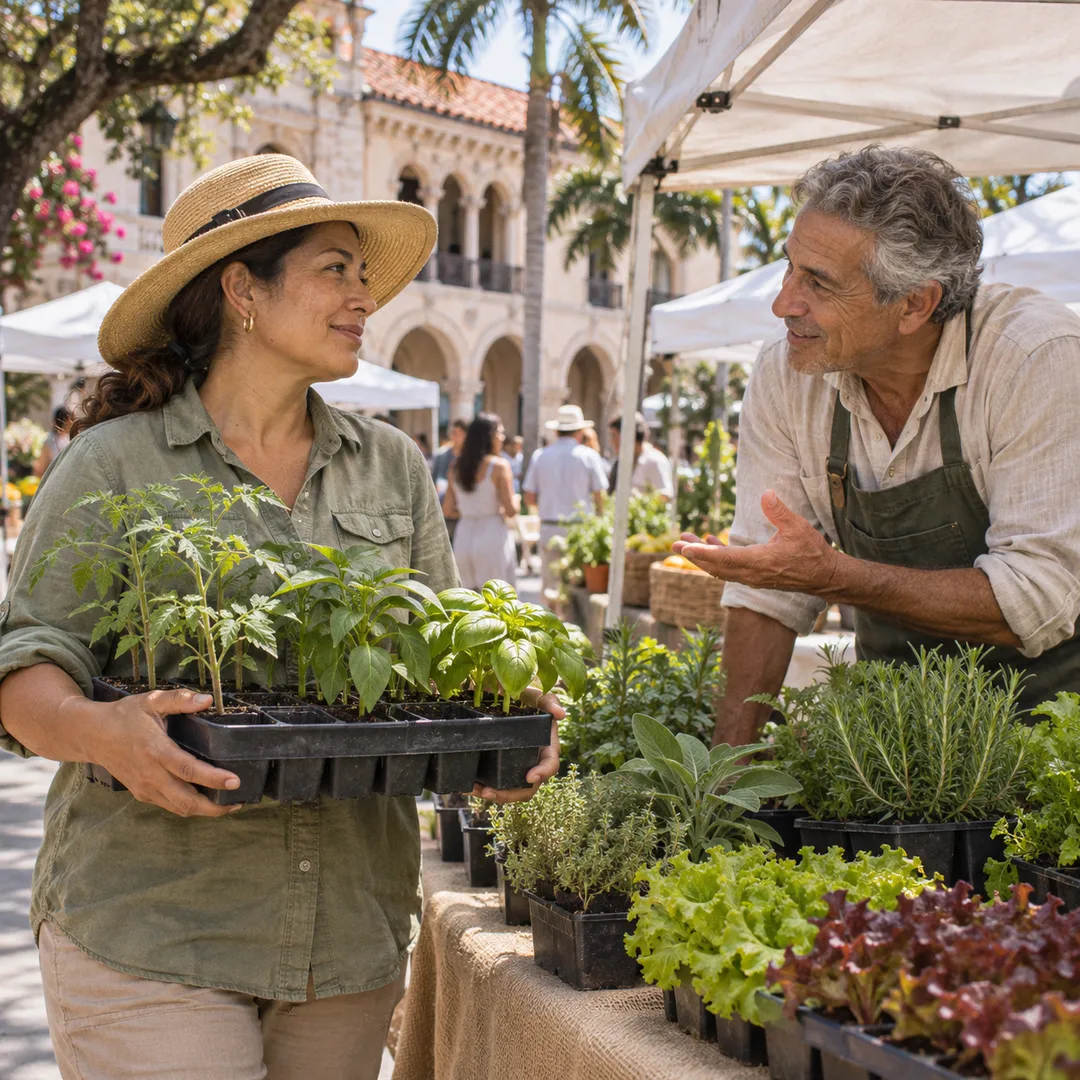
Her first tray stayed small, which turned out to be wise. Two cherry tomato plants, because the larger varieties are harder for beginners in local heat. A pepper, a few lettuce starts, a pot of basil, a pot of cilantro and a culantro plant the grower insisted she try for sofrito. She also took home a bag of local tomatoes and greens to eat while her own were growing.
Several vendors offered advice she would not have found online. Cilantro bolts quickly once days warm, so plant a little at a time. Tomatoes need a stake on day one, not when they flop. Basil loves Miami but hates soggy roots. Marisol wrote each tip on the back of a receipt, and that crumpled paper became the most useful gardening guide she owned.
Questions Worth Asking a Grower
Ask how the plant was grown and how long it has been hardening off outdoors. Ask which varieties handle heat and humidity, and what pests show up in local gardens. Ask what the grower would plant first if they were starting a bed from scratch this week. Most vendors light up at that question, and their answer will tell you more than any label.
Do not be shy about asking for a smaller quantity or a single plant. Good growers would rather you succeed with three seedlings than fail with twelve. If a vendor seems rushed, come back after the morning crowd thins. Marisol found that the second half of the market morning was when the real gardening conversations happened, once the coffee crowd had moved on.
What to Skip on Your First Visit
Her honest advice to other beginners: skip the fruit tree saplings on the first trip. Mango, avocado and citrus trees are tempting, and the market often has handsome ones, but a tree is a long commitment that needs planning for space, sun and neighbors. Get one season of vegetables right first. If it works, the trees will still be there next winter.
Skip buying soil and heavy bags at the market too, unless you have a cart. It is easier to pick those up nearby by car. Use the market for what it does uniquely: live plants raised for local conditions, ripe local produce and advice. Carry a flat box or a laundry basket to keep seedling trays level on the drive home.
A Walk Under the Banyans to Miracle Mile
With her tray safely in the shade of the car, Marisol took the long way around. Coral Gables was planned as a whole city, with Mediterranean Revival buildings in coral stone and streets lined with banyan trees whose roots drop from the branches like curtains. Walking down toward Miracle Mile, the main shopping street, felt like strolling through a planned garden rather than a downtown.
She ended at a café on Miracle Mile, then looped back past the grand City Hall building with its clock tower. On a later visit with her sister she walked out to the Merrick House, the family home of the city's founder, where the gardens hint at the citrus and avocado groves this land held before streets were laid. It gave her own backyard a satisfying sense of continuity.
Planting the Same Afternoon
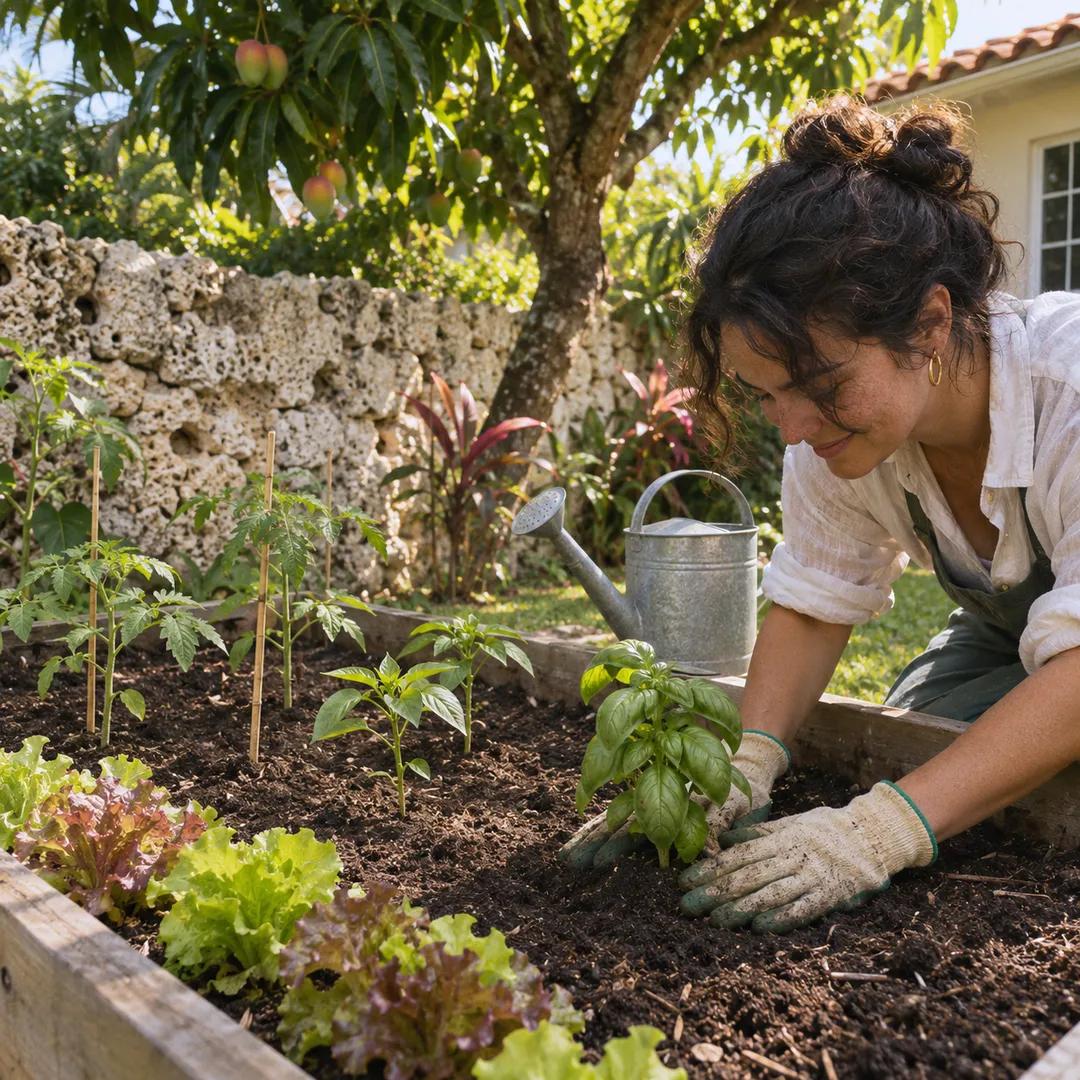
Seedlings do best in the ground quickly, so Marisol planted that afternoon. She built a simple raised bed with fresh soil because Miami's native ground is shallow over limestone, set the tomatoes at the sunny end with stakes, and tucked lettuce and cilantro where the wall cast afternoon shade. A good soak, then a quiet evening checking on them like new pets.
By January she was cutting lettuce. By February the cherry tomatoes were ripening faster than she could eat them, and she brought a bag back to the grower who had sold her the plants. He laughed, ate one and told her to try peppers and eggplant next year. That exchange, more than the harvest itself, made her feel like a local.
Keeping the Season Going With Karpo
New gardeners can ask the Karpo APP to find other farmers markets and plant sales around Miami through the winter, so there is always a place to pick up a replacement seedling or a second round of lettuce. Karpo can also suggest a nearby café or a shady walk, which makes each supply run a small outing rather than an errand.
A practical checklist for the Gables market: a flat box or basket for seedling trays, a reusable bag for produce, a pen and scrap of paper for growers' tips, water and a hat. Buy fewer plants than you think, plant them the same day, stake tomatoes at once, and go back to tell the grower how it went.
Ask Karpo for more information.
Keep reading
- Upper East Side Winter Farmers Market Picker With a Dog
 Normandy Village Winter Farmers Market Picker for an Asado
 Lincoln Road Winter Farmers Market Picker With No Kitchen