 Upper East Side Winter Farmers Market Picker With a Dog
Weekend Plans
Little Havana Weekend Farmers Market Route Planner: Viandas
Plan a Little Havana weekend farmers market route for a Cuban Sunday pot: buy yuca, malanga and boniato, add Calle Ocho fruit stands, then rest at Domino Park.
A Little Havana weekend farmers market route planner starts with a question every Cuban kitchen already knows the answer to: what goes in the pot on Sunday? For many families the answer is viandas, the starchy roots and plantains at the center of ajiaco, yuca con mojo and a plate of tostones. Little Havana does not have one big farmers market of its own. It has something more scattered and more personal, a habit of buying produce from fruit stands, small markets and weekend growers, then carrying it home along Calle Ocho. This route treats the neighborhood as the kitchen and the weekend market as the pantry, with a stop for sugarcane juice and dominoes before the cooking begins.
Start With the Dish, Not the Stall
Shopping for viandas goes faster when you know what you are cooking. Ajiaco, the Cuban stew of meat and many roots, wants a little of everything: yuca, malanga, boniato, calabaza, corn and green and ripe plantains. Yuca con mojo wants only yuca, plus plenty of garlic, sour orange and onion. Tostones need very green plantains, maduros need almost black ones. Write the dish at the top of your list and the roots underneath, and you will skip the impulse buys that end up soft and forgotten in the pantry.
This is also how older shoppers in Little Havana move through a market. They do not browse. They look for one or two things, check them with their hands, and move on. Copy that rhythm. It keeps the route short, which matters on a warm morning, and it means you spend your attention on quality rather than on every colorful pile of fruit you pass.
How to Pick Yuca, Malanga and Boniato
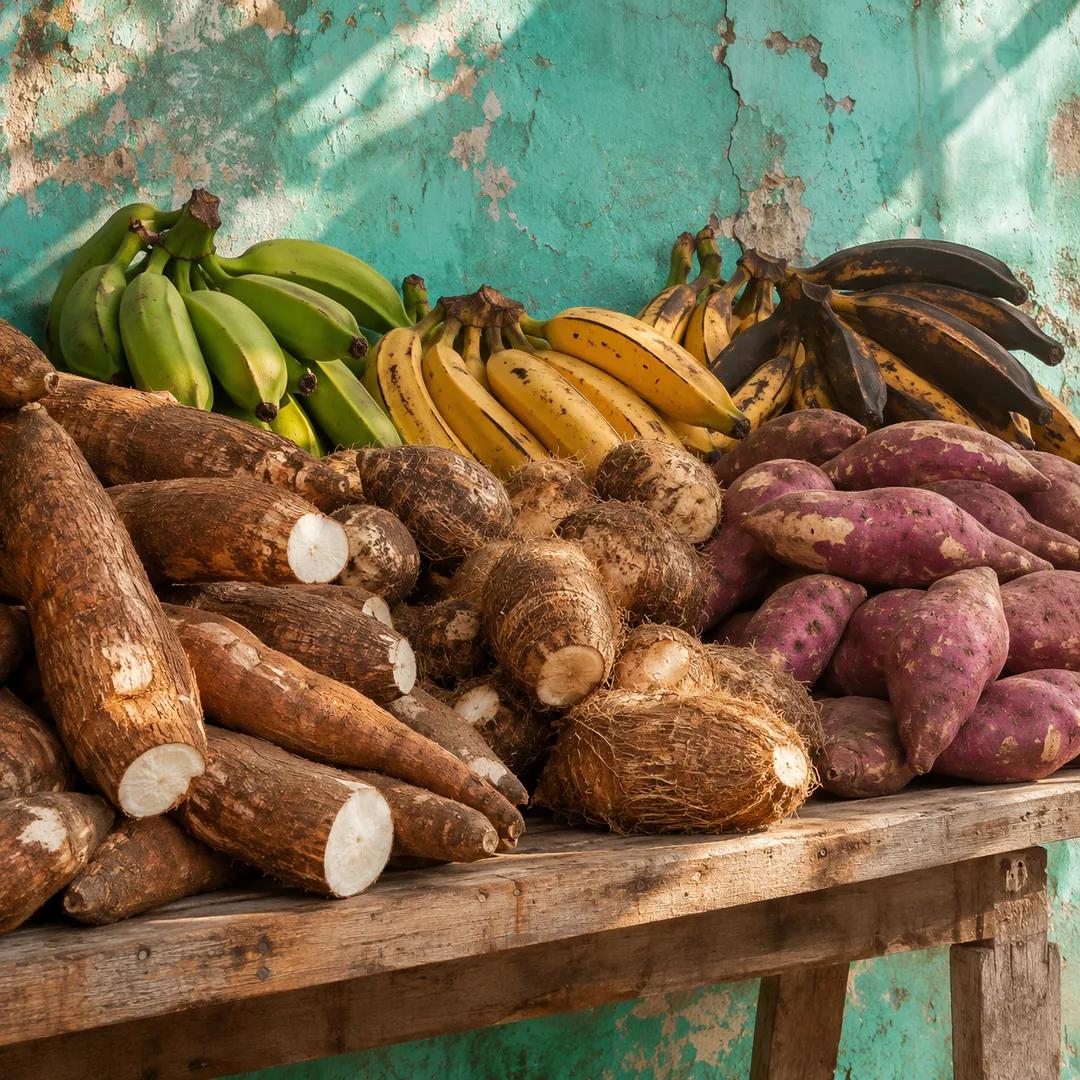
Good yuca feels heavy and hard, with a waxy brown skin and no soft spots or mold at the ends. If a vendor will snap off the tip, look for clean white flesh. Gray streaks or dark lines mean it is old and will cook up stringy. Malanga should be firm, with hairy skin and no wrinkles, and it will turn creamy in a stew. Pick pieces of similar size so they cook at the same pace.
Boniato, the Cuban sweet potato, has reddish or purple skin and pale flesh that is drier and less sweet than an orange sweet potato. It should feel solid all the way around. Calabaza is often sold by the wedge. Look for deep orange flesh and a tight rind. Put the heaviest roots at the bottom of the bag and keep the boniato away from anything wet, since it bruises more easily than it looks.
Reading Plantains by Color
Plantains are the vianda people get wrong most often. Fully green and stiff means tostones or mariquitas, the thin chips sliced lengthwise. Yellow with a few black spots is the middle stage, good for boiling in ajiaco or mashing. Mostly black and soft is maduro territory, where they caramelize in the pan and turn sweet. A good weekend haul includes plantains at two or three stages so you can cook through the week without waiting.
If you want maduros for Sunday but only find green plantains, buy them anyway and keep them in a paper bag on the counter. They ripen slowly, so for a quick dinner choose the yellowest ones on the table. Older shoppers often press the plantain gently and check the stem end. A dry, cracked tip is fine, but a moldy one is not.
Adding Fruit Stands and Sour Orange
Little Havana has long been a neighborhood of small fruit stands and corner markets, the kind of places that sell mamey, guanábana, papaya and avocados alongside sugarcane and limes. They fill the gaps that a weekend grower may not cover. Sour orange, or naranja agria, is the one to look for if you are making mojo. Its juice is the base of the marinade, and regular oranges are not a good substitute. Some cooks blend orange and lime juice when it is hard to find.
Mamey is a fall and winter treat worth learning. It has rough brown skin and salmon-colored flesh that tastes like sweet potato and apricot. Press it near the stem. It should give a little. Many families blend it into a batido with milk and sugar. Buy one for the table and one for a milkshake, and you will understand why people here talk about mamey the way others talk about peaches.
A Calle Ocho Walk Between Errands
Once the bag is full, walk part of Calle Ocho instead of heading straight home. The street is the spine of Little Havana, lined with cigar shops, cafés with ventanitas, art galleries and murals of Cuban musicians. The Walk of Fame stars set into the sidewalk honor Latin artists, and the rooster sculptures painted in bright colors appear along the blocks. Stop at a ventanita for a cafecito and pass the tiny cup around if you are with friends. That is how it is meant to be shared.
Walk on the shaded side of the street and keep the produce bag on your shoulder rather than in your hand. Roots are heavy, and a short walk with a bag that cuts into your fingers is no fun. If the weather turns hot, cut the walk short and save the galleries for another weekend. The viandas will forgive you, but your back may not.
Guarapo and Dominoes at Máximo Gómez Park
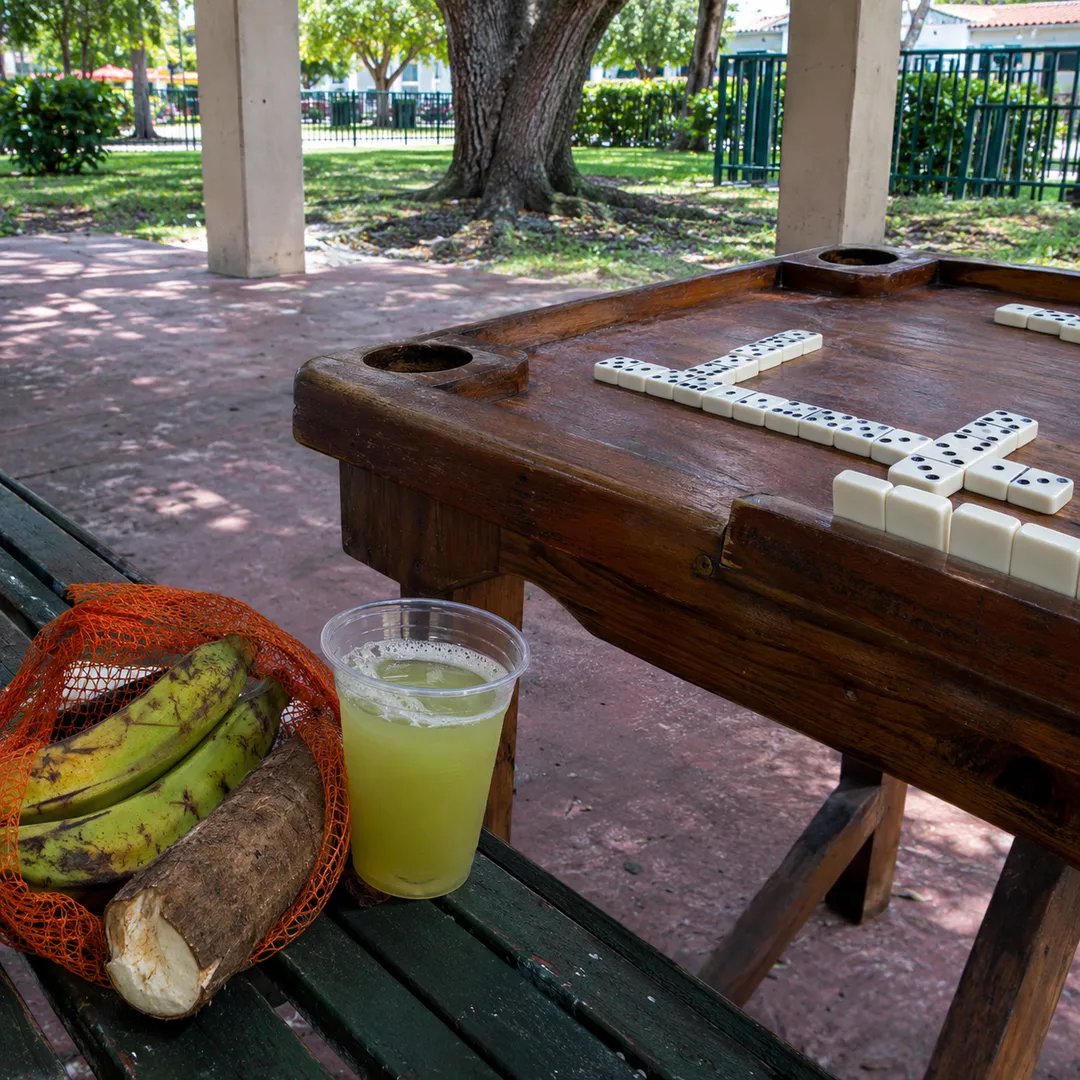
The traditional pause on this route is Domino Park, formally Máximo Gómez Park, where older men and women play dominoes under the pergola. The click of tiles, the arguing, and the commentary from onlookers are part of the character of the neighborhood. You can watch quietly from the edge. It is not a place to interrupt a game or take close photos without asking, but it is a fine place to rest your feet with a cold drink.
Guarapo, fresh-pressed sugarcane juice, is the drink to look for. It is sweet, grassy and very cold, often with a squeeze of lime. Sip it slowly, set the bag down on a bench in the shade, and let the morning settle. This is also a good moment to look over what you bought and decide whether you still need limes, garlic or onions before you cook.
Cooking the Haul on Sunday
Back home, peel yuca and malanga with a sharp knife rather than a vegetable peeler, since the skin is thick. Cut the yuca into chunks and remove the woody core after boiling. For ajiaco, add the hardest roots first and the softest, like calabaza and ripe plantain, toward the end. The pot will thicken as the malanga breaks down, which is exactly what you want.
Leftover roots keep for a few days in a cool, dry spot, and peeled yuca can be frozen in chunks for later. Green plantains last longer than ripe ones, so plan tostones later in the week and maduros early. Many Little Havana families cook a big pot on Sunday and eat from it through Tuesday, which makes the weekend route a full week of meals.
What to Skip on This Route
Skip pre-cut, plastic-wrapped yuca if fresh roots are available. It dries out quickly and often cooks unevenly. Skip buying more mamey than you can eat in a couple of days, since it goes from perfect to too soft fast. Skip the car on Calle Ocho if you can. Parking on a busy weekend is a hassle, and the walk is half the fun. A bus or rideshare drop near the produce stops works better.
Skip rushing, too. The neighborhood rewards people who stop to talk. Vendors and older customers are often happy to tell you how they cook a root or which plantain they would choose, especially if you ask in Spanish, even a little. Those small conversations teach more than any recipe card.
Practical Notes for a Viandas Weekend
Bring a sturdy shoulder bag or a folding cart, a small knife for checking yuca, and a separate bag for fruit. Cash is still common at small stands in the neighborhood. Wear shoes for walking and a hat for the sun, and plan the route for the cooler part of the day.
Use the Karpo APP to find weekend farmers markets, fruit stands and produce shops around Little Havana and the rest of Miami, so you can mix a grower's table with a neighborhood frutería. After a few Sundays you will know where to find the firmest yuca and the sweetest mamey, and the route will feel like your own.
Ask Karpo for more information.
Keep reading
- Upper East Side Winter Farmers Market Picker With a Dog
 Normandy Village Winter Farmers Market Picker for an Asado
 Coral Gables Winter Farmers Market Picker for New Gardeners