 Upper East Side Winter Farmers Market Picker With a Dog
Weekend Plans
Coconut Grove Weekend Farmers Market Route Planner: No Waste
Plan a zero-waste Coconut Grove weekend farmers market route: pack jars and cloth bags, shop the organic stalls, then picnic by the bay with no trash.
A Coconut Grove weekend farmers market route planner suits people who are trying to shop without plastic. The Grove has always had a slightly bohemian streak, with sailors, artists and longtime residents who prefer bicycles and tree canopy to valet parking. Its organic market has been part of that culture for a long time, known for raw food, sprouts, tropical fruit and greens sold to a loyal crowd. If you are working on a zero-waste kitchen, the Grove is an easy place to practice. You bring the containers, the market supplies the food, and the morning ends with a picnic on the grass by Biscayne Bay where the only thing left over is a pile of peels for compost.
Why the Grove Works for a Plastic-Free Shop
Zero-waste shopping is easier in places where people already think that way. Many Grove regulars arrive with their own bags, and vendors at the organic stalls are used to customers handing over a jar for sprouts or a cloth bag for greens. Nobody will look twice when you ask to skip the plastic. That comfort matters if you are new to the habit, because the hardest part is often the moment at the table when you feel you are slowing things down.
The setting also helps. Coconut Grove is green and shaded, with banyans, sea grapes and gardens spilling over walls. The pace is slow, especially on weekend mornings. You will see families with strollers, cyclists with baskets, and people who clearly come every week for the same few things. Shopping without packaging takes a little more time, and the Grove gives you that time without the rush you might feel at a busy supermarket counter.
What to Pack Before You Leave Home
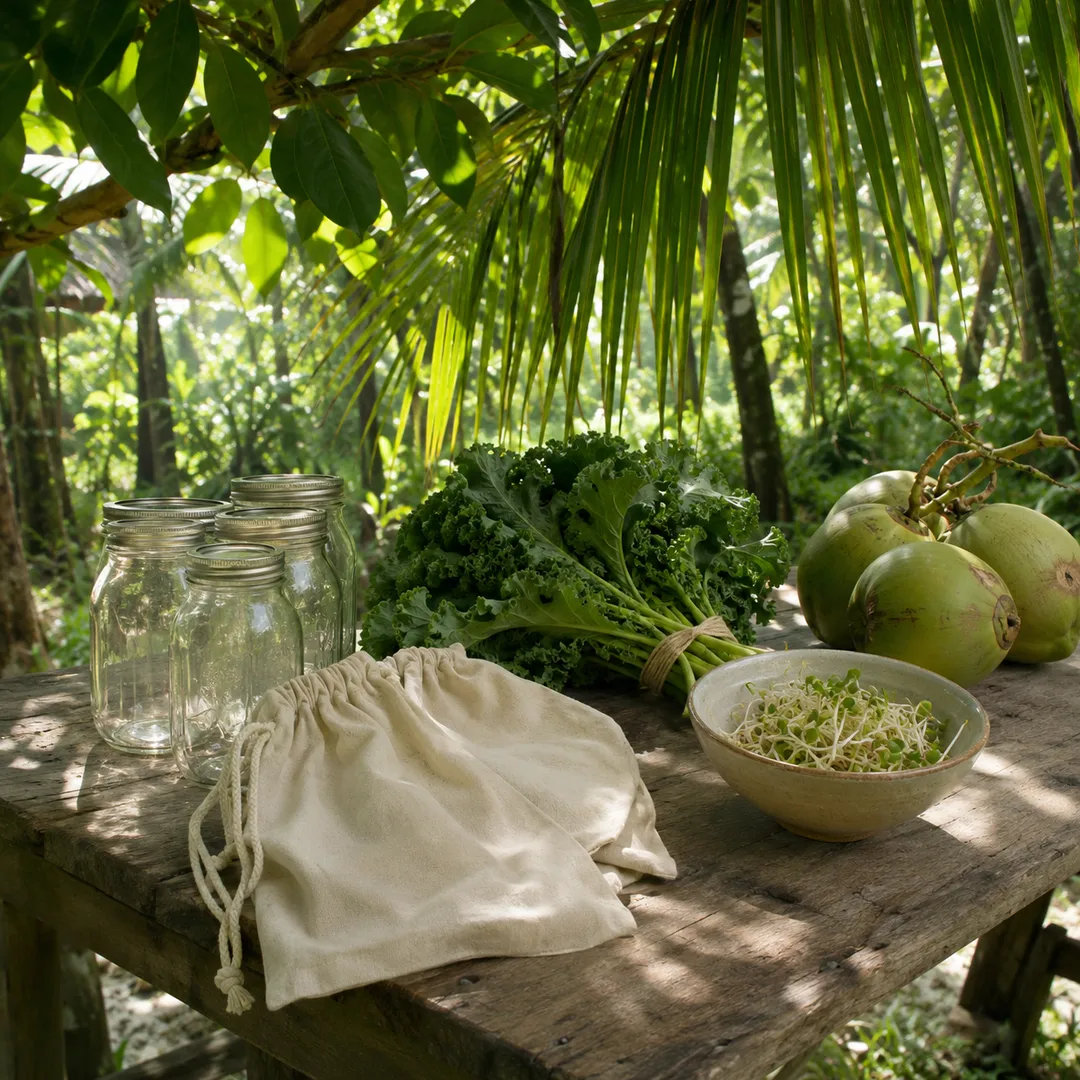
Make a kit the night before. Two or three cloth produce bags handle leafy greens and loose fruit. A couple of wide glass jars or steel containers are useful for sprouts, cut fruit or anything wet. A larger tote or a basket carries the rest. Add a cloth napkin, a reusable cup and a small fork if you plan to eat at the market, since prepared food is often served in disposables unless you offer your own.
Weigh nothing and label nothing. At an outdoor market, vendors usually sell by the piece or by the bunch, so the jar trick works best for small items that would otherwise go into a plastic bag. Keep the kit light. Glass is heavy, and carrying five jars through the Grove on a warm day is a quick way to give up on the idea. Two jars and a few bags are plenty for a first trip.
Shopping the Organic Stalls in Order
Walk the market once before buying to see what is there and who sells it loose. Then shop from sturdy to delicate. Start with roots, squash and coconuts, which can go straight into the bottom of the tote. Move on to fruit like papaya, citrus and bananas, which travel fine in cloth bags. Leave greens, herbs and sprouts for last, since they wilt in the heat and bruise under heavier items.
When you reach a table, hold up your bag or jar before the vendor reaches for plastic. A simple 'I brought my own' is enough. If an item only comes pre-packed, decide whether you really need it this week. Sometimes the answer is yes, and that is fine. Zero waste is a direction, not a test. The goal is to bring home less packaging than last time, not to walk away hungry.
Eating at the Market Without Disposables
The Grove market is known for raw and plant-based food, and part of the fun is eating something there. Ask whether a vendor can serve into your container or onto your napkin. Many will. A fresh coconut is the easiest zero-waste snack of all: the vendor opens it, you drink it, and the shell goes back to them or into the compost. Bring a reusable straw if you like one.
If you want a smoothie or juice, hand over your own cup. If a stall only uses disposables, enjoy something else there and save the drink for home. This is also a good chance to try foods you might not buy for yourself, like sprouted grain breads or raw desserts, in small portions. Taste first, then decide whether to fill a jar to take home.

A Short Walk Through the Village
After shopping, walk through the center of the Grove before heading to the bay. The village has independent shops, cafés and old buildings tucked among newer ones, and the streets are shaded enough for a slow stroll with a full bag. If you have time, wander toward the older residential streets, where gardens overflow with tropical plants and the houses range from simple wooden cottages to grand estates hidden behind walls.
Keep greens in the shade and away from the bottom of the bag. If the walk is long, a damp cloth over the herbs helps them survive the heat. This is also when you will notice how many people in the Grove move on foot or by bike, which makes the plastic-free habit feel natural rather than unusual.
A Bayfront Picnic With Nothing to Throw Away
The bay is the reward. Head down to the waterfront parks near the marina, where big shade trees, grassy lawns and views of sailboats make a calm spot for lunch. Spread a mat or a large cloth on the grass, open your jars, and eat what you bought: cut papaya and mango, a few greens with lemon and salt, a hunk of bread, a coconut if you saved one.
Pack out everything you bring. Peels and pits go back into a jar or cloth for home compost. The breeze off the water is pleasant, but it also carries napkins and light wrappers into the bay, so keep everything weighted down. Watch for iguanas and birds that know picnickers well, and keep food covered when you step away.
Composting and Storing the Haul at Home
Back at home, unpack in order. Greens go into a damp cloth or a container in the refrigerator, sprouts stay in their jar with the lid slightly open, and fruit ripens on the counter. Coconut water should be drunk soon. Clean the jars and bags right away so the kit is ready for next week. A hanging hook by the door helps you remember to grab it.
If you do not have a compost bin, look into community gardens or neighborhood composting programs in Miami. Many people in the Grove grow plants at home and are happy to take scraps. Composting closes the loop and makes the weekend trip feel complete: food came from a grower, and what you did not eat goes back into soil.
What to Skip and How to Keep It Simple
Skip buying special zero-waste gear before you start. Old jars from pasta sauce and a few cotton bags from the closet work fine. Skip trying to be perfect on the first trip. Skip heavy glass if you are biking, and choose light steel tins instead. And skip arriving at the hottest part of the day, when greens wilt quickly and the bay picnic becomes a sweaty one.
Outdoor markets in South Florida follow the seasons, and the cooler months bring more variety and more pleasant shopping. If you arrive and find the market quieter than you expected, treat it as a scouting trip. The bay and the village are still worth a visit, and you can plan a fuller shop for another weekend.
Practical Notes for the Grove Route
Bring your kit, a hat, sunscreen and water. Cash can be handy at small stalls. If you drive, park once and walk the rest, since the village and bay are close enough on foot. If you bike, a rear basket with a cloth liner protects fruit, and panniers carry jars safely.
Use the Karpo APP to find other organic and weekend farmers markets near you across Miami, so you can see which ones suit a plastic-free shop. Over time you will learn which vendors are happy to fill your jars, and the Grove route will become an easy weekly habit.
Ask Karpo for more information.
Keep reading
- Upper East Side Winter Farmers Market Picker With a Dog
 Normandy Village Winter Farmers Market Picker for an Asado
 Coral Gables Winter Farmers Market Picker for New Gardeners