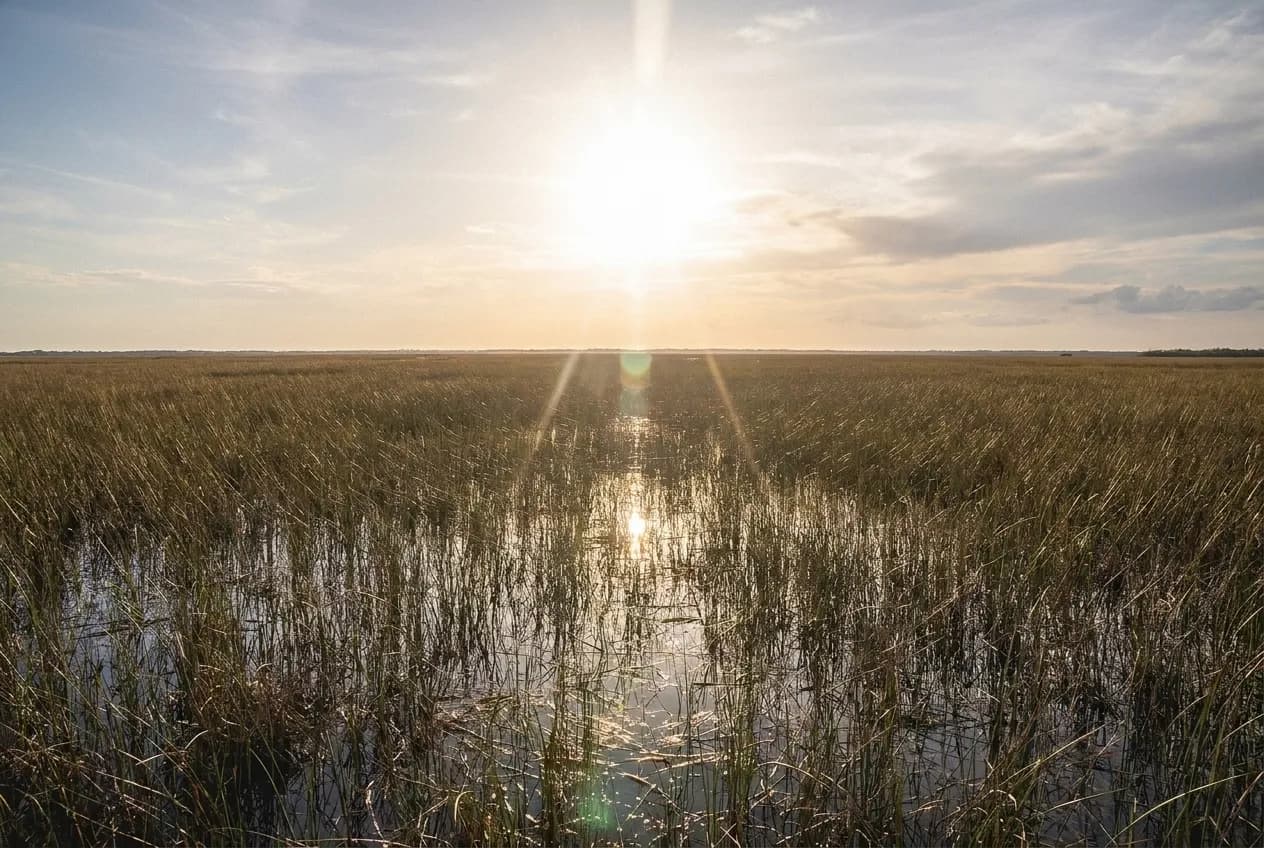
It is worth answering this one honestly at the start, because a great many articles do not: there is no waterfall near Miami. South Florida is a limestone plain with a few metres of elevation across the entire southern third of the state, and water here moves sideways rather than down. Searching waterfalls near me from Miami will return results, and every one of them is either many hours away or a fountain in a shopping centre. What the region has instead is a landscape that no other American city sits next to.
The nearest real falls are a long drive north; everything worth doing in a day is water rather than waterfall. Ask Karpo which of these is open and how far it actually is.
The Everglades, which is the answer
Everglades National Park begins about an hour from downtown Miami and it is one of the most unusual landscapes in the world — a river sixty miles wide and a few inches deep, moving so slowly it looks like standing water. Shark Valley, on the northern edge, has a fifteen-mile paved loop that you can cycle or ride by tram, with alligators along the canal at close range and an observation tower at the far end. The Anhinga Trail near Homestead is the other classic: a short boardwalk with more visible wildlife per hundred metres than anywhere else in Florida.
The season matters enormously here. The dry season, roughly December to April, concentrates wildlife around the remaining water and keeps the mosquitoes tolerable; the wet season, June to October, disperses the animals and produces insects that are not an exaggeration. If you do one nature trip from Miami, do this one, and do it in winter.
Biscayne National Park, which is mostly underwater
Biscayne National Park sits south of the city and is about ninety-five per cent water, which makes it the least visited and most misunderstood park in the region. There is a visitor centre you can drive to, and beyond that the park is reached by boat — reefs, mangrove shoreline, and the northernmost Florida Keys. Snorkelling trips and paddling run from the mainland, and the water is the point.
For a day trip it requires more planning than the Everglades, since the boat schedule constrains everything and weather cancels trips. But the payoff is a coral reef within an hour of a major American city, which is a genuinely rare thing and something most people who live in Miami have never done.
The close options, for a half-day
Oleta River State Park in North Miami Beach is the largest urban park in Florida, with mangrove kayaking, mountain-bike trails and a beach on the Intracoastal, and it is twenty minutes from central Miami. It is the answer when the day is short and the ambition is modest. Matheson Hammock and the Fairchild garden in Coral Gables cover similar ground closer in, with a tidal pool and one of the better botanical collections in the country respectively.
These are not wilderness and they are not pretending to be. What they offer is a couple of hours outside without a long drive, and in a city where the default outdoor activity is a beach, a mangrove tunnel by kayak is a genuinely different afternoon.
The springs, if you will drive
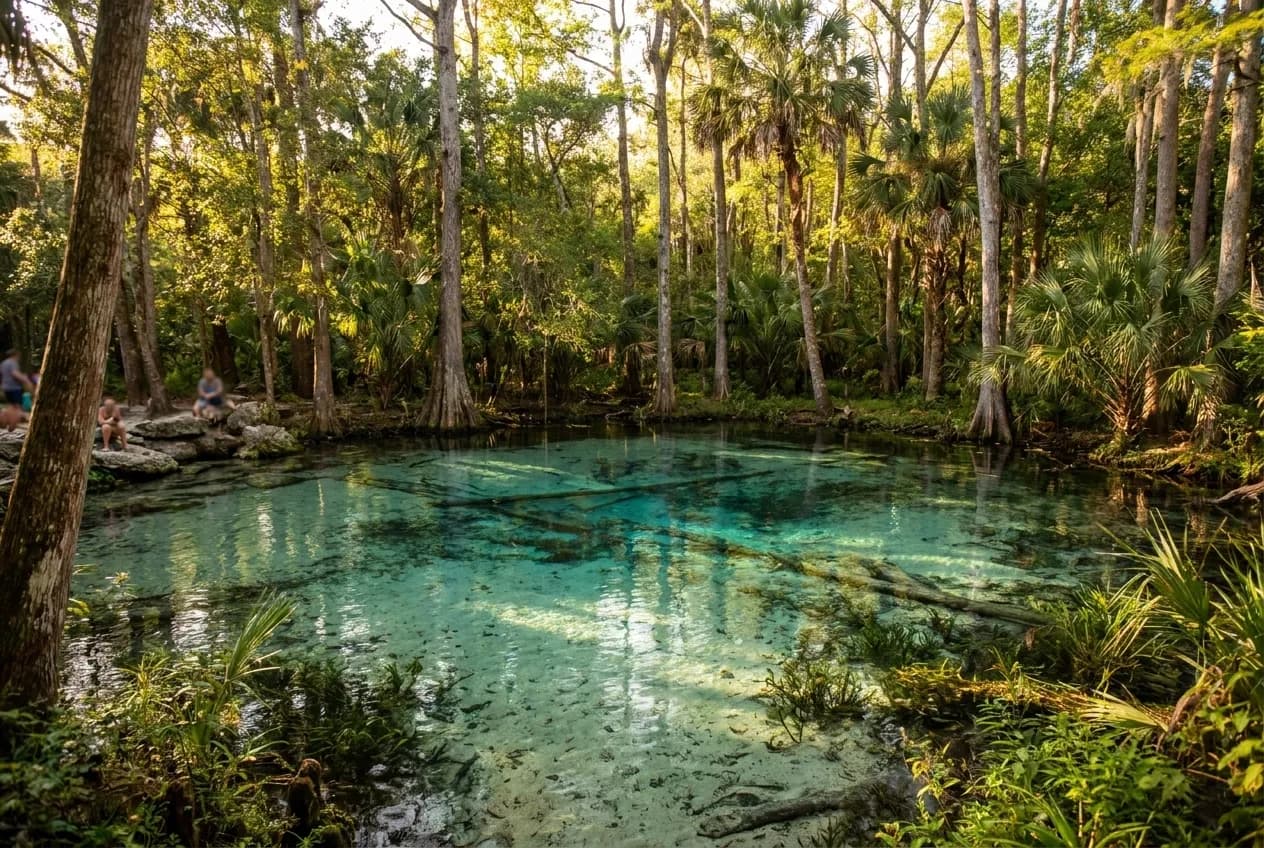
For the closest thing Florida has to the swimming-hole experience people are usually imagining when they search for waterfalls, you have to go north — the freshwater springs of central Florida, where water comes out of the aquifer at a constant temperature year-round, clear enough to see thirty feet down. The nearest of them are a long day's drive from Miami rather than a comfortable one, which makes them a weekend rather than a day trip.
That is the honest framing. If a swim in cold clear fresh water is what you want, plan an overnight and go properly. If you have a single day, the Everglades and the bay are what South Florida actually offers, and they are not a consolation prize — they are the reason people study this landscape.
And the actual nearest waterfall
For completeness: Florida does have waterfalls, and the state's tallest is in the panhandle, roughly nine hours from Miami by road. It is a sinkhole waterfall, it is about seventy feet, and it is a genuinely odd and interesting thing. It is also nine hours away, which puts it in the same travel bracket as leaving the state entirely.
The useful conclusion is to stop looking for the wrong landscape. The reason South Florida has no waterfalls is the same reason it has the Everglades — a vast, flat, slowly draining limestone shelf. Once you stop measuring it against mountains, it is one of the most interesting places in the country to spend a day outdoors.
Practical notes
The dry season, December to April, is dramatically better for the Everglades in both wildlife and insects. Bring repellent regardless. National park entry is charged per vehicle and passes cover multiple parks. Boat trips in Biscayne are weather-dependent and cancel often. Summer afternoon thunderstorms are the default rather than the exception, so morning starts are the rule. And alligators are genuinely wild animals — keep the posted distance and do not feed anything.
One planning note: mobile signal in parts of the Everglades ranges from poor to absent, so download maps before leaving the highway, and carry more water than you think you need. There is very little shade in the sawgrass.
Tags: #WaterfallsNearMe #Miami #Everglades #DayTripsFromMiami #BiscayneNationalPark #OletaRiver #WeekendPlans #MiamiOutdoors #ThingsToDoMiami #FloridaSprings #NatureNearMiami #SharkValley #Kayaking #MiamiParks
All trademarks are the property of their respective owners.
Ask Karpo first
Want to know which of these is open, how far it really is, and what the weather is doing out there? Ask Karpo before you drive west.