Miami's coastline gets the headlines, but the real texture of the city lives inland and along quieter stretches of waterfront. You can spend days here without ever laying out a towel, moving instead through art districts that repaint themselves seasonally, neighborhoods where Spanish remains the first language, estates that predate the Art Deco boom, and parks where the skyline does all the work. The beach will always be there. These four stops show you what happens when you turn away from it.
Karpo knows the city changes by the hour. Ask which Wynwood galleries opened this week, where dominoes run latest in Little Havana, or which garden path at Vizcaya stays coolest at two o'clock.

Wynwood Walls: Miami's shifting outdoor gallery
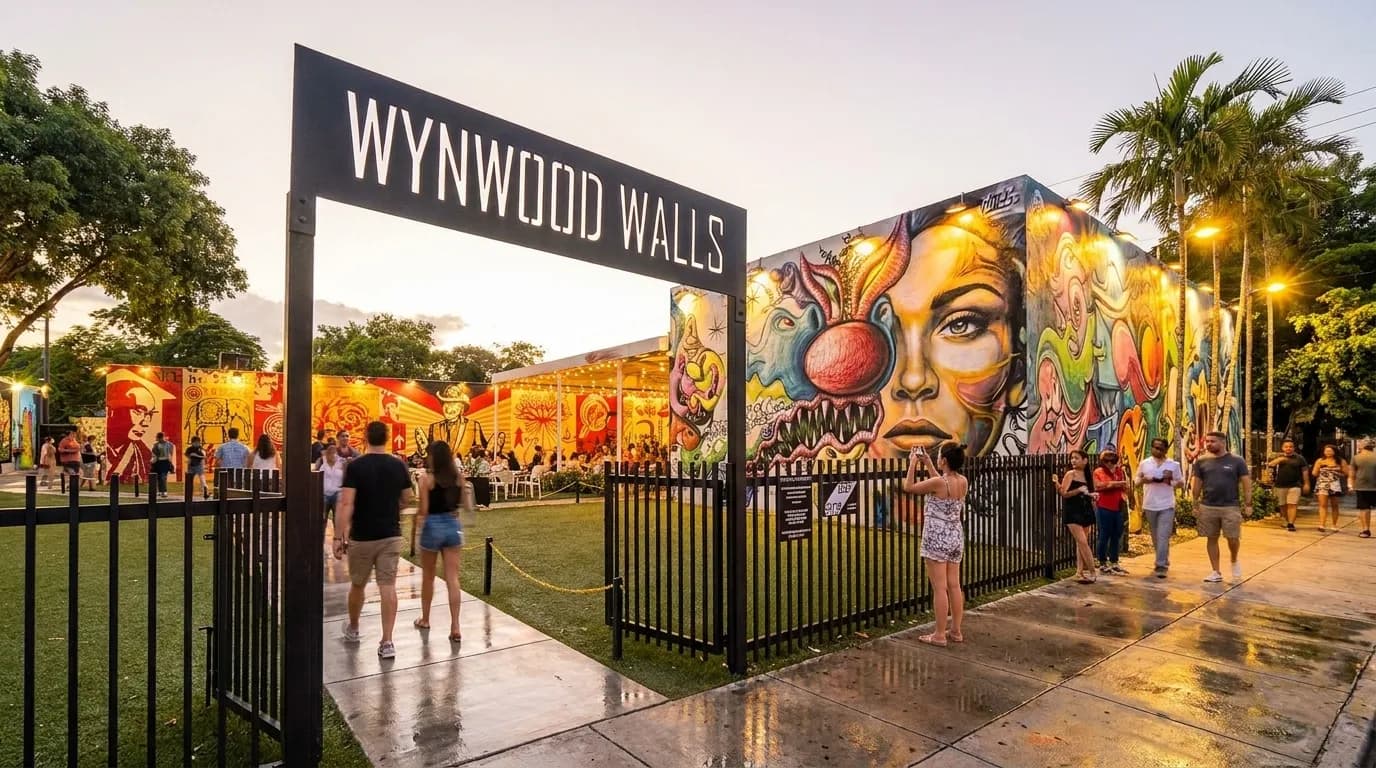
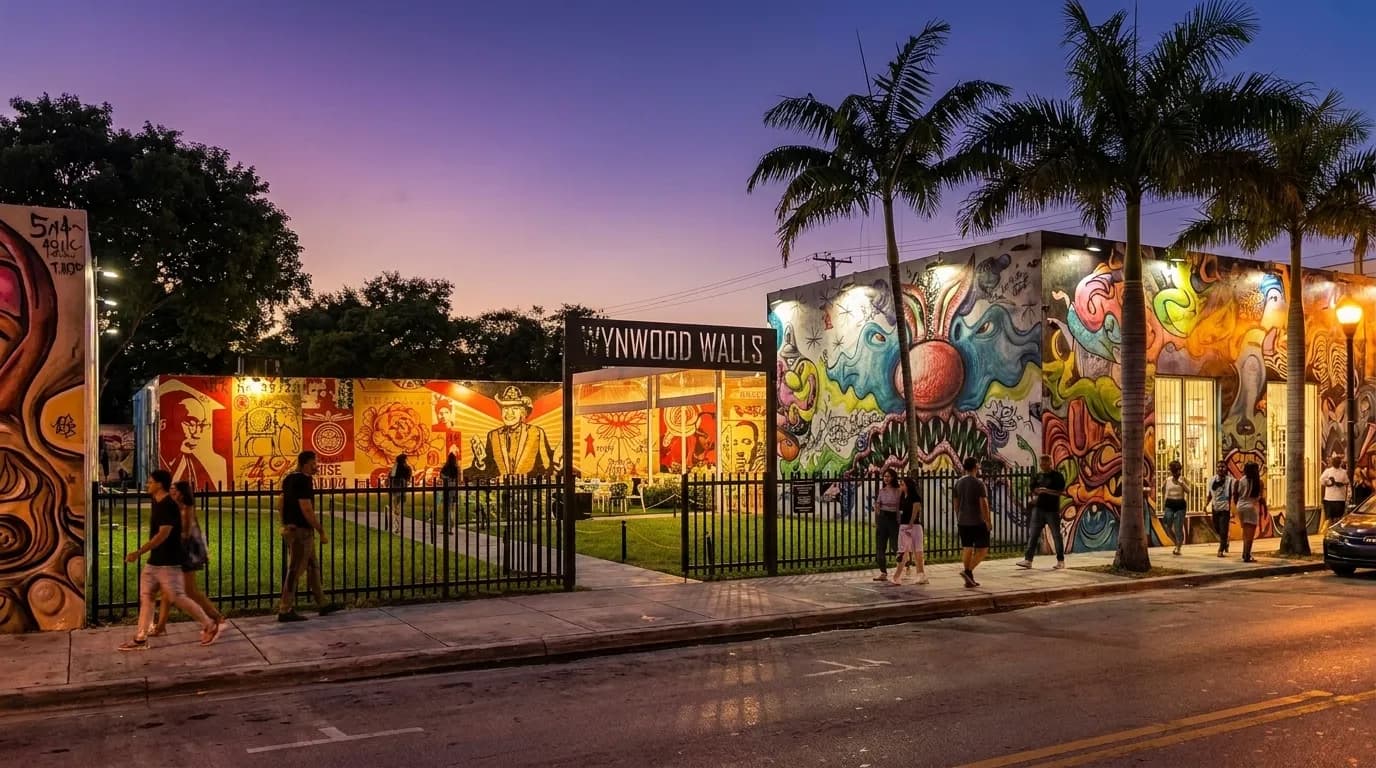
Wynwood Walls started as a developer's bet in 2009 that murals could revive a warehouse district, and it worked almost too well. The open-air complex spans a full city block between 25th and 26th Streets, surrounded by chain-link-turned-canvas and concrete slabs covered in works by Shepard Fairey, Os Gêmeos, and rotating international street artists. You'll walk past fifteen-foot faces, geometric abstractions that warp perspective, and political commentary rendered in spray paint and wheat paste. The art changes every year during Art Basel, so what you see in December will be different by spring.
Go in the late afternoon when the sun drops low enough to soften the glare but still lights the walls. The surrounding Wynwood Arts District has expanded into forty-plus galleries, breweries in former auto shops, and cafés where iced cortados cost what they do in Tribeca. If you want the full loop, start at the Walls, then drift north toward NW 26th and 27th Streets where smaller studios open their garage doors on second Saturdays. Parking runs easier on the residential streets west of NW 2nd Avenue, and it's free if you're willing to walk three blocks.
Little Havana: where the city speaks Cuban
Calle Ocho—Southwest 8th Street—runs as the spine of Little Havana, and the stretch between 12th and 17th Avenues holds the densest concentration of what people come here for: ventanitas serving cafecito in thimble cups, cigar shops rolling tobacco by hand, and Domino Park where retirees play under a permanent pavilion. Máximo Gómez Park, the park's official name, is free to watch, and games run from mid-morning into early evening. The clack of tiles and the running commentary in Spanish create a soundtrack you won't find anywhere else in the city.
Walk west from the park and you'll pass murals of Celia Cruz, José Martí, and other Cuban icons painted on building facades. Stop at any of the ventalitas for a cafecito—expect to pay around two dollars, drink it standing, and leave room buzzing—then continue to one of the family-run restaurants where ropa vieja and lechón asado come with rice, beans, and maduros. Versailles on 35th Avenue is the landmark, but locals will point you to smaller spots on 13th Avenue where the pork gets crispier and the wait is five minutes instead of thirty. Friday nights bring street festivals with live son and salsa, especially during Viernes Culturales, which happens the last Friday of every month and turns the neighborhood into an open-air concert.
Vizcaya: a Gilded Age estate that refuses to age
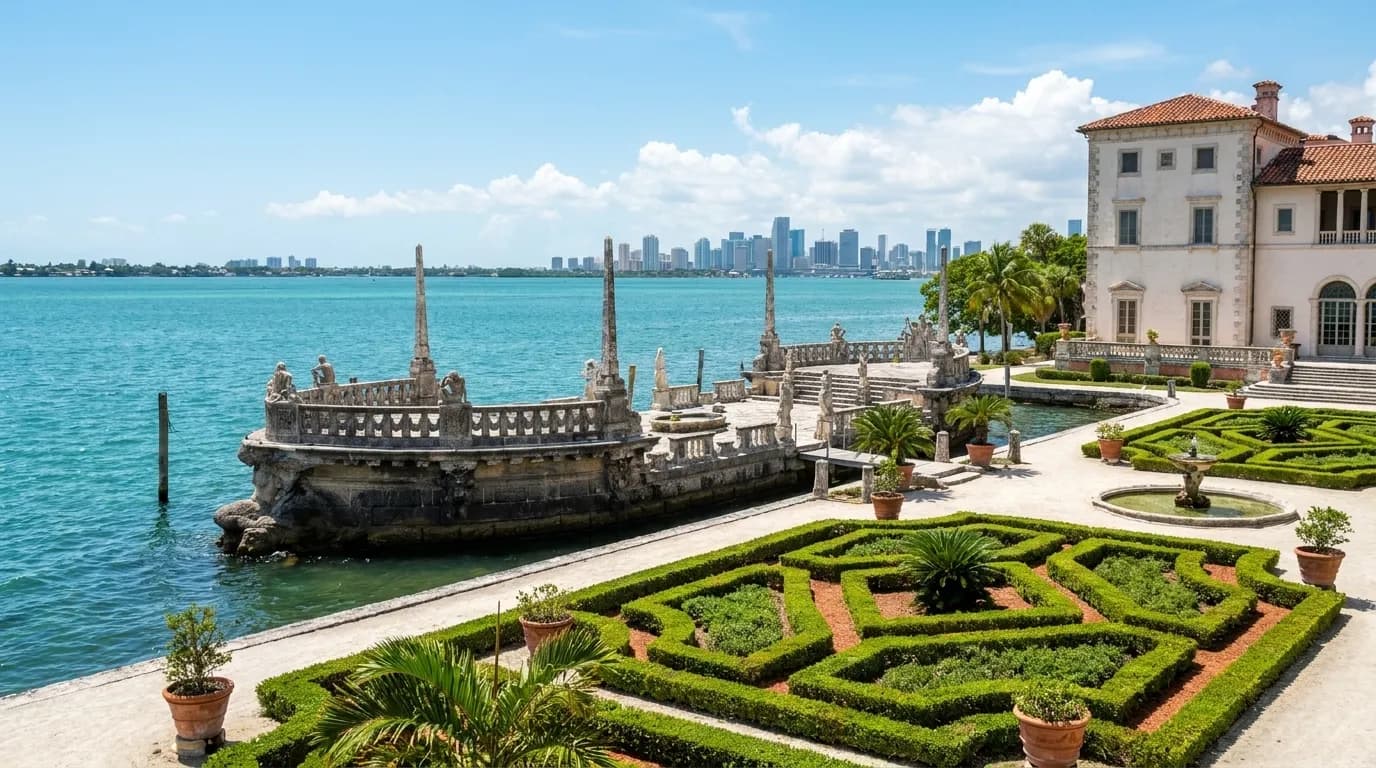
Vizcaya Museum and Gardens occupies fifty bayfront acres in Coconut Grove, a 1916 Italian Renaissance-style villa built for industrialist James Deering with limestone imported from Cuba and interiors staged to look like centuries-old European rooms. The house holds thirty-four decorated rooms—Rococo, Neoclassical, Renaissance—each furnished with gilded chairs, Flemish tapestries, and ceiling frescoes that required scaffolding and months of work by imported craftsmen. You'll move through a music room with a massive pipe organ, a library lined with leather-bound volumes, and a courtyard open to the sky and surrounded by loggias.
The gardens stretch south from the villa in a series of terraced levels: a secret garden framed by coral walls, a theater garden with stone seating, a maze, fountains, and statuary that nod to Versailles and Italian villas. The best time to visit is early morning or late afternoon when the heat breaks and the light turns softer. Admission runs around twenty-five dollars for adults. The house requires a timed entry ticket, but the gardens let you wander at your own pace. Wear shoes you can walk in—the grounds cover ten acres of gravel paths, stairs, and uneven stone. If you're driving, parking is onsite and included, but the number 42 bus from Brickell drops you a short walk away.
South Pointe Park: Miami's skyline from the quiet end
South Pointe Park sits at the southern tip of Miami Beach, where Biscayne Bay meets the Atlantic and cruise ships glide past close enough to count the decks. The park runs along a narrow peninsula with a paved promenade, grassy lawns, a playground, and a fishing pier that juts out into the channel. You'll see joggers, dog walkers, fishermen rigging lines, and families picnicking under chickee huts while container ships and yachts navigate Government Cut.
The view north frames the full South Beach skyline—high-rises in pastel and glass stacked against the sky—and the park's openness gives you space the beach itself never does. Sunset draws a crowd, but the park is large enough to absorb it without feeling packed. Go in the early morning if you want the boardwalk mostly empty and the light clean. There's no admission fee, parking is metered along Washington Avenue, and the park has restrooms and water fountains. The grass areas welcome blankets and coolers, and the pier stays open until dusk. If you're walking from the Art Deco core, it's a twenty-minute stroll south down Ocean Drive.
Practical notes
Miami traffic thickens between 7:30 and 9:30 a.m. and again after 4 p.m., so plan around rush hour or accept the crawl. Wynwood is walkable once you're there, but driving between neighborhoods is often faster than transit unless you're staying in Brickell or downtown. Little Havana and Wynwood both get hot by mid-afternoon; bring water and plan for shade breaks. Vizcaya closes Tuesdays and requires at least ninety minutes if you're seeing both house and gardens. South Pointe Park has zero shade on the pier, so late afternoon or early morning works best. Sunscreen is non-negotiable year-round. Reservations aren't needed for any of these stops, but Vizcaya's timed entry tickets can sell out on weekends during high season—book online the day before.
Tags: #miamithingstodo #wynwoodwalls #littlehavana #vizcayamuseum #southpointepark #miamiart #cubanmiami #coconutgrove #miamigardens #miamiskyline #miamiculture #weekendinmiami #miamiwalkthrough #explorermiami #miamibeyondthebeach
All trademarks are the property of their respective owners.
Ask Karpo first
Miami moves fast—galleries rotate, festivals pop up, new murals cover old ones. Karpo keeps pace with what's open now, where parking won't cost you thirty minutes of circling, and which ventanita on Calle Ocho makes the strongest cortadito today. Before you cross the causeway or head west into the neighborhoods, ask. You'll spend less time guessing and more time walking through the city that lives beyond the sand.