 Scenic Walking Trail Near Me: Greynolds Park Mound and Oleta River Path
Free Things to Do
Street Art Near Me at Miami Worldcenter in Downtown Miami
A free Downtown Miami public-art walk at Miami Worldcenter, with mural and sculpture context, route advice, timing tips, and nearby arena stops.
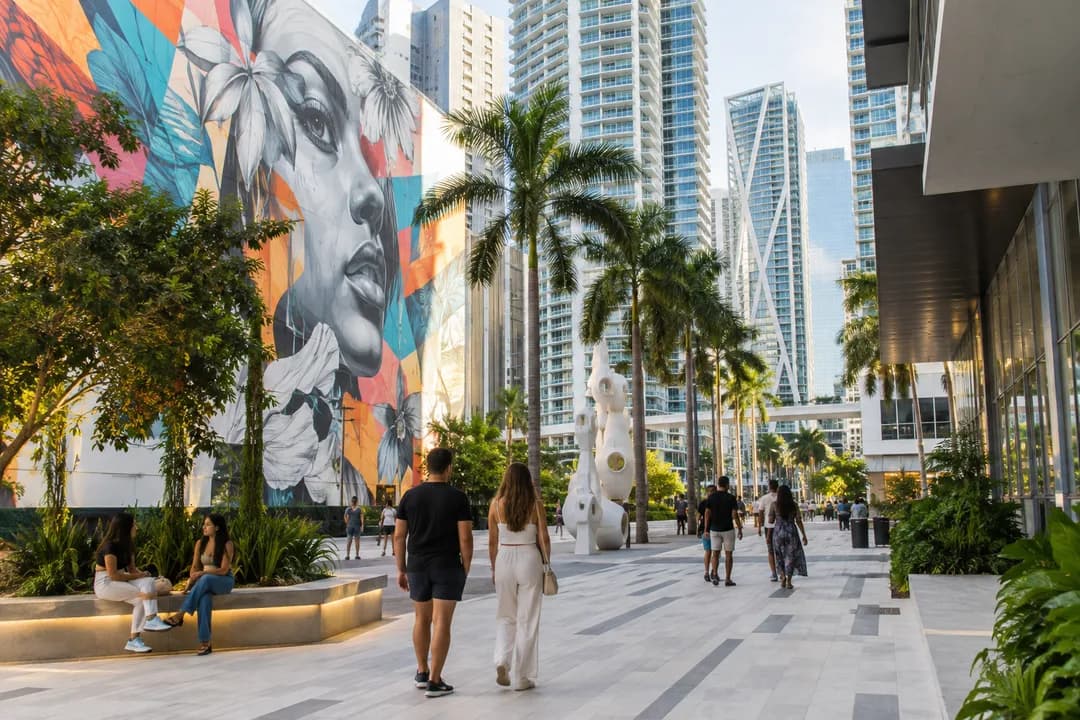
Downtown Miami's answer to street art near me includes Miami Worldcenter, where public art is woven into a new mixed-use district of towers, plazas, retail passages, and busy streets. The mood is different from Wynwood or Little Havana. Here, murals and sculptures meet fresh construction, arena traffic, and a fast-changing skyline. Because NE 2nd Avenue gives the new district a practical reference point, Miami Worldcenter gives the opening choice a local anchor, and Miami feels easier to read from there.
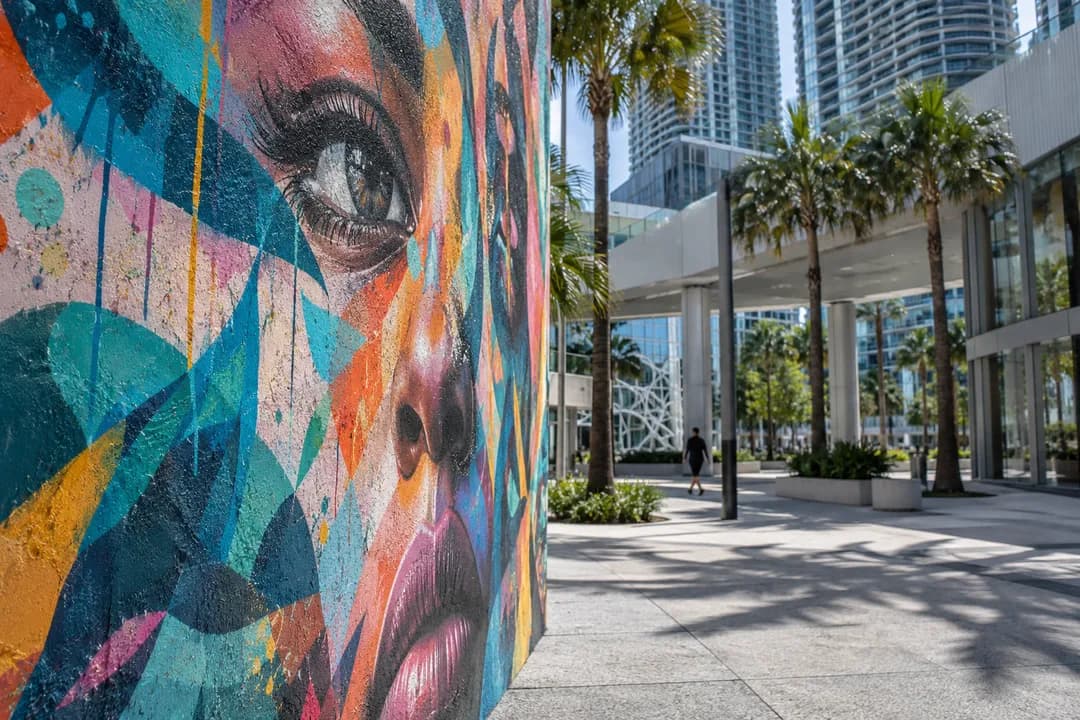
Miami Worldcenter describes its district as a public gallery, with murals, sculptures, and site-specific installations guided by a dedicated art program. That framework gives the art a planned quality. Instead of finding walls by accident, you are moving through a development that uses public work to shape identity at street level. Around Miami Worldcenter, the detail to notice is that tower shadows make the art feel different from low warehouse murals; it keeps the stop from becoming a generic wall on a map.
Use 652 NE 2nd Avenue as a reference point, then follow the public-art map through open streets, building edges, and plazas. The route should remain flexible because downtown construction, events, and access patterns can shift. Stay alert to barriers and signs rather than assuming every apparent shortcut is open. Use this route cue near Miami Worldcenter: construction barriers can change a walking route without warning. That Miami Worldcenter cue helps visitors decide when to pause and when to move.
The visual appeal lies in contrast. New towers rise above large murals, sculptural pieces sit near retail corridors, and reflective surfaces change with the light. Unlike warehouse districts, the scale here is vertical and urban in a different way. The art often feels framed by glass, pavement, crane lines, and downtown movement. At Miami Worldcenter, notice that Kaseya Center traffic shapes the best arrival and exit time. That Miami Worldcenter texture matters when the block is busy, shaded, or changing by the minute.
Rules are straightforward but important. Stay on public paths, respect construction barriers, keep entrances clear, and do not step into active work zones for a cleaner photograph. The district may feel open, but it is still a working downtown development. Good viewing depends on recognizing where public space begins and ends. For timing at Miami Worldcenter, remember that Metromover access keeps the downtown loop from becoming parking-led. Around Miami Worldcenter, light, traffic, and comfort can change the pace of looking.
Late afternoon is the most rewarding time for light. Tower shadows can soften the heat and create dramatic angles across murals and pavement. Midday may be harsh, especially when glare bounces off sidewalks and glass. If you are pairing the walk with dinner or an event, arrive early enough to look before crowds thicken. Etiquette feels clearer at Miami Worldcenter when you remember that plazas and retail passages frame murals with a brand-new city texture. The art at Miami Worldcenter still sits inside a working Miami neighborhood.
Kaseya Center, Museum Park, Bayside, Metromover stops, and downtown restaurants can all connect naturally to the route. The art walk makes sense before a game, concert, waterfront visit, or dinner plan. It is not a remote destination; it works best as part of a larger downtown itinerary. Planning stays flexible at Miami Worldcenter when Museum Park and Bayside give the public art walk two easy extensions is treated as useful context, not a promise that every visit will match.
The district's public art is useful for visitors who want contemporary Miami without committing to a museum schedule. You can see large-scale work outdoors, then keep moving toward transit, food, or the waterfront. The experience is efficient, but it still benefits from attention to details like materials, shadows, and placement. A smaller loop around Miami Worldcenter works well because site-specific installations show how development uses art to slow pedestrians can pull attention away from the obvious wall.
Photography here is shaped by vertical lines. Try framing murals with tower edges, sculptures with open plazas, and pedestrians at a respectful distance to show scale. Avoid blocking retail doors or lingering in narrow passageways. Downtown has less patience for long staged shoots when people are moving to work, events, or transit. Nearby, NE 2nd Avenue gives the new district a practical reference point can reset the day, giving Miami Worldcenter a second rhythm after the first sweep of color.
Because Miami Worldcenter is still evolving, check current maps and access notes before setting out. A piece may be easier to view from one street than another, and temporary construction can change the best path. Flexibility prevents frustration and keeps the visit from becoming a navigation problem. Let the frame include the fact that tower shadows make the art feel different from low warehouse murals at Miami Worldcenter; real street life often explains scale better than an empty shot.
The art program's planned nature gives the district a distinct personality. Some visitors may prefer the rougher spontaneity of older mural neighborhoods, but this route offers a look at how public art is being used in new urban development. That makes it interesting as both an aesthetic stop and a city-change case study. Look for how construction barriers can change a walking route without warning changes the surface, because Miami Worldcenter carries weather, repair, and neighborhood use together.
Metromover access can simplify arrival if you are already downtown. If you drive, account for event traffic, garage rates, and one-way streets. A short public-art loop can become stressful if you arrive during a major arena crowd without planning. Let transit or timing do some of the work. As of October 2026, Kaseya Center traffic shapes the best arrival and exit time is the sort of current detail worth checking before crossing Miami.
Practical Notes: outdoor pieces are free to view, while nearby restaurants, events, parking, and attractions have separate costs and schedules. Watch for construction updates, bring water in warm weather, and use current public-art information to avoid dead ends. The route is urban, exposed, and best walked with awareness. Metromover access keeps the downtown loop from becoming parking-led keeps this street art near me result specific to Miami Worldcenter, not interchangeable with another mural district.
For a compact plan, start near NE 2nd Avenue, see the closest murals and sculptures, then continue toward Museum Park or Bayside. For a longer outing, combine the walk with a Kaseya Center event or dinner downtown. The art adds texture without requiring a full-day commitment. Practical planning improves when plazas and retail passages frame murals with a brand-new city texture is handled before arrival, leaving more attention for the free outdoor art.
Miami Worldcenter is a useful reminder that public art does not only live in older cultural districts. It can also shape brand-new streets, soften hard construction lines, and give pedestrians reasons to slow down. Visit with realistic expectations, respect active boundaries, and the downtown setting will make the work feel distinctly Miami. For the last pass, Museum Park and Bayside give the public art walk two easy extensions gives Miami Worldcenter a memory beyond the search phrase and the first photograph.
Ask Karpo for more information.
Keep reading
- Scenic Walking Trail Near Me: Greynolds Park Mound and Oleta River Path
 Waterfront Park Near Me: Noguchi Sculptures and Seawall Sunsets at Bayfront Park
 Waterfront Park Near Me: Mast Views and Bay Lawns at Regatta Park