 Scenic Walking Trail Near Me: Greynolds Park Mound and Oleta River Path
Free Things to Do
Street Art Near Me in Miami Design District
A free open-air Miami Design District public-art walk with installation highlights, architecture context, timing advice, and nearby museum stops.
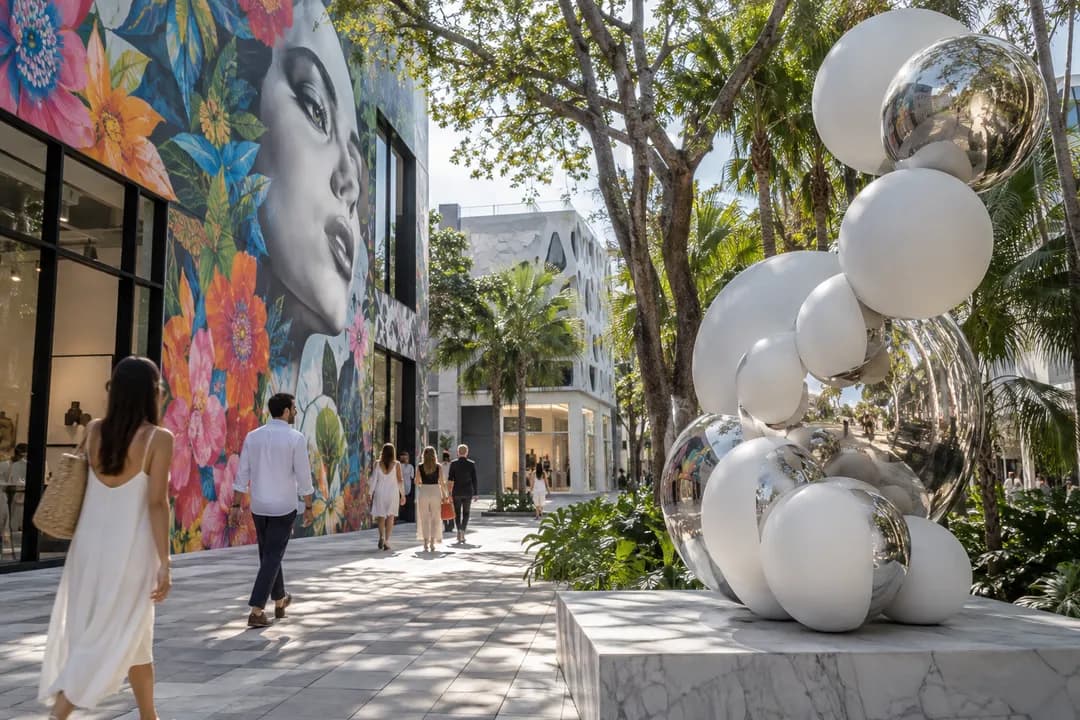
Search street art near me in Miami and the Design District offers a polished alternative to warehouse mural corridors. Its public art sits among architecture, luxury storefronts, plazas, and design-focused streets. The experience feels more like an open-air museum than a graffiti walk, with sculpture, facade work, pattern, and installation sharing the route. Because NE 39th Street and NE 2nd Avenue make the polished loop easy to start, the Design District gives the opening choice a local anchor, and Miami feels easier to read from there.
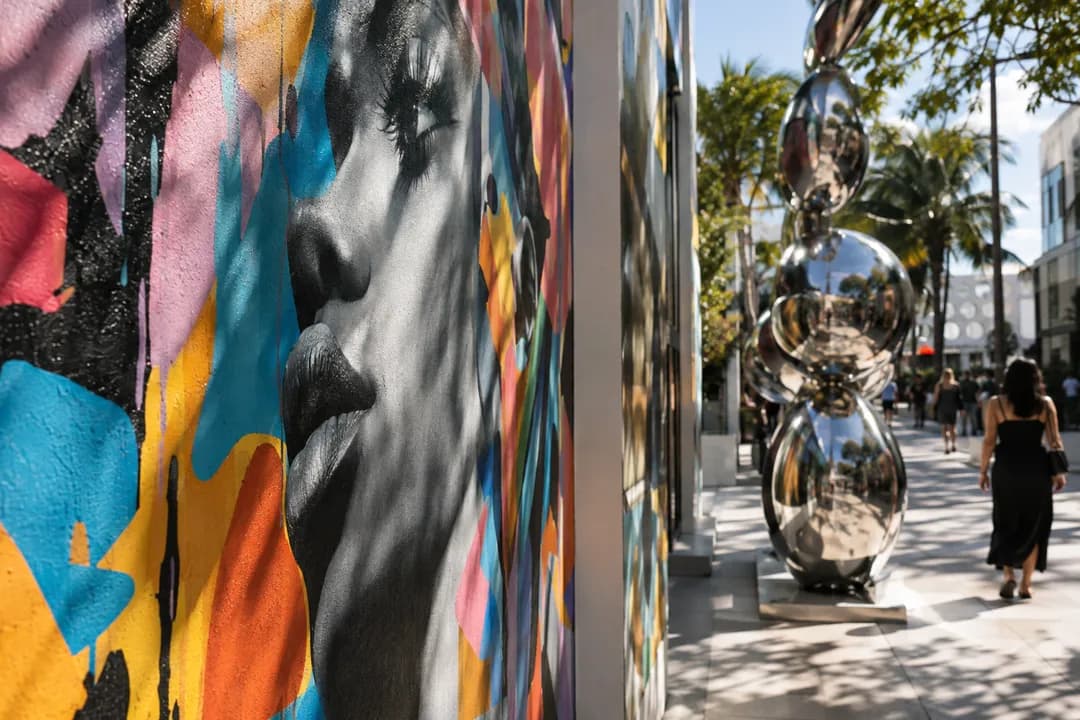
The district presents itself as a place where art, design, architecture, and retail overlap. That framing matters because the public pieces are often integrated into buildings and plazas rather than painted randomly on leftover walls. Changing installations and curated commissions give the area a controlled, high-design atmosphere while still allowing free outdoor viewing. Around the Design District, the detail to notice is that facade work can matter as much as a freestanding sculpture here; it keeps the stop from becoming a generic wall on a map.
Start near NE 2nd Avenue and NE 39th Street, then use the district's public-art directory if you want structure. The blocks are walkable, and many works reveal themselves as you move between storefronts, shaded passages, and small plazas. A loose loop works better than a straight-line route. Use this route cue near the Design District: ICA Miami and Locust Projects can extend the walk without leaving the district. That the Design District cue helps visitors decide when to pause and when to move.
The visuals are clean and varied. You may encounter sculptural forms, patterned architectural screens, painted facades, reflective surfaces, and design objects that behave like landmarks. Compared with Wynwood, the mood is less raw and more curated. That does not make it less interesting; it simply asks you to read polish as part of the story. At the Design District, notice that architectural screens create moving shadows that change the art. That the Design District texture matters when the block is busy, shaded, or changing by the minute.
Most outdoor pieces can be viewed for free, but respect boundaries. Do not climb installations, sit where signs say not to, block shop entrances, or assume interior galleries are open. Some works are meant to be approached closely, while others function as architecture. Let posted rules and common sense guide your distance. For timing at the Design District, remember that luxury retail traffic makes doorway etiquette especially important. Around the Design District, light, traffic, and comfort can change the pace of looking.
Morning keeps the walk cooler and quieter, especially if you want to photograph facades before the district fills. Early evening can be beautiful because reflective materials, screens, and sculptural surfaces catch warmer light. Midday sun is bright, though shaded passages can make short breaks easy if you plan the route thoughtfully. Etiquette feels clearer at the Design District when you remember that the public-art directory helps distinguish current pieces from older photos. The art at the Design District still sits inside a working Miami neighborhood.
ICA Miami and Locust Projects are natural nearby additions, depending on hours and current exhibitions. Cafes and restaurants can turn the visit into a slow design afternoon. The district is compact, so you can mix public art, architecture, shopping windows, and museum time without moving across the city. Planning stays flexible at the Design District when shade passages make short breaks part of the design experience is treated as useful context, not a promise that every visit will match.
The art here is not always mural-based, and that is worth embracing. A facade pattern, suspended form, or plaza installation may carry more visual weight than a painted wall. Look up often. Some of the district's strongest moments happen above storefront height, where architecture and public art merge into a single surface. A smaller loop around the Design District works well because early evening reflections can soften the district's controlled polish can pull attention away from the obvious wall.
If you are photographing, be mindful of luxury retail traffic and security presence. Keep entrances clear, avoid lingering too long in doorways, and do not use shop windows as props when people are trying to enter. The district welcomes looking, but it remains a functioning commercial area with its own pace. Nearby, NE 39th Street and NE 2nd Avenue make the polished loop easy to start can reset the day, giving the Design District a second rhythm after the first sweep of color.
The Design District's public-art route also offers a lesson in how Miami presents creativity differently by neighborhood. Here, art is curated alongside fashion and architecture. That can feel controlled, but it also produces excellent sightlines, maintenance, and surprising juxtapositions. A polished setting can still offer genuine public visual pleasure. Let the frame include the fact that facade work can matter as much as a freestanding sculpture here at the Design District; real street life often explains scale better than an empty shot.
Parking garages, rideshare drop-offs, and short walking loops make access relatively simple compared with more spread-out mural areas. Still, check the best arrival point before you leave, especially if you are combining the visit with a museum. Heat, rain, and event closures can influence which blocks feel comfortable. Look for how ICA Miami and Locust Projects can extend the walk without leaving the district changes the surface, because the Design District carries weather, repair, and neighborhood use together.
Do not rush past the architecture while chasing named pieces. Staircases, screens, tile, shade structures, and facade treatments often carry the district's strongest identity. The public art is part of a larger design language. Let your route include pauses where you simply look at how materials, color, and shadow work together. As of October 2026, architectural screens create moving shadows that change the art is the sort of current detail worth checking before crossing Miami.
Practical Notes: outdoor viewing is free, while dining, shopping, museums, gallery hours, and events vary by date. Use the public-art directory for current locations, wear comfortable shoes, and bring sun protection. The district is compact, but Miami weather can still make shade breaks essential. Luxury retail traffic makes doorway etiquette especially important keeps this street art near me result specific to the Design District, not interchangeable with another mural district.
For a short visit, focus on the central blocks near NE 39th Street and NE 2nd Avenue. For a longer one, add ICA Miami, Locust Projects, coffee, and a meal. The walk scales well because the art is dense enough for thirty minutes but layered enough for several hours. Practical planning improves when the public-art directory helps distinguish current pieces from older photos is handled before arrival, leaving more attention for the free outdoor art.
The Miami Design District works best when approached as a curated city walk rather than a hunt for graffiti. Its public art is free to encounter, but its meaning comes from its relationship to architecture, retail, and design culture. Move slowly, look upward, and let the district's polished surfaces reveal their complexity. For the last pass, shade passages make short breaks part of the design experience gives the Design District a memory beyond the search phrase and the first photograph.
Ask Karpo for more information.
Keep reading
- Scenic Walking Trail Near Me: Greynolds Park Mound and Oleta River Path
 Waterfront Park Near Me: Noguchi Sculptures and Seawall Sunsets at Bayfront Park
 Waterfront Park Near Me: Mast Views and Bay Lawns at Regatta Park