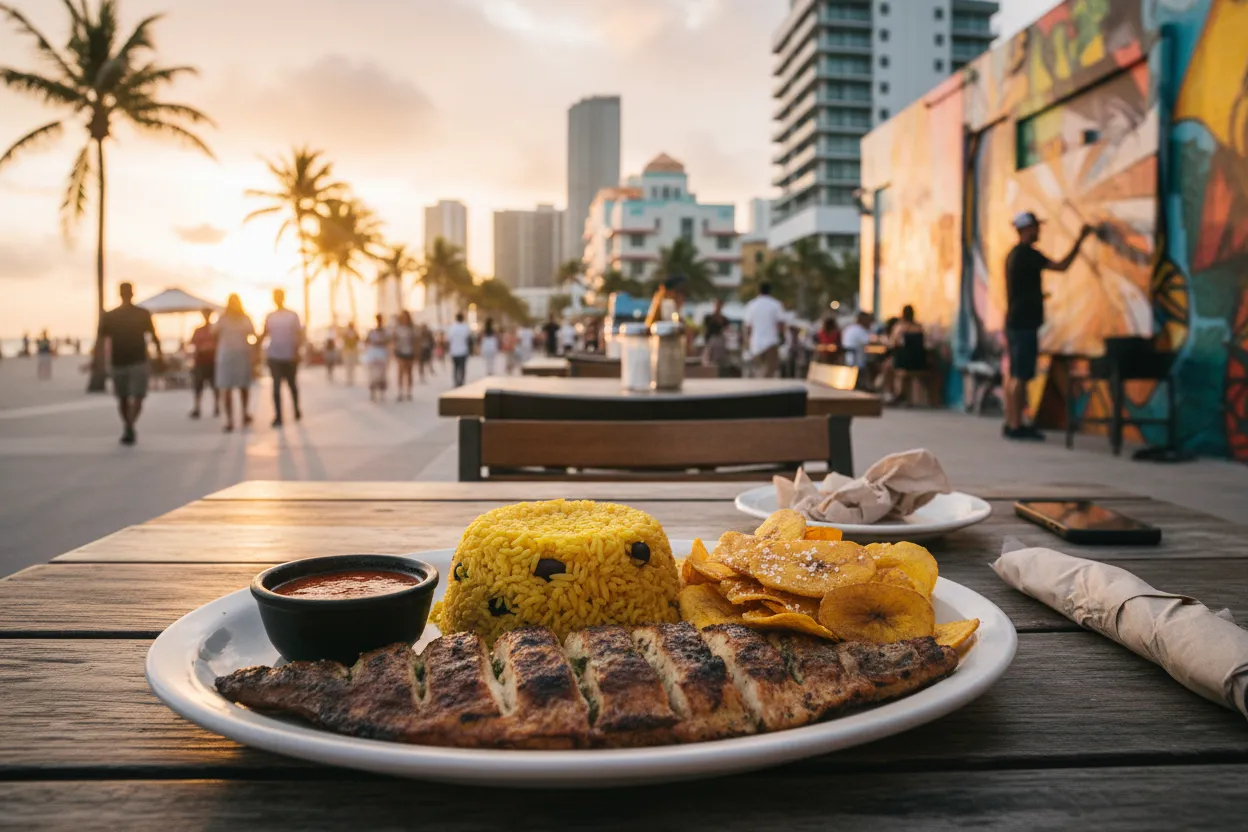
Miami makes a simple dining search feel bigger than it should. Type “Miami Restaurants Near Me: Beach, Downtown, and Wynwood Picks” or “food near me” and you can end up with a map full of tempting dots, traffic decisions, beach logistics, and restaurant pages that may not reflect your exact day. The better move is to build a small public plan: choose one neighborhood anchor, make transit do some filtering, and keep a backup for heat, rain, or crowds. Greater Miami & Miami Beach officially promotes beaches, a rich culinary scene, dynamic arts and culture, Wynwood Walls, Downtown Miami discoveries, and South Beach’s white-sand beach, so the raw material is there. Your job is to verify the live details before you leave.
Want a tighter Miami food plan before you cross the causeway or commit to Wynwood? Text Karpo with your neighborhood, timing, group size, and transit preference, then ask what to verify first.

Start With The Time Window
Start with the honest window, not the restaurant fantasy. A beach lunch, a Downtown dinner, and a Wynwood art walk are three different Miami days, even if they look close on a map. If you only have two or three hours, your best “restaurants near me” result is usually the one that fits the neighborhood you are already in, not the one with the prettiest photos across town. Miami’s official visitor site frames the destination around beaches, food, arts, culture, and distinct neighborhoods, which is exactly why a time window matters.
For August 10, 2026 planning, remember that Visit Miami lists seasonal programs such as Miami Spa Months in July and August and Miami Spice in August and September, with Miami Spice described as specially priced three-course meals at top eateries for lunch, brunch, and dinner. Those details can influence demand and choices, but they are not a substitute for checking the official restaurant or program page. Before going, verify whether the place you want is participating that day, what meal periods apply, and whether any posted menu or booking option is current.
Choose One Anchor Not Five
Pick one anchor and let everything else orbit it. For a Beach plan, that might mean starting near South Beach’s famous white-sand beach, then choosing food within a walkable radius. For Downtown, it could mean pairing a meal with Bayfront Park or another central stop. For Wynwood, the anchor may be the arts-and-culture draw of Wynwood Walls, which appears among official Miami points of interest and webcams. The point is not to rank neighborhoods; it is to avoid spending your day relocating instead of eating.
This is especially useful for groups. One person wants ocean air, another wants galleries, and someone else just searched “food near me” and sent six links. Decide the anchor first, then compare only options that support it. If the anchor is Beach, do not evaluate Wynwood as if it were around the corner. If the anchor is Wynwood, do not add Downtown unless you have checked the route. A tighter plan feels less glamorous in the group chat, but it usually leaves more time for the actual meal.
Use Transit To Remove Bad Ideas
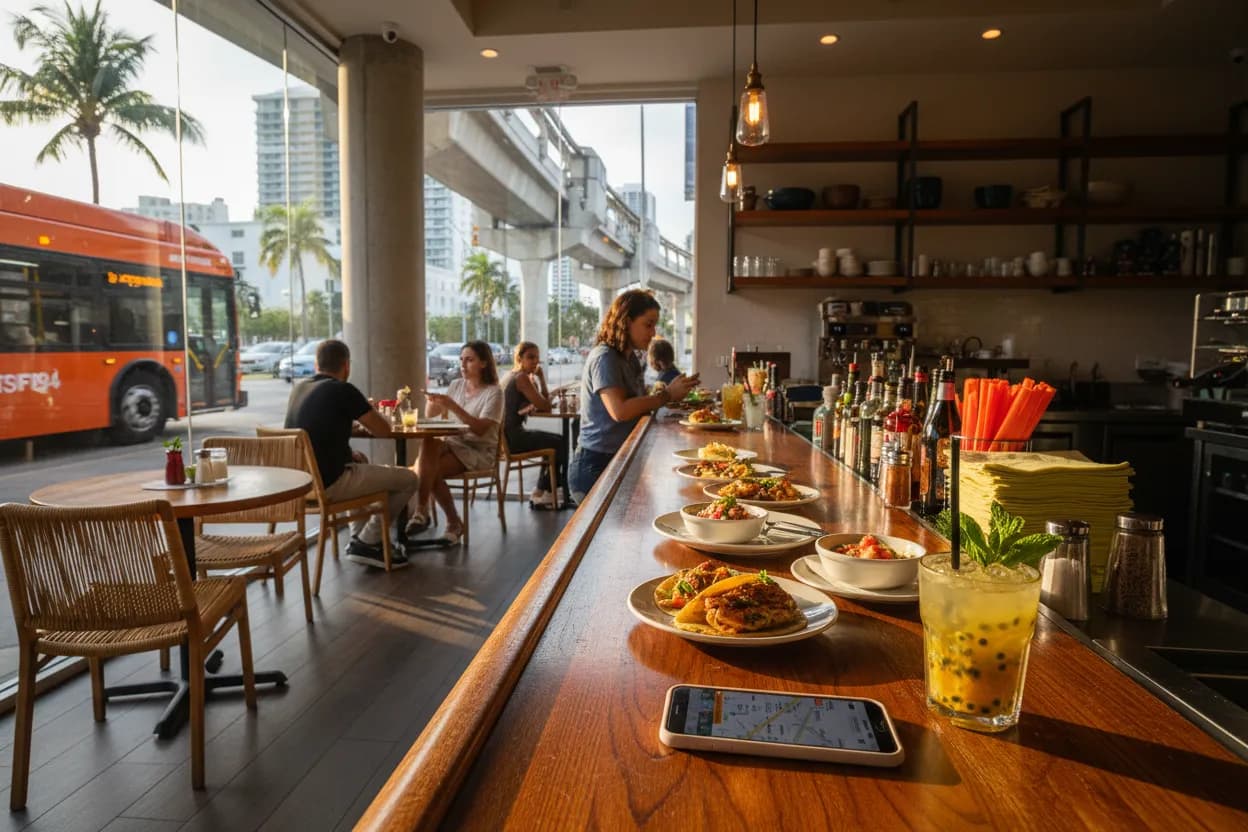
Miami-Dade Transit should be part of the restaurant decision, not an afterthought. The official transportation site says riders can plan a route, track buses and trains in real time, and read service updates and rider alerts. It also points users to Metrobus, Metrorail, Metromover, Transit Tracker, the Trip Planner, and the GO Miami-Dade Transit mobile app. Use those tools before you fall in love with a dining option that requires an awkward transfer, a long wait, or a return trip your group will not tolerate.
Transit can also reveal temporary problems. The official page notes elevator and escalator status information, rider alerts, service updates, and active work on Metromover upgrades and Metrorail single-tracking. Because those details change, check the official transit page the same day you travel. If your plan depends on Metromover, Metrorail, or a specific bus connection, verify alerts, real-time tracking, and any posted service changes before you leave. A restaurant that looks perfect online becomes a bad pick if the route is fragile.
Add A Weather Or Crowd Backup
A Miami food plan needs a backup because the city rewards flexibility. The official visitor site highlights outdoor activities, beaches, art, culture, tours, attractions, and year-round things to do, but that variety also means your original idea may run into heat, rain, a packed area, or a group that suddenly wants air conditioning. A Beach plan should have an indoor or nearby alternative. A Wynwood plan should have a shorter version. A Downtown plan should know where it can pause without adding another long ride.
Use official tools for the pieces they actually confirm. Visit Miami provides live webcams for places such as South Beach, Bayfront Park, Biscayne Bay and PortMiami, Lincoln Road, Calle Ocho, Miami International Airport, Sunny Isles Beach, and Wynwood Walls. A webcam does not guarantee comfort, seating, parking, or restaurant availability, but it can help you sense conditions before committing. Before going, verify the restaurant’s current hours, reservation options, menu, location, and any weather-related or operational notice on its official page.
Keep The Route Small Enough To Finish
The best Miami route is often the one you can finish without negotiating every block. Beach, Downtown, and Wynwood each have enough identity to carry a meal plan. South Beach brings the beach setting. Downtown connects with central Miami discoveries and Bayfront Park. Wynwood is tied to creativity, art, culture, galleries, and Wynwood Walls. Trying to stitch all three together around one lunch or dinner usually creates more friction than payoff, especially when your search started as restaurants near me rather than a full-day tour.
Build a route with one meal, one nearby activity, and one exit plan. For example: beach first, then food nearby, then leave. Or Wynwood Walls, then a verified restaurant, then a rideshare or transit route you already checked. Or Downtown first, then dinner, then Metromover or Metrorail if the official alerts support it. Keep extra stops optional. The practical win is not seeing every Miami neighborhood in one sweep; it is ending the day fed, un-rushed, and not stranded between better ideas.

Verify Live Details Before Leaving
The final check is where good Miami plans separate from wishful ones. Visit Miami can help you understand the destination’s neighborhoods, beaches, culinary scene, arts, culture, events, and seasonal programs. Miami-Dade Transit can help with route planning, real-time tracking, rider alerts, service updates, and accessibility-related status information. Neither should be treated as proof that a specific restaurant has your preferred table, menu item, price, delivery option, or current operating hours unless that exact information is confirmed on the official restaurant or program page.
Before you leave, verify six things: the restaurant’s official hours, address, booking or walk-in guidance, current menu, any event or seasonal offer details, and your transit route home. If you are using Miami Spice, check the official program and the restaurant’s own page for current participation and meal-period details. If you are relying on transit, check Miami-Dade Transit alerts, trackers, and route planning tools the same day. That small habit makes a “food near me” search much less chaotic.
Tags: #Miami #MiamiBeach #DowntownMiami #Wynwood #RestaurantsNearMe #FoodNearMe #WeekendPlans #MiamiEats #MiamiDining #PublicTransit #MiamiSpice #LocalGuide #AskKarpo #BeforeYouGo
Sources consulted: Visit Miami · Miami-Dade Transit
All trademarks are the property of their respective owners.
Ask Karpo first
Ask Karpo first when the Miami map feels crowded. Share your anchor neighborhood, meal window, transit tolerance, and backup preference. Karpo can help you narrow Beach, Downtown, or Wynwood into a realistic plan and remind you what official details to verify before leaving.


