 Upper East Side Winter Farmers Market Picker With a Dog
Weekend Plans
Miami Rainy Day Plan Comparer for Afternoon Pivots
Compare a cultural visit with an indoor meal in Miami, weighing transfers, group energy and shelter before choosing an afternoon rain backup plan.
A Miami afternoon can change while you are still deciding what to do next. You have finished lunch, a cultural stop sounds appealing, and rain suddenly makes the outdoor part of the plan feel much bigger than it looked on a map. A rainy day plan comparer helps separate two questions: what would be enjoyable, and what can your group reasonably reach? Use this guide to compare an indoor cultural visit with a longer dining break, then carry a clear request into the Karpo APP. The aim is a workable afternoon with fewer decisions made on a wet sidewalk.
Start with the room you are already in
Before searching across the city, describe your starting position precisely. Are you seated inside a restaurant, standing in an enclosed lobby, or outside beneath a small awning? These are different situations. A meal already underway gives you somewhere to pause, although staying longer still depends on the venue's service and staff. An outdoor canopy is a different kind of protection. The National Weather Service recommends a substantial building or enclosed hard-topped vehicle for lightning shelter. A picturesque covered terrace should not become the reason you remain outside during thunder.
Put the remaining time into ordinary language. Perhaps you have two hours before an evening commitment, everyone has already eaten, and one person dislikes long car journeys. That brief makes a cultural visit plausible. If lunch has barely started and the group is tired, extending the meal may preserve more of the afternoon than moving twice. Neither choice requires a promise that the storm will end at a particular minute. Treat the weather as a constraint on the decision, rather than a countdown that forces a rushed departure.
Compare the actual experience, not just the category
A museum or indoor exhibition offers a reason to focus on something beyond the weather. It suits people who want a defined activity and are comfortable spending time on their feet. However, the entrance, admission arrangements and amount of indoor content all matter. A broad label such as cultural center does not establish that every part of a visit is enclosed. When considering a named candidate, distinguish its exhibition rooms from a sculpture garden, outdoor installation or separate building that would add another exposed transfer.
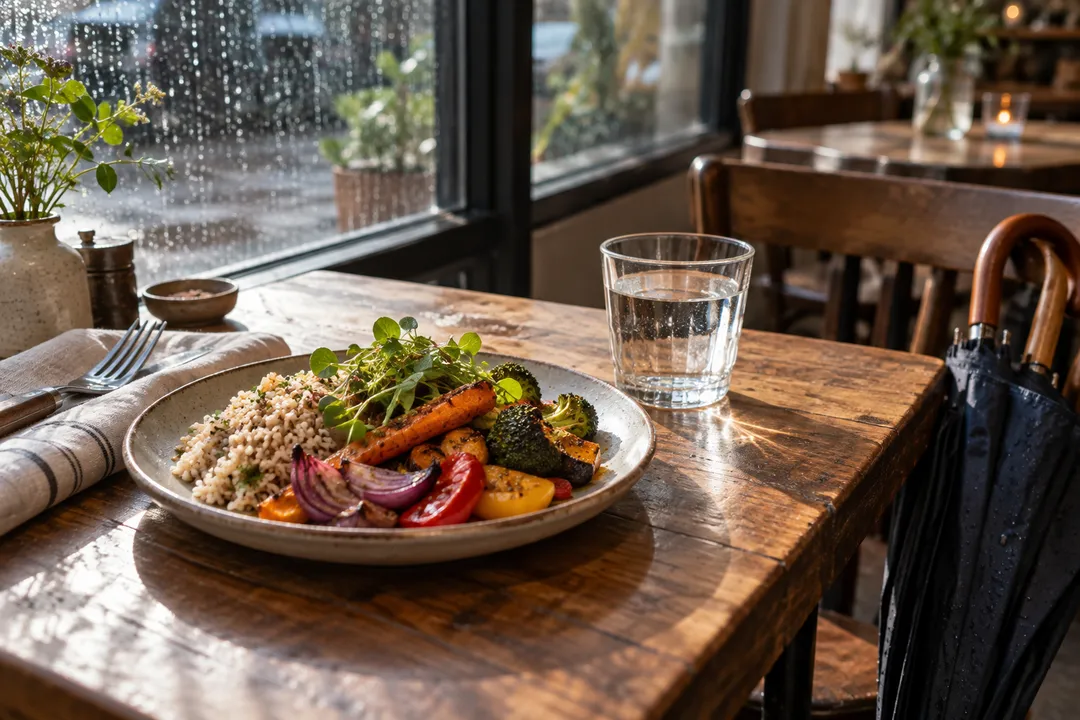
A dining alternative changes the afternoon's pace. You can prioritize conversation, a substantial snack or a proper meal, depending on what the group actually needs. The tradeoff is that a table is part of a business with its own service rhythm. Ordering a drink does not establish permission to occupy it indefinitely. Make food preferences and the desired length of the stop part of the comparison. If someone has just eaten and wants to move around, a second restaurant may solve the rain problem while missing the reason they came out.
Count the exposed minutes between doors
The useful unit is the journey from your present shelter to the next interior. Include the walk to a vehicle, the pickup area, the arrival curb and the approach to the destination. A short distance on a neighborhood map can hide several separate outdoor segments. An accessible entrance may be on another side of the building. A car park can be separate from the cultural space. Record these as unresolved details when the information is absent, rather than treating a nearby icon as proof of a protected connection.
For an illustrative comparison, imagine a gallery candidate that requires a drive followed by an uncovered entrance approach, and a dining room reachable through the same building you already occupy. The gallery offers more novelty, while the restaurant has fewer transfers. The decision changes if your group has already spent the morning at exhibitions, or if the nearby dining room cannot accommodate your dietary needs. These are hypothetical alternatives, not claims about a particular venue. Their value is showing why travel friction and enjoyment belong in the same conversation.
Give the comparison a small set of priorities
Choose three priorities before adding more candidates. For this afternoon they might be minimal outdoor walking, something culturally interesting and a comfortable place to sit. Rank them, because equal weighting can conceal a real disagreement. A visitor with limited stamina may regard seating as essential, while another person sees it as optional. Let each person name one requirement that would rule a choice out. That produces a clearer decision than a long list of attractive places with no shared understanding of what makes them suitable.
Budget also needs a definition. Compare the whole outing, including transport and any admission or food you intend to purchase. Do not attach invented ticket prices to unnamed alternatives. An option with no admission charge can still involve extra travel, while remaining at a restaurant can add another order. If your group has a firm spending limit, state it as your own budget in the request. A personal limit is a useful input, not evidence of what a venue charges or what a table will cost.
Turn the situation into a useful Karpo request
In the Karpo APP, write a request that contains your starting neighborhood, group size, available time and the tradeoff you want help thinking through. For example: “We are already indoors in Miami after lunch. Help us compare a cultural visit with staying nearby for food. We want little outdoor walking and seats for one person who tires easily.” This is a suggested way to ask for city guidance. It does not establish that any particular venue has space, that a route is sheltered or that admission is available.
Read any suggested alternatives against your original requirements. If a response gives several destinations but leaves the door-to-door transfer unclear, ask a narrower follow-up about the missing segment. If it overlooks food restrictions or walking tolerance, restate that requirement. A recommendation becomes useful when you can explain why it fits your group. You still control the decision, and venue access, reservations and payments remain separate actions. Avoid treating a conversational suggestion as a booking or as a report of live conditions outside the building.
Decide what would make you change course
Write one fallback before leaving shelter. If the cultural option does not meet the entrance or admission requirements, the fallback might be a nearby indoor meal, returning to your accommodation or ending the outing. The fallback should require less effort than the first choice. Otherwise a rejected plan simply starts another search in an inconvenient place. Agreeing on this point also helps the group avoid blaming the rain for a disagreement that was really about energy, appetite or the number of stops everyone wanted.
Practical Notes for an afternoon pivot
Keep the original outdoor walk separate from the indoor replacement. You can save it for another outing without trying to squeeze it between showers. Carry your departure point, accessibility needs and chosen destination in a form everyone can understand, and let someone in the group know if the meeting place changes. If thunder or flooding makes the transfer inappropriate, remain in suitable shelter and defer leisure travel. A successful afternoon pivot can be one satisfying indoor activity, one unhurried meal or a decision to stop. The quality comes from the fit, not the number of places reached.
Ask Karpo for more information.
Keep reading
- Upper East Side Winter Farmers Market Picker With a Dog
 Normandy Village Winter Farmers Market Picker for an Asado
 Coral Gables Winter Farmers Market Picker for New Gardeners