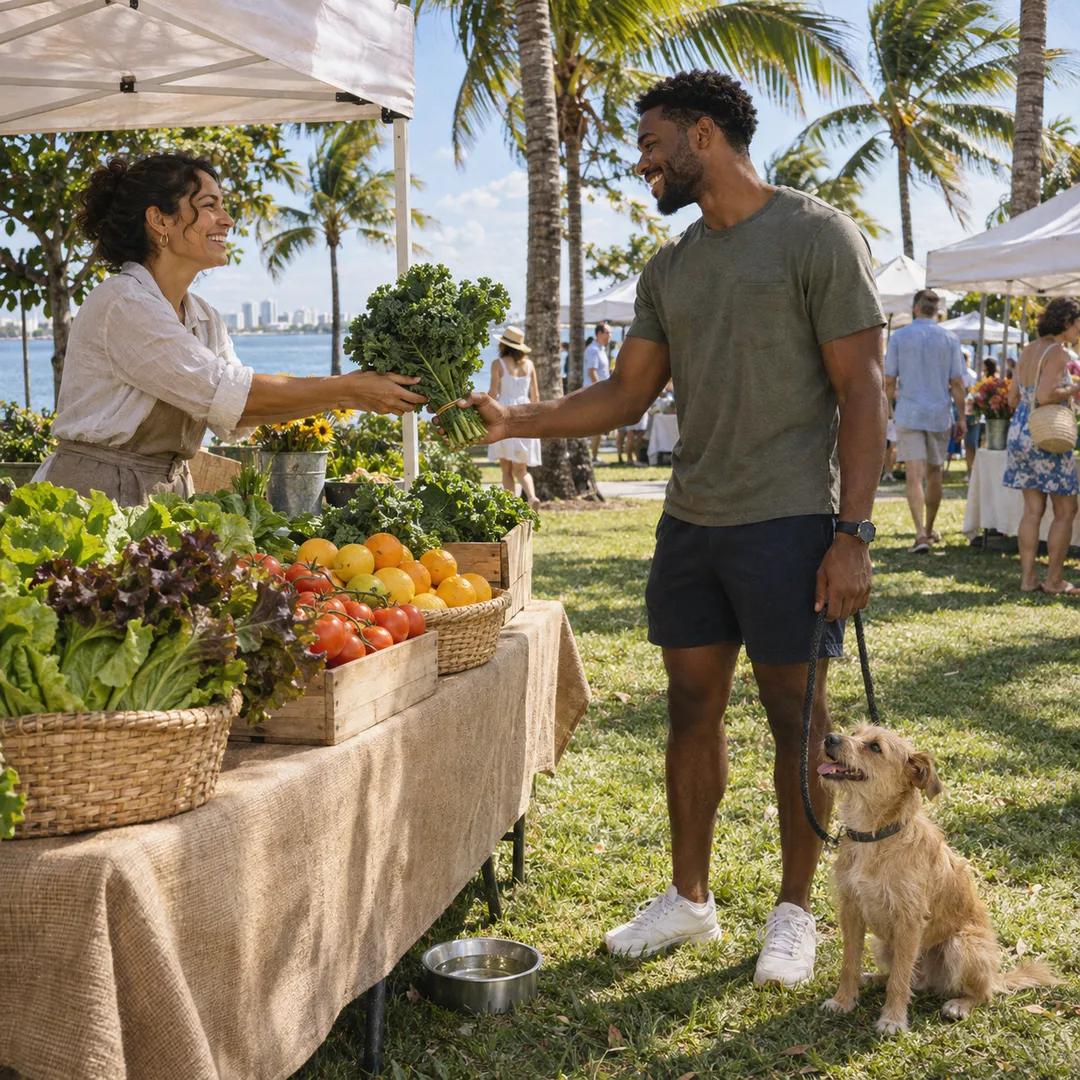
 Upper East Side Winter Farmers Market Picker With a Dog
Weekend Plans
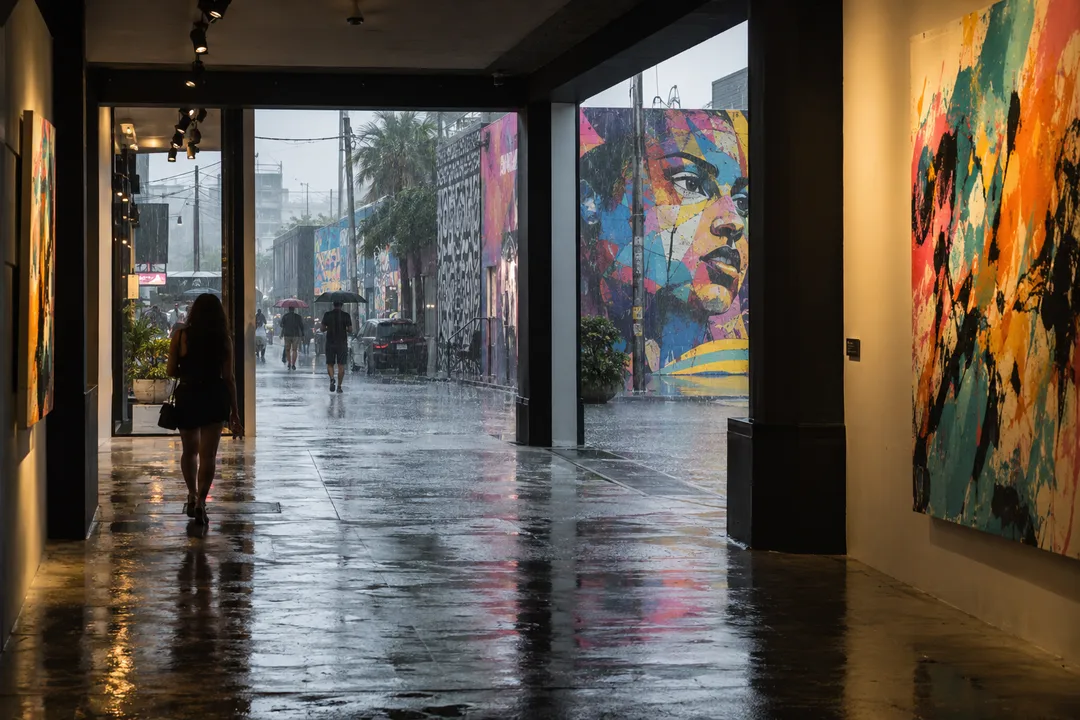
Wynwood Rainy Day Plan Comparator: 3 Short Indoor Hops
Wynwood rain rewards a smaller route. Compare an art-first visit, a food-led pause, and one indoor anchor without assuming the sidewalks are sheltered.
The tricky part of a wet Wynwood afternoon is often the movement between activities. A gallery may be indoors and a food stop may be indoors, yet the route connecting them can still dominate the outing. A rainy day plan comparator helps you decide how many moves are worth making. Compare an art-led visit, a food-led pause, and a single indoor anchor. Use the Karpo APP to ask for suggestions around the part of Wynwood where you already are, with outdoor exposure treated as a constraint.
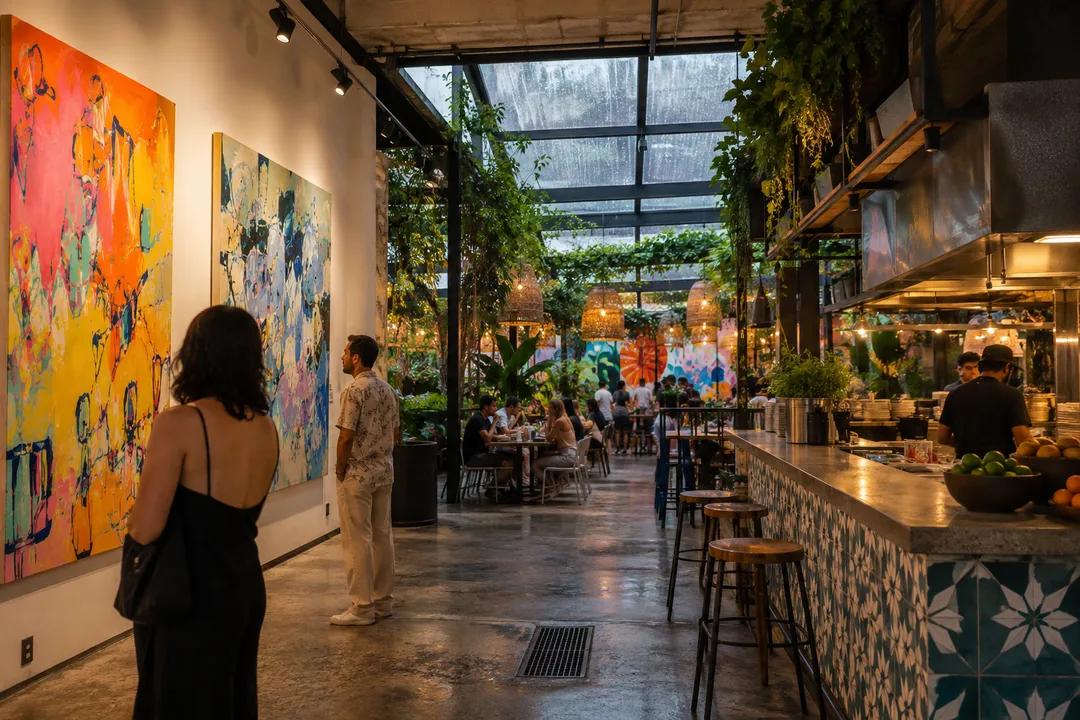
Start with the doorway you can reach
Describe your actual starting point rather than asking for all of Wynwood. A neighborhood label is too broad to explain whether a proposed destination is an easy next step. Include whether you are already sheltered, waiting for friends, or carrying bags. Then say how much outdoor movement feels acceptable. That limit is a personal input, not a forecast or a measured route claim. The request should help narrow the search before you become attached to a destination across the neighborhood.
Use the first destination as an anchor that would still be worthwhile if nothing else happened. This is especially useful when the weather makes a chain of stops tiring. An exhibition that interests the group can stand on its own, as can a meal with enough time for conversation. A stop chosen solely because it sits between two other stops is weaker. If either of those surrounding ideas falls away, the middle destination may no longer have a reason to be in your afternoon.
Decide whether art or food leads
An art-first approach makes sense when curiosity is the reason you came. Ask for public indoor art spaces that match a subject or medium you enjoy. Say whether the group wants a focused visit or a less structured browse. Keep admission, timed entry, and access conditions as details that need their own reliable information. A colorful exterior or a gallery-like photograph does not establish that a place welcomes casual visitors. Let the interest in the art drive the candidate list, rather than its appearance alone.
A food-first approach answers a different need. It is about giving the group a comfortable pause before deciding how to spend the rest of the day. Ask whether a suggested food venue has an indoor setting appropriate for your party, instead of treating every market or dining court as enclosed. Distinguish a quick counter meal from a place where conversation is the main activity. If your group includes different diets, give those constraints together so the proposed stop does not solve only one person's problem.
The single-anchor approach removes the pressure to hop between buildings. Choose the indoor experience that matters most and leave the second stop optional. This can suit people who have already spent time walking, visitors who dislike moving through rain, or anyone with a short remaining window. It does not mean the afternoon must feel small. A focused activity followed by an unhurried departure may be more satisfying than collecting several destinations while watching the weather from each doorway.
Treat every gap as part of the outing
When a request mentions NW Second Avenue, it should still distinguish a specific destination from the wider street. Do not infer continuous coverage from neighboring buildings or a patch of awning. Ask for the distance and entrance details relevant to the exact options being compared when that information is available. Describe the planned link in ordinary terms: leaving one indoor room, reaching the street, crossing, and entering the next building. That makes the exposed portion harder to overlook.
Build the route around the least comfortable traveler. A person using a mobility aid, a child who dislikes getting wet, or a companion in unsuitable shoes can change the decision. Put their needs into the brief without assuming a map knows them. Consider whether a short vehicle transfer would simplify things, while accounting for pickup and drop-off exposure as well. Changing modes does not automatically remove the awkward part of the trip. Sometimes staying with the first indoor anchor is the more comfortable solution.
Ask for a comparison you can use
An opening message might read: “We are in Wynwood and want to stay mostly indoors. Suggest an art-first option and a food-first option near our starting point. Limit the plan to one essential destination and one optional follow-on.” Explain the group's interests and the remaining time. This requests a practical shortlist in conversation. It does not assume that the Karpo APP measures rainfall, tracks your walk, or knows whether a particular room has a seat waiting for you.
After receiving ideas, ask a question that challenges the route. Which option still works if the second stop is removed? Which demands the fewest separate arrivals? Which gives a reluctant art visitor something to enjoy? These questions prevent a visually appealing list from becoming a fragile itinerary. If the response names a venue whose public access is unclear, exclude that candidate until the relevant information supports it. You can simplify a recommendation without having to discard the entire conversation and start from scratch.
Keep the fallback different from the main plan
A useful fallback should fail for a different reason from your first choice. If the primary idea requires admission to an art space, the backup might be a seated food stop rather than another place with the same access uncertainty. If your main concern is walking in rain, a fallback farther away does not solve the problem. Ask for an alternative with a different level of commitment. You are building resilience into the afternoon through the structure of the choice, not by claiming that a venue will always be available.
Set a clear boundary on improvisation. You may decide to add a second destination only if everyone still wants to continue after the anchor visit. This is a group decision, not a prediction that the weather will improve. If people are content inside, stay with the experience you selected. A planned afternoon should give you permission to enjoy an activity, not repeatedly interrupt it with comparisons on a screen. Keep the next address and departure plan accessible, then put the browsing aside.
Practical Notes for a smaller Wynwood route
Carry the destination's name, your intended arrival method, and a shared understanding of whether another stop is optional. Leave space in the schedule for wet belongings and a slower entrance. Open the Karpo APP when you are ready to ask for options, and give your outdoor walking limit before listing aesthetic preferences. Choose the route with the strongest single destination and the fewest unnecessary transitions. That is how a rainy Wynwood afternoon can remain about art, food, and company rather than the difficulty of connecting them.
Ask Karpo for more information.
Keep reading
- Upper East Side Winter Farmers Market Picker With a Dog
 Normandy Village Winter Farmers Market Picker for an Asado
 Coral Gables Winter Farmers Market Picker for New Gardeners