 Upper East Side Winter Farmers Market Picker With a Dog
Weekend Plans

South Beach Rainy Day Plan Comparator: 3 Dry Pivots
South Beach rain calls for a shorter indoor plan. Compare culture, a seated cafe break, and a lounge stop around your energy, timing, and walking tolerance.
A beach afternoon in South Beach can leave you with an awkward decision when rain interrupts it: stay nearby, travel for an indoor attraction, or abandon the outing altogether. A rainy day plan comparator starts with the day you actually have. Wet sandals, a hungry friend, a checkout deadline, and the desire to see something interesting matter more than a long list of attractions. Use three possible pivots as a starting point, then ask for a shortlist in the Karpo APP that reflects your priorities.
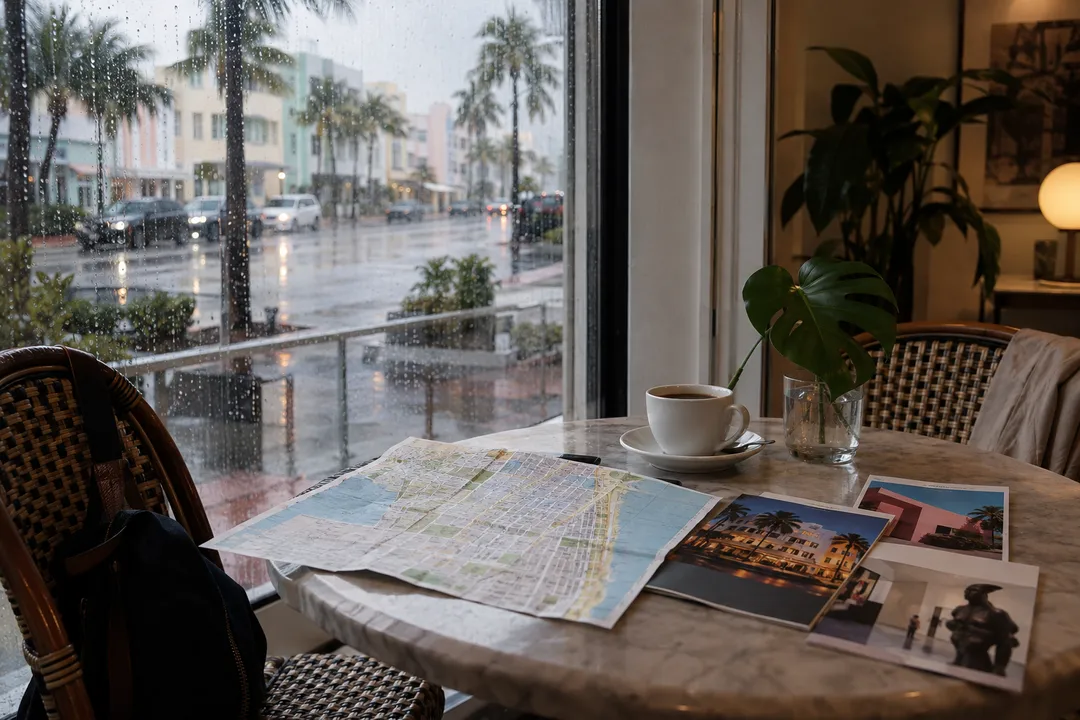
Rescue the purpose of the afternoon
Decide what you wanted from the beach before selecting its replacement. If the goal was quiet time together, a seated cafe break might preserve that better than a crowded cultural stop. If you wanted to discover something about Miami, ask for an indoor exhibition or collection that suits your interests. If the outing was meant to feel celebratory, describe a relaxed lounge atmosphere rather than asking vaguely for somewhere indoors. These are different jobs, even when every option has a roof.
Keep the original plan's emotional value while changing its physical demands. A couple who came for a leisurely conversation needs a different fallback from a family trying to occupy children before dinner. Write down the one thing that would make the next few hours feel worthwhile. Then give your companions permission to drop the rest. This makes the comparison useful: you are choosing how to spend the afternoon, rather than trying to reproduce a beach experience inside another building.
Put three competing pivots on the table
The culture pivot gives the afternoon a clear focus. Its attraction is a defined activity that does not require everyone to keep suggesting the next move. Its drawback is commitment: a ticket, a time slot, or simply the energy needed to look closely at unfamiliar work. Ask for a candidate that matches the group's attention span. Someone who loves design may prefer a compact design collection, while another person wants a place where they can wander without following a set narrative.
The cafe pivot is a gentler choice. It works when people need to dry off, eat, talk, or decide whether they want to continue. Compare a proper seated break with a quick takeaway counter, because those are different experiences. A coffee purchase does not automatically provide a table for the entire afternoon. Describe the sort of stay you need, including food preferences and whether conversation matters more than a photogenic room. Request relevant options without assuming that seats are available.
The lounge pivot suits a group that wants a comfortable social setting and a slower pace. Define whether you mean an alcohol-free afternoon, a place for a meal, or a later drink. A hotel lobby is not automatically a public lounge, and a shaded terrace is not the same as a fully enclosed room. Ask for public indoor choices, and keep any access question visible in your decision. An attractive photograph alone does not establish that you can settle in there.
Compare the uncomfortable parts first
Measure each pivot from your present position rather than from a general South Beach label. A destination can be close on a map while still requiring exposed crossings, a pickup wait, or a walk around the building to reach the entrance. Use your preferred walking limit as an input. For example, a ten-minute maximum can be a personal boundary in the request, not a claim about any particular route. A party with a stroller may put more weight on the entrance than the headline attraction.
Consider what you are carrying. A beach bag, damp clothes, or luggage changes which rooms feel practical. Put that detail into the conversation instead of hoping the recommendation will infer it. Also separate the spending limit for the activity from the amount available for transport and food. A low admission cost does not necessarily make a detour worthwhile. The better comparison includes the full outing's burden, including how much effort it will take to return to your hotel or next appointment.
Turn preferences into a useful request
A good opening message is specific but readable: “Our South Beach beach plan is washed out. Two adults want a calm indoor afternoon, with a short walk, food, and no fixed-time activity. Suggest a cultural option, a cafe option, and a lounge option.” Add where you are starting and when you need to finish. This is a request for conversational discovery. It does not require a special comparator screen, an automatic weather connection, or a background alert to be useful.
Follow up on the difference that matters most. You might ask which idea leaves the most time for conversation, which has the simplest arrival, or which can be shortened if someone gets tired. Ask for the reason behind each suggestion. If the answer contains a price or admission rule, treat that as a separate factual detail in the choice, not as evidence that your party has a reservation. A suggested plan becomes a commitment only when you complete the relevant action with its provider.
Give the group a decision rule
Choose a primary pivot and one fallback, then stop browsing. An example rule is to favor culture when everyone has the energy for it, take the cafe when someone needs a rest, and save the lounge for a group that wants a social afternoon. These rules are your preferences, so they can be changed in a follow-up message. Avoid collecting five backups that all depend on the same long transfer. One alternative near your starting point is often more useful than another distant attraction.
Agree on a point for reassessing the outing, such as after the first seated break. Decide whether you would return toward the beach, remain indoors, or finish early. This is not a forecast of when the rain will end. It is a way to keep the afternoon flexible without repeatedly reopening the entire decision. If the weather makes moving uncomfortable, let the indoor stop be the outing. There is no requirement to add a second destination merely because the initial plan had several parts.
Practical Notes for a beach-day reset
Before leaving your current shelter, know the chosen destination, how you intend to reach it, and the next commitment on your calendar. Keep umbrellas and wet belongings contained so the group can settle in respectfully. Describe any mobility or sensory needs directly. For the next step, open the Karpo APP and ask for the three pivots using your real starting point and priorities. Select the suggestion that preserves the part of the afternoon you care about, and leave unnecessary stops out of the plan.
Ask Karpo for more information.
Keep reading
- Upper East Side Winter Farmers Market Picker With a Dog
 Normandy Village Winter Farmers Market Picker for an Asado
 Coral Gables Winter Farmers Market Picker for New Gardeners