 Upper East Side Winter Farmers Market Picker With a Dog
Weekend Plans

Coral Gables Rainy Day Plan Comparator: 3 Slow Stops
Coral Gables rain suits an unhurried indoor pause. Compare books, a cultural visit, and a meal while keeping the exposed gaps around Miracle Mile visible.
A rainy afternoon around Miracle Mile can be an invitation to slow down, provided the plan does not confuse attractive arcades with a fully sheltered route. A rainy day plan comparator for Coral Gables should weigh the quality of the time indoors as carefully as the walk between doors. Consider a book-led pause, a cultural visit, or a meal as three different anchors. Tell the Karpo APP what kind of afternoon you want, then ask for a short set of ideas that suit your pace and companions.
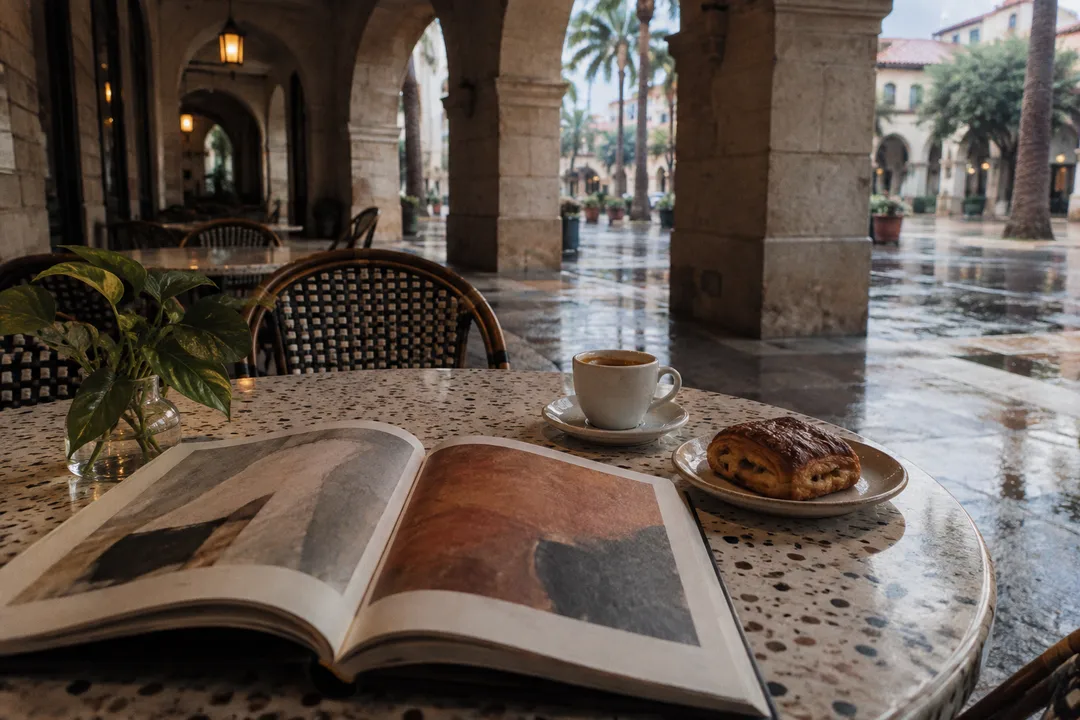
Choose the kind of attention you want
Books, exhibitions, and meals ask different things of a visitor. Browsing shelves lets you follow your own curiosity, while an exhibition can give the afternoon a shared subject. A meal directs attention toward the people at the table. Begin with the question of how you want to feel after the visit. Do you want a new idea, a conversation, or time alone? This is more useful than treating every indoor activity as an interchangeable substitute for a walk outside.
Account for differences within the group. A keen reader may happily browse for a long time while a companion wants a seat almost immediately. Someone interested in architecture might enjoy the surrounding setting but prefer a shorter indoor visit. Describe these preferences together in the request. The goal is not to persuade everyone to enjoy the same thing equally. It is to select an anchor with enough shared appeal that nobody spends the whole afternoon waiting for someone else to finish.
Let books lead when flexibility matters
A book-led plan works as a planning category because it can follow a theme rather than a strict schedule. Ask for a public bookshop option around your chosen starting point, and explain the subjects or atmosphere that interest you. Do not assume that browsing implies a cafe, extensive seating, or permission to stay indefinitely. Those are separate characteristics. If sitting down is essential, make that a requirement for the wider plan rather than allowing an appealing shelf photograph to stand in for practical information.
Give the visit a light purpose. You might choose a travel book for the rest of your stay, find a present, or have each person pick something to discuss over food. These are optional activities that do not depend on a shop running a special event. They also give a reluctant browser a reason to participate. If the group wants a reading event or talk instead, treat that as a different request requiring a specific advertised session, rather than folding an imagined event into a casual visit.
Use a cultural anchor for a shared subject
A museum or other public cultural space can give the afternoon a clearer beginning and end. Explain which subjects appeal to you and how much time you want to devote to the visit. Ask for a candidate that fits those interests rather than simply asking for the nearest museum. Public access, admission, and entry conditions belong to the venue itself. A conversational suggestion does not establish that a particular exhibition is available at the time you intend to go.
Compare the cultural option with the book-led one through the group's desired attention level. A focused exhibition may be ideal when everyone wants to look at the same thing. Flexible browsing can be easier when people have different interests or limited energy. Neither has to include a second attraction. Give your preferred activity enough room to feel substantial. Adding another cultural stop simply because both are indoors can dilute the reason for choosing the first one and create an unnecessary exposed transfer.
Make a meal the destination when company matters
A meal can carry the afternoon on its own when the group mainly wants to talk. In the request, describe cuisine, dietary needs, preferred noise level, and whether you want a substantial meal or something lighter. Be precise about indoor seating if that is important. An arcade table, a patio, and an enclosed dining room are not equivalent settings. You can ask for a comparison between them, but the response should not be treated as a guarantee of a dry table or immediate admission.
Keep spending and duration in the same conversation. A relaxed meal may be a good use of time even when it costs more than a brief browse, while a small snack can be enough if you are meeting others for dinner. Avoid creating a second full meal because a generic itinerary suggests it. Tell the app about that later commitment. A plan that respects your existing day is more useful than one that makes every recommendation sound like a separate occasion.
Draw the gaps between shelter
An attractive stretch of covered frontage can encourage you to imagine a continuous indoor circuit. Instead, think of each stop as an individual shelter with a route between it and the next. Miracle Mile is the area around which this request is organized, not a promise about the location of every proposed cultural venue. Ask for destinations in your chosen area and keep any longer transfer explicit. A neighborhood-themed plan should not quietly expand into a trip across the city.
Describe access needs and weather tolerance before asking for a pedestrian itinerary. Someone who needs step-free access should say so. Someone who wants the smallest possible amount of outdoor walking should not receive a route whose main attraction is the walk itself. If the connection cannot be supported by reliable information, simplify the outing to one anchor. Planning around a smaller geographic area is a useful preference, while claiming that every doorway is linked by shelter would be a factual assertion requiring evidence.
A brief that keeps the afternoon gentle
Try: “We want a quiet Coral Gables afternoon near our starting point around Miracle Mile. Compare a bookshop-led pause, an indoor cultural visit, and a relaxed meal. We prefer little outdoor walking and no packed schedule.” Add who is coming, when you need to finish, and whether seats or step-free access are essential. Ask for the main tradeoff of each idea. The answer can help you choose a direction without needing a dedicated comparison interface or any automatic reservation feature.
Once the group selects its anchor, use the next action appropriate to that choice. A specific timed activity calls for the provider's booking process, while a casual visit may need a simpler arrival plan. Keep the alternative as a fallback instead of turning it into another required stop. Open the Karpo APP with the actual constraints and let the conversation narrow the decision. A successful rainy afternoon in Coral Gables can be a single absorbing place, a good meal, and an uncomplicated trip back.
Ask Karpo for more information.
Keep reading
- Upper East Side Winter Farmers Market Picker With a Dog
 Normandy Village Winter Farmers Market Picker for an Asado
 Coral Gables Winter Farmers Market Picker for New Gardeners