 Upper East Side Winter Farmers Market Picker With a Dog
Weekend Plans
Planetarium Near Me in Hialeah: Ken Mattingly Planetarium
A Hialeah and Miami-Dade guide to the Ken Mattingly Planetarium at HML High School, featuring a 30-foot dome, Apollo 16 heritage, and STEM stargazing.
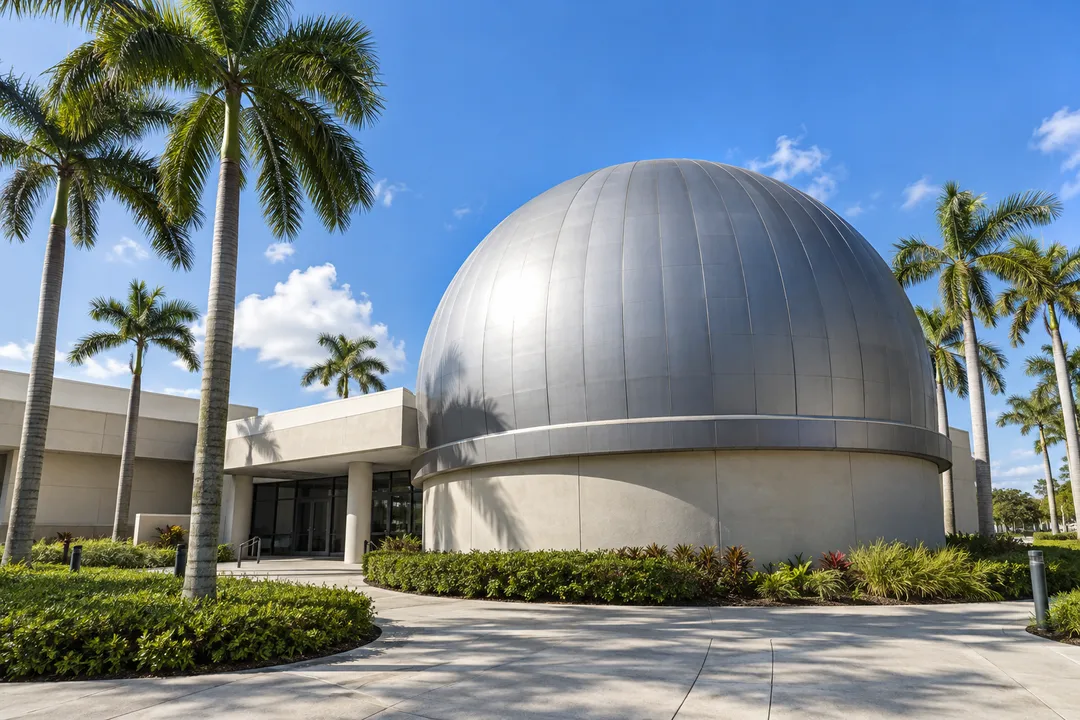
Discovering an authentic educational planetarium near me in northwest Miami-Dade County directs science enthusiasts to Hialeah-Miami Lakes Senior High School, located at 7977 West 12th Avenue. Known affectionately across the community as HML, this historic secondary campus is home to the Ken Mattingly Planetarium, a specialized astronomical facility that has nurtured generations of stargazers. Originally opened in 1972 during the height of the American Apollo space program, the planetarium fell dormant around the turn of the millennium before undergoing a comprehensive two-point-three million dollar capital renovation championed by Miami-Dade County Public Schools. Reopened to the public and student body with state-of-the-art digital spherical projection, the dome stands today as an inspiring community bridge between aerospace history and modern space exploration.
Motorists and transit riders can reach the 7977 West 12th Avenue campus with minimal difficulty from across Greater Miami. Situated conveniently near the intersection of the Palmetto Expressway (State Road 826) and the Gratigny Parkway (State Road 924), the high school provides straightforward highway access for families traveling from North Miami, Doral, or Downtown Miami. Miami-Dade Transit bus routes 54 and 73 stop within easy walking distance of the school main gates along West 12th Avenue and West 79th Street. Visitors attending scheduled weekend open houses or community planetarium evenings can take advantage of the expansive free campus parking lot situated directly beside the school gymnasium and auditorium entrances, offering well-lit walkways leading right to the planetarium entrance foyer.
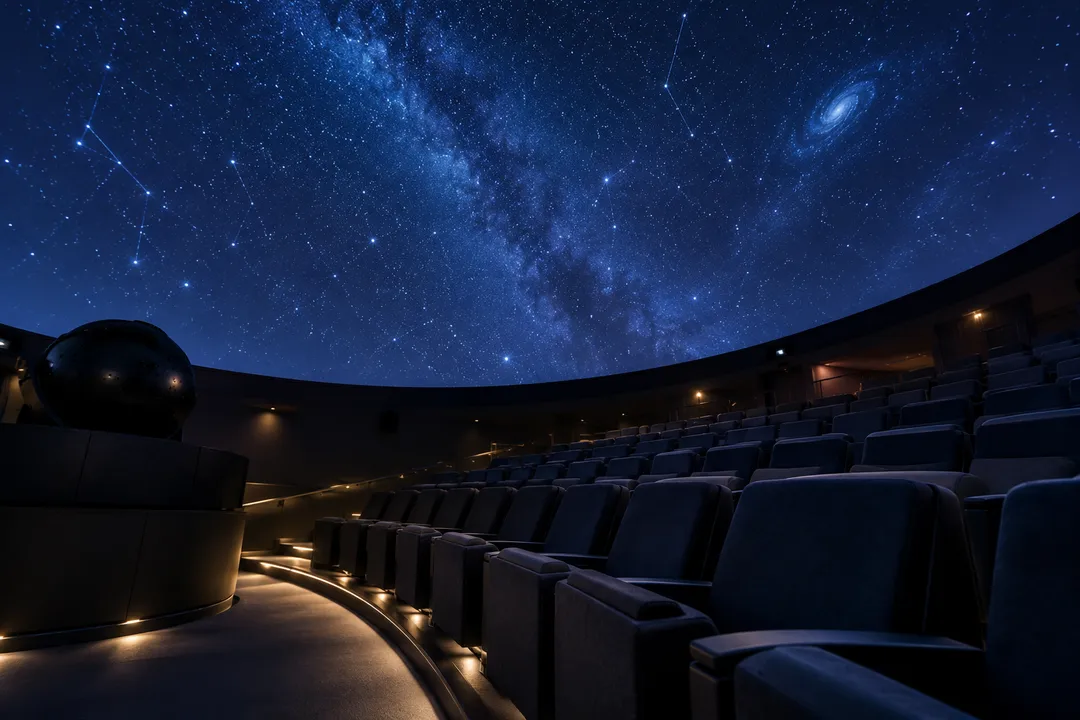
Inside the reconstructed thirty-foot metal spherical structure, the planetarium showcases an advanced digital projection system that brings distant galaxies into sharp relief. Replacing the antiquated optical star ball installed in the 1970s, the current digital installation projects high-definition astrophysical simulations across a seamless nine-point-one-meter hemispherical dome. The system renders over one hundred thousand distinct stars, planetary orbital trajectories, lunar surface topography, and interstellar gas clouds with pinpoint geometric precision. Complementing the overhead visuals is a dynamic multi-channel sound system that envelops audiences in atmospheric audio, whether tracking the roar of a Saturn V rocket launch or the subtle radio emissions captured from Jupiter magnetic field.
Participating in public stargazing presentations and community STEM open house showcases is entirely free of charge. In keeping with the public educational mission of Miami-Dade County Public Schools, admission to community astronomy nights costs $0, though advance registration is required due to the intimate fifty-two-seat auditorium capacity. Special astronomy club meetings, student showcases, and weekend telescope observation parties do not charge admission fees, and parking on campus property is completely free ($0) during all official school-sponsored events. These zero-cost public opportunities make the Ken Mattingly Planetarium one of the most accessible scientific cultural experiences in South Florida for families and curious learners.
Screening schedules during public planetarium sessions alternate between deep-space astrophysical documentaries and live guided constellation overviews. Student docents and certified aerospace instructors guide visitors through current seasonal skies, teaching audiences how to locate Polaris, the Orion constellation, and bright planets like Jupiter and Venus against the tropical South Florida backdrop. Popular digital featurettes explore planetary rover explorations on Mars, the deep-field cosmic vistas captured by the James Webb Space Telescope, and the future Artemis lunar landing architecture. Each presentation concludes with an interactive question-and-answer period where guests can discuss astrophysics topics directly with resident educators.
Entering the theater chamber reveals fifty-two newly installed upholstered seats arranged beneath the curved projection ceiling. The seating tiers are angled backward at an ergonomic rake to ensure that viewers in every row can gaze upward into the zenith of the dome without straining their necks. The theater features advanced acoustic paneling that isolates exterior campus noise, creating a tranquil soundscape ideal for immersive cosmic journeys. Regulated air conditioning maintains a comfortable interior climate year-round, ensuring that visitors enjoy a refreshing environment while contemplating the mysteries of the universe.
Coordinating your visit to coincide with scheduled public open houses guarantees a seamless and educational experience. Because the planetarium operates primarily as an active academic classroom during standard school hours, public access is organized around scheduled evening community forums, science fairs, and quarterly celestial events. Visitors are encouraged to monitor school district announcement bulletins or contact the campus administration desk ahead of time to confirm upcoming evening show dates. Arriving twenty minutes prior to the announced showtime allows ample time to complete visitor sign-in procedures and secure choice seating in the central rows of the auditorium.
Maintaining a respectful viewing environment inside the intimate fifty-two-seat dome is essential for all attendees. To preserve dark adaptation and maintain the contrast of digital nebulae projected overhead, all mobile phones, tablet screens, and luminous wearable devices must be turned off completely before the lights extinguish. Late entry is strictly prohibited once the presentation sequence commences, as opening the double doors floods the room with exterior light. In addition, food, sugary beverages, chewing gum, and photography with flash are barred from the theater space, keeping the newly renovated carpets and upholstery in pristine condition for students and visitors alike.
Serving as the flagship anchor for the school SpaceHUB Aerospace Mega-Magnet program, the facility inspires hundreds of secondary students each semester. Enrolled students engage in hands-on coursework spanning aerospace engineering, applied orbital mechanics, satellite telemetry, robotics, and computer programming. Students learn to operate the digital planetarium software themselves, designing original astronomical presentations and delivering sky lectures to visiting elementary and middle school classes from across the school district. This pre-professional training pipeline equips Miami youth with technical skills that prepare them for collegiate degrees and aerospace industry careers.
The historical significance of this celestial theater honors Apollo 16 astronaut Ken Mattingly, who spent his formative youth in Hialeah. Thomas Kenneth Mattingly II attended local schools before entering the United States Navy as an aviator and joining NASA astronaut group five in 1966. He famously served as the command module pilot for Apollo 16 in April 1972, orbiting the moon while his crewmates explored the Descartes Highlands, and played a pivotal engineering role on the ground resolving the critical Apollo 13 service module crisis. Naming the high school planetarium in his honor commemorates a hometown hero whose courage and technical excellence continue to inspire local students striving toward the stars.
Combining an astronomy visit with outdoor recreation at nearby Amelia Earhart Park makes for a quintessential Northwest Miami-Dade outing. Situated just a five-minute drive east of the campus at 401 East 65th Street, this five-hundred-acre county park offers broad freshwater lakes, shaded Australian pine groves, paved biking paths, and a heritage farm village complete with petting zoo animals. Families can spend a sunny afternoon paddling kayaks, fishing along the shoreline, or picnicking under breezy pavilions before heading over to the high school campus for an evening of stargazing and cosmic discovery.
Following a weekend planetarium session, the lively culinary thoroughfares of West 49th Street and Miami Lakes offer a tempting array of casual dining options. Visitors can stop by historic family-owned Cuban ventanitas for warm beef empanadas, freshly pressed media noche sandwiches, and sweet cafecitos. Just north of the campus along Main Street in Miami Lakes, charming tree-shaded promenades feature artisan gelato shops, classic pizzerias, and welcoming outdoor bistros where families can gather to discuss lunar geology and space telescope discoveries over delicious dinners.
Essential visitor guidance ensures an enjoyable and hassle-free excursion to Hialeah-Miami Lakes Senior High School. The planetarium is located at 7977 West 12th Avenue, Hialeah, FL 33014, within the central administrative wing of the school complex. The facility is fully compliant with Americans with Disabilities Act standards, offering barrier-free ramp access from the parking lot, wide entrance doorways, and dedicated wheelchair seating locations inside the auditorium.
Planning Your Ken Mattingly Planetarium Visit
Rooted in proud Apollo space exploration history and revitalized through modern digital engineering, the Ken Mattingly Planetarium stands as an exceptional educational landmark in Miami-Dade County. Whether you are an aspiring young aerospace engineer fascinated by orbital trajectories or a local resident eager to rediscover the constellations, this community dome offers an uplifting and informative window into deep space. Let the Karpo APP guide your Hialeah explorations, identify local STEM events, and suggest top neighborhood dining spots across Miami.
Ask Karpo for more information.
Keep reading
- Upper East Side Winter Farmers Market Picker With a Dog
 Normandy Village Winter Farmers Market Picker for an Asado
 Coral Gables Winter Farmers Market Picker for New Gardeners