 Upper East Side Winter Farmers Market Picker With a Dog
Weekend Plans
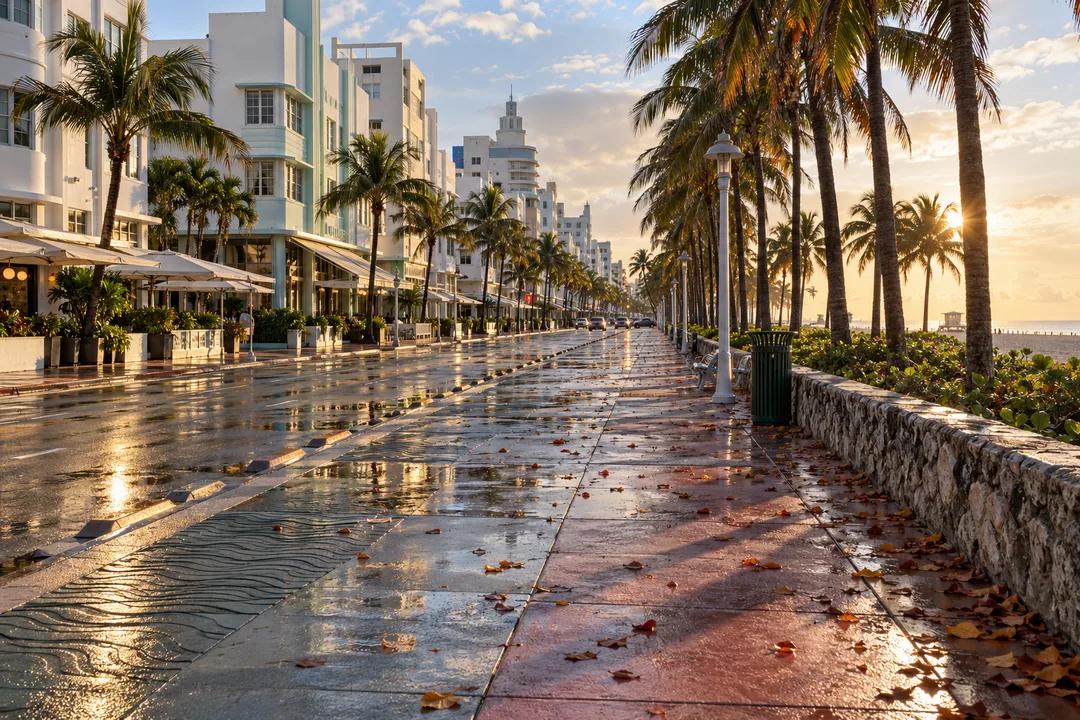
South Beach Ocean Drive Late Fall Urban Hike at Sunset
A late fall urban hike from South Pointe to Ocean Drive, balancing beach wind, Art Deco blocks, park pauses, and shorter exits before a flexible return.
A South Beach late fall urban hike works when the route treats wind and light as active partners. Begin at South Pointe Park, where the ocean, bay, and skyline create a clear three-way orientation. Move north along the beachwalk, then turn into the Art Deco streets before returning toward the water. The plan stays comfortable because every chapter has a shorter version. You can watch the sunset, study the buildings, or simply let the sea air set the pace.
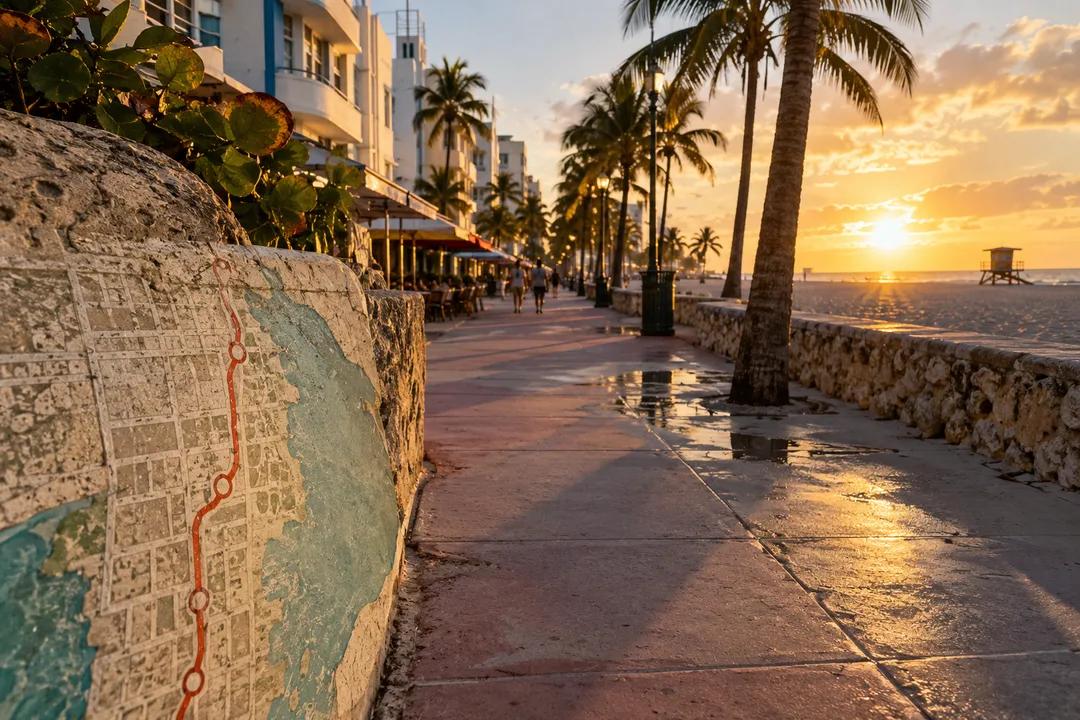
Start Where the Water Widens
Use the opening park section to decide how exposed the group wants to be. A calm day invites a longer look toward the shipping channel and the shifting water; a windy day calls for an inland start through the park paths. Keep the first regroup somewhere broad and visible. Ask everyone to secure hats and loose layers before leaving. Small preparations matter on the beach, where a gust can turn a relaxed conversation into a chase after a map or scarf.
The beachwalk gives the route its simplest line, but do not assume simple means easy. Sand, cyclists, runners, and changing wind all affect the cadence. Keep walkers to a predictable side, leave space for faster traffic, and move off the main flow before stopping. Use the shoreline as a visual reference while the group notices how the light changes on water, palms, and high-rise glass. The walk feels best when the group shares the edge without crowding it.
When the route turns toward Ocean Drive, the architecture becomes the subject. Art Deco facades, curved corners, porthole windows, and shaded entries read differently after the open beach. Encourage the group to look at repeated forms rather than assigning invented stories to individual buildings. A short block can hold several colors and geometries. Let one person guide the visual theme while another watches crossings. That division keeps the conversation lively without making the street feel like a staged tour.
South Pointe to the Beachwalk
The Art Deco section should alternate between close detail and an open view. Walk one block slowly, then use the next to regain distance. This rhythm prevents the group from stopping at every facade and gives pedestrians room to pass. If the street becomes crowded, move inland for a quieter parallel line and return when the group is ready. Karpo APP can show the shift as a deliberate detour, not a route failure caused by the crowd.
Sunset is a choice, not a guarantee. The ocean side can offer color in clear weather, while the bay-facing streets may hold softer reflections under cloud. Give the group two meeting points and decide based on the sky rather than a promise in the title. People who want photographs can settle early; others can continue a short loop through the neighborhood. The best ending leaves enough time to notice the transition from daylight to neon without rushing through it.
Read the Art Deco Blocks
A late-fall beach route benefits from a layer strategy. Carry a light wind shell, keep a warmer top accessible, and bring water even when the air feels cool. Shoes that handle pavement and sand are more useful than anything designed for speed. If the wind rises, shorten the beach chapter and spend more time among the blocks. The route's identity survives the change because the ocean, architecture, and park remain connected in the plan.
Use Flamingo Park or a similar inland green space as a decompression option when the group wants shade, quieter paths, or a break from the tourist corridor. Keep the stop bounded and choose a visible reunion point. Some walkers may prefer to stay on Ocean Drive for the people-watching; others will appreciate a few calm minutes away from traffic. Both choices fit the hike. The important thing is to avoid forcing the entire group into one mood.
A practical route has three endings. The short finish returns through the Art Deco blocks to an easy transit point. The medium finish adds a sunset pause near the beachwalk. The full finish continues north through the oceanfront streets before turning inland. Name each option in Karpo APP and explain what changes—wind exposure, crowd level, and return time—rather than presenting them as simple distances. Clear language helps visitors choose without feeling they are disappointing the group.
A Sunset Choice
South Beach crossings deserve attention because the visual field is busy. Gather before larger streets, wait for the signal, and keep the group compact after crossing. Do not step into hotel driveways or linger in doorways for photos. Along the beachwalk, give cyclists and runners a predictable line. Respecting flow is especially important at sunset, when everyone is looking toward the same color and forgetting that the path still has other users.
The route is more memorable when people are given a few small observation prompts. Notice one building with a strong curve, one place where the sea sound becomes louder, and one moment when the skyline hides behind palms. These prompts work for children, photographers, and visitors who do not know Art Deco vocabulary. Share the answers at the next regroup instead of turning the walk into a lecture. The city becomes legible through attention rather than information overload.
Keep Wind in the Plan
Keep food and shopping outside the core route. Ocean Drive can tempt a group into an unplanned queue, and a fixed stop can make the sunset decision feel urgent. Mark a general finishing area instead, then let Karpo APP find an option that matches the group's mood after the walk. Someone may want a quick snack, while someone else wants to keep moving. Flexibility makes the final mile kinder and keeps the hike focused on the shoreline and streets.
Assign a navigator, a rear walker, and a person responsible for the shared weather note. The three roles are enough for a small group and prevent one person from managing every detail. Save both the beach-heavy route and the inland route before leaving South Pointe. When the wind changes, switch with one tap and keep walking. The best technology use is quiet: everyone knows the plan, but nobody has to stare at a screen for the whole afternoon.
Practical Notes
Photographs should move from wide to intimate. Start with the meeting of bay, ocean, and skyline, then frame a palm shadow or curved facade, and finish with a human-scale street scene as lights come on. Avoid blocking the walkway for a perfect shot. A few imperfect frames preserve the actual movement of the route better than a staged line of identical buildings. Sunset photography improves when the group remains willing to walk between exposures.
Skip the longest northbound extension if the wind has made everyone quiet. The South Pointe, beachwalk, and Art Deco chapters already form a complete South Beach story. A shorter ending among the blocks can feel more generous than another exposed mile. If the group still wants distance, make the choice after the sunset pause, when everyone knows how cold the evening feels. Good planning leaves room for a late decision without turning it into a debate.
End Before the Crowd
Practical notes: meet on a broad path at South Pointe, secure loose layers, and brief beachwalk etiquette before starting. Save short, medium, and full versions in Karpo APP, with an inland weather switch and two reunion points. Use signalized crossings, keep doorways clear, and let the sky decide the sunset side. Choose the finishing area after the walk rather than promising a particular venue. The route should end with warm conversation, not a frantic search for the next stop.
South Beach earns its late fall urban hike title by making the season visible in wind, low light, and changing street energy. South Pointe gives the group a compass, the beachwalk provides air, and Ocean Drive supplies a human-scale architectural counterpoint. Open Karpo APP when you are ready to choose the exposure level and return, then let the evening become the final chapter instead of something the route has to force.
Ask Karpo for more information.
Keep reading
- Upper East Side Winter Farmers Market Picker With a Dog
 Normandy Village Winter Farmers Market Picker for an Asado
 Coral Gables Winter Farmers Market Picker for New Gardeners