Miami's supernatural landscape extends far beyond modern neon lights, offering deep historical mysteries that evoke an insidious out of the further atmosphere. For those seeking to explore the city's documented paranormal activity, focusing on preserved architectural landmarks provides a grounded, historically accurate way to experience local lore.
To ensure access to these historic properties during scheduled investigation windows, plan your visits well in advance.

Biltmore Hotel Ghost Lore and Coral Gables History
Completed in 1926, the Biltmore Hotel in Coral Gables serves as a premier architectural monument with a complex history of supernatural reporting. During World War II, the luxury resort was converted into a military hospital, and later, a VA hospital, leaving behind layers of institutional history that parallel the classic concept of a liminal, transitionary space.
Visitors and staff frequently report unexplained elevator movements, sudden temperature drops, and sightings of figures in early 20th-century attire, particularly on the upper floors. To explore the grounds, check the hotel's official concierge desk the morning of your visit for current historical tour schedules and public access restrictions.
Deering Estate Paranormal Tours and Coastal Mysteries
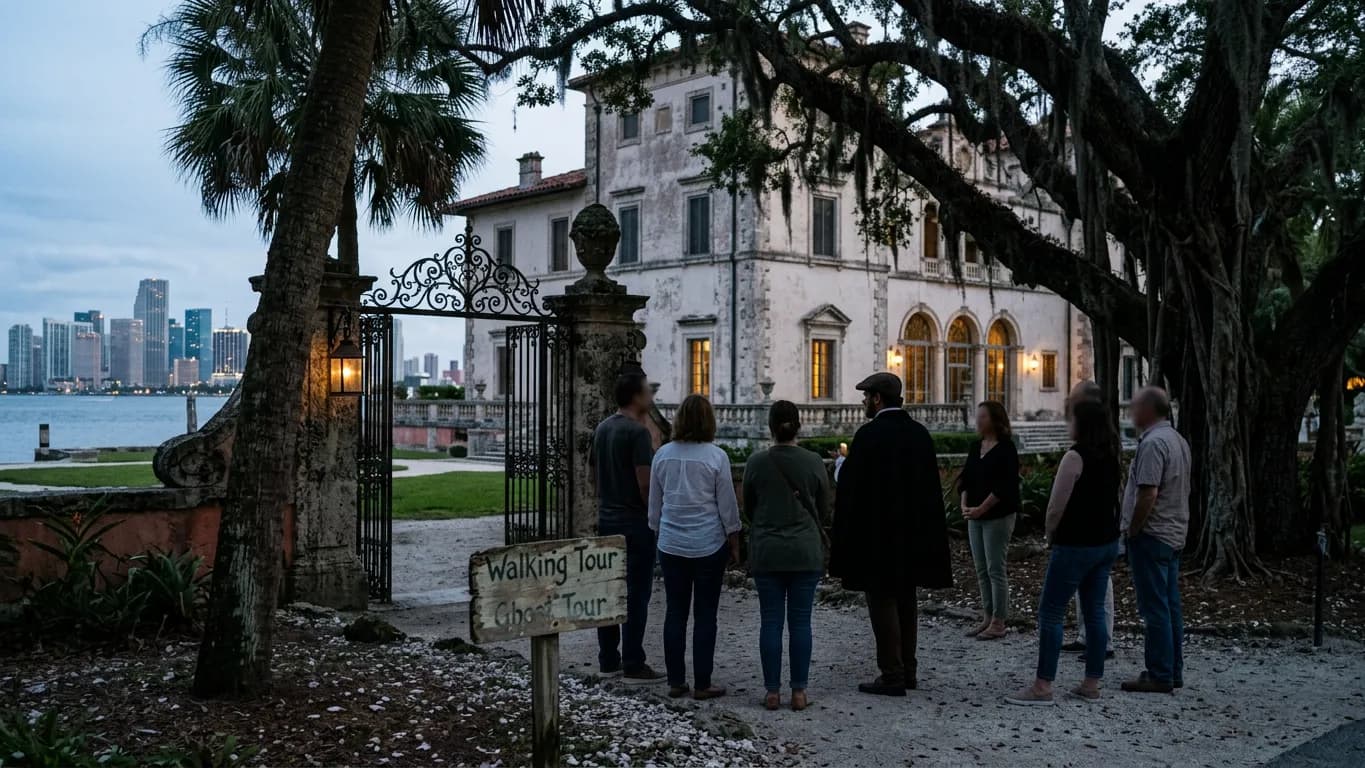
The Deering Estate, the 1920s era home of industrialist Charles Deering, sits on a massive environmental preserve that has yielded archaeological evidence of human habitation dating back thousands of years. This deep connection to the past makes it a primary hub for serious researchers studying anomalous physical phenomena.
Official evening investigations allow participants to use professional equipment to monitor electromagnetic fields and voice phenomena across the historic stone houses and surrounding hardwood hammock. Because these events are highly regulated to protect the conservation site, verify booking availability directly on the estate's conservation portal before traveling.
Villa Paula and Little Haiti's Haunted Heritage
Built in 1926 as the first Cuban consulate in Miami, Villa Paula is a striking neo-classical building in Little Haiti known for its preservation of early diplomatic history and persistent local legends. Named after the consul's wife, Paula Milord, who died following a medical complication, the villa has long been associated with auditory anomalies and phantom scents of Cuban coffee and roses.
The property has transitioned through various roles, including a senior center and an art gallery, while maintaining its reputation as one of the city's most spiritually active structures. Because Villa Paula is often privately owned or undergoing restoration, check local historic preservation listings online to confirm if the interior is currently open to the public.
Practical Guidelines for Respectful Ghost Hunting
Exploring historic sites requires a respectful approach that prioritizes preservation over sensationalism. Many of Miami's most active locations are protected heritage sites that enforce strict rules regarding guest conduct and equipment use.
- Carry a physical flashlight and backup batteries, as historic properties often have limited outdoor lighting.
- Avoid trespassing on private residential properties like Villa Paula when they are closed to the public.
- Use silent or low-light recording equipment to avoid disturbing other visitors or local wildlife.
- Check the weather forecast before booking coastal outdoor tours, as afternoon storms can cause sudden cancellations.