 Upper East Side Winter Farmers Market Picker With a Dog
Weekend Plans
Little Havana Cemetery Tour: Woodlawn North Historic Mausoleum and Cuban Memorials
A comprehensive guide to taking a cemetery tour through Woodlawn North in Little Havana, exploring historic marble mausoleums and Cuban heritage.
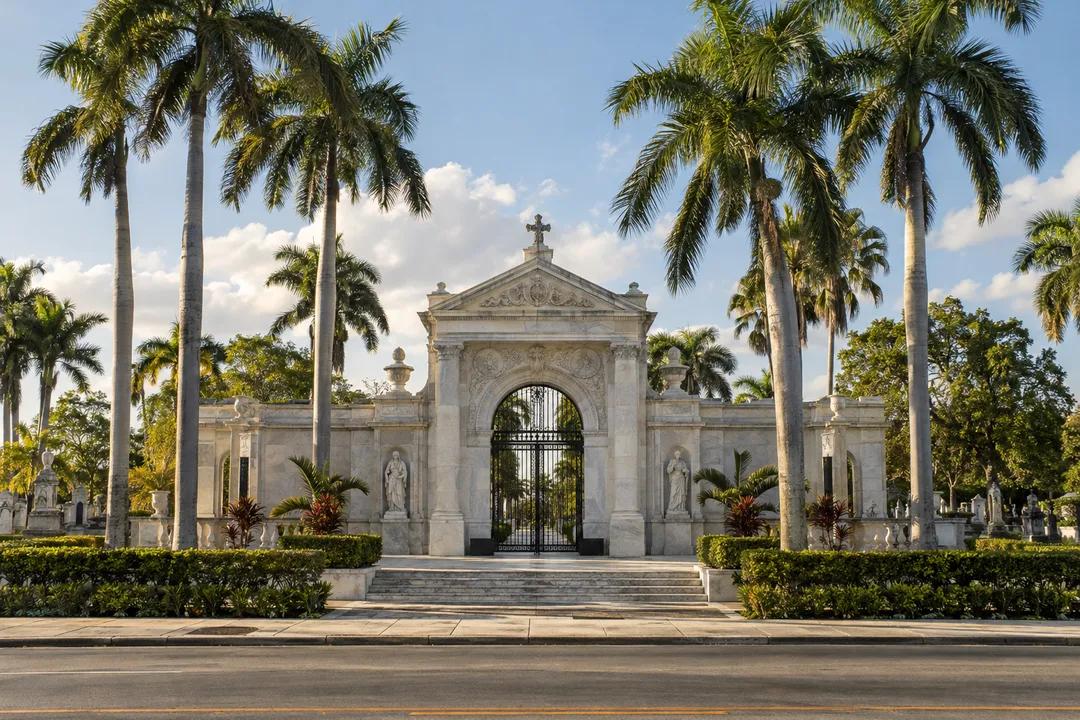
The monumental wrought-iron entrance gates of Caballero Rivero Woodlawn North Cemetery at 3260 SW 8th St in Little Havana welcome visitors embarking on a self-guided cemetery tour through Miami's premier historic resting ground. Established in 1913 by pioneer civic developers Thomas O. Wilson, William N. Urmey, and Clifton D. Benson, this 66-acre memorial park stands as an enduring chronicle of South Florida's cultural transformation. Pedestrian admission across the landscaped botanical lawns remains completely free of charge at $0.00 for historical exploration.
Reaching Woodlawn North from central Miami is straightforward by car and public transit. Transit riders can board the Miami-Dade Metrobus Route 8 along Southwest 8th Street, which connects directly to the Brickell Metrorail station (bus fare is $2.25, adjusting to $2.75 in January 2027). Drivers traveling via Interstate 95 can take exit 2D or 3A onto State Road 836 West, exiting south at Northwest 27th Avenue or Northwest 37th Avenue to reach Southwest 8th Street, where complimentary visitor parking is free ($0.00) inside the main cemetery gates.
The physical environment blends traditional European memorial park design with an expansive subtropical urban arboretum. Majestic royal palms, flowering jacarandas, Spanish moss-draped live oaks, and mature West Indian mahogany trees shade broad carriage lanes, effectively insulating the grounds from the commercial bustle of adjacent Calle Ocho. Flocks of wild monk parakeets, white ibis, and migratory warblers forage across rolling green lawns, creating a tranquil botanical sanctuary dedicated to quiet historic reflection.
Walking along the cemetery's central avenues brings visitors face-to-face with seminal figures in international diplomacy, civic governance, and the Cuban diaspora. Foremost among these is Carlos Prio Socarras (1903–1977), who served as the last democratically elected President of Cuba prior to the 1952 coup. Nearby resting places commemorate classical ballet dancer Fernando Bujones, influential civic leader Jorge Mas Canosa, and Desiderio Alberto Arnaz II, who served as Mayor of Santiago de Cuba before his son Desi Arnaz achieved American television fame. Additionally, pioneer Miami developers Mary and William Brickell were reinterred here in 1946 from their original downtown family estate.
While the HistoryMiami Museum previously hosted a one-time Cemetery Series walking tour at Woodlawn North led by resident educators in autumn 2023, that specialized program concluded and the institution currently has no scheduled guided walks at this location. Today, visitors explore Woodlawn North independently at $0.00 admission during open daily gate hours, walking the shaded avenues at their own pace to discover monument inscriptions and landscape architecture.
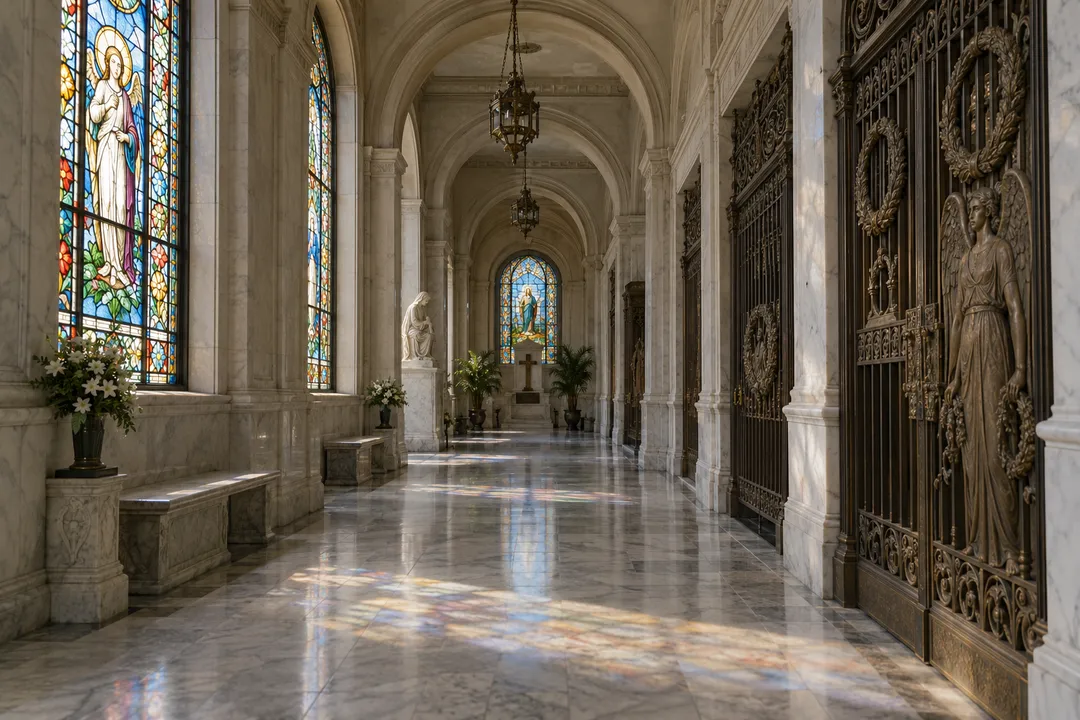
The architectural centerpiece of the cemetery is its Great Mausoleum, designed in 1926 by renowned American mortuary architect McDonald Lovell. Built with native Florida limestone accents, the block-long structure showcases soaring vaulted barrel ceilings, classical arched portals, and cathedral-style leaded stained-glass windows that filter soft daylight across the interior halls. Its quiet corridors remain naturally cool throughout the day, providing an atmospheric setting for contemplative architectural appreciation.
Morning hours between 9:00 AM and 11:30 AM offer the most pleasant ambient temperatures and the softest natural lighting through the mausoleum's high stained-glass transoms. Outdoor walking along the perimeter avenues is especially rewarding during late morning or mid-afternoon between 3:00 PM and 4:30 PM, when mature canopy trees cast long cooling shadows across the paved paths. Midday hours in South Florida often produce intense direct heat across the unshaded open lawn sections.
Because Woodlawn North remains an active cemetery with daily committal services, visitors must uphold respectful decorum at all times. Guests should dress modestly, speak in quiet conversational tones when traversing the corridors of the Great Mausoleum, and step aside courteously whenever a funeral cortege approaches. Maintaining quiet observation honors the families who visit these sacred memorial sections to pay their respects.
A dignified rhythm between historical remembrance and neighborhood life characterizes everyday activity at Woodlawn North. On any given morning, visitors encounter architectural researchers studying classical stone carving, university history students documenting exile memorials, and local Little Havana residents enjoying quiet walks along the shaded outer loops. The cemetery's structured geometry and lush vegetation offer a peaceful counterpoint to the lively rhythm of the surrounding neighborhood.
Founded in 1913 by pioneer developers Thomas O. Wilson, William N. Urmey, and Clifton D. Benson, Woodlawn Park Cemetery was established to provide a modern landscaped memorial park for Greater Miami. In 1923, the cemetery trustees sold a commemorative plot at a discounted price to American Legion Miami Post, erecting a towering granite obelisk that honors local military service members who perished during World War I. In subsequent decades, the cemetery grew to encompass diverse memorial sections reflecting Miami's multicultural population.
Visitors should avoid driving personal vehicles through the interior cemetery lanes when touring the historic burial quadrants. The narrow paved carriage roads were originally engineered for ceremonial corteges and offer minimal turnaround clearance when family vehicles are parked alongside grave curbs. Leaving your vehicle in the visitor parking area near the main administrative gate and touring the grounds on foot ensures relaxed exploration and intimate architectural observation.
Following your walking tour, head eastward along Southwest 8th Street into the cultural heart of Little Havana. About seventeen blocks east along Calle Ocho near Southwest 15th Avenue sits Máximo Gómez Park, famously known as Domino Park, where local seniors gather daily for spirited domino matches. Along the avenue, visit historic walk-up ventanitas for authentic Cuban espresso and pastries, reflecting on the generations of immigrant families who shaped South Florida's heritage.
Sturdy walking sneakers are recommended for traversing the cemetery's 66 acres, alongside sun protection such as a broad-brimmed hat, sunglasses, and a refillable water bottle. The cemetery grounds welcome self-guided visitors daily from 8:00 AM to 5:00 PM.
If private committal services or administrative maintenance temporarily limit indoor access at the Great Mausoleum, your best nearby Plan B destination is Miami City Cemetery at 1800 NE 2nd Ave in Downtown Miami. Established in 1897 and located just fifteen minutes northeast by car, Miami City Cemetery offers another captivating journey into South Florida history, featuring Julia Tuttle's historic gravesite and Victorian iron-fenced plots beneath massive tropical trees.
Ask Karpo for more information.
Keep reading
- Upper East Side Winter Farmers Market Picker With a Dog
 Normandy Village Winter Farmers Market Picker for an Asado
 Coral Gables Winter Farmers Market Picker for New Gardeners