 Upper East Side Winter Farmers Market Picker With a Dog
Weekend Plans
Miami Cemetery Tour: Historic City Graveyard Graves and Pioneer Legends
A comprehensive visitor guide to exploring a cemetery tour at Miami City Cemetery, highlighting Julia Tuttle's grave and downtown history.
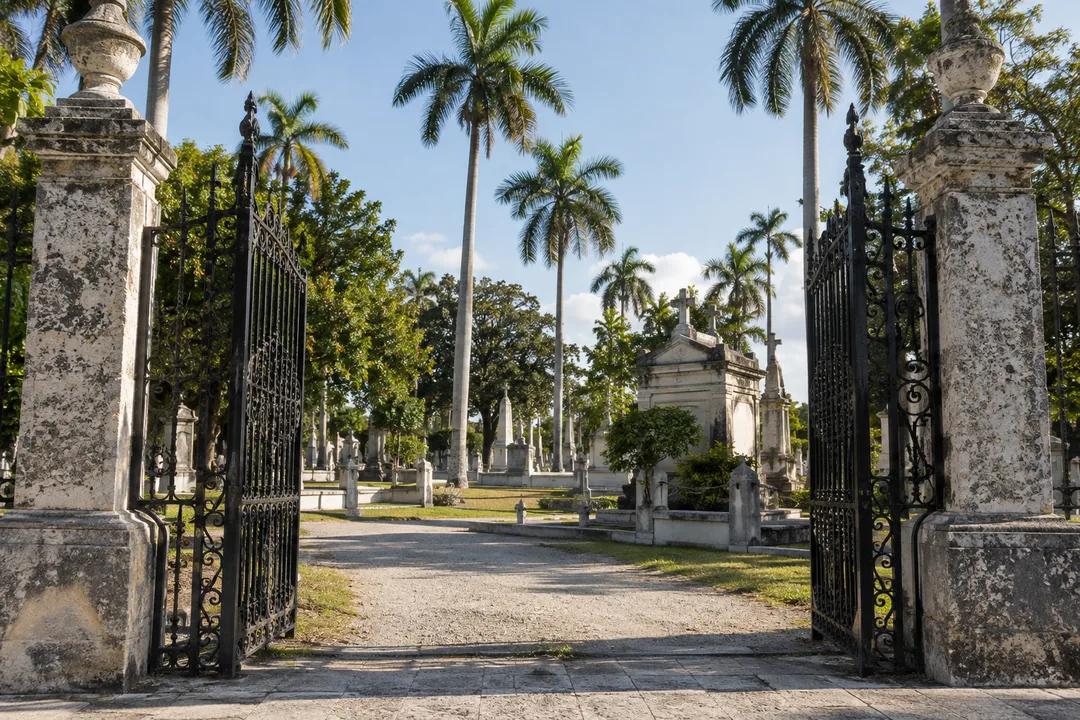
The historic iron gateway of Miami City Cemetery at 1800 NE 2nd Ave in Downtown Miami welcomes travelers on an essential cemetery tour through the city's oldest municipal burial site. Established in 1897 on land purchased by the City of Miami from pioneer founders Mary and William Brickell for $750, this ten-acre civic memorial park preserves the resting places of South Florida's foundational pioneers and civic builders. General pedestrian admission for self-guided historic exploration is entirely free at $0.00, providing open community access to one of the most culturally vital landmarks in downtown Miami.
Getting to Miami City Cemetery is straightforward from Downtown Miami and Edgewater. Public transit commuters can take the Miami-Dade Metrobus Route 2 along Northwest 2nd Avenue, or Route 9 running north along Northeast 2nd Avenue directly past the cemetery entrance gate (bus fare is $2.25, adjusting to $2.75 in January 2027). Alternatively, the Metromover Omni Loop stops at the School Board station on Northeast 15th Street, from which visitors can enjoy an easy five-minute walk three blocks northward. Complimentary curbside parking ($0.00) is also available along the street borders of Northeast 18th Street and Northeast 2nd Avenue.
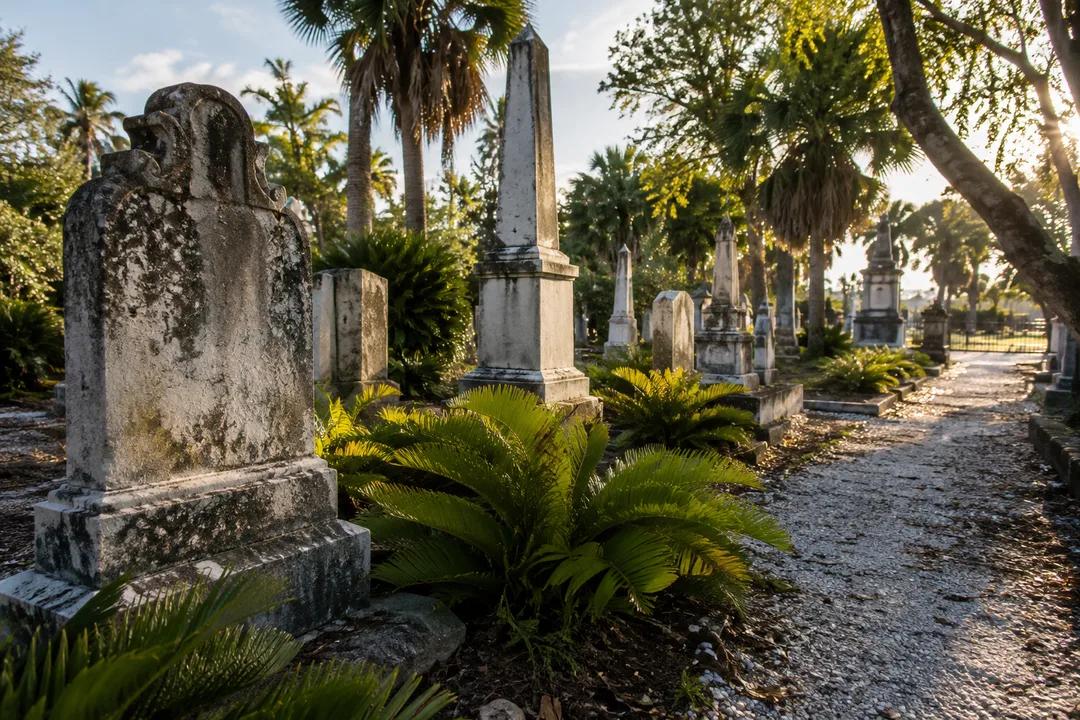
The physical setting of Miami City Cemetery provides a verdant urban sanctuary framed by historic tropical vegetation and modern city architecture. Towering royal palms, broad-canopied mahogany trees, flowering royal poincianas, and twisted gumbo limbo trees shade geometric avenues laid out in a classical nineteenth-century grid. The cemetery offers a remarkable visual juxtaposition, where weathered Victorian headstones and hand-wrought iron fences stand directly against the backdrop of Edgewater's contemporary high-rise skyline.
Walking along the cemetery's central avenues brings visitors to the gravesites of leaders who transformed a mangrove wilderness into an international metropolis. The most renowned monument belongs to Julia DeForest Tuttle (1849–1898), celebrated as the Mother of Miami for her pivotal role in convincing industrialist Henry Flagler to extend the Florida East Coast Railway to Biscayne Bay. Nearby monuments honor John B. Reilly, Miami's first mayor, alongside exactly sixty-six Confederate veterans and twenty-seven Union veterans who relocated to the South Florida frontier after the Civil War.
For an extraordinary historical narrative, the HistoryMiami Museum hosts its renowned Annual Miami City Cemetery Walking Tour led by resident historian Dr. Paul George. This signature event occurs once per year around Halloween, scheduled for Friday, October 30, 2026, from 6:30 PM to 8:30 PM, with tickets priced at $25 for HistoryMiami Museum members and $35 for non-members. Dr. George guides participants with personal handheld flashlights through the historic pioneer grounds, recounting dramatic tales of early frontier triumphs, yellow fever epidemics, and colorful civic rivalries.
In the historically segregated Black cemetery section, visitors find the grave of Reverend Theodore Gibson, a prominent civil rights leader who served as president of the local NAACP and later as a Miami City Commissioner. The grounds also contain the modest resting places of Bahamian laborers whose manual work cleared the dense pine and hardwood hammocks for the original city street grid, as well as pioneer Jewish merchants who established early commercial storefronts along Avenue D.
Morning exploration between 8:30 AM and 10:30 AM offers comfortable walking temperatures and clear directional sunlight illuminating historic marble headstone inscriptions. Midday visits during the summer months can become intensely hot across open central avenues, making sun protection essential. Late afternoon visits between 3:30 PM and 5:00 PM also provide comfortable ambient conditions as long shadows stretch across the historic burial plots before the gates close at dusk.
The City of Miami Parks and Recreation Department oversees preservation guidelines to safeguard these delicate century-old sepulchral monuments. Visitors must treat all grave markers with profound respect, refraining from climbing on marble curbing, sitting on raised ledger stones, or performing aggressive gravestone rubbings that could erode porous coquina and limestone carvings. Maintaining thoughtful decorum ensures that these fragile pioneer memorials endure for future generations.
A serene atmosphere of quiet reflection defines the daily scene across Miami City Cemetery. On any weekday morning, visitors encounter architectural researchers cataloging historic ironwork, university students reading local history under royal palms, and neighborhood residents enjoying a contemplative walk away from downtown traffic. The cemetery serves as an invaluable outdoor classroom illustrating South Florida's early multicultural foundations.
Established in 1897 on land purchased from pioneers Mary and William Brickell, the cemetery originally allocated burial quadrants reflecting municipal customs of the frontier era. Distinct sections were designated for white pioneer settlers, Black laborers, and Jewish pioneer merchants. In 1946, the remains of Mary and William Brickell were reinterred at Woodlawn Park North Cemetery in Little Havana, while the downtown municipal cemetery continues to preserve these diverse historic quadrants as a unified cultural monument honoring all who built modern Miami.
Navigating the grounds on foot is best done by sticking to the paved central avenues and clear turf lanes. Guests should watch their step around uneven ground where mature tree roots surface above the sandy soil, taking care not to step directly onto low-profile ledger stones or ornamental lot borders. Following the established perimeter loops provides complete visibility of the historic veteran monuments and family plots while preserving the cemetery's tranquil environment.
Following your historic walking tour, take a pleasant stroll three blocks north along Northeast 2nd Avenue into Edgewater and the adjacent Wynwood Arts District. The surrounding neighborhood offers vibrant pedestrian avenues lined with independent cafes, contemporary art galleries, and historic commercial buildings. Walking through these neighboring streets highlights how historic pioneer heritage connects seamlessly with modern Miami's creative urban core.
Wear comfortable closed-toe walking shoes with reliable rubber soles, as ground cover around older pioneer plots includes uneven limestone edges, tree roots, and sandy grass. The cemetery grounds feature paved central carriage avenues that accommodate strollers and wheelchairs, though access between tightly spaced individual grave plots requires walking over turf. If you attend an evening tour, bringing a personal handheld flashlight is essential for navigating unlit grass walkways after dark.
Free street parking ($0.00) is available along the perimeter of Northeast 2nd Avenue and Northeast 18th Street. If scheduled tours at Miami City Cemetery are filled or the gates are locked after hours, your premier nearby Plan B is visiting the HistoryMiami Museum at 101 W Flagler St in Downtown Miami to view extensive archival exhibits on Miami pioneers and rail history.
Ask Karpo for more information.
Keep reading
- Upper East Side Winter Farmers Market Picker With a Dog
 Normandy Village Winter Farmers Market Picker for an Asado
 Coral Gables Winter Farmers Market Picker for New Gardeners