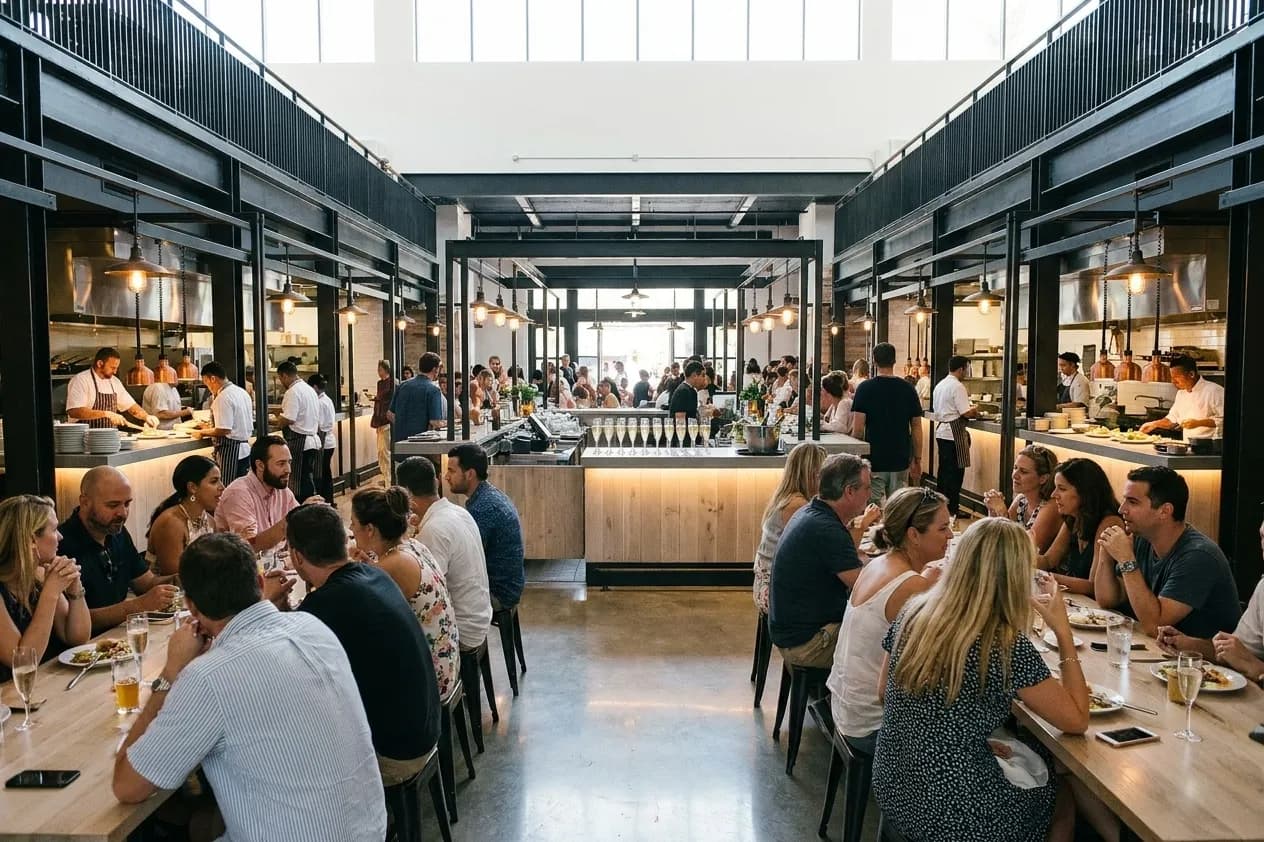
The thing that ruins group brunch is almost never the price. It is the menu. Six people cannot agree on a cuisine, someone does not eat meat, someone wanted pancakes and someone else wanted tacos, and the compromise restaurant does all of it badly. A food hall removes the problem entirely, which is why the bottomless brunch at Time Out Market Miami works better than its twenty-two-dollar price tag suggests.
Group brunch usually fails on the menu, not the money — one vegetarian, one who hates seafood, one who wants pancakes. Ask Karpo which food halls and multi-kitchen rooms near you run a brunch deal, and what it covers.
Twenty-two dollars, three hours
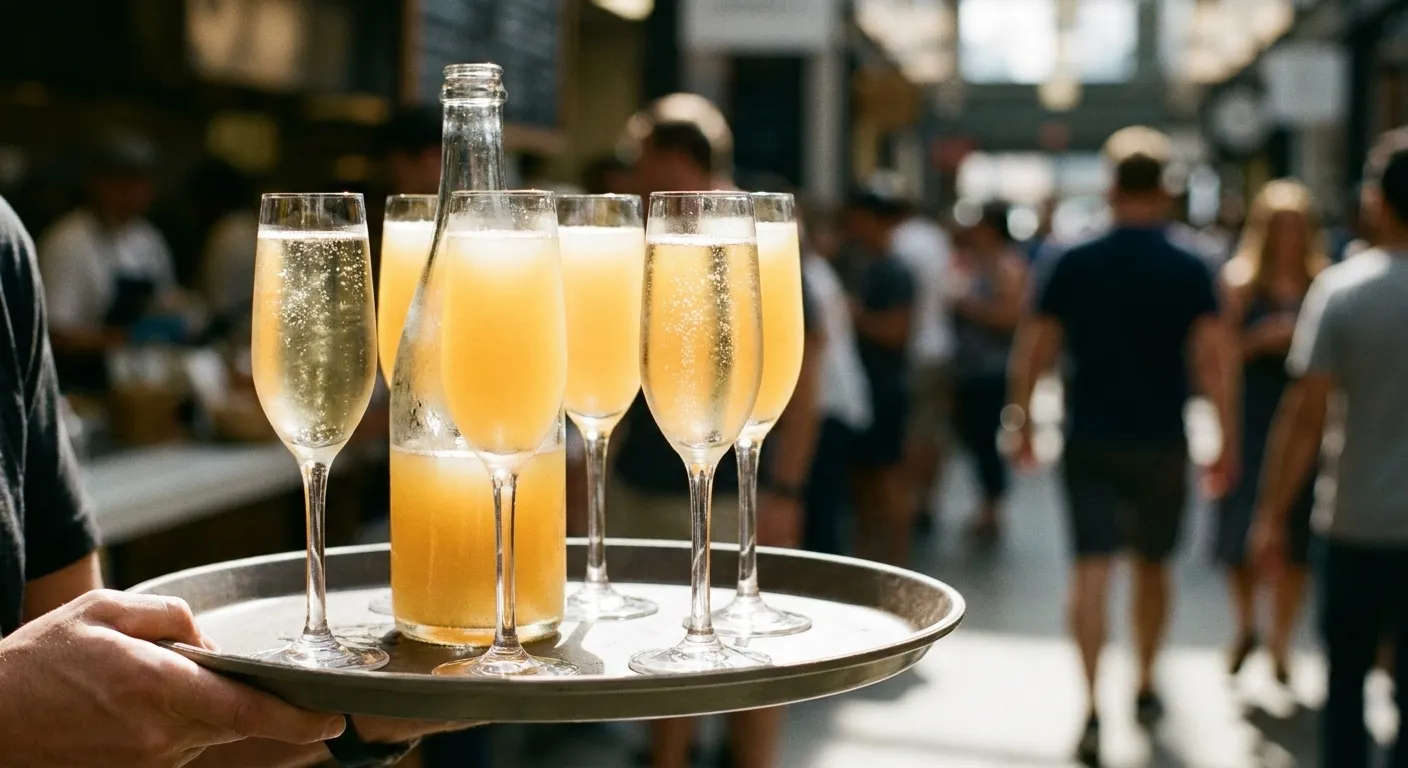
The deal is $22, plus tax and gratuity, for three hours of unlimited mimosas, Bellinis and prosecco, running from noon to 3pm at weekend brunch. Three hours is the number that makes this unusual. The industry standard for a bottomless window is ninety minutes; some venues run two hours. Three is double the norm.
Combine that with the price and the comparison becomes stark. A ninety-minute bottomless brunch in South Beach at fifty or sixty dollars is roughly four times the cost per hour. Whether you want to be drinking sparkling wine for three consecutive hours is a separate question, but the option is there and it is priced as though it were not.
Food from any counter in the hall
The drinks deal sits alongside food from any of the market's eateries rather than a fixed brunch menu. This is the actual feature. Everyone at the table orders from whichever counter they want, eats at the same table, and nobody has negotiated anything.
It also means the food quality is not tied to the deal. At a conventional bottomless brunch the kitchen is producing high-volume plates at a price point that assumes you are mostly there to drink. In a food hall the counters are running their normal service to their normal standard, and your table happens to have a drinks package attached to it.
How to run three hours without ruining them
Three hours is long enough that pacing matters in a way ninety minutes does not. The mistake is treating it like a shorter window and front-loading — four glasses in the first forty minutes leaves two hours of diminishing returns and an afternoon that is over by four o'clock.
The better shape is to eat in stages, using the hall's format as the structure: something savoury from one counter early, something else an hour in, dessert at the end. It spaces the drinking naturally, it uses the thing that makes this venue different, and it means you walk out at three having had a long lunch rather than a short bender.
What three hours actually costs the venue
It is reasonable to be suspicious of a number this low, so it is worth understanding why it works rather than assuming there is a catch. A food hall makes its money on the counters, not on the bar package — the drinks deal exists to get a large group through the door and keep them there through a full lunch service, during which each person buys food from one or more kitchens. The twenty-two dollars is customer acquisition, not the business.
That also explains the three-hour length. A ninety-minute window at a restaurant is designed to turn the table. A three-hour window at a food hall is designed to keep you buying from the counters for a whole afternoon. Neither is a trick; they are just different businesses. Knowing which one you are in tells you how to use it — here, the right move is to eat properly rather than to treat the food as a formality.
The South Beach timing question
The market is in South Beach, which shapes both the crowd and the logistics. A noon start on a Saturday is before the beach crowd has properly moved indoors, which makes the first hour the calmest. By two in the afternoon the hall is at its busiest and the communal tables fill, so a large group arriving late will struggle to sit together.
Getting there follows all the usual South Beach rules: parking is a negotiation, garages are the realistic answer, and a rideshare removes the problem entirely — which, given that the entire premise is three hours of unlimited sparkling wine, is the correct call anyway.
When a food hall is the wrong answer
Worth being honest about the trade-off. A food hall is a hall: it is loud, it is bright, the seating is communal, and it is not a room for a quiet conversation or a proper occasion. If what you want is a birthday brunch with everyone able to hear the person opposite them, this is not it and a restaurant will serve you better.
What it is extremely good at is a large, mixed, informal group where the priorities are cost, choice and not having to organise anything. On that specific brief it is close to unbeatable in Miami, and the three-hour window is what makes it work for a group that will inevitably arrive at different times.
Practical notes
Time Out Market Miami, in South Beach. Bottomless brunch runs Saturday and Sunday: $22 plus tax and gratuity for three hours, noon to 3pm, of unlimited mimosas, Bellinis and prosecco. Food is ordered separately from any of the market's counters rather than a set brunch menu. Communal seating; the hall is busiest from about 2pm, so arrive at noon if you need a large table together. Loud, informal setting — not suited to a quiet occasion. Parking in South Beach is difficult; a rideshare is the sensible option. Terms and pricing change seasonally — confirm before booking a group.
Please drink responsibly. Must be of legal drinking age.
Tags: #bottomlessbrunchnearme #timeoutmarket #southbeach #miamibrunch #bottomlessbrunch #miamifood #foodhall #mimosas #miamibeach #weekendplans #brunchmiami #miamirestaurants #prosecco #miamiguide
All trademarks are the property of their respective owners.
Ask Karpo first
Brunch deals in Miami change seasonally and the good-value ones are rarely the ones that advertise hardest. Ask Karpo what the current terms are at the rooms near you, how long the window runs, and whether the food is included or separate.


