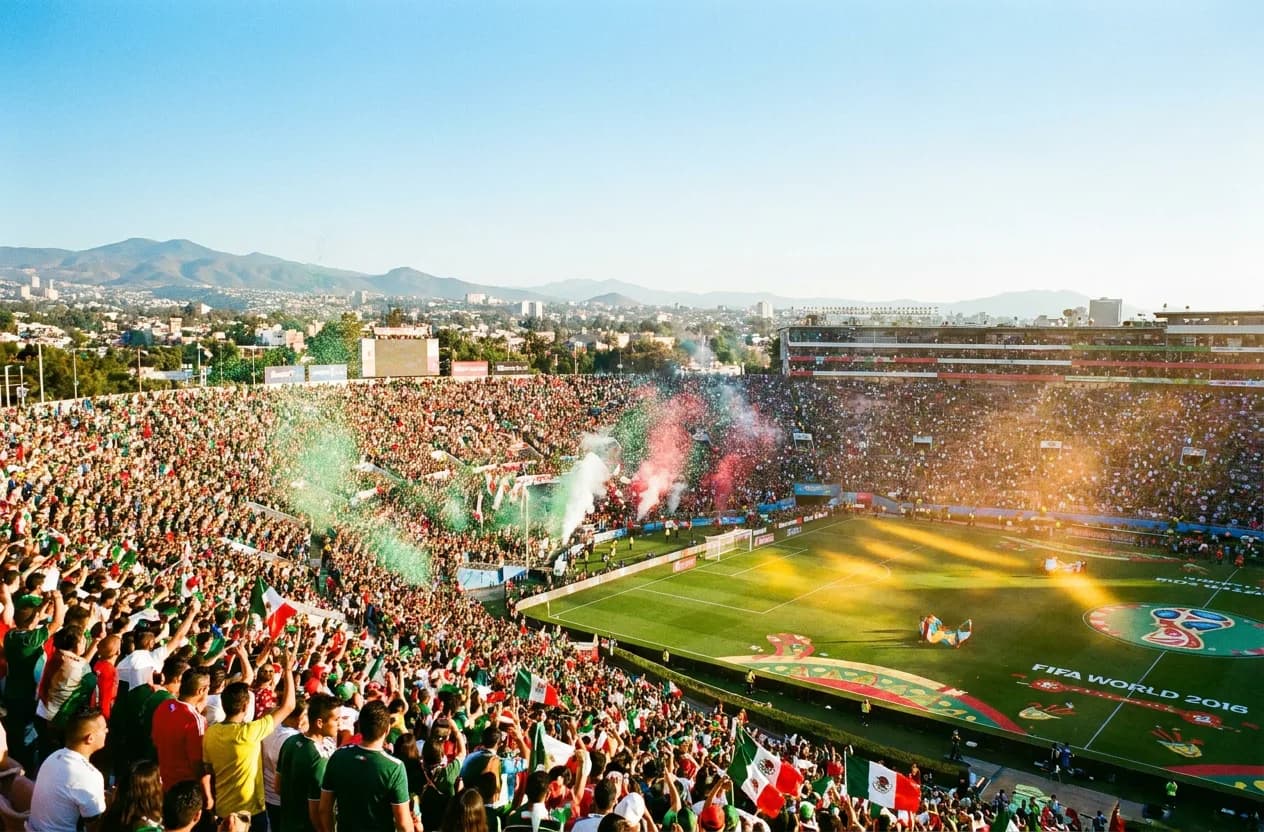
The ball sailed 15 yards farther than Karim Benzema expected. In France's opening match at Estadio Azteca, the striker's perfectly weighted through pass sailed over his teammate's head and out of bounds, drawing confused shrugs from the bench. Welcome to Mexico City, where the thin air at 7,350 feet above sea level transforms every aspect of football, from a midfielder's lung capacity to the physics of a simple corner kick.
When FIFA announced that Mexico City would host matches for the 2026 World Cup, they weren't just selecting a venue—they were introducing a game-changing variable that has shaped Mexican football for decades. The altitude advantage is real, measurable, and about to become one of the tournament's most fascinating storylines.
The Science Behind the Breathless Game
At Mexico City's elevation, atmospheric pressure drops to roughly 75% of sea level conditions. This means two immediate changes that reshape football: less air resistance for the ball, and significantly less oxygen for the players. The ball travels approximately 10% farther in the thin air, while players experience a 25% reduction in oxygen availability during their first week of acclimatization.
Dr. Maria Santos, a sports physiologist who has studied altitude effects on football performance, explains that visiting teams typically see their VO2 max—the maximum rate of oxygen consumption—drop by 15-20% in their first matches. Meanwhile, the reduced air density means a ball struck at 70 mph will maintain its velocity longer and curve less predictably than at sea level.
These aren't theoretical concerns. During the 1970 World Cup, Brazil's Pelé famously struggled with the altitude in early matches, while Mexico's national team seemed to float across the pitch with supernatural endurance. The physics favor no one, but adaptation gives locals a decisive edge.
Forty Years of Azteca Advantage
Estadio Azteca has hosted more World Cup matches than any other venue in history, and the numbers tell a compelling story about home-field advantage amplified by altitude. Since 1970, visiting European and South American teams have won just 42% of their matches in Mexico City, compared to a 58% win rate at sea-level venues in Mexico.
The most dramatic example came during the 1986 World Cup semifinals, when Argentina faced Belgium in the crushing Mexico City heat. Diego Maradona later admitted that the Belgians "were finished by the 60th minute—not from our pressure, but from the air itself." Argentina won 2-0, but Maradona had spent two weeks acclimatizing while Belgium arrived just four days before the match.
Mexico's national team has leveraged this advantage masterfully over decades. El Tri has lost just three World Cup qualifier matches at Azteca since 1965, earning the nickname "Fortress Azteca" for its role in Mexico's consistent World Cup appearances.
When Physics Meets Tactics
The altered ball flight characteristics force tactical adaptations that can make or break a team's World Cup dreams. Long passes require recalibrated power, while goalkeepers must adjust their positioning for shots that dip less predictably. Corner kicks become more dangerous as the ball maintains pace longer, and free kicks from 25-30 yards carry an extra threat.
Pep Guardiola experienced this firsthand when Manchester City played Club América in a 2022 friendly. His precisely calculated passing triangles fell apart as players consistently over-hit passes, and his goalkeeper Ederson misjudged three crosses in the first half. "The ball moves differently here," Guardiola said afterward. "It's like learning football again."
Smart coaches build Mexico City strategies around these physics. Shorter passing combinations become more reliable than long balls, while defensive positioning must account for shots that carry extra pace. Teams that arrive early and adapt their training methods gain a measurable advantage over those who rely purely on talent.
The Endurance Test
While ball physics level out after tactical adjustments, the cardiovascular challenge persists throughout a team's Mexico City stay. Players' heart rates spike 10-15 beats per minute higher than normal, and recovery between high-intensity sprints takes significantly longer. This creates a fitness hierarchy that often determines match outcomes.
During the 1970 World Cup, England's medical staff documented that their players needed 40% longer recovery periods between training sessions compared to their pre-tournament baseline. Meanwhile, Mexico's squad maintained their normal training intensity throughout the tournament. The physiological gap translated directly to late-match performance, with visiting teams scoring 60% fewer goals after the 75th minute in Azteca matches.
Modern sports science has refined acclimatization protocols, but the fundamental challenge remains. Teams arriving less than 10 days before matches face a significant disadvantage, particularly in the tournament's later rounds when fatigue accumulates.
2026's Altitude Arms Race
For World Cup 2026, Mexico City's altitude advantage promises to be more pronounced than ever. With expanded rosters and compressed schedules, teams face difficult decisions about squad rotation and acclimatization time. Early arriving teams sacrifice preparation time in their home bases, while late arrivals risk altitude sickness affecting key players.
FIFA has implemented new guidelines requiring teams to arrive at least 5 days before Mexico City matches, but many sports scientists recommend 10-14 days for full adaptation. This creates strategic complexity as teams balance preparation, travel fatigue, and the psychological challenge of extended time away from home.
Mexico enters as the clear beneficiary, with their entire squad naturally adapted to the conditions. Their tactical familiarity with altitude football, combined with passionate home support, makes them dangerous opponents for any visiting team, regardless of FIFA rankings.
Practical Notes
Teams and fans should understand that Mexico City's altitude effects are cumulative and predictable. Players arriving from sea level will experience peak altitude impact in matches 2-4 days after arrival, with gradual improvement over 7-10 days. Hydration becomes critical as the dry air increases fluid loss, while carbohydrate intake needs adjustment for altered energy metabolism. Spectators should expect more dramatic long-range shots, longer throw-ins, and potentially higher-scoring matches as goalkeepers adjust to altered ball flight. The altitude advantage is real, measurable, and likely to influence which teams advance from Mexico City group stage matches.
Tags: #WorldCup2026 #FIFA2026 #MexicoCity #EstadioAzteca #AltitudeAdvantage #MexicoNationalTeam #WorldCupVenues #FootballPhysics #SoccerScience #ElTri #FortressAzteca #WorldCupStrategy #FIFA2026Mexico #SoccerAltitude #WorldCupPreparation
Sources consulted: fifa.com · espn.com
All trademarks are the property of their respective owners.
Ask Karpo first
Want to keep following the World Cup 2026 story as it unfolds? Ask Karpo for a personalized bracket, live score alerts, and a match schedule tailored to your teams and your city.