The Mediterranean and Middle Eastern restaurant belt in Los Angeles runs east from Hollywood through Glendale and into the Burbank edge, then drops south through Mid-Wilthire and Pico-Robertson. These are not date-night corridors. The weekend format here is the group platter: whole chickens off the rotisserie, lamb kabob trays that claim to feed four but actually serve six, and the rice-and-protein mountains designed to be strapped into a back seat and driven to a park table or a backyard. The kitchens know this. Saturday and Sunday service is built around phone-ahead orders, trunk pickups, and the assumption that you are feeding more people than the menu math suggests.
Open the Karpo app right now to see which Mediterranean counters are firing grills this afternoon, what the actual wait is for a family platter, and which three shops on the same block will build you a complete spread.
Where the Clusters Sit and Why They Work for Groups
The densest Armenian corridor runs along East Hollywood into Glendale, roughly from Vermont Avenue through Brand Boulevard. This is where the kabob houses and rotisserie chicken counters stack next to each other, often three or four within two blocks. The clustering is not accidental. It means you can order grilled meats from one counter, pick up lavash and dips from the bakery next door, and grab baklava from the pastry case across the street, all within a ten-minute walk. The parking is easier than it looks: most of these blocks have rear lots or side streets that open up after the weekday office crowd leaves.
The Persian stretch sits further west, concentrated along Westwood Boulevard south of Wilshire and into the Pico-Robertson grid. This is where the rice game gets serious. The tahdig alone—the crispy rice crust—is often sold by the pound, and the zereshk polo platters come in sizes labeled for four that will actually cover six adults if you add one more side. The weekend rhythm here is slower. Families arrive in waves between one and three in the afternoon, and the kitchens pace themselves. Calling ahead by noon gets you a pickup slot that avoids the post-prayer rush.
The Lebanese and broader Levantine options spread across a wider geography: parts of West LA, some of Culver City, and pockets of the Valley. These spots lean into mezze abundance. The weekend move is to order two or three large mezze plates—hummus, baba ghanoush, tabbouleh—and then add one large protein rather than trying to cover the table in individual entrees. The math works because the mezze portions are generous and the bread is usually free or close to it. You end up with a spread that photographs well and feeds a table without forcing everyone to commit to the same main.
What the Price Bands Actually Buy You
Under twenty dollars per person, you are working the counter-service kabob houses and the rotisserie chicken specialists. A whole chicken runs twelve to sixteen dollars. A mixed grill platter—lamb, chicken, koobideh—costs eighteen to twenty-four dollars and the menu will say it serves two, but it serves three if you add rice from the bulk container and one large salad. The quality is high. These are not corner shortcuts. The chickens are brined, the skewers are hand-formed that morning, and the rice is cooked in volume, which means it holds temperature and texture better than small-batch restaurant rice. The trade-off is atmosphere: you are eating in a bright room with laminate tables, or you are taking the food somewhere else.
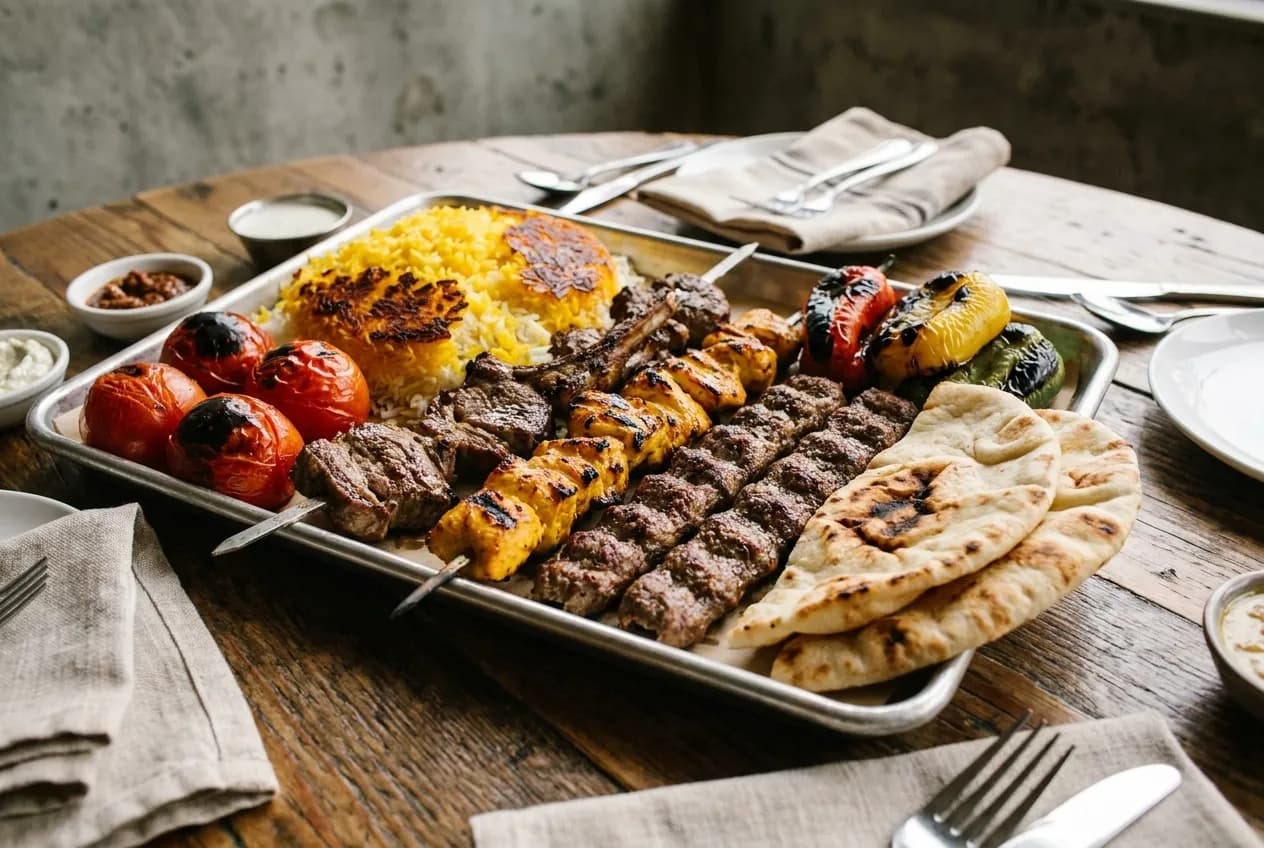
Between twenty and thirty-five dollars per person, you unlock sit-down service and the larger format platters. A family kebab platter in this range typically includes three proteins, enough rice for five or six, grilled vegetables, and bread. The portions are calibrated for the American table: larger than traditional Middle Eastern serving sizes but not aggressively oversized. The value is in the vegetables and the bread. You are not paying a steep markup for the sides, which means you can order an extra round of hummus or an additional skewer without the bill spiraling. The service is fast. These rooms turn tables, and weekend lunch service is often faster than dinner because the kitchen is already in rhythm.
Above thirty-five dollars per person, you are paying for whole fish, for lamb ribs by the rack, or for the premium cuts of the grill. The format does not change much—the platter is still the platter—but the protein quality steps up and the menu starts listing specific farms or cuts. A whole branzino runs forty to fifty dollars and feeds three if you order it with two large sides. Lamb chops come by the piece, usually five to eight dollars each, and six chops with rice and salad will cover four adults. The weekend advantage here is that the higher-end spots take reservations, which means you can lock a table for six at one-thirty and avoid the walk-in scramble.
When to Order Ahead and What That Actually Means
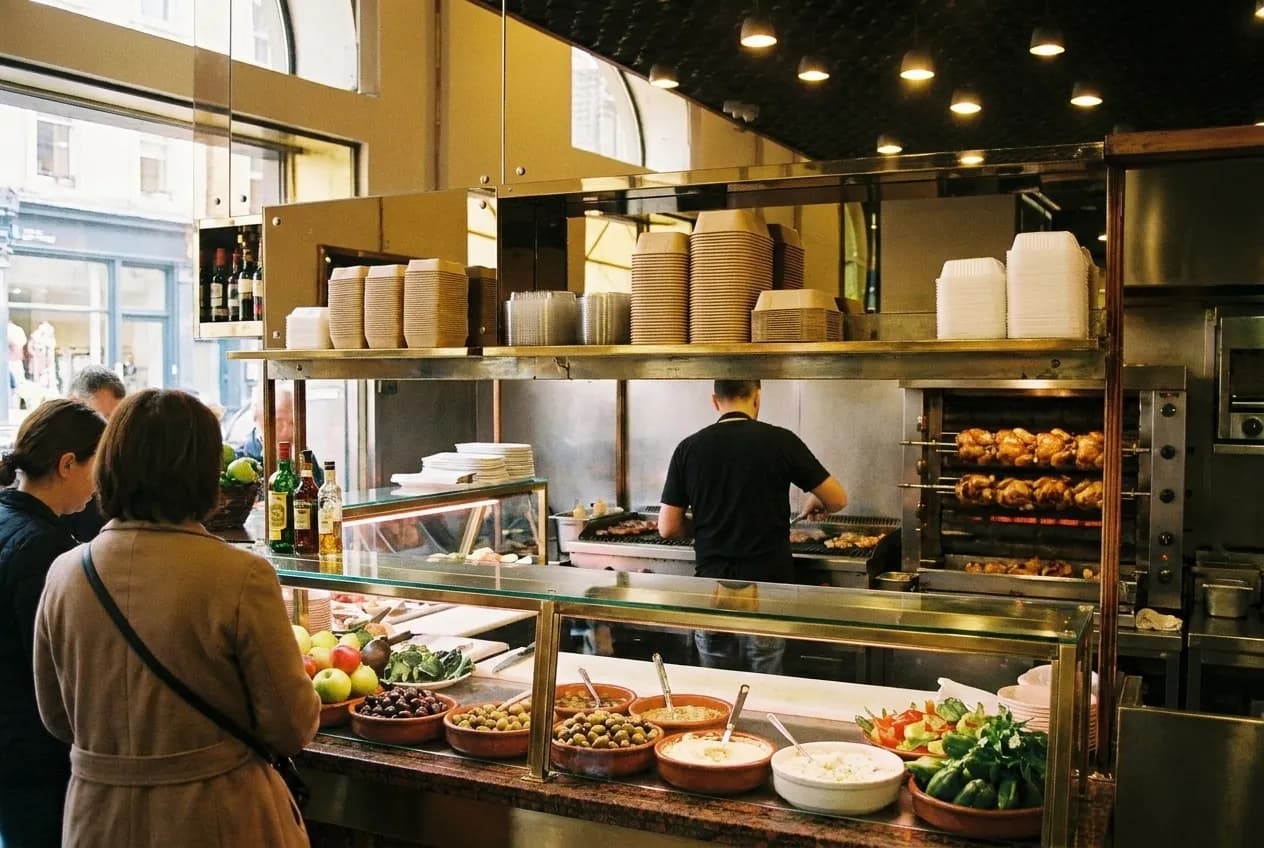
Order ahead does not mean order the night before. It means calling by eleven in the morning for a pickup between one and three in the afternoon. The kabob houses and chicken counters do not hold food for hours. They want you to arrive within a thirty-minute window of when the food comes off the grill. If you call at ten in the morning and ask for a two o'clock pickup, they will tell you to call back at noon. This is not inefficiency. It is how they keep the food at the right temperature and texture.
For sit-down service, reservations on weekends are useful but not essential. Most of the mid-range spots hold a few tables for walk-ins, and if you arrive at one or one-thirty, you will usually get seated within fifteen minutes. The post-two o'clock window is harder. That is when the family groups arrive in waves and the kitchen is already deep into tickets. If you are planning a group of six or more, call the morning of and ask if they can hold a table. Many will say yes without calling it a formal reservation.
The three-counter strategy—picking up components from different shops on the same block—requires more coordination but not much more time. Order the grilled meats from the kabob counter first, because that is the item with the longest lead time. While that is cooking, walk to the bakery for bread and dips. The pastry stop is last because those items hold at room temperature. The entire loop takes twenty to thirty minutes if the shops are on the same street, and you end up with a spread that has more variety than any single kitchen could produce.
What a Platter Actually Feeds Versus What the Menu Claims
Menu serving sizes in Mediterranean and Middle Eastern restaurants are conservative. A platter listed for four will feed six if you are also serving bread, salad and at least one mezze. The math assumes that everyone is eating a full portion of protein, which is not how group tables actually work. Some people load up on rice and vegetables. Some take one skewer and call it. The variance averages out, and the result is that you almost always have leftovers.
Whole chickens are the most reliable benchmark. One chicken feeds three adults as a main course, or four if it is part of a larger spread. Two chickens, one large rice, one large salad and bread will cover six people with a little left over. If you are adding kabobs or other grilled meats, drop to one chicken and add two skewers per additional person. The rice scales easily. A large rice at most counters is three to four pounds, which is enough for eight to ten people as a side. You are almost never short on rice. You are sometimes short on bread, so order extra.
Mezze portions are harder to predict because the serving sizes vary widely by restaurant. A large hummus at one spot might be twelve ounces; at another it is a full pound. The safe move is to order one fewer mezze than you think you need, then add another if the table is still hungry. Mezze does not reheat well, so overordering is a bigger waste than underordering. The exception is baba ghanoush, which holds better than hummus and works cold the next day.
The single habit that transfers across every visit: count the table, add one, and then order for that number. If you are feeding six, order as if you are feeding seven. The cost difference is usually one extra skewer or one more side, and it removes the tension of watching the last pieces disappear from the platter. The leftovers, if there are any, make better next-day lunches than most of what you would pack intentionally.
Tags: #MediterraneanFoodNearMe #LosAngelesFoodScene #WeekendPlansLA #GroupDining #FamilyPlatters #ArmenianFood #PersianCuisine #LebaneseFoodLA #KabobHouses #GlendaleEats #PicoRobertson #WestwoodBoulevard #MiddleEasternFood #LAFoodGuide #WeekendEatsLA
All trademarks are the property of their respective owners.
Ask Karpo first
Open the Karpo app before you leave to see which Mediterranean counters near you have grills running right now, what the current wait is for a family platter, and whether the bakery next door has fresh lavash. Karpo will also map the three-stop route if you are building a spread from multiple counters.