The Boston Quarterfinal and the Fitness Question
Boston's tournament venue hummed with anticipation as France and Morocco took the pitch for a quarterfinal that carried the weight of history and the edge of uncertainty. In the days leading up to kickoff, murmurs about a key player's availability had circulated through press rooms and fan forums alike, the kind of pre-match speculation that can unsettle a squad or galvanize it. France, with decades of World Cup pedigree and a roster assembled from Europe's elite clubs, chose the latter path.
Text Karpo Now: Get real-time match intel, transit hacks for AT&T Stadium and Mercedes-Benz, and the inside track on semifinal watch parties across Dallas and Atlanta.
The match itself unfolded as a test of composure rather than chaos. Morocco, buoyed by passionate support and a tournament run that had already exceeded many predictions, pressed high and looked to exploit any hesitation. France responded not with individual heroics alone but with the kind of collective assurance that separates contenders from champions. Midfield rotations kept fresh legs in the center of the park, wide players tucked in to compress space, and the backline communicated in the shorthand of a group that had trained together through long preparation cycles.
When the final whistle sounded and France had secured their place in the semifinals, the story was less about any single moment of brilliance and more about a system that held firm under pressure. The coaching staff's willingness to adjust formations mid-match, the seamless insertion of substitutes who understood their roles, and the mental resilience to weather Morocco's most dangerous spells all pointed to a team built for the long haul of a 48-team tournament.
Squad Depth as a Tournament Superpower
Modern World Cups reward nations that can field not just a strong starting eleven but a deep bench capable of stepping in without a drop in quality. France arrived in North America with exactly that luxury, a 26-player roster where club form and tactical versatility were prized as highly as reputation. When fitness questions arise in the knockout rounds, the ability to pivot without panic becomes the difference between advancing and an early flight home.
In Boston, that depth was on full display. Midfielders who might start for other national teams entered as substitutes and immediately influenced tempo. Defenders accustomed to different club systems slotted into France's shape and communicated effectively with their new partners. The forward line, often the focus of pre-tournament headlines, benefited from service that never wavered even as personnel rotated. This wasn't improvisation; it was the fruit of months of preparation, where the coaching staff had drilled multiple formations and ensured every player understood their role in each tactical variant.
The quarterfinal win also underscored a broader truth about the 2026 tournament structure. With 48 teams and a grueling schedule that spans three host nations and thousands of miles, squads that rely too heavily on a handful of stars risk burnout or injury crises. France's approach—cultivating competition for places, rotating intelligently in the group stage, and maintaining fitness protocols that kept players sharp—offered a blueprint for how to navigate a World Cup that demands endurance as much as excellence.
Tactical Tweaks That Steadied the Ship
Tactical flexibility is often discussed in abstract terms, but in knockout football it manifests in concrete decisions: a subtle shift in defensive line height, a midfielder dropping deeper to receive the ball under pressure, a winger instructed to hold width rather than drift inside. Against Morocco, France's coaching staff made several such adjustments that may have seemed minor to casual viewers but were critical to controlling the match's rhythm.
Early in the game, Morocco's press disrupted France's usual build-up patterns, forcing hurried passes and turnovers in dangerous areas. Rather than persist with a strategy that wasn't working, the French midfield began positioning themselves in staggered lines, creating passing angles that bypassed the first wave of pressure. Fullbacks pushed higher to stretch Morocco's shape, and the central defenders, comfortable on the ball, took more responsibility for progressing play through the middle third. These tweaks didn't require wholesale personnel changes; they asked existing players to execute familiar concepts in slightly different contexts.
As the match wore on and Morocco committed more numbers forward in search of an equalizer or breakthrough, France's shape compressed and then released in quick transitions. Wide players who had been defending deep suddenly found space to run into, and the team's pace on the counter became a weapon. The ability to shift between defensive solidity and attacking threat within the same phase of play spoke to hours of video study and tactical drilling, where scenarios are rehearsed until they become instinctive.
The Road to AT&T Stadium and Mercedes-Benz
With the quarterfinal secured, France now turns its attention to the semifinals, where the stakes rise and the margin for error shrinks to nothing. The tournament's final four will converge on two of North America's most impressive venues: AT&T Stadium in Arlington, just outside Dallas, and Mercedes-Benz Stadium in Atlanta. Both arenas blend cutting-edge design with capacities that can swell past 70,000, creating atmospheres that amplify every pass, tackle, and roar from the stands.
AT&T Stadium, which has hosted the most matches of any venue in this World Cup with nine fixtures, is a marvel of retractable roof engineering and giant video boards that wrap around the interior. For fans traveling to the Dallas area, the stadium sits in a sprawling suburban landscape where ride-shares and official shuttles are the primary transport options. Atlanta's Mercedes-Benz, by contrast, is embedded in the city's downtown grid, walkable from MARTA rail stations and surrounded by neighborhoods where pre-match energy spills into bars, plazas, and food halls.
France's semifinal assignment will determine which city becomes their temporary home for the next crucial match. Either way, the team's preparation will remain consistent: video analysis of their opponent, recovery sessions tailored to individual player needs, and tactical meetings where the coaching staff refines the game plan. For a squad that has already demonstrated its ability to adapt under pressure, the semifinal stage is less a leap into the unknown and more a continuation of the process that has brought them this far.
What the Final Four Means for Fans and Cities
The semifinals represent a convergence not just of the world's best teams but of the tournament's most passionate supporters. In Dallas and Atlanta, local hospitality industries have spent months preparing for the influx: hotels coordinating with transit authorities, restaurants extending hours, and fan zones setting up giant screens for those without tickets. The economic impact is measured in millions, but the cultural moment—when a city becomes a global stage for a few days—is harder to quantify.
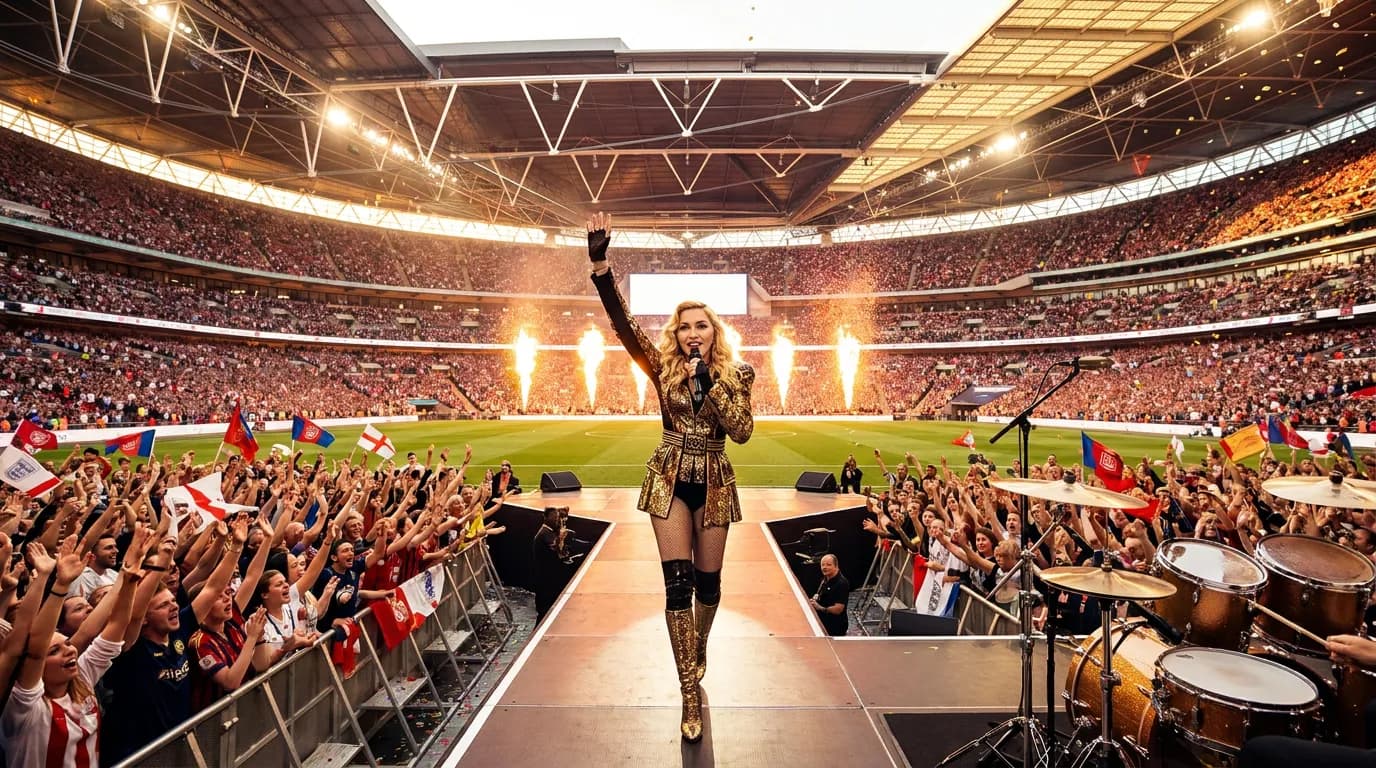
For France supporters, many of whom have followed the team across multiple host cities, the semifinal is a chance to see their squad one step away from the final at MetLife Stadium in East Rutherford. That July 19 showpiece, with its first-ever halftime show curated by Chris Martin and featuring Madonna, Shakira, and BTS, looms as the ultimate prize. But first comes the semifinal, where focus narrows to 90 minutes (or more) and the only currency that matters is performance on the pitch.
Cities hosting these matches also become temporary homes for traveling fans who want more than just the game. In Dallas, the arts district and Deep Ellum's music venues offer post-match gathering spots. Atlanta's BeltLine trail and Ponce City Market provide daytime destinations where supporters from different nations mingle, trade scarves, and share stories. These unscripted moments of connection are as much a part of the World Cup experience as the matches themselves, a reminder that the tournament is both a competition and a celebration.
Building Toward the Final in New Jersey
MetLife Stadium in East Rutherland, a short train ride from Manhattan, will host the final on July 19, and the logistics are already the subject of intense planning. With no on-site parking or tailgating permitted, fans will rely on official shuttles or NJ Transit, where return wristbands ensure re-entry to the transport system after the match. The halftime show, a World Cup first, adds another layer of spectacle to an already historic occasion, blending sport and entertainment in a way that reflects the tournament's North American setting.
For France, the path to that final runs through the semifinal and the challenge of an opponent who has also survived the knockout rounds' unforgiving gauntlet. The team's performance in Boston, where depth and tactical acumen carried the day, offers a template for what comes next. But templates are only starting points; execution under the brightest lights is what separates good teams from great ones, and France will need to summon their best when it matters most.
The days between now and the semifinal will be filled with preparation, recovery, and the quiet confidence that comes from knowing a squad has already weathered adversity and emerged stronger. Fans, meanwhile, will track every training report, every lineup rumor, every hint of tactical evolution. In a tournament defined by its scale and drama, France has positioned itself to compete for the ultimate prize, and the journey from Boston to the final four is a chapter that will be remembered long after the confetti falls.
Practical notes
- AT&T Stadium in Arlington hosts the most matches (9) and requires ride-shares or official shuttles; plan transport early for semifinal crowds.
- Mercedes-Benz Stadium in Atlanta is accessible via MARTA rail; downtown walkability makes pre-match exploration easy.
- MetLife Stadium final on July 19 has no on-site parking or tailgating; use NJ Transit with a return wristband or official shuttles.
- Halftime show at the final features Chris Martin, Madonna, Shakira, and BTS—arrive early to secure your spot and soak in the spectacle.
- France's quarterfinal win in Boston showcased squad depth; expect tactical rotations and fresh legs in the semifinals.
The World Cup's knockout stage strips away everything but what matters: preparation, adaptability, and the collective will to advance. France's quarterfinal performance in Boston was a masterclass in all three, a reminder that tournament success is built on more than headlines and star power. As the semifinals approach in Dallas and Atlanta, the team carries momentum forged in moments of uncertainty and the knowledge that their depth can match any challenge. For fans planning to witness the next chapter, the journey from Boston to the final four is a story still being written, one match at a time.
Tags: #FranceWorldCup #MoroccoQuarterfinal #WorldCup2026 #ATTStadium #MercedesBenzStadium #MetLifeStadium #SquadDepth #TacticalFootball #BostonWorldCup #SemifinalBound #DallasWorldCup #AtlantaWorldCup #KnockoutStage #WorldCupFinal #TournamentStrategy
All trademarks are the property of their respective owners.
Ask Karpo first
The World Cup's biggest moments unfold in real time, and the best experiences come from knowing what to expect before you arrive. Whether you're headed to the semifinals in Dallas or Atlanta, planning your final journey to MetLife, or simply looking for the smartest way to navigate match day logistics and local flavor, Ask Karpo first. We'll make sure you're ready for every kick, every roar, and every unforgettable chapter of this tournament.