 Where to Eat Near Penn Station That Isn't a Chain
US Open 2026
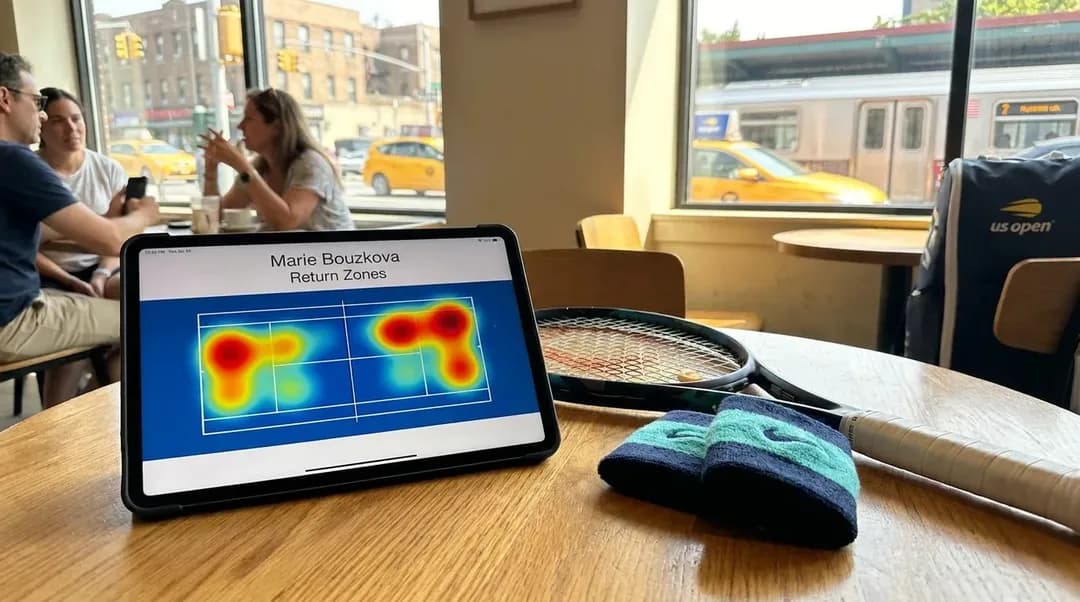
Marie Bouzkova’s Counterpunching Fit for New York Hard Courts
Marie Bouzkova’s return-first game offers a clear way to watch how second-serve pressure can reshape women’s hard-court matches in New York.
If you are choosing a women’s match to study closely in New York, begin with the serve that is supposed to be safe but often is not: the second serve. Marie Bouzkova is a useful lens because her best hard-court tennis is not built on one spectacular knockout shot. It is built on making ordinary service games feel less ordinary. She can take a server’s pace, redirect it, and ask for one more accurate swing before the point has settled. That matters on hard courts because the server’s advantage can disappear quickly when the return lands deep, central, or at the body. Instead of watching only for aces and winners, watch whether the server’s first groundstroke after the return is balanced. If it is late, cramped, or struck while moving backward, the returner has already changed the point.
Text Karpo for a current, low-friction plan for marie bouzkova’s counterpunching fit for new york hard courts—including timing, route checks, and practical options that fit your day.
Return Position Sets The Trap
Bouzkova’s counterpunching works best when her return position is assertive without becoming reckless. She does not need to crush every second serve to be aggressive. A compact return hit early, deep through the middle, can be just as uncomfortable as a bigger swing that lands closer to the lines. The target matters because it limits the server’s first angle. A ball driven back near the server’s feet can turn the expected serve-plus-one pattern into a recovery shot.
Her first step is the cue to watch. If she reads the toss early, she can shorten the backswing and meet the ball before the server has fully reset. Against heavier first serves, that may mean a block return with depth. Against a softer second serve, it can become a forward move that takes time away. The difference may look small from the stands, but it changes the server’s choices. A player who expects to attack may suddenly have to defend the very first ball after the serve.
Second Serves Become Negotiations
Second-serve points often decide the rhythm of women’s hard-court matches because they sit between attack and survival. The server wants margin, shape, and a location that starts the rally on familiar terms. The returner wants to make that margin feel smaller. Bouzkova’s style fits that exchange because she can apply pressure without swinging at maximum risk. A firm return at the body, a deep ball through the middle, or an early crosscourt return can all force the server to hit under time pressure.
That is why return aggression should not be confused with pure power. A return winner is one version of aggression, but Bouzkova can be aggressive by denying comfort. If she jams a tall hitter, pins a backhand corner, or makes the server hit the first groundstroke from a closed stance, she has already earned tactical control. The point may still last six shots, yet its shape was decided by the return. The server is no longer choosing the rally; she is solving it.
- A deep middle return can remove the server’s first angle and delay the attack.
- An early crosscourt return can force movement before the server has balance.
- A body return can jam a powerful opponent and turn pace into a problem.
- A controlled return on break point can be more damaging than a low-percentage swing.
Short Points Without Recklessness
Counterpunchers are often described as players who extend rallies, but that misses an important part of Bouzkova’s hard-court value. Her defending can lengthen points, while her returning can shorten them. The short point does not have to be built around serve-plus-one power. It can be return-plus-one pressure: the return lands deep, the server replies short or central, and Bouzkova steps in to guide the next ball into space. That is a controlled form of acceleration rather than a gamble.
The pattern is usually structural. She can use the middle of the court to deny angles, absorb pace crosscourt until the reply loses depth, and then redirect when the opening is real. For a fan, the key question is simple: did the return make the server hit up, hit late, or hit from an awkward position? If the answer is yes, the returner has created a short-point chance even before a winner appears. The scoreboard records the point; the return explains why it happened.
Pressure Changes Service Choices
Bouzkova’s tactical influence is clearest in the middle of sets, when one demanding return game can alter how both players behave. A server who has been holding comfortably may begin aiming safer, choosing more predictable locations, or adding spin to avoid a costly double fault. None of that guarantees a break. It can, however, start a chain reaction: safer serves invite stronger returns, stronger returns produce shorter replies, and shorter replies give the counterpuncher earlier chances to finish.
Do not watch only for clean winners. Watch the server’s first groundstroke after Bouzkova returns. If the hitter often contacts the ball near the baseline with hurried feet, the returner is controlling more than the score immediately reveals. Also watch the next service game. Return pressure is most valuable when it carries across changeovers and score states. A player who has just survived a long service game may press too hard on return, rush a neutral ball, or hesitate on the next important second serve.
- On second-serve points, note whether Bouzkova steps forward or stays neutral.
- After the return, watch who controls the first open-court shot.
- In deuce games, track whether the server’s locations become more predictable.
- After long rallies, notice whether the next second serve becomes safer.
Practical Notes
For “Marie Bouzkova’s Counterpunching Fit for New York Hard Courts,” the useful 2026 calendar anchor is August 23 through September 13, with singles main-draw play beginning August 30. Treat any Bouzkova-focused plan as conditional until official tournament information confirms the draw, daily schedule, and player field. Advice: if you want to study her return patterns, pick a viewing angle that shows the returner’s first step and the server’s first groundstroke, not just the serve motion. A baseline view can reveal depth and body targets, while a higher side view can make spacing and recovery more obvious. Before packing, recheck the official security information; it currently states one bag per guest, subject to search, with maximum dimensions of 12 by 12 by 16 inches.
Tags: #USOpen2026 #Tennis #NewYork #Queens #FlushingMeadows #USOpenGuide #TennisFans #SportsTravel #NYCEvents #HardCourt #KarpoFinds #Karpo
Sources consulted: usopen.org — Official reference · wtatennis.com — Official reference · atptour.com — Official reference
All trademarks are the property of their respective owners.
Ask Karpo first
Want to know what is confirmed, when to show up, and what is actually open to the public? Ask Karpo for the latest US Open updates and a practical New York plan for marie bouzkova’s counterpunching fit for new york hard courts.
Ask Karpo for more information.
Keep reading
- Where to Eat Near Penn Station That Isn't a Chain
 Andytown Coffee in the Outer Sunset: The Snowy Plover Explained
- Best Things to Do in Chicago: What the City Gives Away