 Where to Eat Near Penn Station That Isn't a Chain
US Open 2026
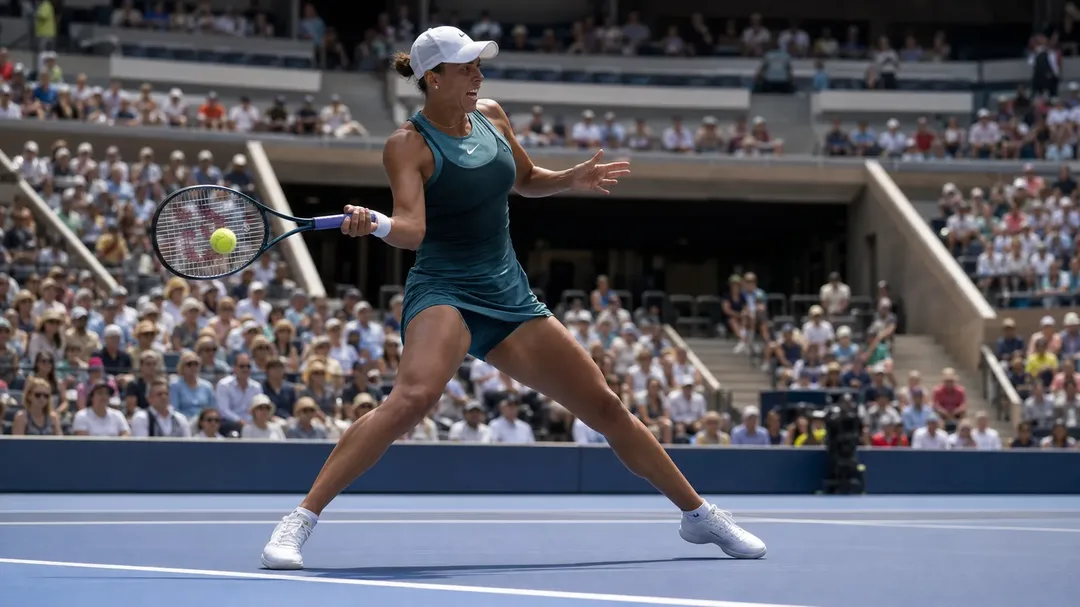
Madison Keys and the Forehand Formula for US Open Success
If Madison Keys is in the US Open mix, her forehand-first style offers a clear lens for fans studying hard-court tactics in New York.
Madison Keys gives tennis fans a clear tactical case study because her best points are easy to recognize even from high in the stands: a strong first serve, a short reply, one heavy forehand, and a rally that ends before it becomes complicated. The confirmed history matters. Keys reached the 2017 US Open final, so New York is not an abstract setting in her career; it is a place where her power game has already traveled deep. Any discussion of a future US Open, however, should stay conditional unless official player lists confirm participation. As a way to understand modern hard-court tennis, her forehand formula remains valuable: controlled aggression, fast decisions, and enough discipline to make power repeatable under noise, heat, and scoreboard pressure.
Text Karpo Now: Tell us what matters most for Madison Keys and the Forehand Formula, and Karpo can turn current US Open updates into a practical plan before you go.
Why Her Forehand Matters
Keys’ forehand is not just a big shot; it is the organizing principle of her most efficient tennis. When she can hit it from a balanced base, especially from inside or just behind the baseline, she can take time away without needing to paint every sideline. That is the difference between useful aggression and hopeful hitting. On a hard court, the ball generally comes through cleanly enough for a confident striker to step in, redirect pace, and make the opponent defend from the first exchange.
For everyday viewers, the key is not only speed. Watch the shape of the point. If Keys is using her forehand into the bigger court, then following with another forehand to the open space, she is playing high-percentage attacking tennis. If she is forced into late contact, or if the first big forehand lands short enough to be counterattacked, the same weapon can become risky. New York rewards controlled aggression because quick momentum swings punish both passivity and overhitting.
Serve And Return Patterns
The forehand formula often begins before the forehand appears. A strong first serve can create the first-strike ball that Keys wants. If the serve pulls the returner wide, jams the body, or earns a floating reply, the next shot can be a forehand into open court rather than a neutral rally ball. That is why fans should look at serve location, not merely serve speed. A serve that sets up the next shot is more useful than a faster serve that comes back low and central.
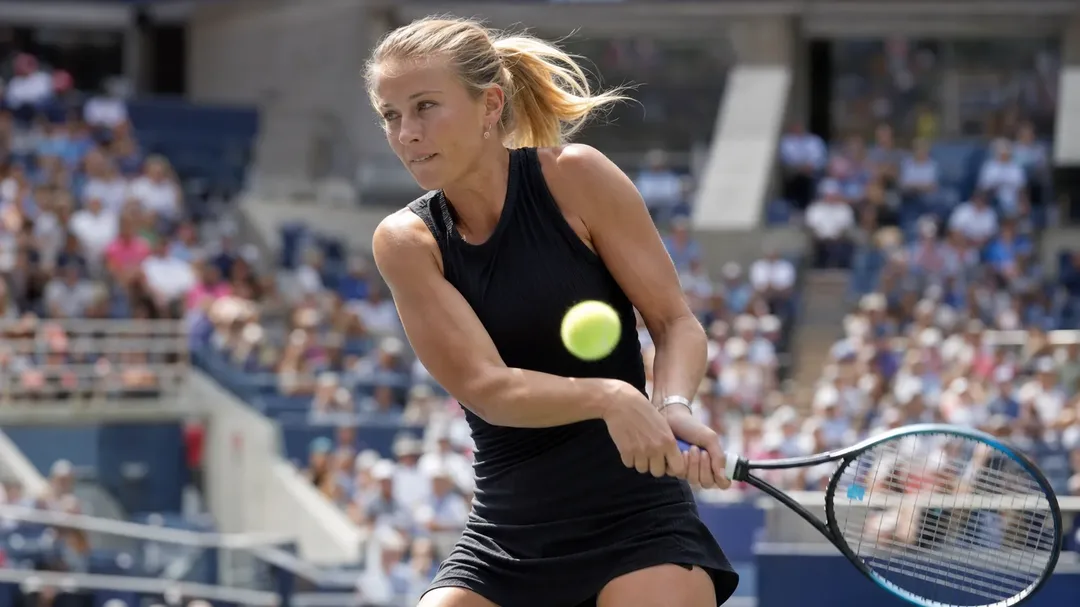
On return, the pattern is slightly different. Against a second serve or a predictable first serve, Keys can try to take the ball early and turn defense into attack immediately. The risk is that returns struck too flat or too close to the lines can leak errors before the rally begins. A practical middle ground is the deep return through the middle, which removes angles from the server and gives Keys a chance to use the next forehand. In a US Open environment, where crowd energy can make players rush, that simple target can be a stabilizer.
- On serve, watch whether the first ball after the serve is a forehand from comfortable court position.
- On return, watch whether she attacks second serves without giving away too many free points.
- In early rallies, notice whether her first forehand pushes the opponent wide or merely starts a neutral exchange.
- After a missed power shot, watch whether the next point becomes more measured or even more rushed.
Movement And Court Geometry
Keys’ attacking tennis depends on movement as much as ball striking. Power is often discussed as if the swing alone creates it, but the cleaner version comes from arriving early, setting the feet, and choosing the right contact height. On hard courts, small positioning choices decide whether a forehand is a weapon or a recovery shot. If she is half a step late, the contact point can slide behind her body, and the ball is more likely to fly long or sit up for a counterattack.
Court geometry is the hidden part of the formula. The safest aggressive forehand is often not the one closest to the line. A heavy cross-court forehand travels over the higher-percentage diagonal, clears more court, and can pull an opponent beyond the doubles alley. Once that happens, the next ball down the line or back behind the runner becomes more available. In New York, where hard courts reward clean timing, the best sequence is frequently two good shots rather than one spectacular shot.
Fans should also notice recovery after the forehand. If Keys hits big and remains near the sideline, she may leave a counterpunching lane open. If she attacks and then recovers toward the correct middle position, her power becomes harder to use against her. That is the difference between a highlight swing and a sustainable point pattern.
Pressure In New York
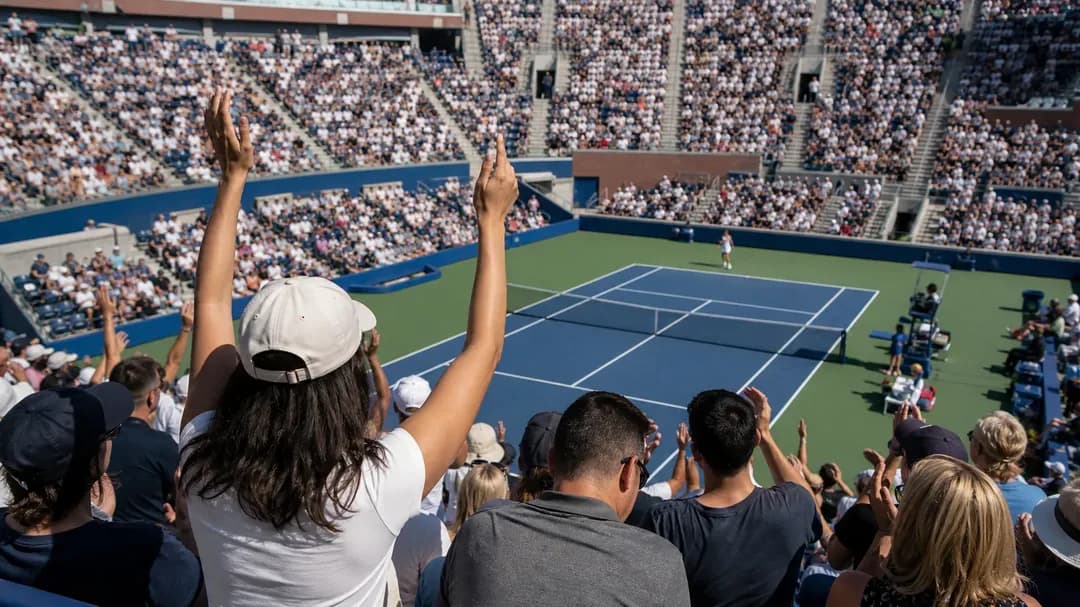
New York tests more than technique. The US Open crowd can lift an attacking player, but it can also magnify impatience. A forehand-first player has to decide when to accept a rally ball, when to build, and when to finish. Keys’ 2017 run to the final confirms that her game has had major success at this event, but it does not tell fans what will happen in any future match. The useful lesson is tactical: the same style that creates short points must also survive tense scorelines.
Pressure management often shows up in target selection. At 30-all, break point, or late in a set, controlled aggression might mean hitting a heavy forehand with margin rather than aiming for the last inch. It might mean serving to a trusted pattern instead of chasing a perfect ace. It might also mean using the backhand or body serve to avoid becoming predictable. Power players can be at their most dangerous when they are not trying to prove they are powerful on every swing.
- Positive sign: first-strike points are ending because of placement, not only raw pace.
- Warning sign: errors arrive early in rallies from neutral balls that did not require a winner attempt.
- Positive sign: she uses depth through the middle to reset after a loud crowd moment.
- Warning sign: opponents repeatedly make her hit one extra ball from awkward court positions.
The opponent’s role matters, too. A defender who absorbs pace can make Keys hit more balls than she prefers. A big server can reduce the number of return games where she gets early control. A player who changes height with spin or brings her forward can disrupt the rhythm of baseline striking. That is why any US Open projection should be conditional and matchup-aware. The forehand formula is useful analysis, not a guarantee.
Practical Notes
If you are visiting New York for the US Open, use official tournament channels to check player lists, daily schedules, and court assignments before making plans around any individual player. Sessions can feel different depending on court size, time of day, and weather, so build flexibility into your visit. For Keys specifically, if she is listed to play, warmups can reveal serve direction, forehand timing, and how cleanly she moves into the first ball after the serve. From the stands, sit where you can see depth as well as speed, because many decisive forehands are really about court position, recovery, and smart margin.
Tags: #USOpen2026 #Tennis #GrandSlam #NewYorkTennis #ArthurAsheStadium #FlushingMeadows #USOpenGuide #TennisFans #SportsTravel #HardCourt #NewYork #KarpoFinds
Sources consulted: wtatennis.com — Official reference · usopen.org — Official reference · usopen.org — Official reference
All trademarks are the property of their respective owners.
Ask Karpo first
Want to know what is confirmed, when to show up, and how to make madison keys and the forehand formula work for your day? Ask Karpo for current US Open updates, a respectful fan plan, and a live route around Flushing Meadows.
Ask Karpo for more information.
Keep reading
- Where to Eat Near Penn Station That Isn't a Chain
 Andytown Coffee in the Outer Sunset: The Snowy Plover Explained
- Best Things to Do in Chicago: What the City Gives Away