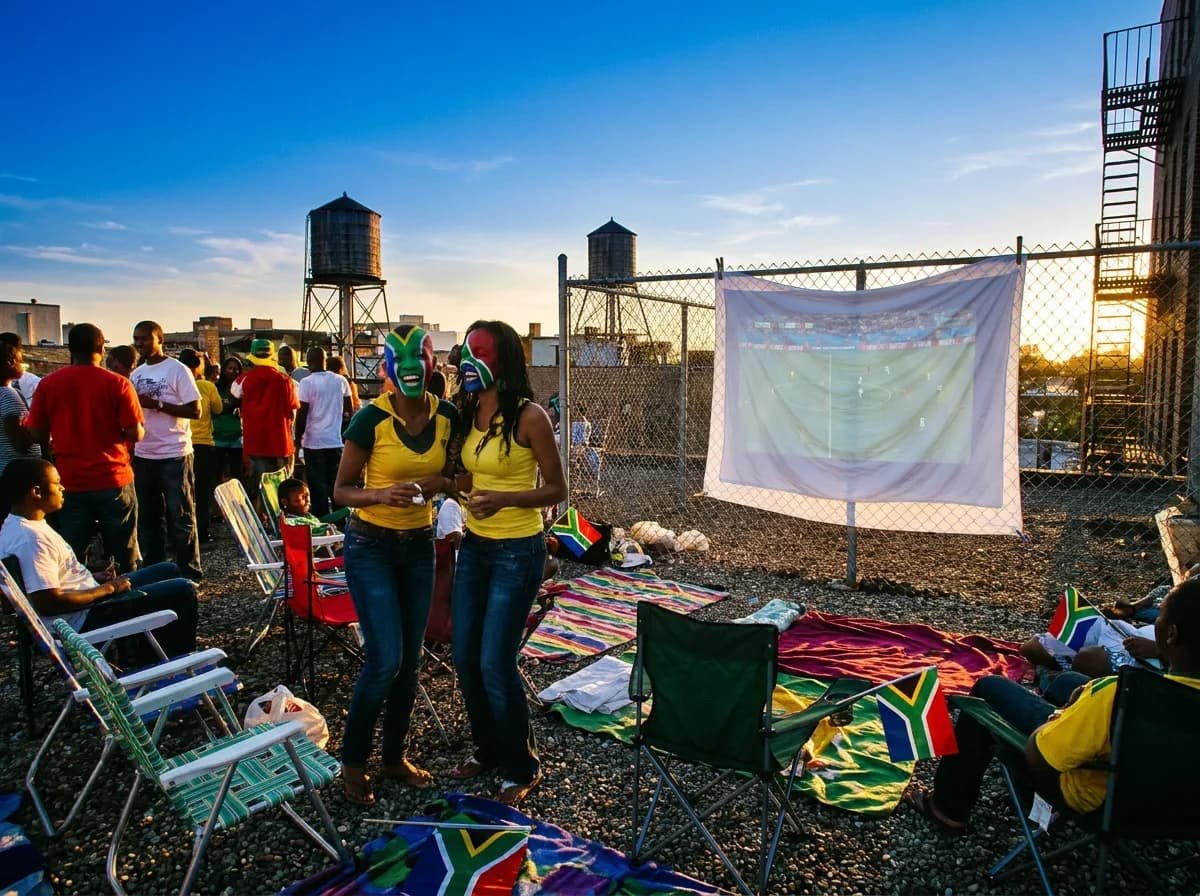
The projector hums against a backdrop of distant sirens and the collective intake of breath from forty strangers crammed onto a Ludlow Street rooftop. Someone's abuela passes a foil-wrapped plate of empanadas while three different languages shout at the screen where Brazil weaves through midfield. The smell of grilled plantains drifts from a hibachi balanced precariously on a fire escape landing, mixing with the downtown exhaust rising from five floors below.
Want a rooftop screening? Ask Karpo where the Lower East Side watches the World Cup.
The Equipment Migration
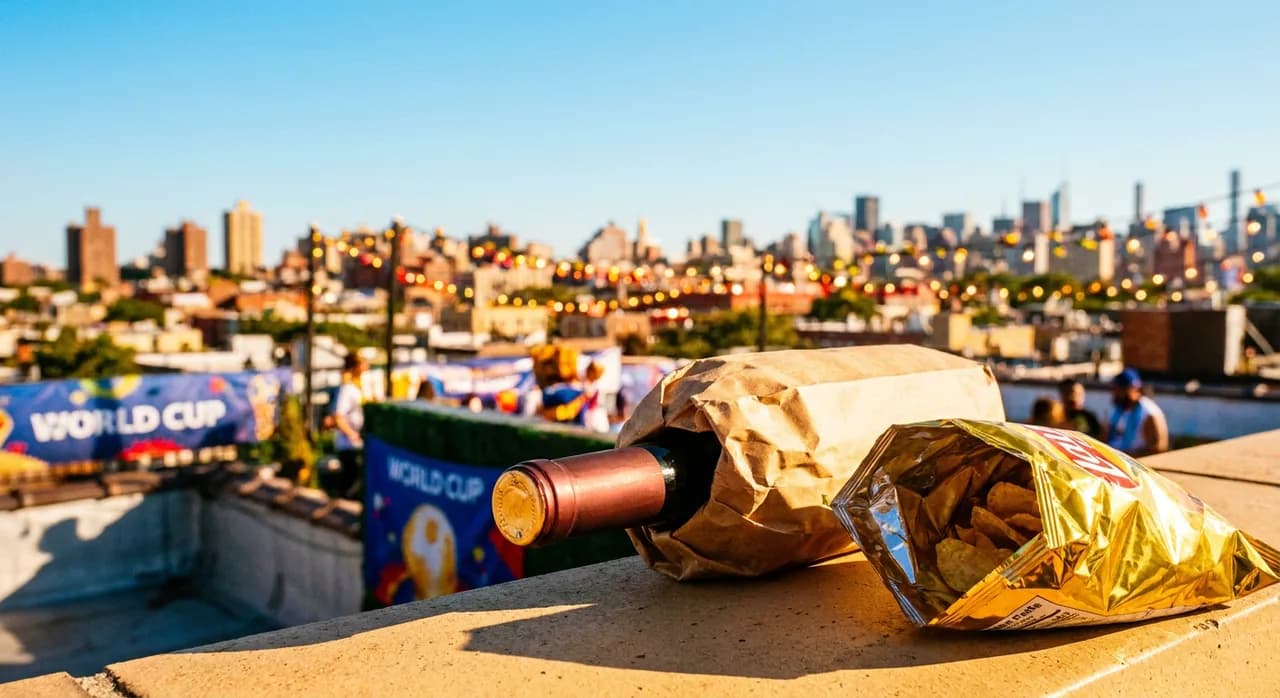
The projector arrives at 6:47 PM in a weathered canvas tote bag, carried by Marcus, whose DJ friend swore it could handle outdoor screenings as long as nobody spills beer on the power cord. Two extension cords snake through a kitchen window while the building superintendent pretends not to notice the minor electrical violations happening on his watch. The white bedsheet taped to the brick wall transforms into a twelve-foot screen once the sun dips behind the Manhattan skyline. This setup costs exactly zero dollars, unlike the rooftop bars NYC establishments charge premium prices for, where a decent view and projected game comes with mandatory drink minimums and reservation fees.
Three teenagers rig speakers to a phone while someone's uncle tests the WiFi strength, muttering about streaming quality and buffering nightmares. The equipment represents a community effort—extension cords borrowed from 4B, speakers from the corner bodega owner, chairs hauled up from various apartments by whoever could carry them.
The Seating Democracy
Folding chairs claim the front row by 7:15, but nobody guards their territory too jealously. When Maria shows up with her two kids twenty minutes before kickoff, the crowd shifts organically, creating sight lines and squeezing space where none existed. This unspoken agreement governs the evening: everyone gets to see, even if it means sharing armrests with strangers or sitting on upturned crates.
The fire escape serves as premium seating for those brave enough to trust decades-old metalwork. Younger viewers perch on the ledge with their legs dangling while older folks stake out the few actual chairs. Blankets spread across the tar paper accommodate overflow, creating a patchwork of viewing positions that somehow accommodate twice as many people as the rooftop should legally hold.
Halftime Migration and Reality Check
When the whistle blows for halftime, the crowd naturally gravitates toward the roof's eastern edge where the city spreads out in rent-defying glory. Someone inevitably mentions their monthly payment while gesturing at the million-dollar view they're enjoying for free. The conversation turns to neighborhood changes, which buildings used to house which families, and how long anyone can afford to stay.
The Manhattan Bridge frames conversations about gentrification while someone passes around a bottle and others debate whether this building will convert to luxury condos within five years. These fifteen-minute intermissions become impromptu neighborhood forums where World Cup analysis mixes with housing market anxiety and shared memories of when this block looked completely different.
The Potluck Economics
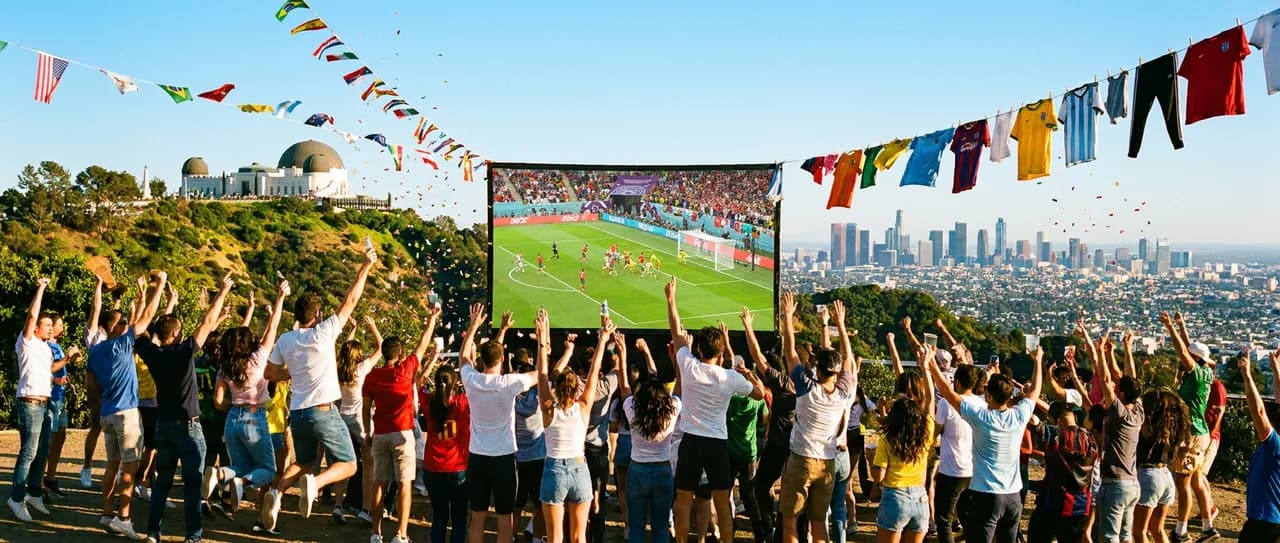
Nobody organizes the food, but everyone eats. Bags of chips emerge from backpacks while neighbors contribute homemade contributions that reflect the building's demographics. Dominican pollo guisado sits next to Pakistani samosas and bodega sandwiches, creating an accidental buffet that shifts throughout the match.
Beer travels in grocery bags and coolers hauled up narrow staircases, operating on an honor system where everyone contributes something and nobody keeps strict accounting. The BYOB economics work because they have to—collective viewing parties exist precisely because individual bar tabs would price out half the participants.
When the City Becomes Background
By the second half, the urban soundtrack fades into ambient noise. Police sirens and car horns become part of the viewing experience rather than distractions. The city's vertical landscape creates natural sound barriers while adding visual drama that no sports bar can replicate.
Street lights twinkle beyond the screen as temperature drops and someone distributes sweatshirts to whoever needs them. The game intensifies while the skyline provides constant reminder of location—this particular viewing angle, this specific community gathering, couldn't happen anywhere else.
When goals happen, the rooftop erupts loud enough to alert neighboring buildings, creating a chain reaction of celebration that echoes between fire escapes and open windows. The sound bounces off brick walls and returns amplified, making forty voices sound like hundreds.
Practical Notes
Show up early with something to share—folding chair, snacks, or beverages work equally well as admission tickets. Dress in layers since rooftop temperatures drop quickly after sunset, and bring phone chargers since WiFi passwords get shared freely but electrical outlets remain scarce. Check weather apps obsessively because these gatherings dissolve rapidly once rain threatens expensive borrowed equipment. Follow neighborhood social media groups and building bulletin boards for screening announcements, which typically appear 24-48 hours before major matches. Respect noise ordinances during late games since residential buildings surround these informal venues.
Tags: #WorldCup2026 #FIFA2026 #LowerEastSide #NYC #RooftopViewing #Football #Soccer #CommunityGathering #NYCSoccer #NeighborhoodWatch #DiasporaCommunities #FreeEvents #Gentrification #UrbanCulture #SportsViewing
Sources consulted: fifa.com · espn.com
Please drink responsibly. Must be of legal drinking age.
All trademarks are the property of their respective owners.
Ask Karpo first
Want the best spot near you to catch every World Cup 2026 match, plus live scores and a matchday plan? Ask Karpo for personalized viewing recommendations, the nearest fan-friendly bars, and real-time bracket updates wherever you are.