
A Los Angeles match day without a car is not a purity test. It is a way to avoid turning the whole day into one long argument about parking, surge pricing, and where the group should stand after the final whistle. The useful plan starts with three boring choices: where you will enter the area, where you will leave it, and what everyone does if mobile service gets slow.
Start with the exit, then design the arrival
Most fans build the day from the stadium outward: tickets, outfit, pregame stop, then a vague promise to figure out the exit later. For Inglewood, reverse the order. Choose the post-match regroup point first. It should be public, easy to describe, and outside the most compressed foot traffic. Once that point is fixed, the arrival route becomes less stressful because everyone already knows the direction of travel after the match.
The no-car version works best for groups that can tolerate a little walking and a little waiting. It is weaker for anyone carrying too much, traveling with a tight connection, or expecting a door-to-door pickup at the exact moment the stadium empties. If your group includes kids, older relatives, or someone who cannot comfortably walk after the match, build a shorter route and a longer patience window.
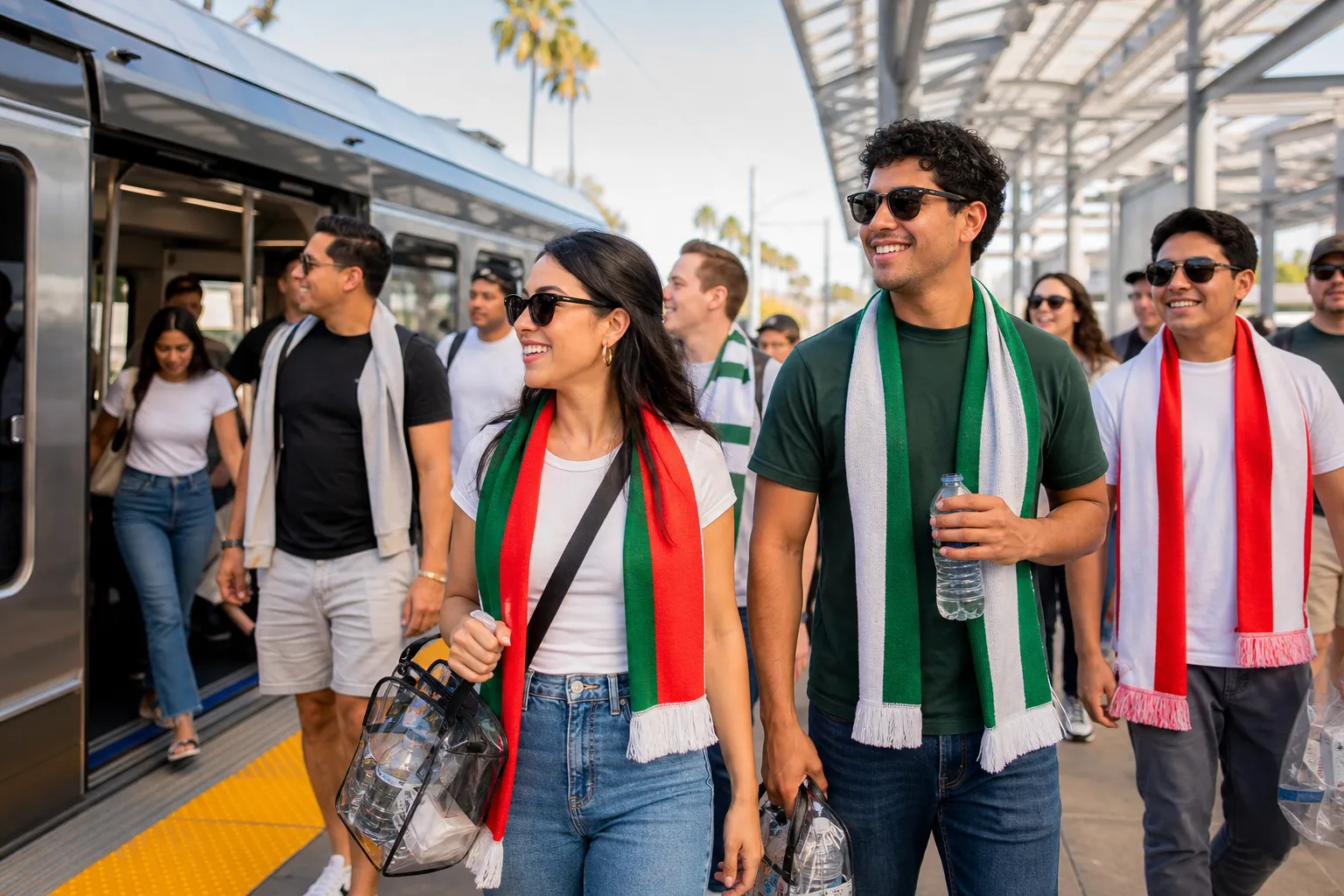
The two-phone rule
Before leaving, put the route on two phones, not one. One person should own the transit plan and another should own the fallback pickup plan. That sounds excessive until one battery dies, a rideshare app stalls, or half the group starts following the loudest person instead of the plan. Keep screenshots of the route, the venue entry policy, and the meeting point. Screenshots are not elegant, but they survive weak service.
Pregame should be close, simple, and optional
The biggest mistake is adding a perfect pregame stop that pulls the group away from the route. If the stop requires a second transfer, a long rideshare hop, or a hard reservation time, it can make the match feel rushed before it starts. Treat food and hydration as part of the route: something near the path in, not a separate mini-trip. Once the final hour begins, stop adding errands. Tickets ready, bag rule checked, water handled, phone charged.
When a pickup is still useful
Rideshare is not banned from a no-car plan; it just should not be the spine of the day. Use it as a late fallback if the group is tired, if service is running differently than expected, or if weather changes. The pickup point should be chosen before kickoff and written in plain language. 'Near the stadium' is not a pickup point. A specific public corner, station area, hotel lobby, or agreed business district edge is easier to execute.

Who this plan is best for
This route is strongest for visiting fans staying in central Los Angeles, groups that want to avoid driving after a long match, and locals who already know that event traffic can make a short distance feel much longer. It is not the lowest-effort option, but it gives the day a calmer shape: arrive early, move deliberately, and leave with a known fallback instead of chasing the crowd.
Practical notes
Check LA Metro, the venue transportation page, bag rules, and event-day service alerts on the morning of the match. If official guidance changes, follow that over any social post. Pick one public regroup point, one transit route, and one rideshare fallback before entering the venue area.
Tags: #Buzz #WorldCup2026 #FIFAWorldCup2026 #LosAngeles #Inglewood #StadiumGuide #TransitGuide #NoCarDay #MatchDayPlan #FanRoute #PublicFanPlan #SoccerFans #AskKarpo #BeforeYouGo #Summer2026
Sources consulted: LA Metro World Cup · SoFi Stadium Transportation · Discover Los Angeles · Google Trends RSS
All trademarks are the property of their respective owners.
Ask Karpo first
Want to know when to show up, where to wait, and what’s actually open to the public? Ask Karpo for the latest Los Angeles match-day updates, a respectful fan plan, and a live route before you head out.