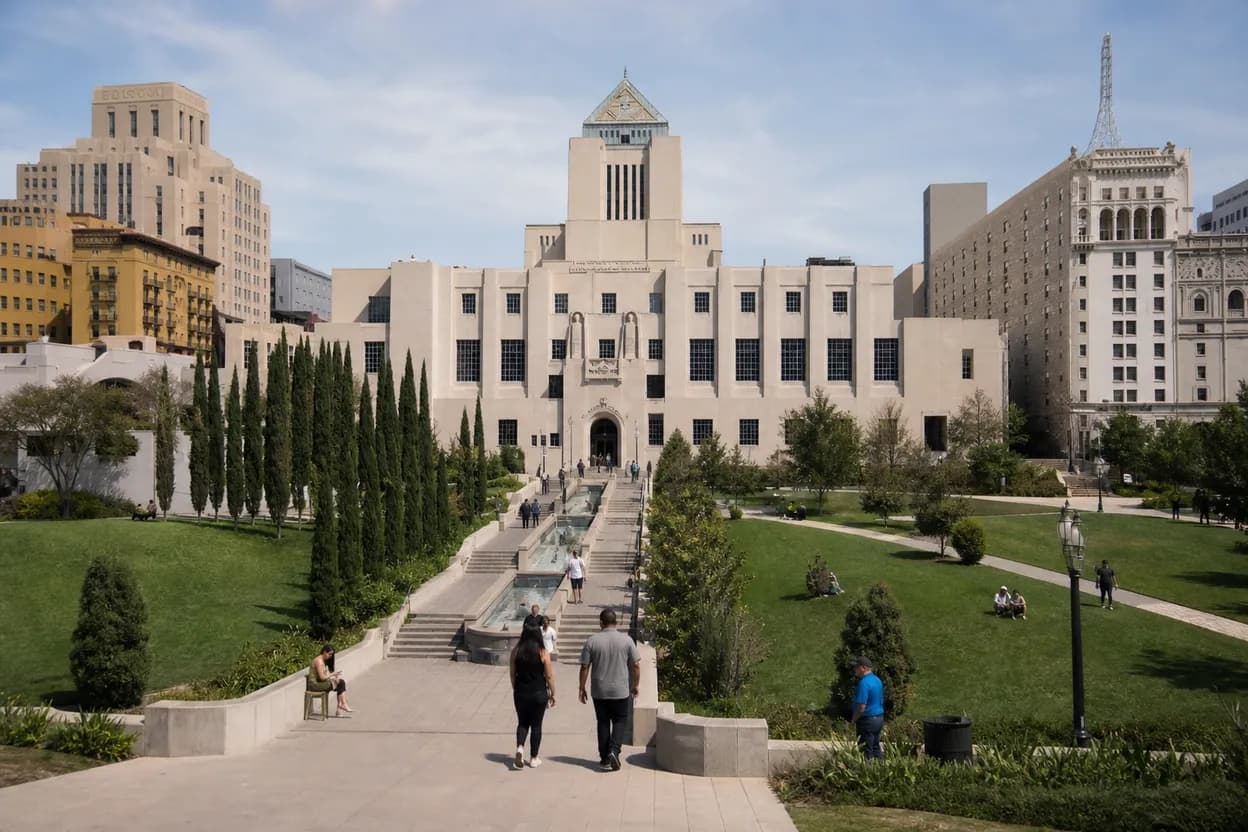
When a name starts circulating online, the useful move is not to repeat it faster. In Los Angeles, the better path is to identify which office actually holds the record, which search tool is only an index, and which files may be sealed or exempt. That matters for jamie komoroski as much as for any other lookup: a court result, county file, or city record can point in different directions, and each source has different limits. The Los Angeles Public Library can help you research quietly and cheaply, but the verification still depends on matching the right record to the right agency.
Want the fastest Los Angeles verification path? Text Karpo for the exact department or court to check first, so you can avoid the wrong office and get to a usable public record sooner.

Central Library research desk
Start at the Los Angeles Public Library’s Central Library when you need a calm place to sort names, spellings, and case types before filing anything. The Computer Center has staffed Internet stations, a low-vision computer, and catalog and database access, while walk-in users without a card can use shorter public sessions. That makes it practical for a solo reader who wants to compare sources without rushing or paying for every printout.
Printing and access details matter because record work often ends with a PDF, docket page, or request form. LAPL’s wireless printing and remote-print options keep the process cheap, but the library is not a records custodian. Use it for orientation, notes, and source comparison, then move to the agency that actually owns the file. If the library is busy, the backup is to use the database computers first and print only the pages that change your next step.
Los Angeles County public records portal
Los Angeles County says records requests must go to the individual department, agency, commission, or committee that holds the file. That is the key tradeoff: the County can route you, but it does not always collect every request centrally. For practical use, that means a narrow request beats a broad one, especially when you are trying to verify a public figure, a county action, or a document that may live in more than one office.
County guidance also gives you a response framework. Departments generally have 10 calendar days to determine whether records exist, with a possible written extension of up to 14 more days in unusual circumstances. That is useful when a search is time-sensitive but not urgent. If the record is copied, there may be direct duplication costs, so the safer backup is to inspect first, confirm relevance, and request copies only after the file matches your question.

City Hall records request page
If the material might belong to the City of Los Angeles rather than the County, use the City’s public records request page or the City Clerk’s records portal first. The City says requests should go to the department likely to possess the record, and it warns that some information in a request itself becomes public. That makes precision important: name the document, date range, location, and department if you know it.
The City also explains the timing rule most readers care about. Departments generally have 10 calendar days to respond, with a possible 14-day extension when needed. Electronic records are usually provided as PDFs, while other formats depend on technical capability. For someone checking a claim in Los Angeles, the backup logic is simple: if a file sounds municipal, do not start with the County or the court. Start with City Hall, then branch out only if the first office says it does not hold the record.
LA Court criminal name search
When the question is about a criminal matter, the Los Angeles Superior Court’s defendant-name search is the first online stop. It returns case number, defendant name, filing date, and filing location, and the court says the search is updated daily. That is helpful for narrowing a rumor into an actual case identifier. It is not the same thing as the official record, so treat the result as a lead, not proof.
The court also notes limits that matter for verification. Traffic and other infractions are excluded from this search, and older matters may require Archives. In practice, this means a hit on a name does not settle the story by itself, and a miss does not prove nothing exists. If you are checking a name like jamie komoroski, the safest move is to confirm the case type before assuming the result belongs in criminal, civil, or family records.
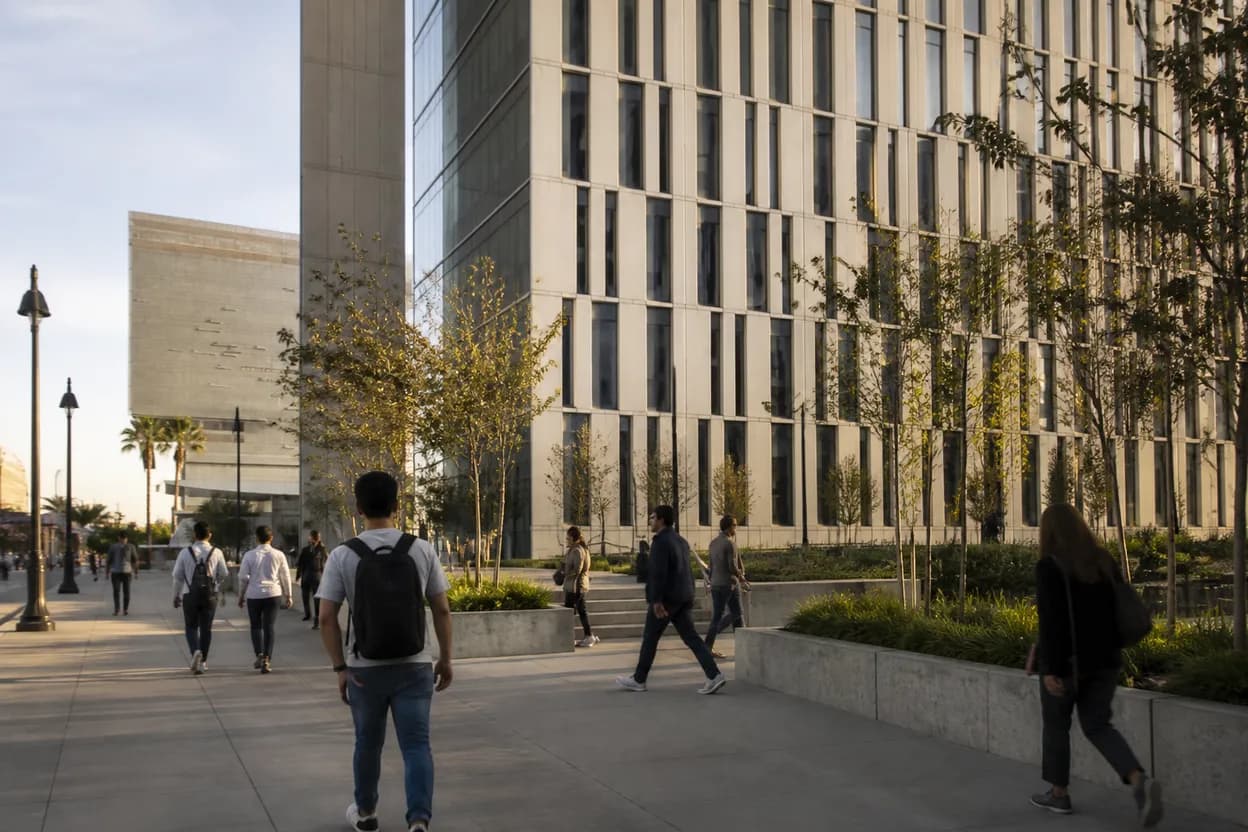
Civil Case Summary in Downtown LA
For civil, small claims, family law, and probate matters, LA Court’s case summary tool gives a separate path. It can show litigant names, filing dates, filing locations, and whether imaged documents are available. The court is explicit that the site is not the official record and may contain error or omission, so it works best as a map to the file rather than a replacement for the file itself.
That distinction is why the tool is useful for casual readers and frustrating for rushed ones. If the case is not in the index, you may need the courthouse clerk or archives. If it is in the index, you still need to check what document types are available online and whether the case has sealed or unavailable materials. For verification work, the best habit is to pair the index result with the underlying docket or certified copy before drawing any conclusion.
Planning records at City Archives
When a story touches property, permits, or neighborhood planning, the City Clerk’s Records Management Division is a better fit than a general search box. The City Archives and Records Center keep historical City Council files, City planning records, and departmental records by appointment, which is useful if the file predates web indexing or lives in storage. That gives you a path for documents that are real but not conveniently searchable from home.
The tradeoff is that archival access takes more setup. Planning files may require box numbers from the Planning Department before the Archives can schedule a visit, and older council files may need an in-person review. For a reader in Los Angeles, that means transit time and appointment time become part of the cost. The backup is to confirm the box number or file series first, then plan one trip instead of two.
One last cross-check at the counter
Before you trust any result, cross-check the record holder, the case type, and whether the document is public, sealed, or exempt. California’s public-records law gives broad access, but agencies can withhold or redact records that fall under legal exemptions. Courts also warn that some information online is not the official record. That is not a dead end; it is the point where verification becomes more careful than search.
A good final check in Los Angeles is to compare at least two independent sources before you repeat a name or share a conclusion. Library computers can get you to the tools, County and City portals can tell you who owns the file, and the court index can point you to the right docket. If the answer still does not hold, stop there and verify with the clerk, archives, or records coordinator instead of guessing.
Tags: #AskKarpo #BeforeYouGo #LosAngeles #PublicRecords #LAPL #LACounty #LACourt #CityHall #RecordSearch #CourtRecords #LibraryResearch #CARecords #VerifyBeforeYouShare #NewsYouCanUse
Sources consulted: Source 1: lapl.org · Source 2: lacity.gov · Source 3: lacounty.gov · Source 4: lacourt.org · Source 5: lacourt.org · Source 6: oag.ca.gov
All trademarks are the property of their respective owners.
Ask Karpo first
Tell Karpo your date, group size, budget, and starting point. We’ll check current access, timing, transit, and the cleanest Los Angeles plan for Los Angeles Public Library before you head out.


