When people search “is there a solar eclipse today,” the immediate question is about a rare event. The more useful Los Angeles answer is less dependent on the calendar: Griffith Observatory already operates free public telescopes on a fixed schedule, with solar instruments in daylight and a large refractor after dark. A desert drive is unnecessary. The practical variables are cloud cover, the day of the week and the line forming on the east roof before its final entry time.
Message Karpo for today's Griffith Observatory hours, likely telescope conditions and a Griffith Park route timed around the roof queues.

1. West roof solar telescopes
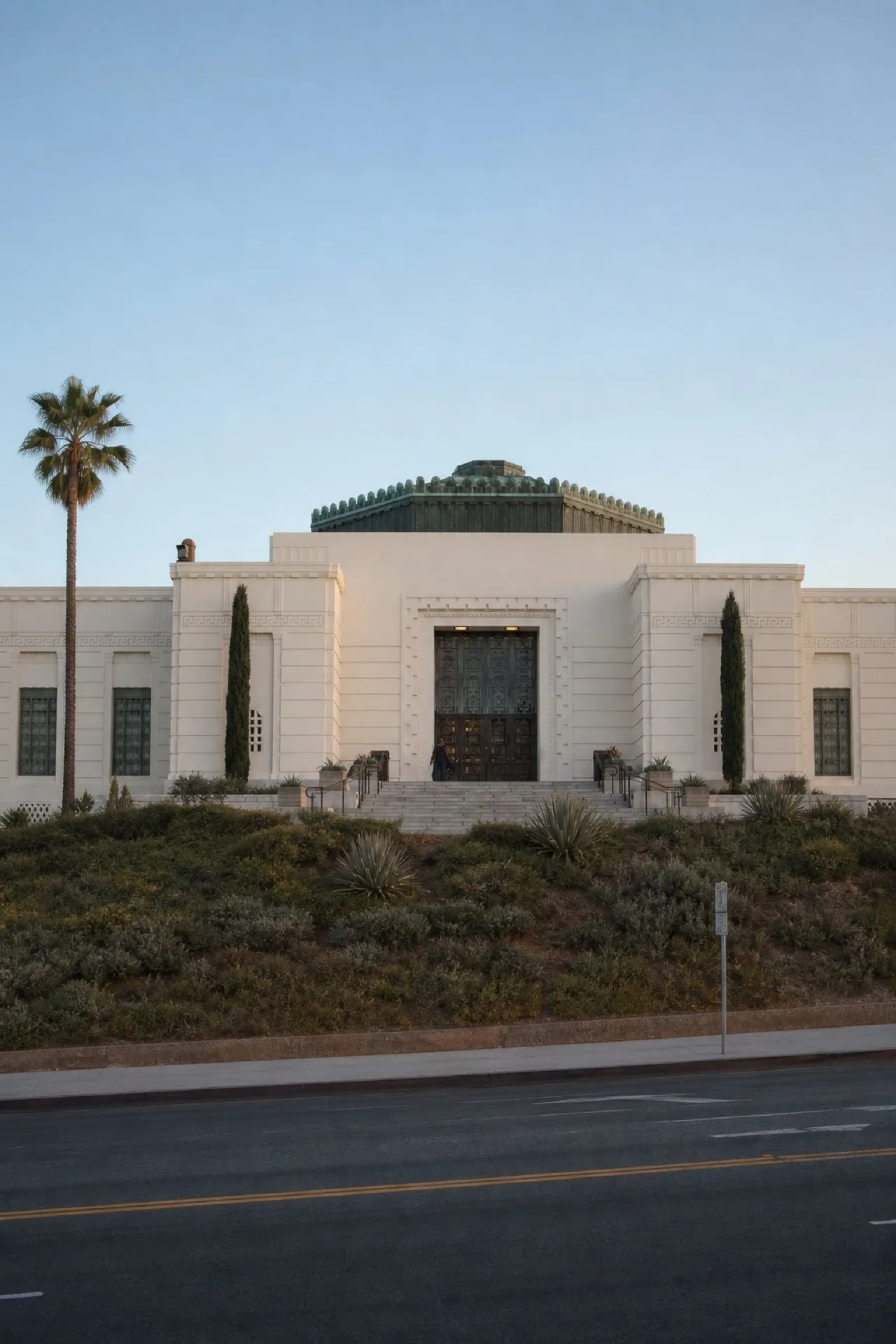
The strongest daytime option is on the west roof of Griffith Observatory. There are three free solar telescopes on the west roof during the day — hydrogen-alpha and white-light instruments for sunspots and solar flares — which almost nobody plans around because they assume sky-watching means night. They operate while the observatory is open and offer a scheduled, supervised way to look at solar activity without waiting for a special evening program.
This is the daytime answer, and the only safe way to look at the sun on the schedule. What can be seen depends on conditions, but the cost does not change: looking through the instruments is free. The sensible arrival window is after the building opens and while daylight remains, with enough flexibility to spend time inside if clouds pass over the roof. On weekdays that means no earlier than noon; at weekends the building opens at 10am.
2. East roof Zeiss refractor
After dark, the east roof becomes the main public observing stop. The Zeiss 12-inch refractor on the observatory's east roof is free to look through on every clear night after dark, running roughly 7:00pm to 9:45pm with last entry at 9:30 — and the queue on a clear evening runs 20 to 30 minutes, so arriving at 9:25 means missing it. The telescope is pointed at the moon and planets, depending on what is available in the evening sky.
The line is the part to plan around. A 9:30pm last-entry deadline is not the same as a suggested arrival time, especially when a clear evening draws a 20-to-30-minute queue. Working backwards, an earlier appearance leaves room for the line and for a change in cloud cover. If telescope viewing is the purpose of the trip, do not leave it until the end of a 10pm observatory visit.
3. Free exhibits when clouds move in
Cloud does not have to end the outing. The Foucault pendulum, the Tesla coil, the Camera Obscura and the Leonard Nimoy Event Horizon theater are all included at no cost, which makes them the real cloudy-night plan rather than a consolation prize. They follow the building's opening hours, so they also provide somewhere to go before darkness or while waiting to see whether conditions improve on the roofs.
This backup matters because the public telescopes depend on a clear view. When cloud closes the roofs, the exhibits remain the straightforward free alternative inside the observatory. It also works in reverse: begin indoors during uncertain weather, then move toward the appropriate roof if the sky clears. There is no need to commit the whole visit to either daytime solar viewing or the evening telescope before seeing the conditions on arrival.
4. Terraces, lawns and grounds
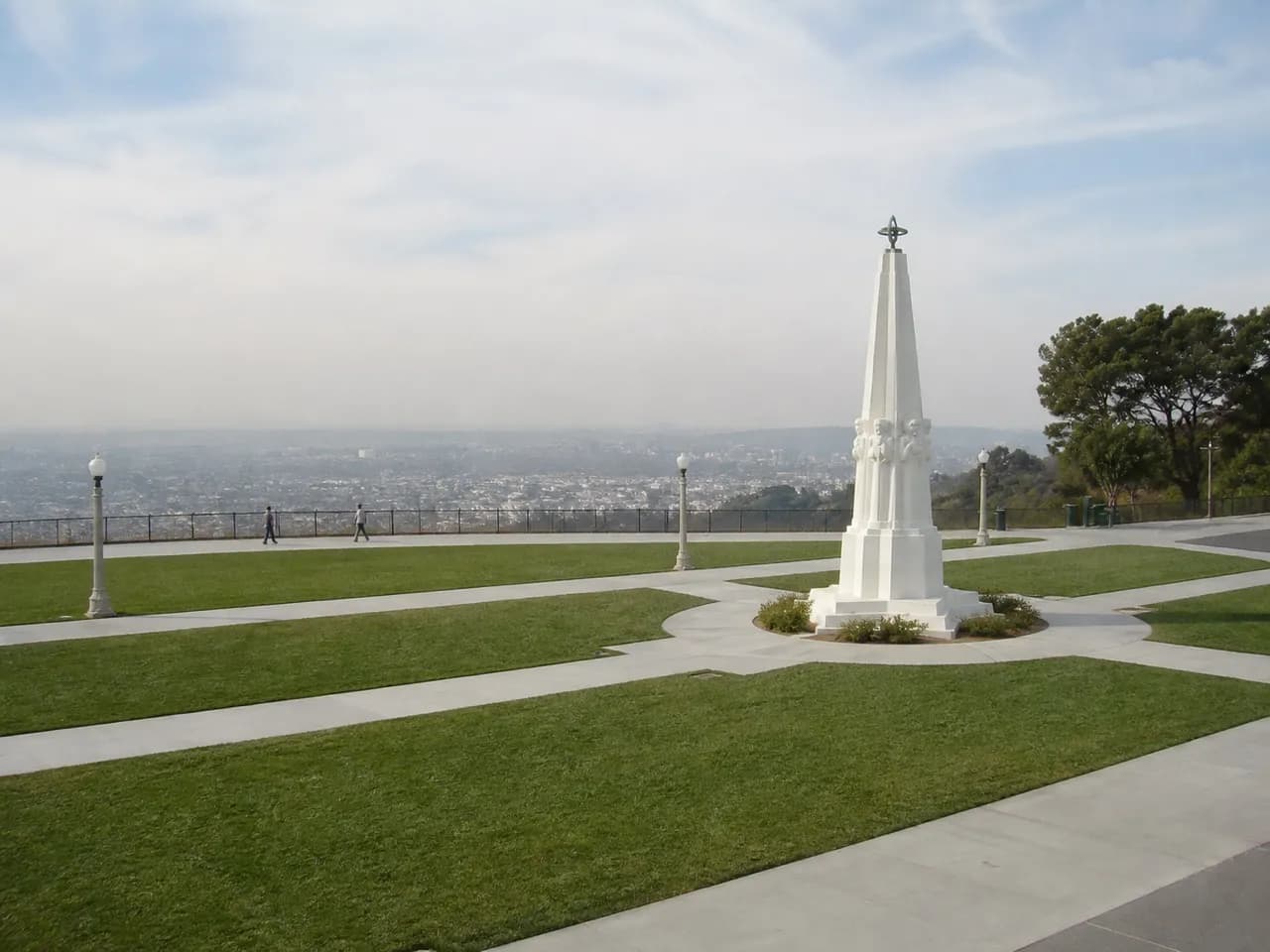
Not every free part of Griffith Observatory requires joining a telescope line. General admission, the exhibits, the rooftop terraces, the lawns and the grounds are all free — the only thing you pay for is the Samuel Oschin Planetarium show under the central dome. That makes it possible to build a visit around the public spaces and telescopes without buying an admission ticket to the building.
The terraces, lawns and grounds are particularly useful when timing does not line up neatly. Daytime visitors can wait for a clearer interval before returning to the west roof. Evening visitors can use the free areas before joining the Zeiss queue, provided they keep the 9:30pm last-entry cutoff in view. The observatory closes at 10pm on every open day, so there is little margin for a late change of plan.
5. Griffith Park trails
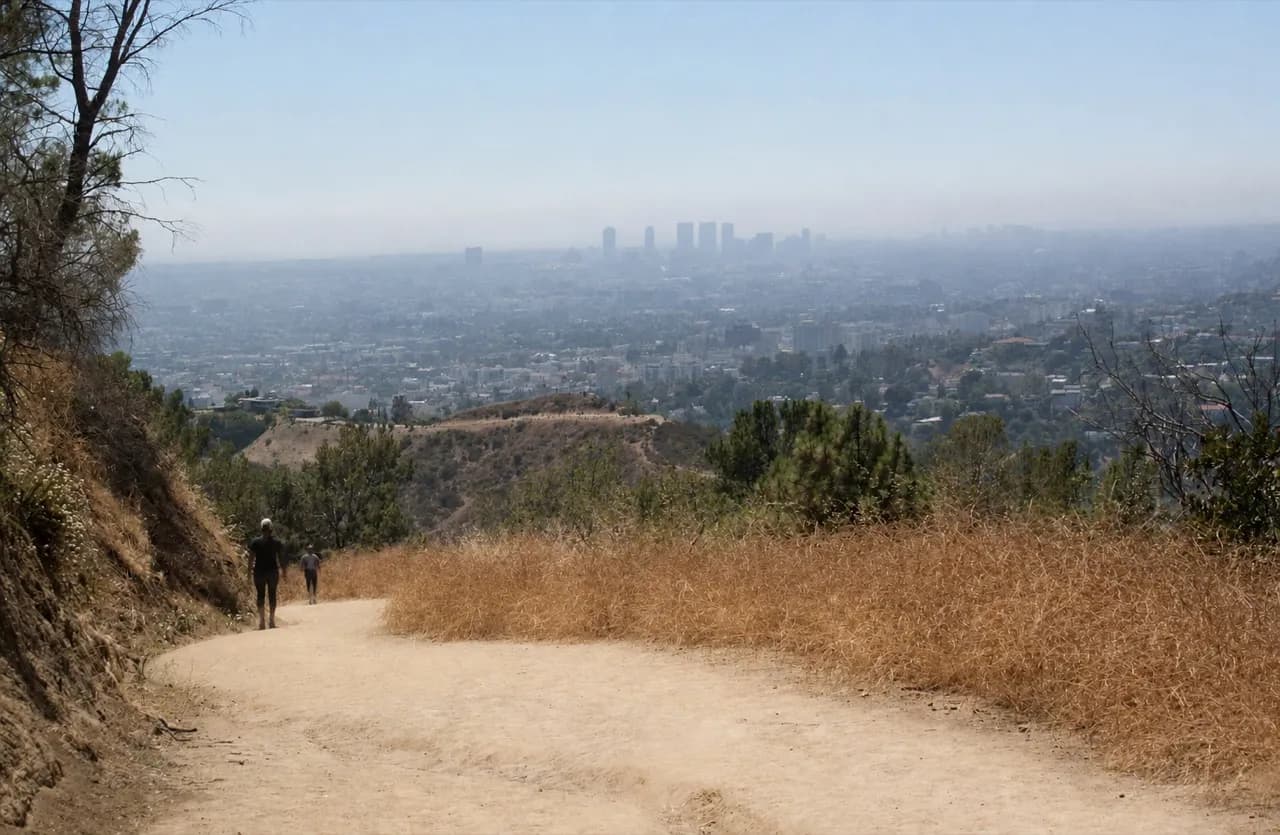
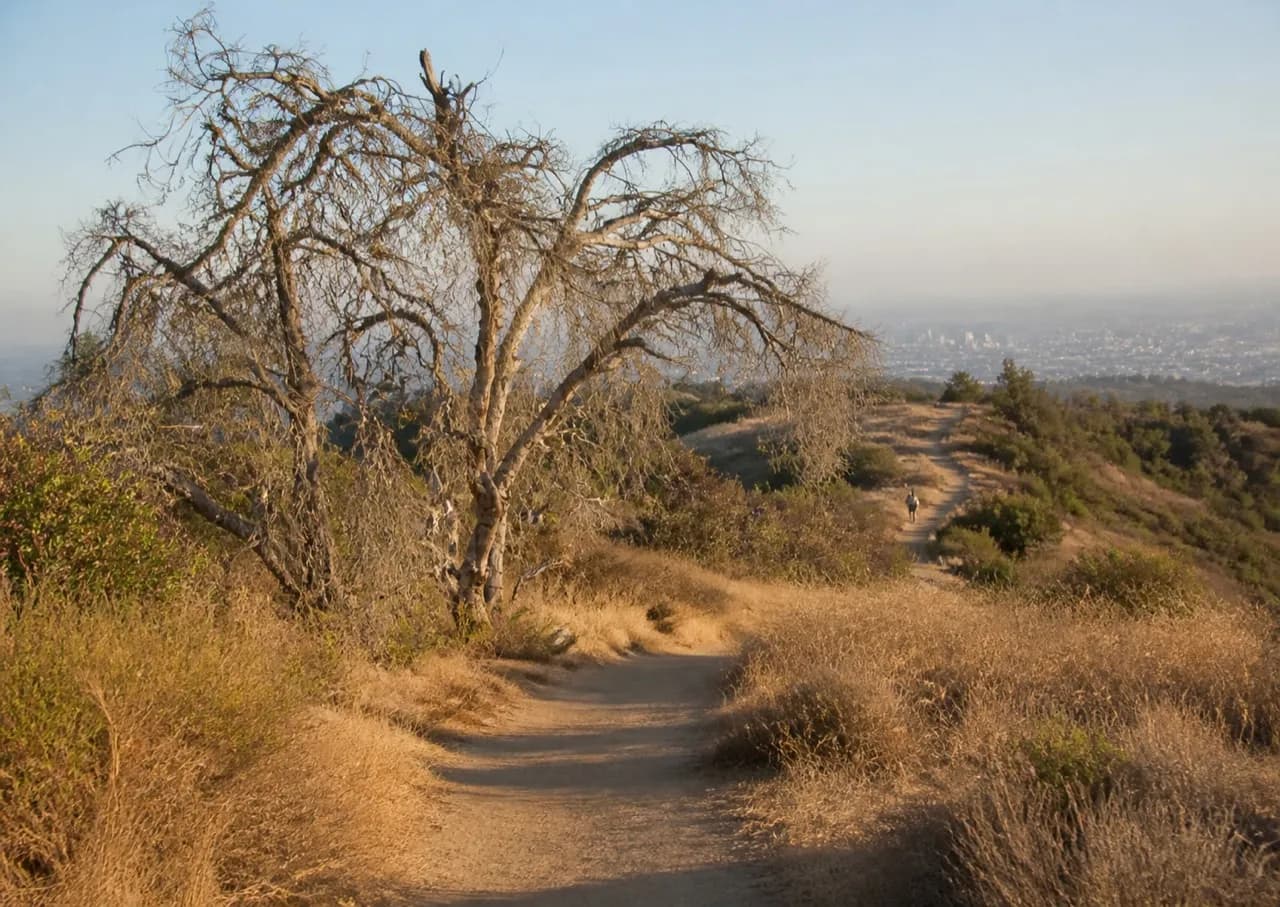
For an arrival that does not depend on parking near the building, the Griffith Park trails are the practical fifth choice. The chaparral trails climb the hills below and around the observatory during daylight. The walk up is free and avoids the parking problem entirely, making it most useful for a daytime visit or an arrival with substantial daylight left.
Trail timing should be kept separate from telescope timing. The paths are a daylight option, while the Zeiss refractor runs after dark. A combined plan therefore starts with the walk, reaches the observatory before daylight disappears and uses the building or grounds until evening viewing begins. Anyone considering the trails should check current access arrangements and conditions before setting out, particularly when a step-free route is needed.
6. Samuel Oschin Planetarium
The Samuel Oschin Planetarium sits last in a ranking of free options because it is the one paid experience in the building. Shows run through the day under the central dome. It can be added to a visit, but it is not required for access to the observatory, exhibits, grounds, terraces or public telescopes.
The distinction is useful at the door: a planetarium charge does not turn the rest of the visit into a paid attraction. Menus of show times can vary through the day, so check the current schedule before arranging the visit around a particular presentation. If the preferred show does not fit, the free exhibits and, in clear conditions, the relevant roof remain the immediate alternatives.
The schedule that prevents a wasted trip
The observatory is closed all day on Mondays; it opens at noon Tuesday to Friday and at 10am at weekends, closing at 10pm on every open day. The Monday closure is the single most common wasted trip because the building is shut for the entire day, not merely opening late. Daytime solar viewing follows those open days and hours, while evening use of the Zeiss still depends on clear skies after dark.
A workable sequence is simple. On a clear daytime visit, start with the west roof and keep the free exhibits available for passing cloud. For an evening visit, arrive early enough to see the exhibits before joining the east-roof line, rather than treating 9:30pm as an arrival target. When the first choice is unavailable, shift indoors; when the roof queue is long, protect the deadline instead of trying to squeeze in another stop.
Practical notes
- Hours: Closed Monday; open noon to 10pm Tuesday-Friday and 10am to 10pm Saturday-Sunday.
- Daylight timing: The three west-roof solar telescopes operate during observatory hours while daylight and conditions allow.
- Evening timing: The east-roof Zeiss generally runs from about 7:00pm to 9:45pm, with last entry at 9:30pm.
- Queue: Allow roughly 20 to 30 minutes on a clear evening and do not treat 9:25pm as a workable arrival time.
- Price: General admission, exhibits, telescopes, terraces, lawns and grounds are free; the Samuel Oschin Planetarium show is paid.
- Arrival: A daylight walk on the Griffith Park trails avoids the parking problem; check current trail and access arrangements before leaving.
- Weather backup: If cloud closes the roofs, use the Foucault pendulum, Tesla coil, Camera Obscura and Leonard Nimoy Event Horizon theater.
Tags: #losangeles #griffithobservatory #griffithpark #skywatching #solartelescopes #stargazing #freeinla #thingstodoinla #astronomy #sunspots #planetwatching #latravel #freeactivities
Sources consulted: griffithobservatory.lacity.gov · furnished.la · washedup.app
All trademarks are the property of their respective owners.
Ask Karpo first
Before heading into Griffith Park, message Karpo to check which public parts of Griffith Observatory are actually open, whether daytime solar viewing or the evening Zeiss window fits the hour, and how early to show up before the 9:30pm cutoff. Karpo can build a live route around Griffith Park that accounts for the daylight trails, the free exhibits, the roof queue and a cloudy-sky backup.