There is a version of the best beaches near Los Angeles built entirely around a handful of famous names, and it describes a way of using the coast that almost nobody who lives here practises. Angelenos do not drive an hour to a photogenic cove with a picnic and a plan. They go to the nearest reasonable stretch of sand, for ninety minutes, usually in the last two hours of daylight, and the beach they pick is determined almost entirely by which freeway exit is closest to their house.
The right beach here is usually the near one at the right hour. Ask Karpo which stretch near you is worth the drive this evening.
The geography of habit
This city is forty miles across and the coast runs along most of one edge of it, which means everybody has a home beach. People in the South Bay use the flat, wide stretches from Manhattan through Hermosa and Redondo. People on the Westside use the beaches either side of the airport approach and the long strand south of the pier. People in the eastern half of the city mostly do not go to the beach at all, which is the least romantic and most accurate fact in this article.
The consequence is that the famous beaches are populated overwhelmingly by visitors and by the small number of locals who happen to live near them. That is not a criticism of those beaches. It just means the crowd you are in is not a local one, and the experience is correspondingly different.
The unglamorous stretches
The best local beaches in Los Angeles are frequently the ones with something wrong with them. The long strand under the airport flight path is loud and has fire pits, which makes it the only place in the county where a beach bonfire is straightforward. The industrial-adjacent stretches south of the harbour are empty because of what is behind them and perfectly pleasant once you are facing the water.
These are the beaches with parking on a Saturday, and that alone is worth more than a better view. A mediocre beach you can reach in twenty minutes gets used fifty times a year; a spectacular one ninety minutes away gets used twice.
Dogs, surf and the specialist beaches
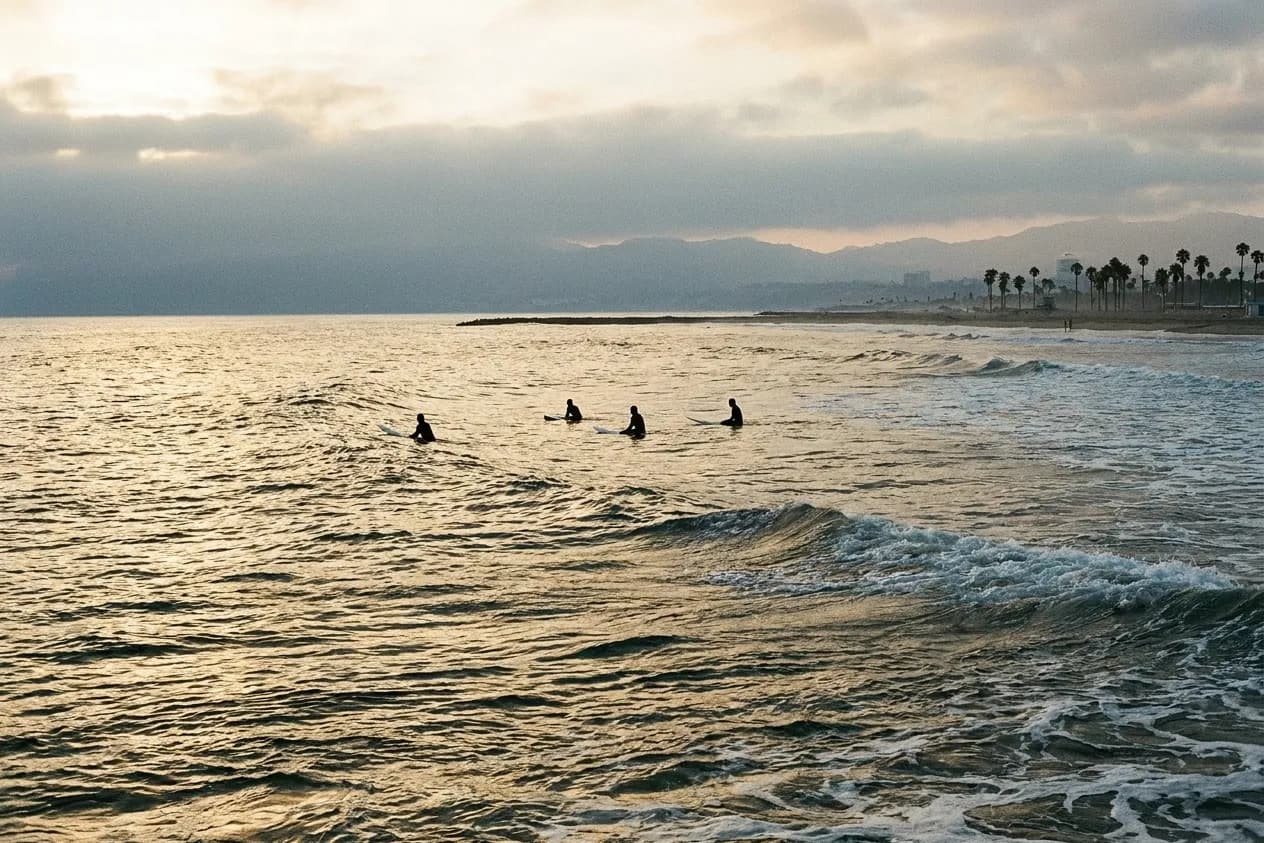
The county has one official off-leash dog beach, in the far south of the region, and it functions as a social institution as much as a beach — people drive an hour for it and the crowd is entirely local. The surf breaks are the other specialist category: the points and reefs along the northern coast and the beach breaks in the South Bay each have their own regular crowd, their own etiquette and their own hours, which are early.
If you do not surf, the early morning at a surf beach is still the best time to be there. The sand is empty, the light is good, and the people in the water are doing something worth watching.
The evening habit
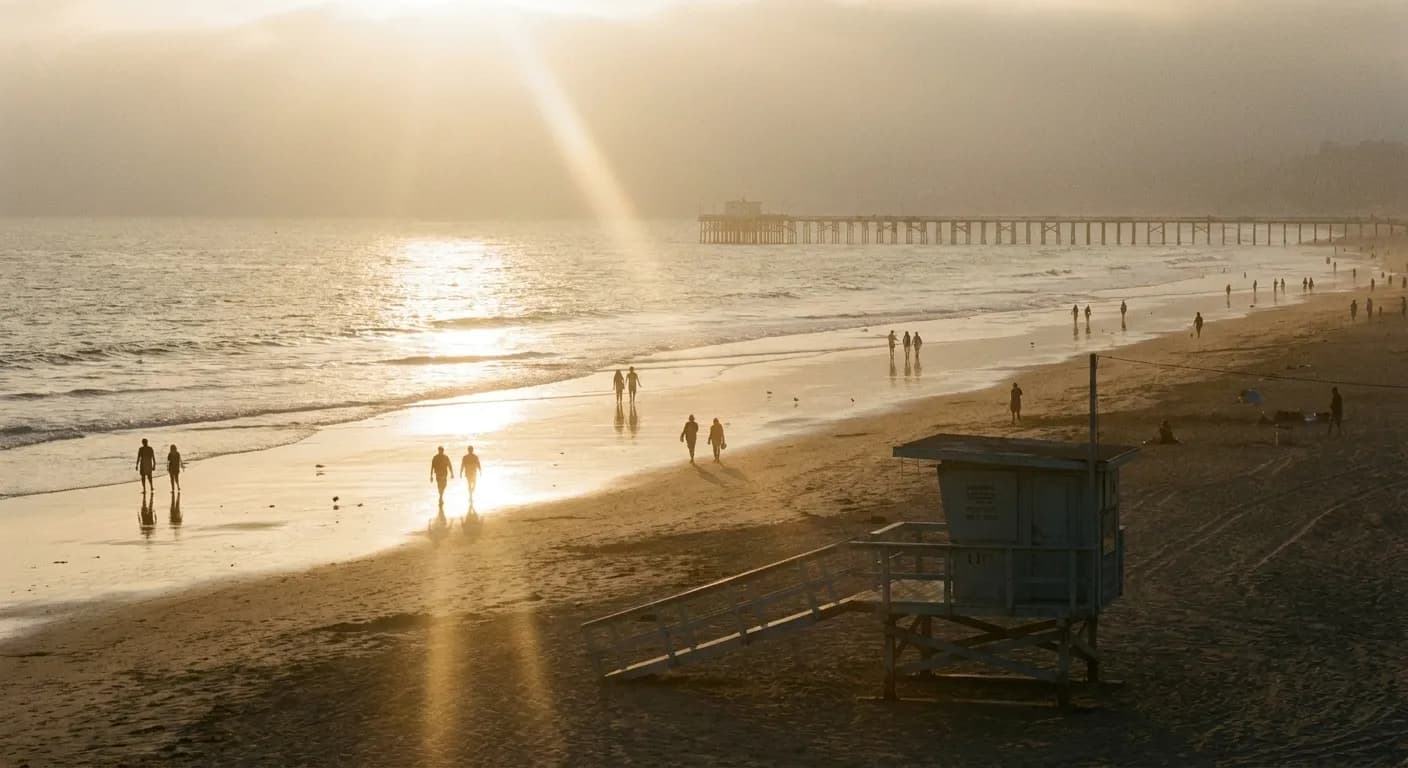
The single most local thing about beach use in this city is the timing. The marine layer keeps mornings grey for much of the year, the middle of the day is hot and crowded and the parking costs the most, and the last two hours before sunset are the best light, the coolest air and the emptiest sand. That is when Angelenos actually go.
It also fits the geography. A beach trip that starts at five and ends at eight avoids the worst traffic in both directions and does not require committing a whole day. Most people here go to the beach after work, not instead of it.
Parking, again
Everything about beach use in Los Angeles reduces to parking eventually. The county lots charge a flat fee and always have space; the street parking is free, legal in defined blocks, and requires reading the signs properly. Locals know the three streets near their home beach where the restrictions allow it and they park there every time.
The other local move is to arrive after the lot attendants have gone home, which at several county beaches is late afternoon. Whether that is a loophole or simply how it works depends on the beach, and it is one of the reasons the evening trip is so entrenched.
The water, honestly
Ocean temperature here runs from about thirteen degrees in late winter to around twenty in September, which is the warmest month and the reason autumn is the best swimming season on this coast rather than midsummer. That is cool but genuinely swimmable without a wetsuit for most people, unlike the water further north.
Water quality is the variable worth checking, particularly after rain. Runoff carries everything from the storm drains into the surf, and the standard local advice is to stay out of the water for seventy-two hours after a storm. County monitoring publishes grades by beach and it is a two-second check that people who swim here regularly do as a matter of routine.
What a local beach day actually contains
Not much, and that is the point. A towel, a walk along the waterline, forty minutes sitting, possibly a swim if the water has warmed up, and then food somewhere on the way home. No cooler, no umbrella, no plan. The elaborate version — the full-day expedition with equipment — is something people here do a few times a summer and mostly with visiting relatives.
If you want to use this coast the way people who live here use it, that is the whole method: go often, go near, go late, stay ninety minutes, and stop treating it as an occasion. The beaches near Los Angeles are best understood as a public amenity you drop into rather than a destination you visit, and the shift in framing improves the experience considerably.
Tags: #LosAngeles #LABeaches #SouthBay #Dockweiler #BeachDay #WeekendPlans #SoCal #LAOutdoors #GoldenHour #LocalsGuide #Surfing #DogBeach #CoastalLA
All trademarks are the property of their respective owners.
Ask Karpo first
Ask Karpo which beaches near you in Los Angeles have parking this evening, how long the drive is, and where to eat on the way back.