 Where to Eat Near Penn Station That Isn't a Chain
US Open 2026
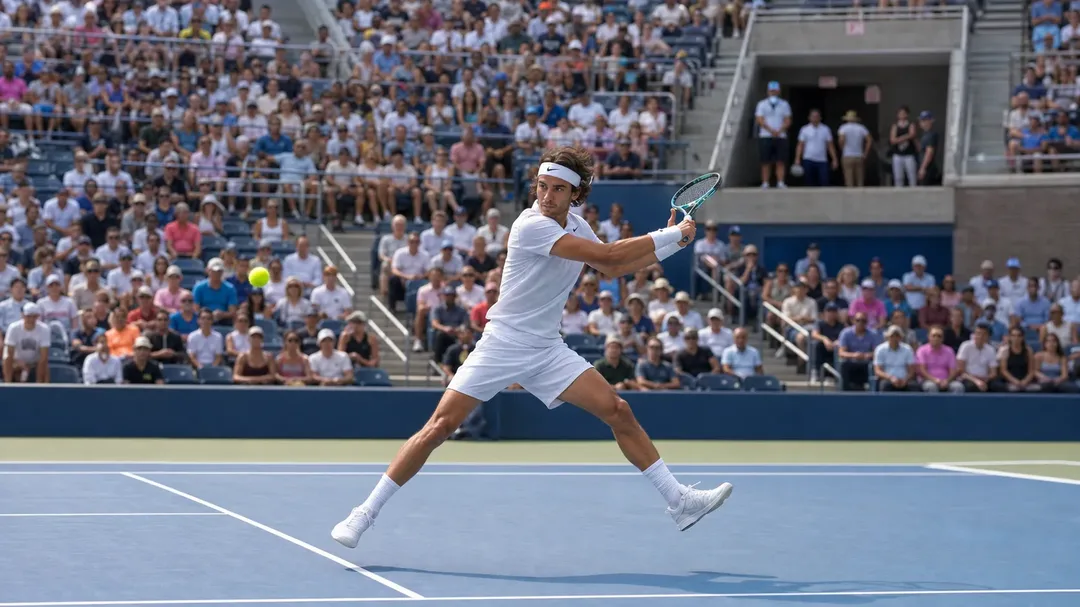
Lorenzo Musetti’s Variety Faces a Hard-Court Test in New York
If Lorenzo Musetti appears in New York, his touch, variety, and one-handed backhand would face a fast, physical hard-court test.
Lorenzo Musetti is interesting for New York fans because his game asks a different question from the standard hard-court formula. The confirmed baseline is simple: he uses variety, touch, and a one-handed backhand. Everything about a future New York appearance should be treated conditionally unless official player and schedule information confirms it. If he appears on a hard court there, the intrigue would not be whether artistry alone can win points. It would be whether changes of height, pace, spin, and direction can survive the tighter timing that the surface creates. Hard courts reward clean first strikes, compact recovery steps, and clear decisions. Musetti’s tools can create awkward looks, but they also demand discipline. For spectators, the fun is watching whether variety becomes a way to control rallies rather than simply decorate them.
Text Karpo Now: Tell us what matters most for Lorenzo Musetti s Variety Faces a, and Karpo can turn current US Open updates into a practical plan before you go.
Why Variety Matters
Variety is not only drop shots and highlight angles. At tour level, it is a way to interrupt rhythm before an opponent settles into repeated cross-court exchanges. Musetti’s touch can matter on a New York hard court when it follows a ball that has already pushed a rival deep or wide. A soft shot from a neutral position can invite trouble. A soft shot after a heavy, deep ball can force a sprint, a low pickup, and a rushed passing-shot decision.
The one-handed backhand adds both appeal and risk to that equation. It can carve angles, change pace, and redirect with disguise. It can also be tested by high, heavy balls or by pace into the body. On hard courts, the bounce can offer cleaner timing than clay, but the ball also moves through the court quickly enough to reduce recovery time. If Musetti can hold the baseline or step inside it, his backhand variety can become a weapon. If he is pinned well behind the line, the same variety may become emergency management.
Fans should look for whether his changes are connected. A low slice followed by a heavier forehand into space is a pattern. A drop shot after two deep drives is a pattern. A sudden backhand line change after drawing the opponent cross-court is a pattern. The key is whether variety builds pressure rather than merely avoiding it.
Serve And Return Patterns
On hard courts, serve-plus-one tennis often decides who gets to use the full playbook. If Musetti were playing in New York, his service games would be worth watching beyond serve speed. Placement matters because it shapes the first groundstroke. A wide serve can open room for a forehand. A body serve can jam a returner and produce a shorter reply. A serve through the middle can reduce angles and make the next shot simpler. For a player built on variety, the first serve is not only a possible point-ending tool; it is the doorway into pattern control.
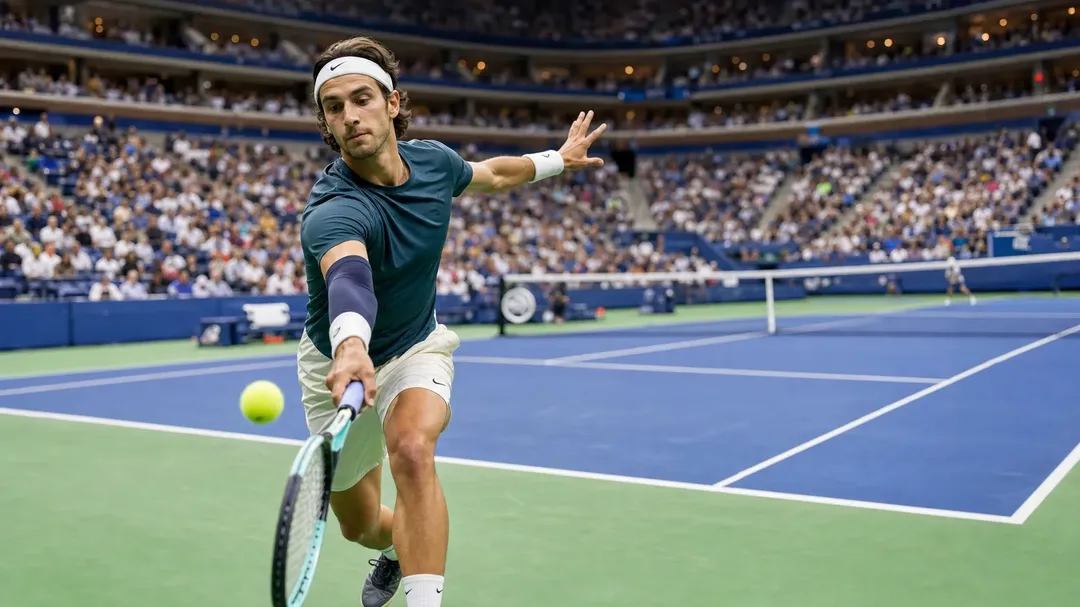
The return side may be even more revealing. Against big servers, a blocked return is valuable only if it lands deep enough to prevent an immediate attack. Against second serves, the question is whether he can take time away or at least influence the opponent’s first shot. A one-handed backhand return can be elegant when the contact point is right, but it can be crowded by kick, body serves, and pace into the hip. If he chips returns, depth becomes everything. A floating short chip gives the server an easy first strike; a skidding deep chip can reset the rally and invite a more tactical exchange.
- Watch whether his first shot after the serve lands deep or only looks creative.
- Notice if his backhand return is driven, blocked, or sliced under pressure.
- Track how often he earns neutral rallies after returning a strong first serve.
- Look for body serves against him, a common way to crowd a one-handed backhand setup.
Movement And Court Geometry
New York hard courts place a premium on the first step after contact. A player who uses touch and angle must also recover quickly enough to defend the reply. That is where geometry becomes more than a coaching term. When Musetti pulls an opponent wide with a short angle, he also opens the opposite side of the court. If his recovery is late, the opponent has a clear target. If his recovery is sharp, the opponent may feel forced to aim closer to the lines, which increases risk.
The one-handed backhand affects movement choices because it usually benefits from space and balance. On a rushed ball, a player may slice to buy time. On a ball reached early, he may drive through it and change direction. For Musetti, the tactical question is whether he can create enough clean-contact moments on a surface that rewards opponents for taking time away. His best hard-court sequences would likely involve depth first, angle second, and touch third. Depth pushes the opponent back. Angle stretches the court. Touch punishes overreaction.
Spectators can read this without a coach’s vocabulary. If he is hitting many balls while moving backward, he is probably defending. If he steps into the court after a neutral exchange, he is beginning to shape the rally. If his slice stays low and the opponent has to hit up, he has changed the height of the point. If the opponent keeps taking the ball early and driving through the middle, the geometry is being compressed, and his options shrink.
Pressure Points To Watch
Pressure management is where style becomes substance. A varied player can look brilliant at 30-0 and overcomplicated at break point if the choices are not disciplined. In tense moments, the important question is whether Musetti simplifies without becoming predictable. That could mean choosing a higher-percentage serve target, playing a deeper cross-court backhand instead of a lower-margin line shot, or using the drop shot only after the opponent has been moved behind the baseline.
Hard courts also test short-term memory. A missed touch shot can discourage a player from using feel later, while a successful one can tempt overuse. The best version of a creative player treats those shots as tools, not moods. If Musetti were in a tight New York match, fans should watch his response after errors. Does he return to the same pattern with better execution? Does he abandon it entirely? Does he protect the backhand corner with slice until he gets a better ball? Those choices reveal confidence more clearly than body language alone.
- At deuce, notice whether he chooses placement over pace on serve.
- On break points, watch if the drop shot follows a deep setup ball.
- After a missed backhand, see whether he keeps driving it or moves to slice.
- Late in sets, note whether his court position moves forward or drifts backward.
For fans used to first-strike hard-court patterns, Musetti’s appeal is the tension between imagination and efficiency. He does not need every rally to become a painting. He needs enough practical structure to make the creative moments valuable. The surface will reward clean serving, early returns, and quick transitions from defense to offense. His variety can fit that environment if it is timed to the score, the ball, and the opponent’s position.
Practical Notes
If you are planning around a possible Musetti appearance in New York, verify participation and timing through official player and event schedule pages before making tennis-specific plans. Player fields and match schedules can change, and this analysis does not confirm an entry, seed, draw position, court assignment, or match time. For live viewing, arrive early enough to watch warmups if your ticket and court access allow it; the warmup can show whether he is emphasizing backhand timing, return blocks, or serve placement. From courtside or a broadcast, focus less on winners and more on rally shape: where he stands, whether his slice stays low, and whether his touch shots come after he has earned court position. That will tell you more than a highlight reel.
Tags: #USOpen2026 #Tennis #GrandSlam #NewYorkTennis #ArthurAsheStadium #FlushingMeadows #USOpenGuide #TennisFans #SportsTravel #HardCourt #NewYork #KarpoFinds
Sources consulted: atptour.com — Official reference · usopen.org — Official reference · usopen.org — Official reference
All trademarks are the property of their respective owners.
Ask Karpo first
Want to know what is confirmed, when to show up, and how to make lorenzo musetti s variety faces a work for your day? Ask Karpo for current US Open updates, a respectful fan plan, and a live route around Flushing Meadows.
Ask Karpo for more information.
Keep reading
- Where to Eat Near Penn Station That Isn't a Chain
 Andytown Coffee in the Outer Sunset: The Snowy Plover Explained
- Best Things to Do in Chicago: What the City Gives Away