 Knightsbridge Festive Shop Window Walk Planner: Dusk Loop
Neighborhood Guides
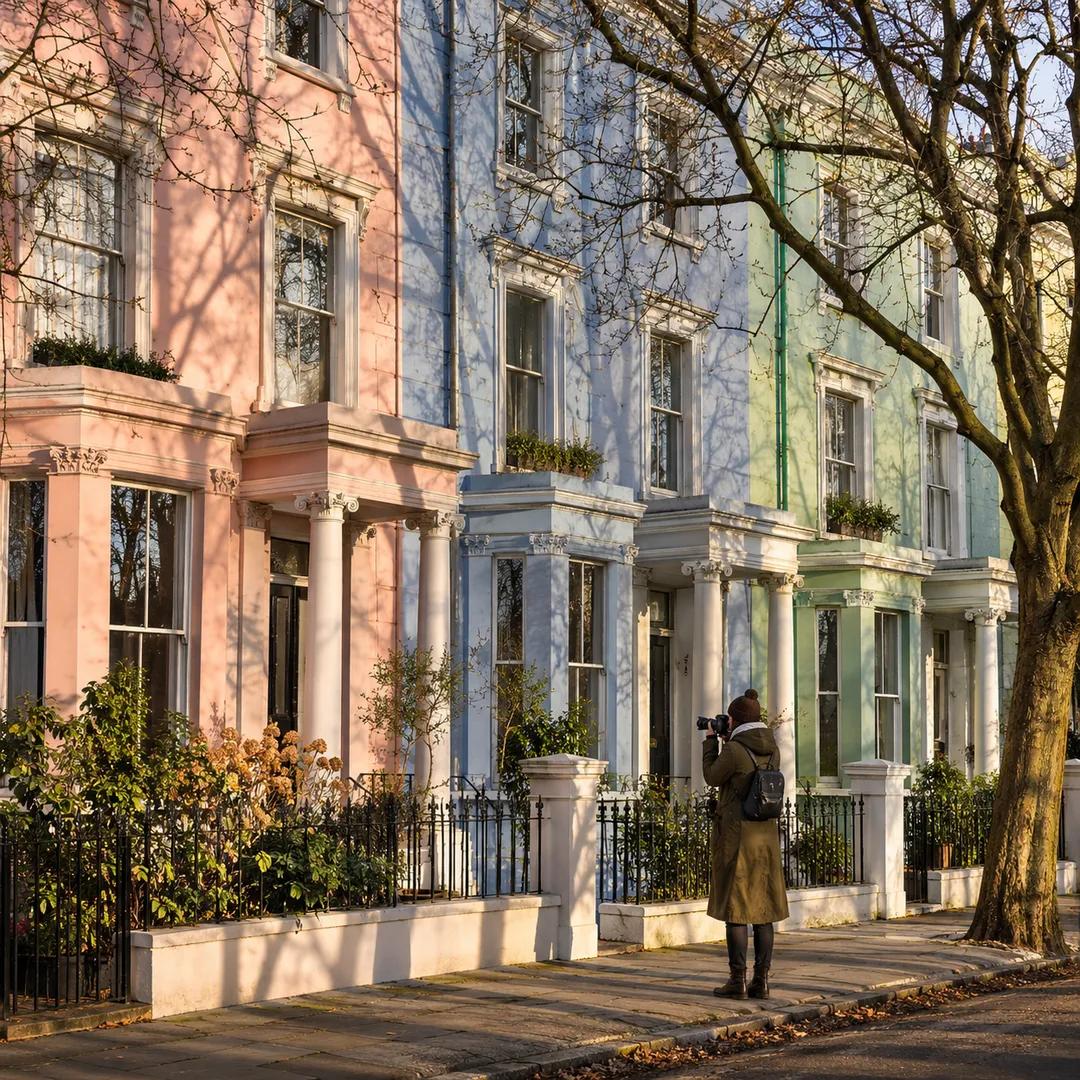
Notting Hill Winter Weekend Neighborhood Guide: Pastel Light
Low winter sun makes Notting Hill glow. Plan a camera weekend of pastel terraces, Portobello stalls, quiet mews and misty Holland Park mornings.
Notting Hill is famous for colour, and winter is secretly the best season to see it. In summer the pastel houses are hidden behind leaves and crowds, but from November onwards the trees are bare, the sun stays low all day, and long golden light rakes across pink, blue and lemon facades. If you love taking photos, even just on your phone, a cold weekend in this corner of west London can be magical. Here is a photographer's plan for two winter days, built around the best light, the market and the quiet green spaces nearby.
What Makes Winter Light Special Here
Photographers talk about golden hour, but in a London winter the sun never climbs very high, so the soft, warm light lasts much longer than in summer. On a clear day in Notting Hill the whole afternoon can feel like golden hour. Pastel paint, white stucco columns and black iron railings all pick up that glow, and the long shadows add depth to even simple street scenes.
Grey days have their own charm too. Under an overcast sky the colours of the houses look calmer and richer, with no harsh shadows to fight. A light drizzle makes the pavements shine and reflects the painted doors. Rather than waiting for perfect weather, treat each kind of winter light as a different mood. Some of the best shots happen on days when tourists stay indoors and the streets are almost empty.
Early Saturday on Portobello Road
Saturday is the big market day on Portobello Road, and in winter it is worth arriving early. The antique dealers at the top of the hill set up first, laying out silver, old cameras, maps, teacups and curious objects on their stalls. In the first hours the light is soft, the crowds are thinner, and traders are happy to chat while they unpack. Wrap up well, because standing still in the cold is harder than walking.
For photos, look for details rather than wide crowd shots. Hands sorting through boxes of postcards, steam from a coffee cup, stacks of vintage frames or rows of china make strong, warm images. Always ask before photographing a stallholder or their goods up close, and buying something small is a nice way to say thank you. Further down the road the market changes to fruit and vegetables, street food and secondhand clothing, each with its own character.
Pastel Terraces and Quiet Streets
Leave the market behind and explore the side streets, where the famous coloured houses are. Several streets just off Portobello are lined with terraces painted in soft shades, and walking them slowly is the real joy of Notting Hill. Each block has its own palette, and on a sunny winter afternoon the colours seem to change minute by minute as the light shifts.
Remember that these are people's homes. Keep off doorsteps, do not lean on railings or block front doors, and keep your voice down. Shooting from across the street gives you a cleaner frame anyway, with the full height of the house and the sky above. Try including a single person walking past for scale, or a bicycle chained to a railing, to make your pictures feel alive rather than like a postcard.
Mews Lanes and Garden Squares
Hidden behind the grand streets are cobbled mews, narrow lanes where the old stables and coach houses have become small homes. Many are painted in bright colours too, with pots of winter shrubs and fairy lights around the doors in December. They are quieter than the main streets and very photogenic, especially when the cobbles are wet. Walk through calmly and remember that some mews are private, so respect any signs.
Notting Hill also has elegant garden squares surrounded by tall white houses. Most are for residents only, but you can still enjoy them from the pavement, with bare trees and frosty lawns behind black railings. The curved crescents on the hill are among the most beautiful streets in the area. Walk them in the late afternoon, when the low sun lights up the upper floors and the street below falls into blue shadow.
A Misty Morning in Holland Park
On Sunday morning walk south to Holland Park, a short distance from the busiest streets. It is a wild, wooded park with formal gardens, peacocks wandering the paths and a beautiful Japanese garden with a waterfall, stepping stones and a koi pond. On a cold misty morning the garden is calm and atmospheric, and the bare maple branches create lovely patterns against the water.
Arrive early for the quietest moments, and move slowly. The peacocks are used to visitors, so you can often get close shots without disturbing them, but keep a respectful distance. Frost on the lawns and the old ruined house at the centre of the park add to the wintry mood. Take a break at the park cafe for something hot, then wander the woodland paths, which feel surprisingly remote for central London.

Warm Breaks Between Shoots
Cold fingers and flat batteries are the enemy of winter photography, so plan regular warm breaks. Notting Hill has plenty of cosy cafes, bakeries and pubs where you can thaw out, review your photos and charge your phone. A slice of cake and a hot chocolate in a steamy cafe window can be a great subject in itself, especially when the street outside is grey and wet.
Pubs here range from smart gastropubs to old local corner pubs with open fires. An afternoon pub stop works well as a break between the market and the late golden light. Keep your camera bag close and off the floor in busy places. If you are carrying a lot of gear, keep it simple: one camera with a fast lens or a good phone is plenty for this weekend.
Gear and Clothing for Cold Shoots
Dress in layers, with a warm hat and thin gloves that let you use buttons and touchscreens. Fingerless gloves with a fold over mitten are popular with photographers for good reason. Carry a spare battery in an inside pocket, because the cold drains power quickly. A small cloth for wiping rain drops off the lens is essential, and a compact umbrella helps on wet days.
Comfortable, waterproof shoes matter more than anything else, since you will walk a lot and stand still for long periods. Keep your bag light and avoid tripods on busy pavements, where they can block people. If you want night shots of the festive lights in December, a small travel tripod can be useful on quieter streets, but most modern phones handle low light very well on their own.
Who This Weekend Suits
This plan suits photographers of all levels, from phone shooters to people with serious cameras, as well as couples who enjoy a slow, pretty walk and visitors who want to see a famous neighborhood without the summer crowds. It is especially good on clear days in late autumn and winter, when the low light is at its best.
It is less suited to anyone looking for nightlife or big attractions, and the market can feel crowded by late morning for those who dislike busy places. If you have young children, keep the market visit short and spend more time in Holland Park, where the peacocks and open space will keep them happy.
Ask Karpo for more information.
Keep reading
- Knightsbridge Festive Shop Window Walk Planner: Dusk Loop
 Covent Garden Festive Shop Window Walk Planner: Night Loop
 Mayfair Festive Shop Window Walk Planner: Arcade Dusk Loop