 Knightsbridge Festive Shop Window Walk Planner: Dusk Loop
Neighborhood Guides
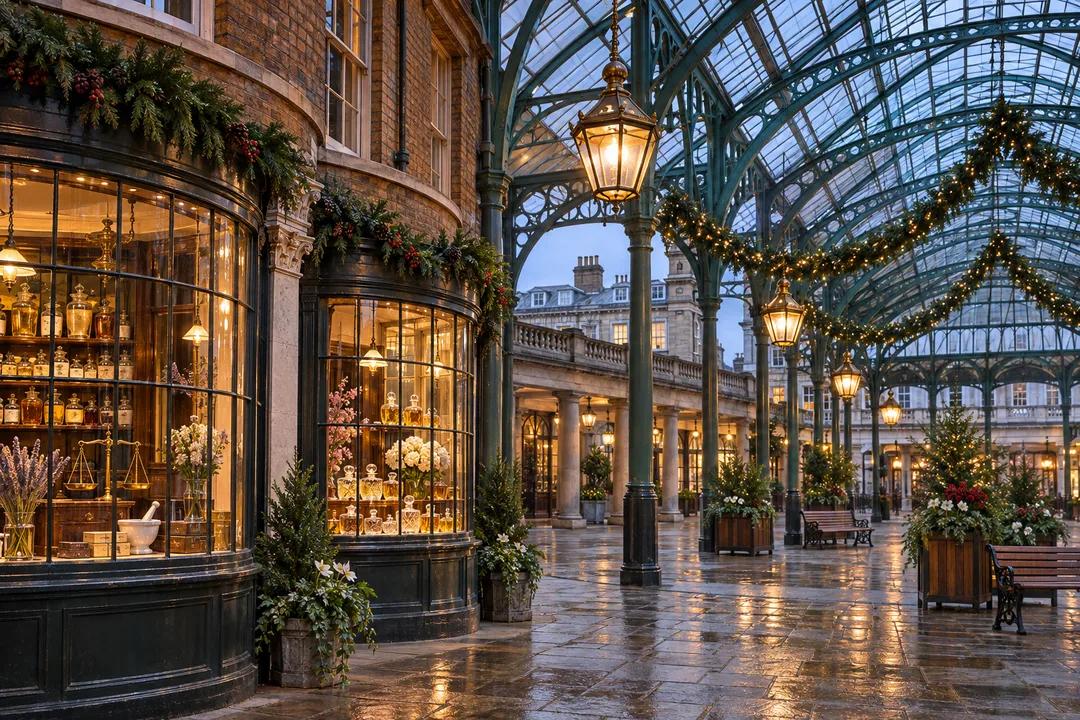
Covent Garden Festive Shop Window Walk Planner: Night Loop
Plan a Covent Garden festive shop window walk from Seven Dials to the Piazza, linking apothecary bow windows and smooth flags while skipping arcade jams.
Rolling a compact folding buggy off Monmouth Street while keeping pace with a grandparent visiting from York quickly proves why a Covent Garden festive shop window walk planner needs to separate smooth Yorkstone margins from bumpy piazza cobbles. Sam and Priya, joined by Priya's mother for an early-evening winter circuit, time their loop for the calm lull between afternoon matinee dispersals and the pre-theatre supper surge. Because Covent Garden packs centuries-old Georgian bow windows, iron-vaulted market galleries, and seven radiating village spokes into a tight walkable pocket, wandering without a sequence often lands you in a stationary crowd around a street acrobat just as the mistletoe chandeliers light up. Starting at the Sundial Pillar in Seven Dials and spiralling inward toward the Market Building via Floral Street and King Street lets you admire miniature perfumery dioramas, print-parlour panes, and chocolatier vitrines without fighting shoulder-to-shoulder bottlenecks.
Radiating Out from the Seven Dials Sundial Pillar First
Most visitors step straight out of the station lift into the central Piazza crush, which means the outer spokes of Seven Dials stay remarkably peaceful during the first hour after sunset. Beginning at the stone Sundial Pillar gives you six sightlines at once down Monmouth Street, Mercer Street, Earlham Street, and Short's Gardens, where overhead winter light canopies frame narrow brick shopfronts rather than massive department-store plates. Walking down one spoke and looping back through Neal's Yard lets you take in dozens of small-scale artisan panes before you ever reach the busier market halls, giving everyone space to stand side by side at the glass without stepping off the kerb or jostling passing theatregoers.
Inside Neal's Yard, colour-washed brick walls and botanical courtyard planters create an enclosed amphitheatre where organic skincare counters, independent espresso bars, and cheese cellars dress their sills with pine boughs, beeswax candles, and stoneware jars. Because the courtyard is completely car-free and sheltered from crosswinds, it works well as an early gathering point where your group can adjust wool coats, fold away damp umbrellas, and settle into an unhurried viewing pace before threading south toward the Piazza. Notice how the upper-floor shutters and window boxes echo the ground-level garlands, rewarding anyone who tilts their chin upward before leaving the courtyard.
Apothecary Flacons, Perfumery Stills, and Georgian Bow Windows
Unlike wide boulevard vitrines designed to be read from across a bus lane, Covent Garden's finest winter windows reward nose-to-glass inspection. Along King Street, Floral Street, and the outer colonnades of the Market Building, heritage perfumeries and botanical apothecaries turn their curved Georgian panes into miniature alchemists' workshops. Look for copper distillation flasks wrapped in frosted cedar, glass bell jars filled with whole star anise and dried bergamot slices, and tiny mechanical carousels rotating ribbon-tied scent bottles under warm pinpoint spots that make the amber liquid glow against dark mahogany panelling.
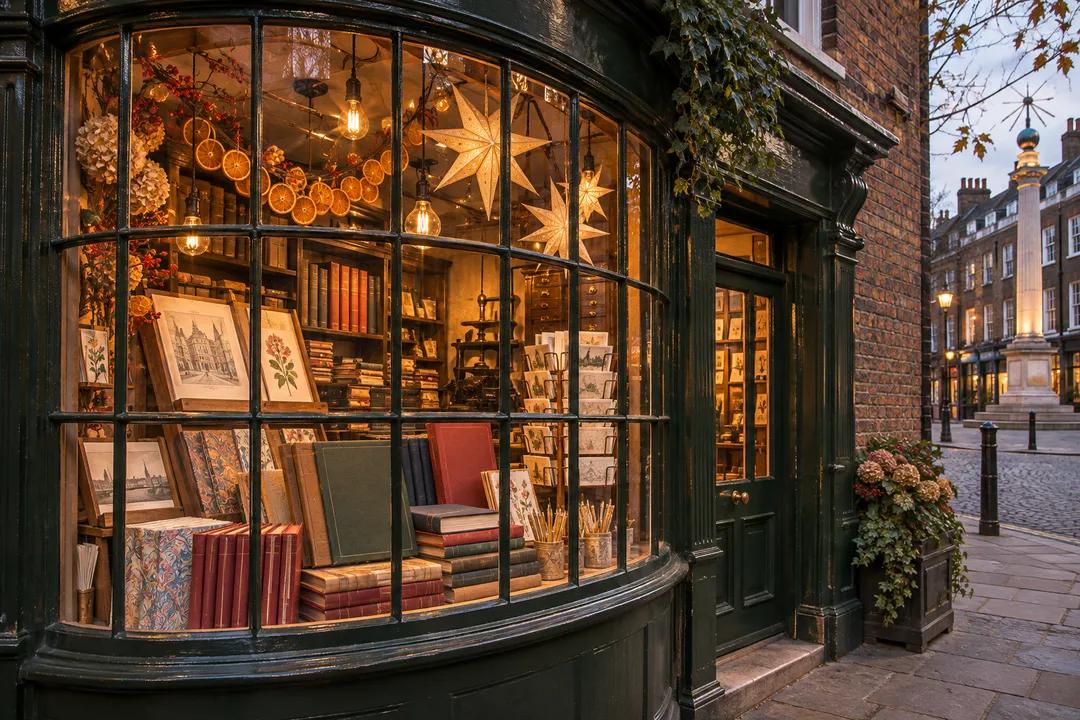
Along Monmouth Street and Cecil Court nearby, independent print dealers, marbled-paper stationers, and leather goods makers rely on warm paper texture rather than bright modern spotlights. Their small-paned wooden frames showcase tiered pyramids of clothbound winter anthologies, brass magnifying glasses, fountain pens, and hand-tooled satchels resting on beds of chestnut leaves and burgundy velvet. Because the wooden sill height sits low to the pavement, young children and seated buggy passengers can see the foreground details just as clearly as tall adults standing behind them, making every stop an easy shared discovery.
Navigating Cobbles, Yorkstone Margins, and Market Arcade Flow
If anyone in your group is pushing wheels or wearing leather-soled winter boots, surface texture matters every bit as much as visual scenery. The central Piazza surrounding the Market Building is paved with rounded granite setts that vibrate under small buggy wheels and grow slick after an evening rain shower. A local habit makes the circuit effortless: stay on the wide, flat Yorkstone flagstone ribbons that hug the building perimeters under the covered colonnade, and use the smooth stone thresholds at Henrietta Street and Southampton Street whenever you cross toward the southern arcades.
Skip walking straight through the middle ground-floor nave of the Market Building when an opera singer or string quartet is drawing a standing crowd around the central courtyard steps. Trying to squeeze past three deep rows of listeners while looking up at the giant hanging mistletoe chandeliers guarantees you will miss the delicate chocolatier, macaron counter, and tea-merchant windows lining the side aisles. Instead, trace the outer glazed gallery first, inspect the ribbon-wrapped biscuit tins and porcelain teapots along the quiet flank, and dip into the lower courtyard view from the eastern balcony after the applause fades and the central passage clears.
Cutting Through Floral Street, Goodwin's Court, and the Actors' Church
When the Piazza begins to swell with theatregoers heading toward Drury Lane and the Strand, slip north into Floral Street, where wide pavements and perforated brick warehouse facades house fashion concept spaces and scent studios with minimalist, gallery-style window installations. Even the historic twisted wrought-iron carriage archways spanning Floral Street catch the warm amber glow from neighbouring panes. From the western end of Floral Street, duck through the narrow gas-lit passage of Goodwin's Court, where row upon row of dark bowed timber windows and polished brass door knockers look untouched by modern retail glare, offering one of the most atmospheric winter thresholds in central London.
For a restorative pause right behind the main piazza, step through the iron gates into St Paul's Churchyard—affectionately known across the neighborhood as the Actors' Church. The enclosed lawn, wooden memorial benches, and brick pathways sit directly behind the West Piazza street performers yet feel muffled and serene behind the high brick walls. Grabbing a warm spiced cider, roasted chestnut cone, or herbal infusion from a nearby counter and resting under the plane trees gives everyone ten quiet minutes to warm their hands and compare favourite window scenes before the final leg of the walk.
Planning Step-Free Warm Stops and Extensions with Karpo APP
Because Covent Garden's historic lanes twist at unexpected angles and several basement tearooms sit down steep Georgian stairs, mapping your rest stops ahead of time saves frustrating detours in cold weather. Sam and Priya use the Karpo APP before leaving home to connect their favourite window-browsing lanes with step-free ground-floor cafes, bakery counters, and quiet courtyard routes toward Soho or Lincoln's Inn Fields. Checking the layout on the Karpo APP also helps you spot parallel backstreets like Maiden Lane or Tavistock Street whenever a pre-show theatre queue spills across a narrow pavement.
Once you have circled King Street and Henrietta Street, you can either follow the warm bow windows of Cecil Court toward Charing Cross Road or stroll east past the Royal Opera House glass atrium toward Russell Street and Bow Street. Either exit keeps your group on flat, well-lit flagstones while letting the golden glow of the Piazza garlands fade gently behind you, turning a potentially hectic West End evening into a calm, story-rich winter tradition.
Ask Karpo for more information.
Keep reading
- Knightsbridge Festive Shop Window Walk Planner: Dusk Loop
 Mayfair Festive Shop Window Walk Planner: Arcade Dusk Loop
 Marylebone Festive Shop Window Walk Planner: Calm Lane Loop