 Knightsbridge Festive Shop Window Walk Planner: Dusk Loop
Neighborhood Guides
London Urban Nature Oasis Walk Around Marylebone Regents Rim
Discover tranquil parish rose gardens, shaded plane tree walks, and lakeside botanical blooms on this refreshing urban nature oasis walk in Marylebone.
Marylebone is celebrated across London for elegant Georgian architecture, boutique medical practices, and independent specialty shops along Marylebone High Street, yet the neighborhood borders some of the capital's grandest ecological spaces. Moving northward through historic mews streets leads seamlessly from secluded parish pocket gardens into the sweeping botanical landscapes of Regent's Park. This curated London urban nature oasis walk connects four distinctive green sanctuaries across an easy two-mile pedestrian circuit, illustrating how refined town planning created enduring green breathing spaces in central London.
Plane Tree Canopies Across Paddington Street Gardens
Begin your morning botanical journey just off the High Street, visiting Paddington Street Gardens, at 1 Paddington Street, London W1U 5QG. Consecrated in the eighteenth century as supplementary burial grounds for St Marylebone Parish, these secluded spaces were converted into North and South public gardens in 1885. Tall brick boundary walls and dense perimeter shrubberies immediately insulate walkers from the commercial traffic of Baker Street just one block west.
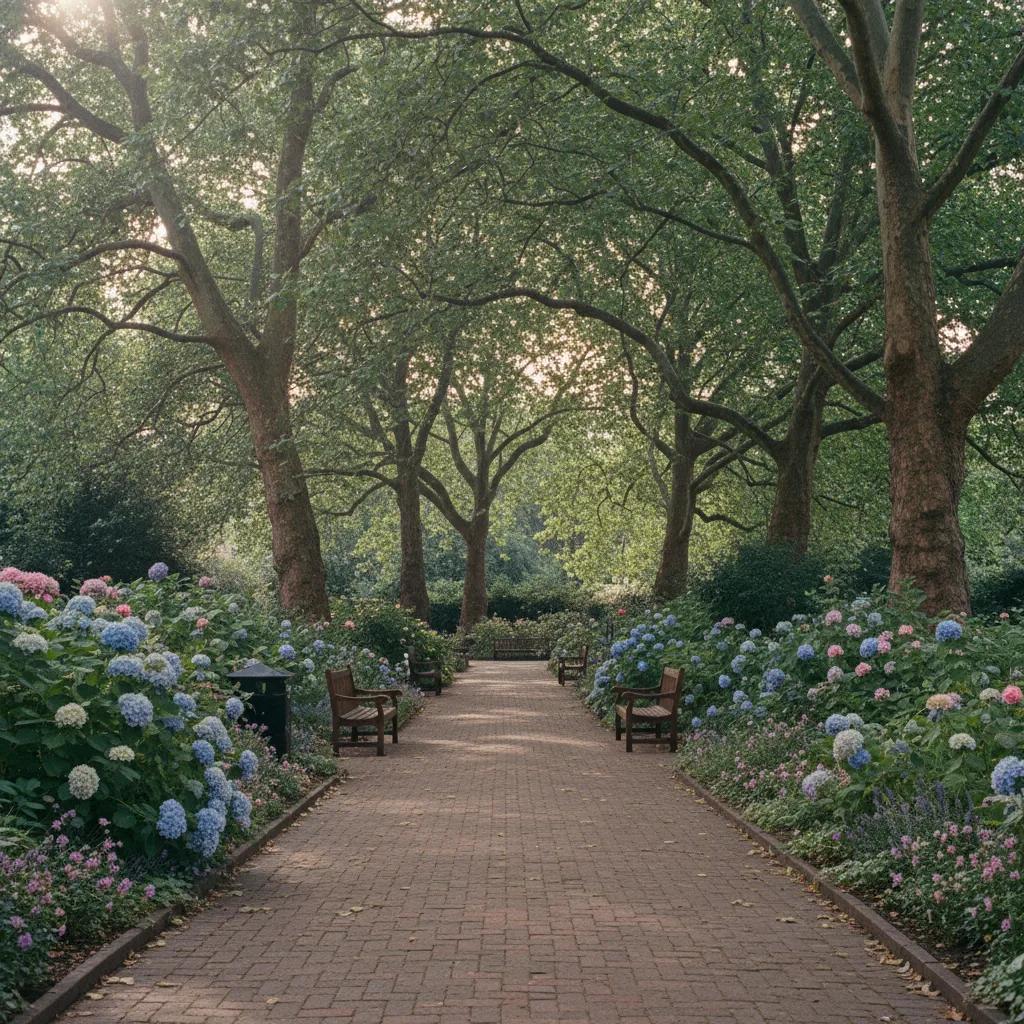
The larger South Garden features wide asphalt walkways winding beneath magnificent, broad-crowned London plane trees that cast deep cooling shade across manicured turf. Restored Victorian cast-iron benches line the perimeter paths, offering peaceful spots where local healthcare professionals and residents read morning newspapers in tranquil seclusion. Seasonal bedding displays showcase vibrant tulips in spring and hardy purple asters through autumn, tended attentively by Westminster city gardeners.
Across Paddington Street, the smaller North Garden houses a charming neoclassical stone mausoleum dating to 1782, flanked by fragrant heritage rose beds and ornamental shrubberies. Songbirds thrive within the high arboreal branches, filling the morning air with cheerful chirping while distant traffic remains barely audible. The gardens open free to the public daily from 8:00 am until dusk, offering an idyllic, peaceful neighborhood departure point.
Historic Memorial Topiary at St Marylebone Parish Church
From Paddington Street, walk north along Beaumont Street and Devonshire Street to reach St Marylebone Parish Church Garden, at 17 Marylebone Road, London NW1 5LT. Consecrated in 1817 and designed by architect Thomas Hardwick, this monumental neoclassical church is renowned for its historical associations with Lord Byron, Charles Dickens, and poets Robert and Elizabeth Barrett Browning. The sheltered courtyard garden behind the church provides an extraordinarily calm stone terrace.
Neatly clipped boxwood topiary, trained climbing jasmine, and fragrant rosemary planters edge the peaceful flagstone pathways. Historic stone wall tablets commemorating notable Georgian and Regency parishioners create a reflective open-air sanctuary shielded from the rush of Marylebone Road. Sturdy teak garden benches offer visitors contemplative vantage points to pause with a morning coffee from nearby Marylebone Lane.
The courtyard garden acts as a peaceful transition zone between Marylebone's quiet medical quarter and the expansive parkland just across the main thoroughfare. The site is maintained impeccably by parish volunteers, with seasonal flower urns providing vibrant splashes of petunias and geraniums. The church gardens welcome public visitors free of charge daily from 8:30 am until 6:00 pm, providing a restful pocket of heritage tranquility.
Lakeside Rose Splendor at Queen Mary's Gardens
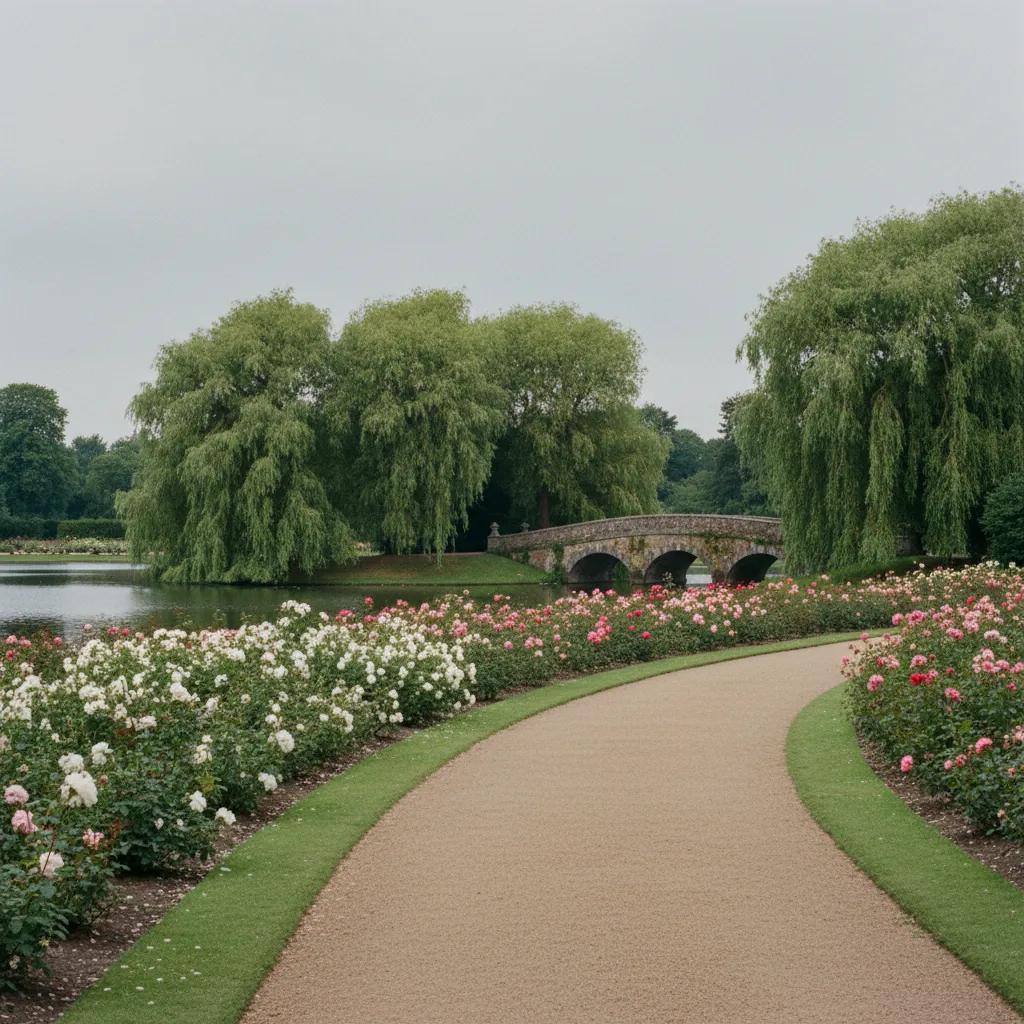
Cross Marylebone Road via the pedestrian subway or crossing toward Park Square, proceeding along the tree-lined Inner Circle to enter Queen Mary's Rose Gardens, at 1 Inner Circle, London NW1 4NR. Officially opened in 1932 within Regent's Park, this world-renowned circular garden contains London's largest collection of roses, featuring approximately 12,000 individual rose bushes planted in formal circular beds. The high perimeter hornbeam hedges create a protected botanical sanctuary that feels completely detached from metropolitan bustle.
Wandering the circular grass avenues reveals breathtaking displays of hybrid teas, floribundas, and climbing heritage roses whose blooms perfume the air from early June through late October. A circular central lake is crossed by wooden pedestrian footbridges, where weeping willows drape gracefully over still waters filled with water lilies and ornamental waterfowl. Rustic timber pergolas draped in flowering wisteria and clematis provide shaded seating pavilions with picturesque garden vistas.
Beyond the formal rose parterres, an authentic Japanese garden rockery features stepping-stone pathways, tumbling artificial waterfalls, and specimen Japanese maples whose foliage turns brilliant crimson each autumn. Benches are positioned along the water's edge, where visitors frequently sit in mindful contemplation watching herons and Egyptian geese forage among the reeds. Queen Mary's Gardens are open free to the public daily from 5:00 am until dusk, offering an unmatched botanical experience.
Regency Pastoral Vistas Across Park Square and Crescent
Exit the Inner Circle walking south toward Park Square and Crescent Gardens, located along Marylebone Road, London NW1 4HT. Designed in 1821 by master architect John Nash as part of his grand royal procession route, this magnificent pair of semicircular garden enclosures forms a pastoral green buffer between Regency townhouses and the park. Stately London plane trees, among the oldest planted in the capital, create a towering green colonnade above manicured perimeter lawns.
While the interior circular lawns remain private communal enclosures for residents, the wide perimeter pedestrian promenades and open view corridors offer spectacular architectural and botanical vistas. Walking beneath Nash's stucco terraces while gazing into the lush private arboretum reveals the timeless elegance of early nineteenth-century London garden design. Cool breezes filter continuously from Regent's Park, making this broad tree-lined sidewalk one of the city's finest architectural strolls.
Informal stone alcoves and shaded tree lawns along the southern boundary wall of Regent's Park invite walkers to pause and reflect on the route's botanical diversity. The visual harmony between classical cream stucco facades and deep green plane canopies creates a soothing aesthetic environment that relieves mental fatigue. The surrounding public promenades are open 24 hours daily, offering an elegant conclusion to this Marylebone nature itinerary.
Recommended Pace and Transit Navigation Notes
This refreshing walking route covers roughly two miles and can be comfortably traversed in ninety minutes to two hours at a leisurely, observational speed. Regent's Park Underground Station on the Bakerloo line and Great Portland Street Station on the Circle, Hammersmith & City, and Metropolitan lines provide immediate street-level transit access. Baker Street Station is located just a five-minute walk west, providing multiple rail and bus connections.
Early morning between 8:00 am and 10:00 am is the most rewarding time to walk this route, when mist frequently hangs over Regent's Park lake and pedestrian crowds remain light. The entire itinerary follows level, well-paved sidewalks and gravel park pathways suitable for all footwear types. Carrying a camera and an insulated water flask allows you to savor the quiet contrasts between Marylebone's intimate parish enclaves and Regent's Park's expansive royal horticulture.
Ask Karpo for more information.
Keep reading
- Knightsbridge Festive Shop Window Walk Planner: Dusk Loop
 Covent Garden Festive Shop Window Walk Planner: Night Loop
 Mayfair Festive Shop Window Walk Planner: Arcade Dusk Loop