The counter geography
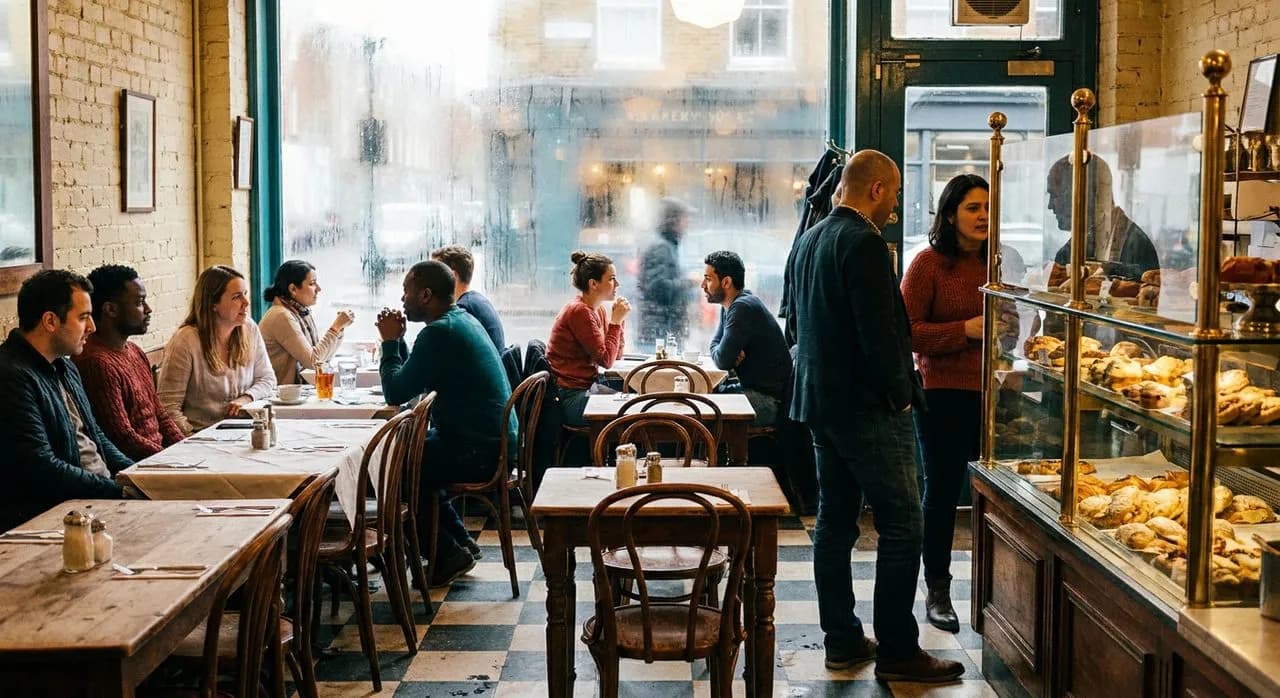
You enter St. John from St. John Street, not the market side, through a door that looks more accounting firm than restaurant. The ground floor splits into two territories: the bar to your left, all high stools and zinc; the bakery counter straight ahead, where a glass case holds the day's pastries and a chalkboard lists what the kitchen will sell you without a booking. There are four stools at the bakery counter itself—the ones facing the till—and another six at the bar. The stool second from the left at the bakery counter, the one nearest the madeleines, catches the best afternoon light through the tall windows. The staff call the regular who claims it most Thursdays "Madeleine Mark," though never to his face.
Updated August 2026: hours, prices, reservations, event dates, transit details, and venue policies can change. Use the linked official venue, city, or operator sources in the Sources section as the final reference before you go.
The whitewashed walls hold no art. There is no music. The space hums with conversation, the scrape of chairs on original floorboards, the particular silence of people eating very good food and not needing to fill the air around it. Smithfield Market sits across the street, and some mornings you'll see porters in blood-smeared coats queuing for the bacon sandwich.
The bone marrow transaction
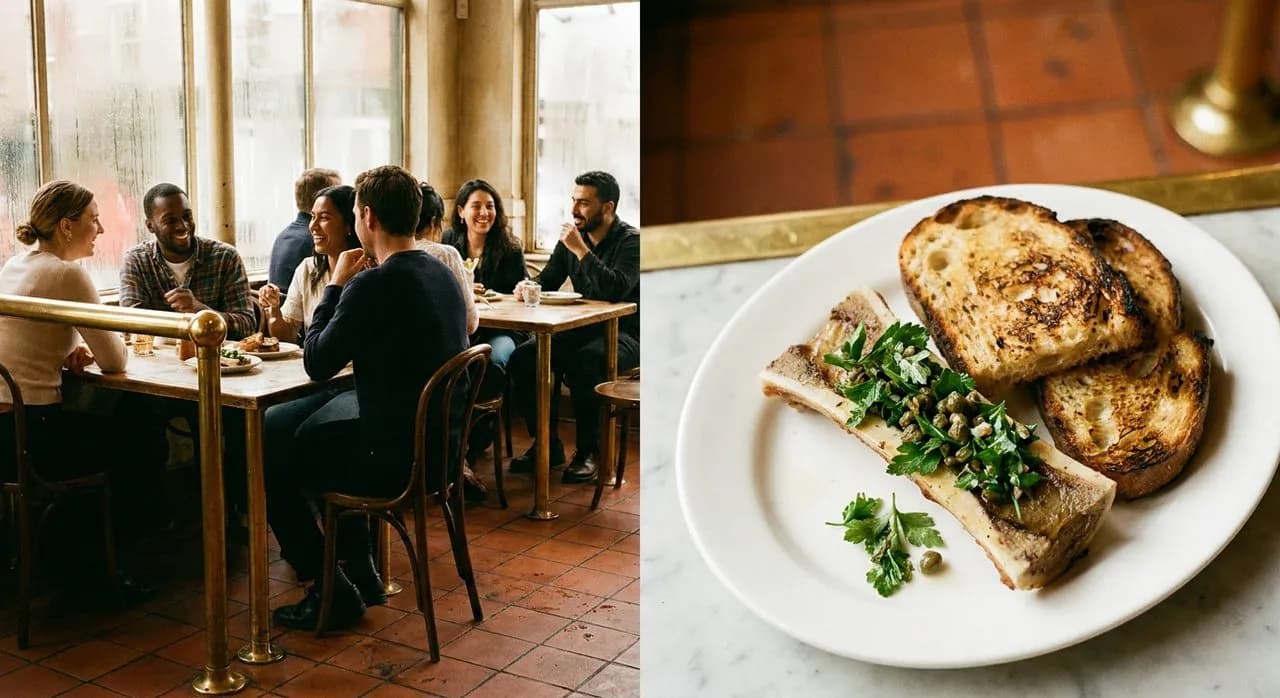
Bone marrow and parsley salad appears on the no-reservation menu most days, though they'll run out by two o'clock on Saturdays. You order at the counter—they don't come to you—and specify if you want it at the bar or the bakery stools. The marrow arrives split lengthwise, roasted until the fat is molten, with a small mound of parsley salad dressed sharply enough to cut the richness, and four slices of sourdough toast. The correct approach: small spoon, scoop, spread, eat. The toast-to-marrow ratio favours a second order of bread, which they'll bring without judgment.
The parsley salad contains shallots and capers in quantities that make it a condiment, not a garnish. You will taste it for an hour afterward. This is the point. On Wednesdays, if the kitchen has duck hearts, they'll appear on the chalkboard for about ninety minutes before someone buys all of them. The chef who preps them, whose name is actually Mark (not Madeleine Mark), will sometimes add an extra heart to your plate if you're sitting at stool four, because the sight line from the kitchen pass makes him feel you deserve it.
The Eccles cake specificities
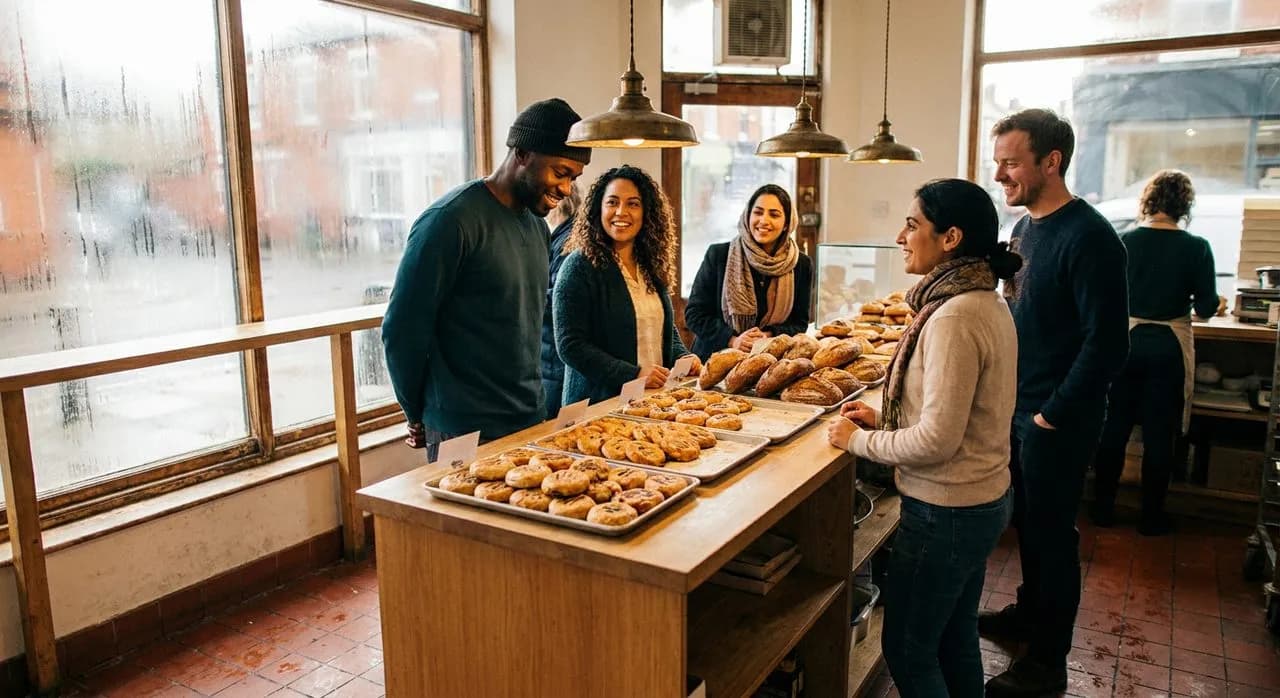
The Eccles cakes sit in the glass case near the madeleines and the doughnuts, which are filled with custard on Mondays and Thursdays, jam on other days. An Eccles cake at St. John is a palm-sized disc of puff pastry containing currants, sugar, and butter in a ratio that Fergus Henderson has never disclosed. They bake them in the basement kitchen twice daily: seven-thirty in the morning, two in the afternoon. The second batch is smaller. If you arrive at four o'clock, you're buying from the morning round, which is fine but not optimal.
The pastry shatters when you bite it, sending shards onto your lap and the counter. They provide napkins in a stack, not dispensed one by one, because they know. The currants are soaked in something—rum, possibly, or Pedro Ximénez—that makes them less sweet than you expect and more complex. You can order an Eccles cake to eat there or take away. The take-away ones go into a small white paper bag that will be translucent with butter by the time you reach Farringdon station.
The dining room adjacency
The dining room is upstairs, and it takes reservations months ahead for weekend lunch. But the ground floor operates on a different system: walk in, claim a stool, order what's available. This creates a two-tier experience in the same building. Upstairs they're eating whole roast suckling pig for four. Down here you're having ox heart and chips at the bar, or a rabbit terrine at the bakery counter, and you didn't plan it six weeks ago.
The menu changes daily based on what the kitchen has and what they feel like serving the walk-in crowd. Lamb's kidneys appear frequently. Pork chops. A whole baked crab when the supplier has them. The chalkboard behind the bar lists wines by the glass, all European, mostly French, nothing designed to make you feel clever for recognizing it. If you ask for a recommendation, they'll give you one sentence and pour. The house white is Vin de Pays, served cold enough.
The Smithfield context
St. John opened here in 1994, when this stretch of Clerkenwell was still more meat hooks than media agencies. Smithfield Market, London's last surviving wholesale meat market, operates from midnight to mid-morning, and the area's pubs still hold special licenses allowing them to serve alcohol at seven a.m. to the market workers. St. John doesn't open that early, but it carries the market's aesthetic DNA: white tiles, functionality, no decoration that doesn't serve a purpose.
The restaurant sits in a former smokehouse, which explains the high ceilings and the industrial windows. On summer mornings, they open the front door fully, and the ground floor becomes semi-outdoor, the boundary between Smithfield's cobbles and St. John's floorboards blurring. The bakery counter gets the best of this arrangement: you can watch the market's last porters finishing their shifts while eating your second breakfast.
Practical notes
St. John is at 26 St. John Street, London EC1M 4AY, a four-minute walk from Farringdon station (Circle, Hammersmith & City, Metropolitan lines, and Thameslink). The ground-floor bar and bakery counter operate walk-in only, Monday to Saturday from nine a.m., Sunday from ten a.m. The bakery case opens when they open; the hot food menu starts at noon. Expect £15-25 for a savoury plate at the counter, £3-5 for pastries. They take cards. The dining room upstairs requires reservations through their website. No music plays. The whitewashed room is bright during the day, warm-lit at night. Arrive before one-thirty for the full menu; after two, selections narrow. The Eccles cakes survive until closing, but the second bake at two p.m. is superior. They do not do coffee to go in takeaway cups—only proper cups at the counter or bar.
Tags: #StJohnSmithfield #FergusHenderson #SmithfieldMarket #LondonBakery #BoneMarrow #EcclesCake #Clerkenwell #NoseToTail #LondonEats #WalkInDining #BakeryCounter #FarringdonFood #LondonFood #PullUpAChair #KarposFinds
Sources consulted: The Infatuation · Eater · Time Out London
Please drink responsibly. Must be of legal drinking age.
All trademarks are the property of their respective owners.