 Fitzrovia Secondhand Bookshop Nook Finder by Subject Shelf
Hidden Gems & Odd Finds
Soho Secondhand Bookshop Nook Finder: Pick Your Street Edge
This secondhand bookshop nook finder for Soho sorts the district by three edges, from the old bookselling road to inner record streets and the quiet square.
Soho's secondhand bookshops do not cluster in one tidy row. They cling to three edges of the district: the long road on its eastern boundary that has sold used volumes for generations, the inner streets of record dealers and film offices, and the quieter north side around Soho Square. A good secondhand bookshop nook finder session here starts with a simple choice of edge, because each one attracts a different kind of browser and hides a different kind of corner.
Why Soho Hides Its Shelves
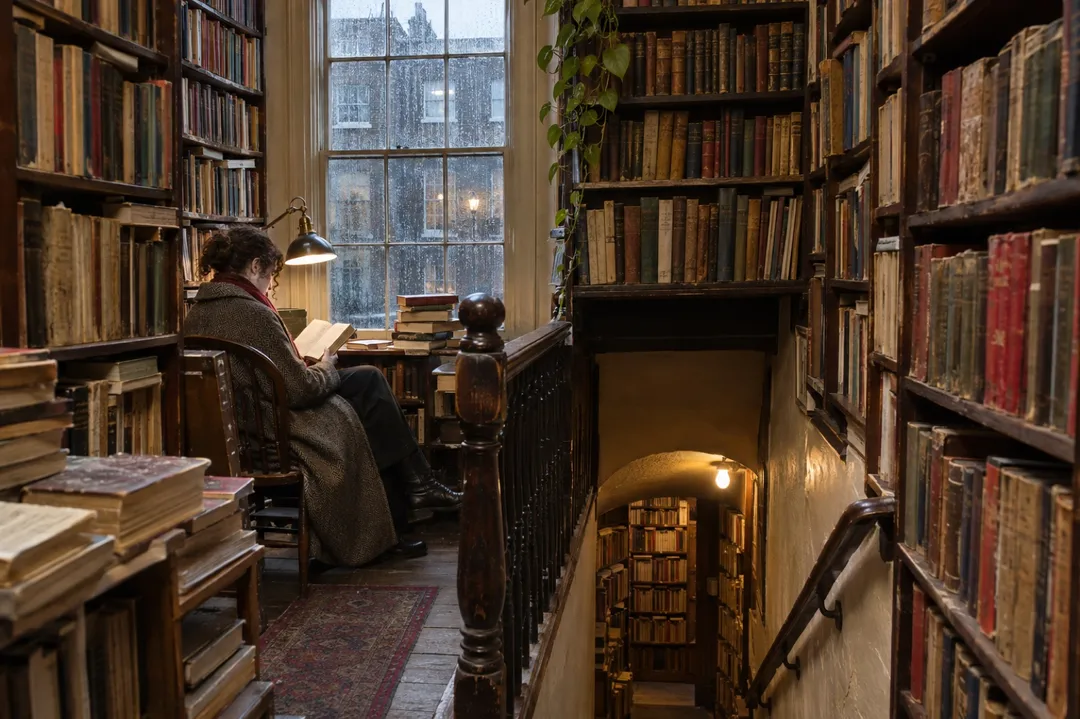
Soho has always been a district of small rooms. Its Georgian houses were built for families, then carved up over the centuries into workshops, tailors' rooms, clubs, cutting suites and tiny offices. Booksellers fitted themselves into whatever space was left: a ground-floor front room with a cellar beneath, a first-floor flat reached by a steep stair, a back parlour behind a print dealer. That is why the most rewarding nooks feel improvised, with shelves built into fireplaces and stock stacked under windows.
The district's reputation also shapes the stock. Soho has been home to writers, jazz players, film editors, theatre people and political exiles, and the volumes that circulate here reflect them. Expect strong sections on cinema, music, drama, poetry, photography and London history, and fewer shelves of airport thrillers. If you collect anything to do with the performing arts, Soho is one of the few places where browsing still beats searching online, because the dealers know exactly what their regulars want.
Edge One: The Old Bookselling Road
The eastern edge, along Charing Cross Road, is the London street most associated with secondhand and antiquarian dealers. The trade has thinned compared with its peak, and some shopfronts now sell coffee or souvenirs, but the road still carries the habit of browsing. Look for the shops where the front table is a jumble of paperbacks while the real treasures sit in a back room or a basement. Many visitors stop at the window and never reach the stairs.
Go down. Basements on this edge often hold the oddest stock: old theatre programmes, out-of-print travel writing, crate-loads of poetry pamphlets, and the occasional signed first edition hiding among ordinary copies. The light is low and the ceilings are close, so it suits a browser who likes to crouch and dig rather than scan neat spines. Allow forty minutes for one proper basement and do not try to cover the whole road in a single afternoon.
Edge Two: Inner Streets of Records and Film
Walk west into the grid of Berwick Street, Wardour Street and their side lanes and the character changes. This is the Soho of vinyl shops, post-production houses and the morning fruit and vegetable market. Used volumes here often share a room with records, magazines, posters and film stills. The nook might be a single tall bookcase at the back of a record shop, or a stairway landing lined with music biographies and old copies of film journals.
This edge rewards the person who already has a subject. Ask the person behind the counter whether they keep anything on a particular director, band or decade, and you may be led to a box under the counter that never reaches the shelves. The regulars are a mix of editors on a lunch break, record collectors in heavy coats and students from the nearby art and drama schools. Keep your voice down; plenty of them come here for a quiet half hour.
Edge Three: The Quiet Square to the North
The northern side of Soho, around Soho Square and the top of Greek Street and Frith Street, is calmer than anywhere else in the district. The square itself has a small half-timbered garden hut in the middle, lawns and benches, and office workers eating lunch on the grass. The shops nearby tend to be fewer, smaller and more specialised: a dealer in literary first editions, a corner of a café with shelves for swapping, or an upstairs room run by appointment only.
Choose this edge if you want to read rather than hunt. Pick up one or two volumes, carry them to a bench in the square, and give them the attention a cramped shop cannot. On fine days, the garden fills quickly around midday, so mid-morning or late afternoon is calmer. In winter, the cafés along the nearby streets become the reading room, and a used paperback and a hot drink by a steamy window make a very Soho hour.
How to Read a Soho Shopfront
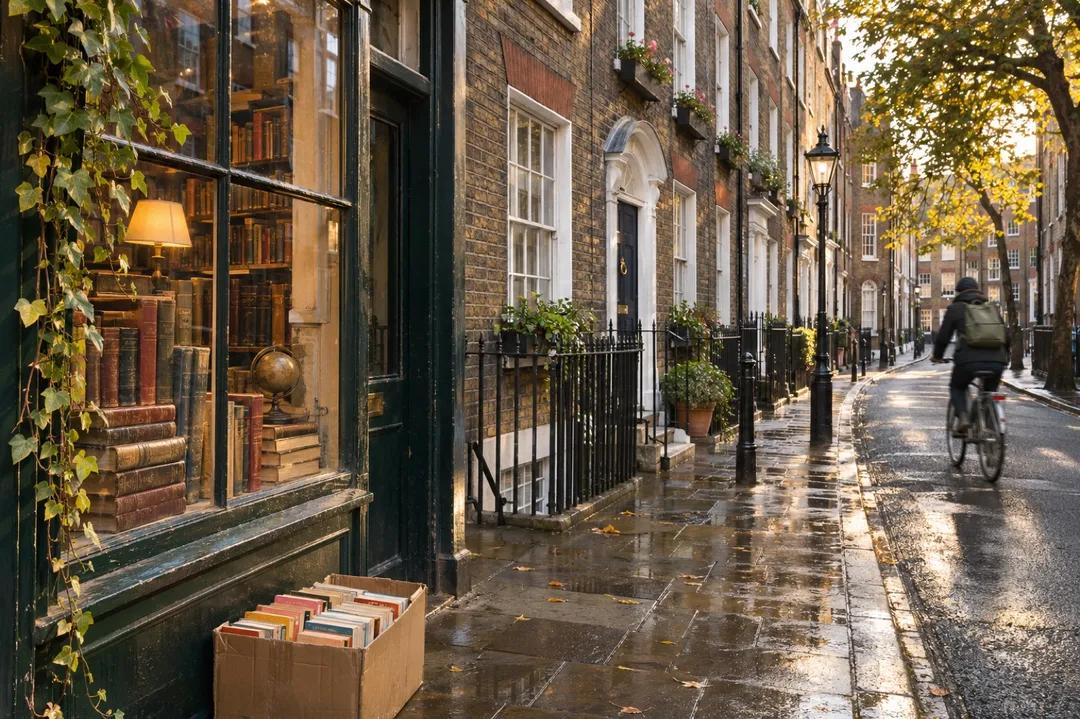
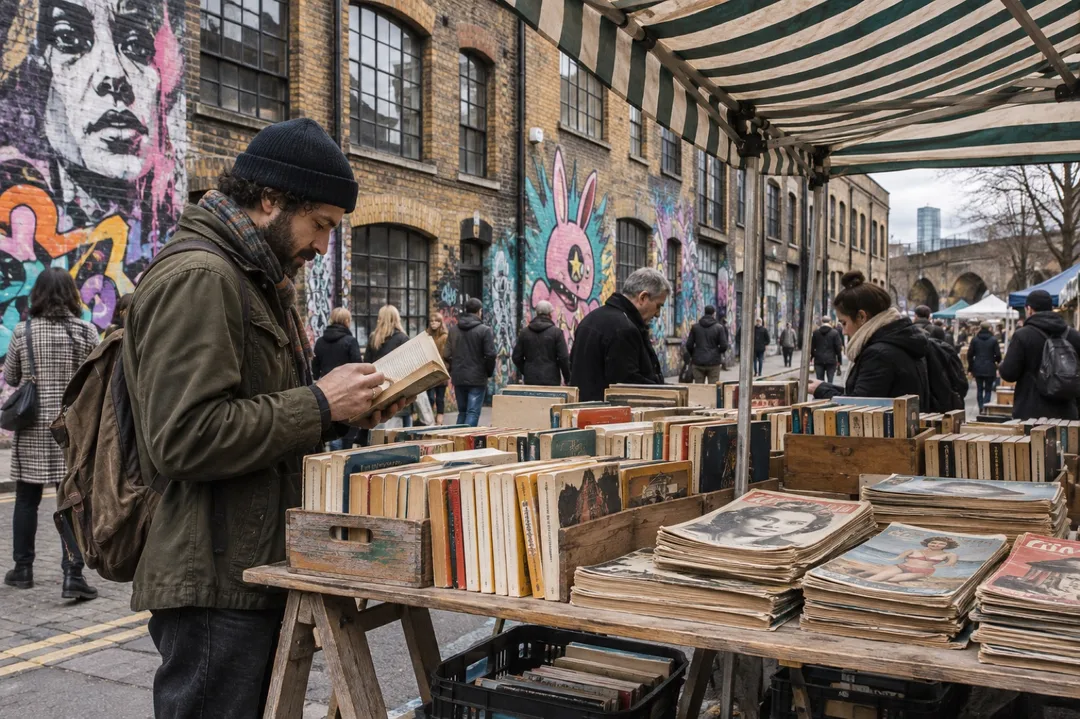
A few signs tell you a shop is worth the stairs. A handwritten note about a basement or an upper floor usually means more stock than the window suggests. Boxes of cheap paperbacks outside the door show a dealer who turns stock over often. A bell on the door and a quiet counter often mean a specialist who will happily talk about their subject. Shops with polished windows and a few expensive volumes on stands are better for admiring than for rummaging.
An honest warning: skip the shops near the busiest junctions that mix a few secondhand titles with souvenirs and new bestsellers. They are fine for a gift but rarely have the depth that makes a nook worth finding. Also skip Saturday afternoons if you dislike crowds. Soho fills up with shoppers and theatre-goers then, and the narrowest rooms become uncomfortable. Weekday late mornings and early afternoons are the gentlest time to browse.
Who Will Enjoy Each Edge
The old bookselling road suits first-time visitors who want the classic London browsing experience, and collectors who enjoy the hunt through deep stock. The inner streets suit music and film lovers, and anyone who likes to combine used volumes with a record or two. The quiet square suits slow readers, couples who want a calm hour before dinner, and anyone who finds the noise of central London tiring after a morning at a museum.
If the shop you hoped to visit is closed or too crowded, do not force it. Soho is small, and another edge is never more than a few minutes away on foot. Bloomsbury, with its university bookshops and quieter squares, sits just north of Oxford Street if you want to keep going, while Covent Garden's narrow lanes lie just to the east. Weather matters too: on wet days, stick to basements and upstairs rooms rather than outdoor stalls.
When you want to see what is close to you in the moment, open Karpo APP and explore nearby secondhand bookshops and quiet reading corners around Soho. It suggests spots near where you are standing; you decide which edge to start from, which stairs to climb and how long to stay.
Ask Karpo for more information.
Keep reading
- Fitzrovia Secondhand Bookshop Nook Finder by Subject Shelf
 Mayfair Secondhand Bookshop Nook Finder for Shy Browsers
 Shoreditch Secondhand Bookshop Nook Finder: Crates to Arches