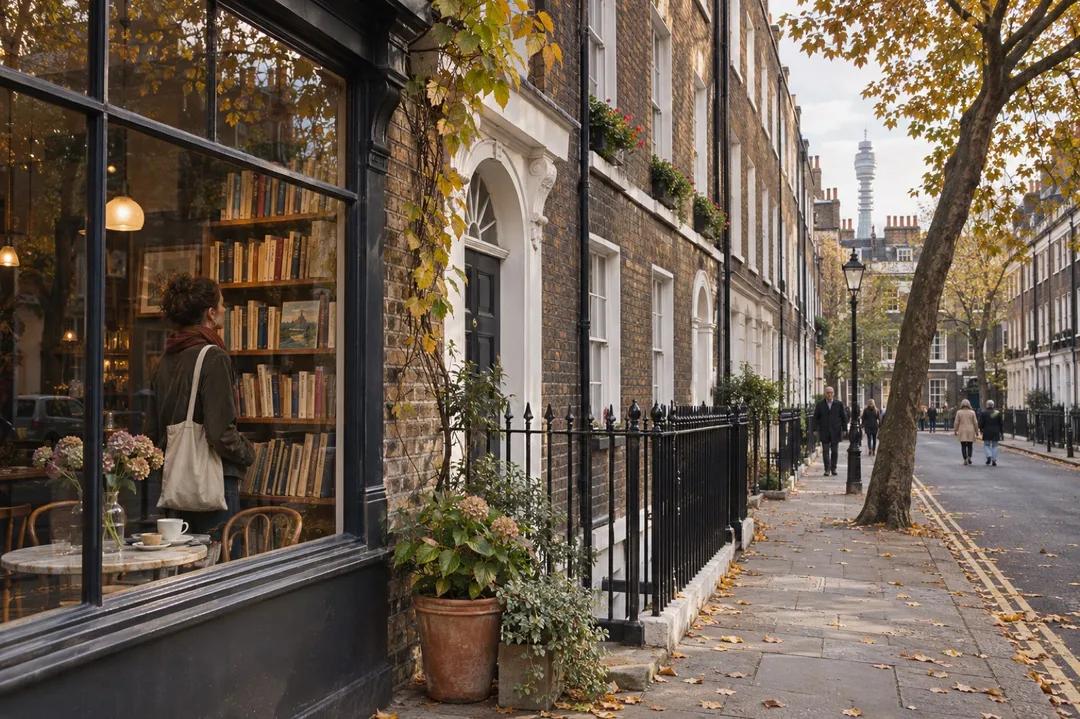
 Fitzrovia Secondhand Bookshop Nook Finder by Subject Shelf
Hidden Gems & Odd Finds
Mayfair Secondhand Bookshop Nook Finder for Shy Browsers
This secondhand bookshop nook finder for Mayfair sorts its quiet reading rooms by nerve, from open side-street shelves to upstairs dealers and sale viewings.
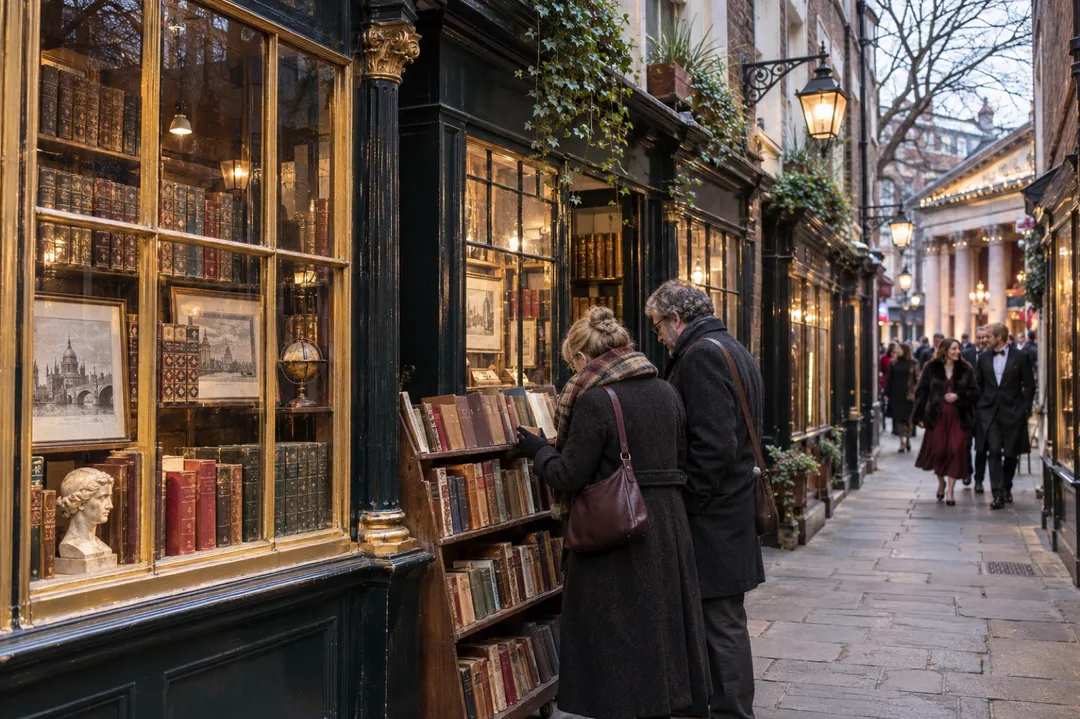
Mayfair is not where most people go hunting for used paperbacks. It is a district of brass door handles, discreet bells and windows dressed with a single open volume on a stand. Yet behind that polish sit some of the most rewarding reading nooks in London, and many of them welcome a curious visitor far more warmly than the façade suggests. A useful secondhand bookshop nook finder session here begins with honesty about your own nerve, because the rooms range from easy walk-in shelves to places where you ring, wait and introduce yourself.
Why Mayfair Feels Closed When It Is Not
The district takes its name from the old May Fair, a rowdy annual fair that once filled these fields before the great estates laid out squares and terraces for the aristocracy. The fair was shut down, the houses went up, and the area settled into a reputation for privacy that it has never really lost. Dealers in rare volumes, prints and manuscripts moved into the same townhouses as tailors, art galleries and private clubs, and they adopted the same manners: a closed door, a quiet room, a person at a desk who looks up when you enter.
That manner is about the stock, not about you. A room full of first editions, signed copies and fragile bindings cannot behave like a high-street shop with a cheerful bargain bin at the front. But most of these dealers are glad to see someone who loves old volumes, whether or not that person leaves with anything. Once you understand that, Mayfair stops feeling like a wall and starts feeling like a series of small, unhurried rooms that happen to have very good shelves.
Level One: Open Side-Street Shelves
Start where the doors are already open. On the side streets running off Piccadilly and around the arcades, a few shops keep shelves you can browse without asking anyone: second-hand art monographs, old travel guides, collected letters, county histories and cloth-bound novels with faded spines. These rooms feel closest to a classic used-volume shop, just tidier. Nobody will mind if you stand and read a chapter.
This level suits first-time visitors, and anyone who simply wants the pleasure of a calm room on a busy shopping day. Take your time with the lower shelves, which often hold the less glamorous stock that regulars ignore. Look at the small sections near the till as well. Dealers often put recent arrivals there before they have been catalogued, and those piles change from one visit to the next.
Level Two: Upstairs Rooms and Ringing Bells
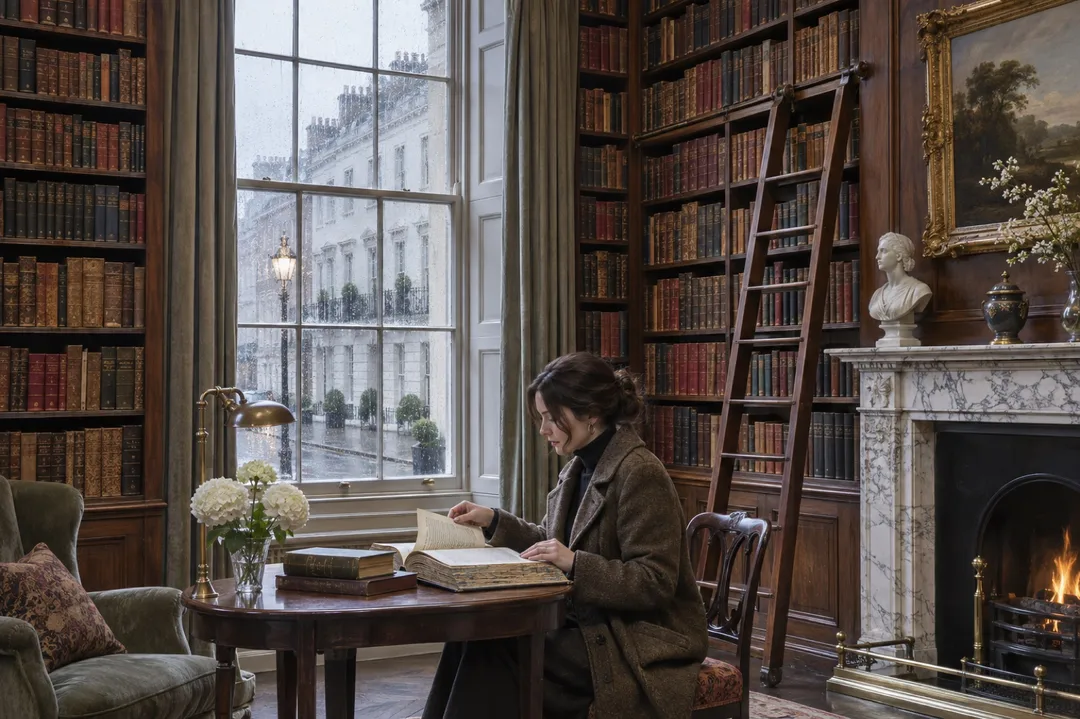
The second level is where Mayfair becomes its own place. Some dealers work from first-floor rooms or from the back of a townhouse, reached by a narrow stair or a door with a small bell beside it. You ring, someone answers, and you walk into a room that feels more like a private library than a shop. Fireplaces, ladders, glass-fronted cases and a single reading table are typical.
The etiquette is simple. Say hello, mention what you are interested in, even if it is broad, such as early travel writing or poetry, and ask whether you may look around. Handle anything behind glass only after asking. Keep bags and umbrellas away from the shelves. If you are curious about a particular volume, ask the dealer to tell you about it rather than pulling it down yourself. Many of the most memorable conversations in London's old trade happen in exactly these rooms, and they cost nothing but a little courage at the door.
This level suits collectors, students of a subject, and readers who enjoy talking about what they love. It is less suited to groups. Two people can share a quiet room comfortably; four people in wet coats cannot.
Level Three: Sale Viewings and Gallery Corners
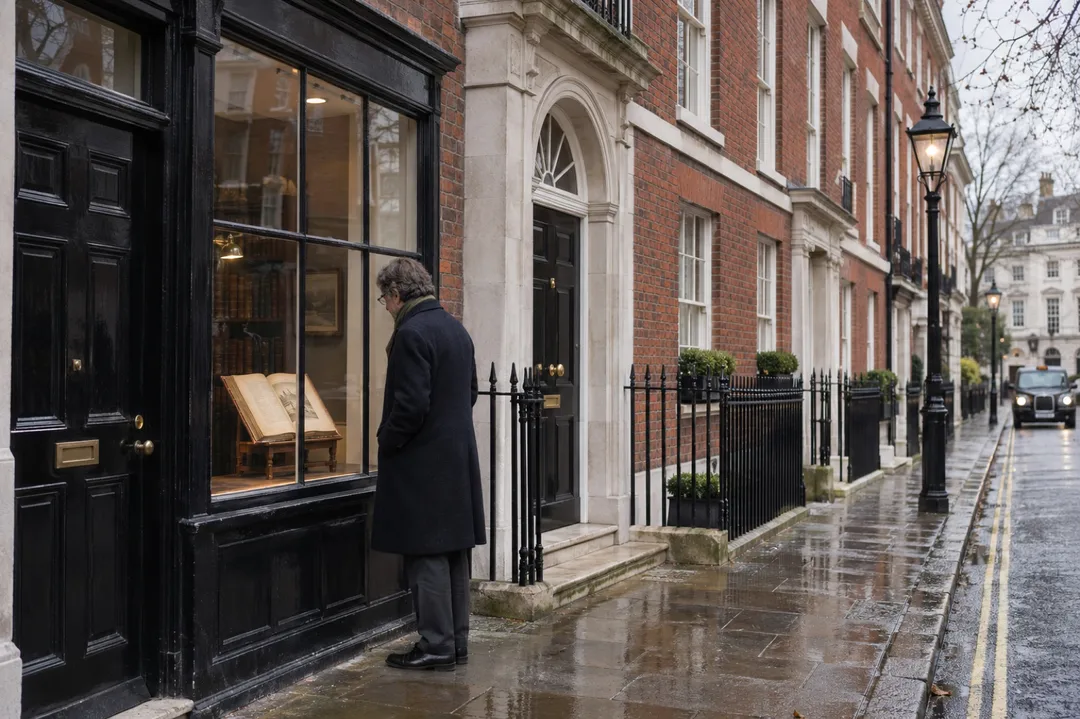
The third level is the one most visitors never consider. Mayfair's auction rooms regularly hold public viewings before sales of rare volumes, manuscripts, old prints and literary archives. During a viewing, the lots are laid out on tables or in cases, and anyone may walk in and look. It is one of the few chances to stand beside material that will soon disappear into a private library, and the atmosphere is calmer than people expect.
Gallery corners belong here too. Several print and drawing galleries keep a shelf of illustrated volumes, exhibition catalogues and artists' monographs, and some keep a small reading area where you can sit with them. These are not secondhand shops in the usual sense, but they reward the same kind of slow browsing and they are often almost empty on weekdays.
Check what is on view before you arrive by looking at the auction house's own public calendar, and remember that viewings come and go with the sale schedule. Treat what you find as a museum visit with better access rather than a shopping trip.
Choosing the Right Hour
Mayfair runs on office and gallery rhythms. Weekday late mornings are the gentlest time to ring a bell, after the dealer has dealt with post and calls but before lunch meetings begin. Early afternoons are also good. Saturday brings shoppers to the main streets, though the upstairs rooms stay quiet, and some of the smaller dealers keep a slower weekend rhythm, so be relaxed about finding a door shut.
Rain is surprisingly helpful. On wet days the arcades and covered passages fill with people sheltering, while the dealers' rooms above them stay calm, and the light through tall sash windows turns soft and grey in a way that suits old paper. Dress for the room rather than the weather if you can, and leave dripping umbrellas at the door.
Pairing a Browse With the Rest of Mayfair
A nook-hunting morning connects easily to the rest of the district. Shepherd Market, the small pocket of lanes on the site of the old fair, has pubs and cafés where you can sit with whatever you found. Mount Street Gardens, tucked behind the church on Farm Street, is one of the quietest benches in central London and a fine place to read a first chapter. Green Park lies just across Piccadilly if you want grass and sky.
For a longer day, the Royal Academy's courtyard sits on Piccadilly, and the galleries of Cork Street and Bond Street are close by. If you want rougher, cheaper shelves after the polished ones, Soho's old bookselling road lies a short walk east across Regent Street, and Marylebone's charity shops are north of Oxford Street. The contrast makes both sides of central London more interesting.
Who Will Enjoy Mayfair's Nooks
Mayfair suits the reader who likes quiet and conversation more than volume and bargains. It suits people interested in fine bindings, illustrated editions, literary history, travel writing and the material culture of collecting. It suits a couple looking for a calm hour together between lunch and an exhibition. It is less suited to someone who wants to fill a tote bag with cheap paperbacks; that is a Shoreditch or Soho errand.
Shy browsers should simply start at level one, move to level two once they feel comfortable, and leave level three for a day when a viewing happens to match their interests. There is no test to pass at any of these doors.
When you are already in the district and wondering what is close by, open Karpo APP and explore nearby secondhand bookshops, quiet reading rooms and garden benches around Mayfair. It suggests spots near where you are standing; you decide which bell to ring, which stair to climb and how long to stay with a volume in your hands.
Ask Karpo for more information.
Keep reading
- Fitzrovia Secondhand Bookshop Nook Finder by Subject Shelf
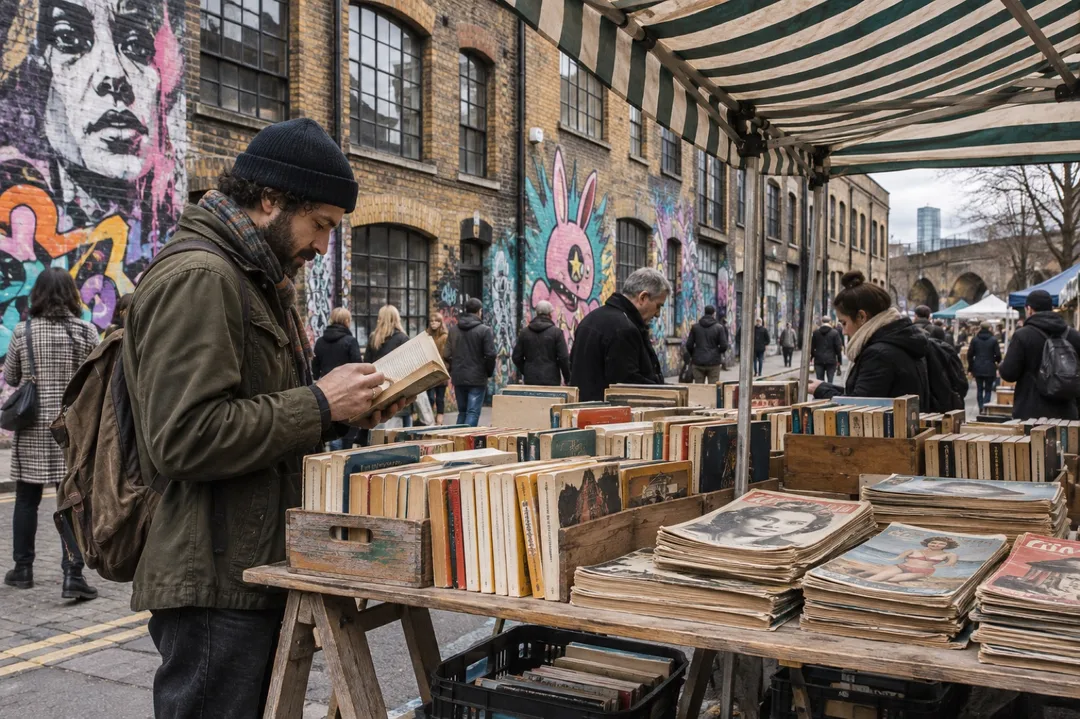 Shoreditch Secondhand Bookshop Nook Finder: Crates to Arches
 Covent Garden Secondhand Bookshop Nook Finder by Show Time