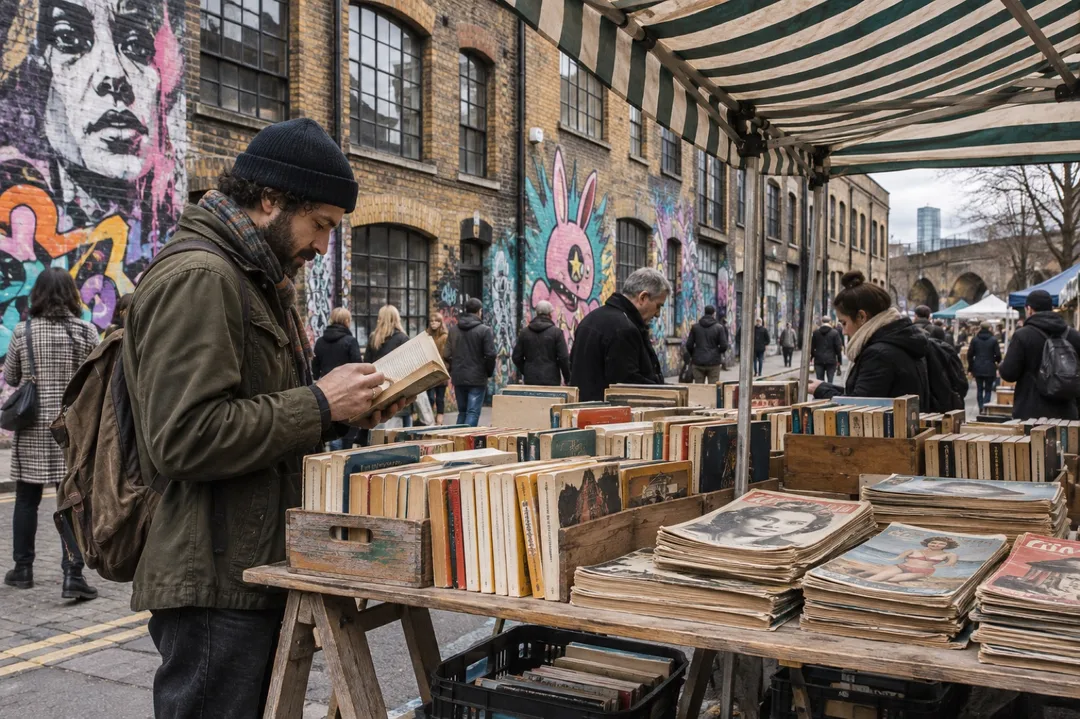
 Shoreditch Secondhand Bookshop Nook Finder: Crates to Arches
Hidden Gems & Odd Finds
Covent Garden Secondhand Bookshop Nook Finder by Show Time
This secondhand bookshop nook finder for Covent Garden fits each browse to the theatre clock, from a slow matinee morning to a short pre-curtain dash.
Covent Garden runs on theatre time. Doors open, curtains rise, intervals empty the bars and final bows send crowds back onto the pavements, and the district's secondhand bookshops feel completely different depending on which part of that cycle you arrive in. Rather than treating a secondhand bookshop nook finder walk as a list of addresses, it helps to match the kind of nook to the hour you have, whether that is a full matinee morning or twenty minutes before the lights go down.
A Theatre District With Paper in Its Veins
The area has been tied to performance for centuries, from the royal opera house on Bow Street to the dozens of playhouses lining the Strand, Drury Lane and St Martin's Lane. Where theatres gather, printed matter follows: playscripts, programmes, posters, memoirs of actors and the books that productions are adapted from. Covent Garden's used-volume trade grew up alongside that world, and much of the stock still leans towards drama, opera, ballet and the history of the stage.
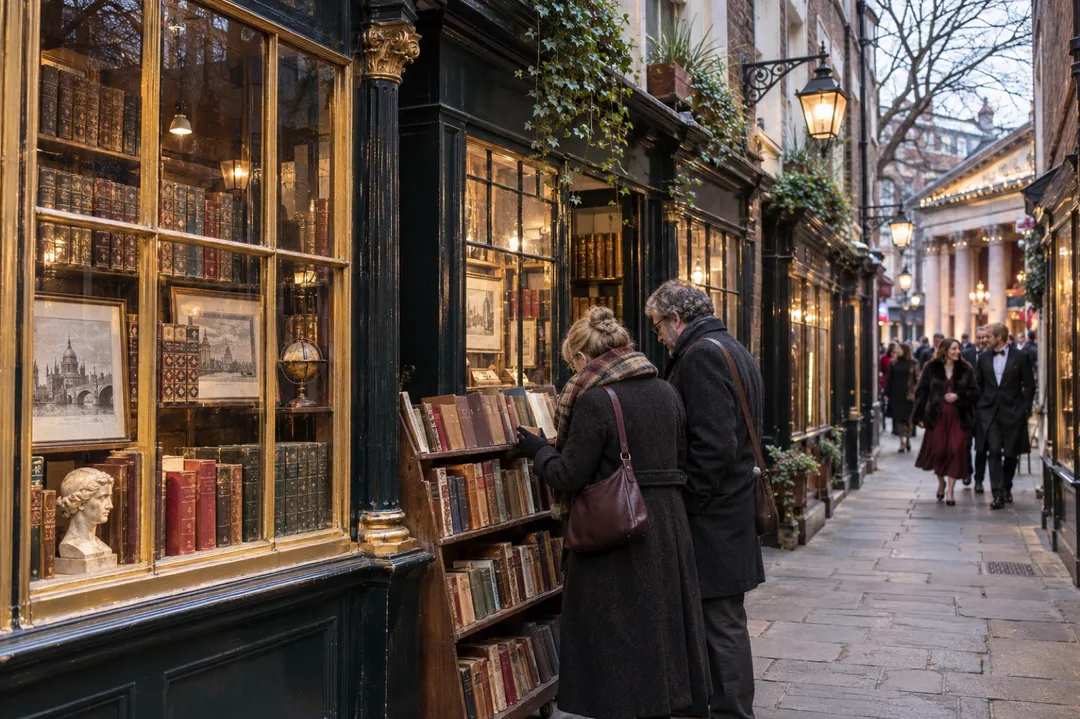
Between St Martin's Lane and Charing Cross Road runs Cecil Court, a short pedestrian lane of Victorian shopfronts with dark paint, gilded lettering and small panes of glass. Dealers here have long specialised in antiquarian volumes, children's illustrated editions, prints and engravings, and esoteric subjects. Even if you never step inside, walking its length and reading the window displays is one of the quieter pleasures of the West End, especially on a winter evening when the lamps come on.
A Matinee Morning: The Long Browse
If you have tickets for an afternoon performance, the morning is the finest stretch for slow browsing, and it is the hour this guide recommends most. The piazza is still waking up, street performers have not yet drawn crowds, and the antiquarian dealers are calm. Pick one specialist shop and give it a full hour. Ask about the subject you love most, whether that is early detective fiction or first editions of a favourite playwright, and see what comes out from the back.
This is also the time to climb stairs. Several of the older buildings around the lanes have upper rooms full of shelves, reached by narrow steps with handrails worn smooth. Upstairs tends to be where the playscripts, programmes and theatre memoirs end up. A drama student reading on a step stool, a retired stage manager hunting a particular production history, a tourist who wandered up by mistake and stayed: these are the people you share the room with.

Before the Curtain: Twenty Minutes Well Used
Evening theatre-goers often arrive early and drift around with nothing to do. Instead of queuing for an overpriced drink, use the gap for a short browse. Choose a shop with a strong front table or a pavement shelf, where a quick scan can turn up a cheap paperback of the play you are about to see, or a novel by the same writer. Keep it simple and do not attempt a deep dig; you will only end up rushing to your seat.
A small honest rule: skip the large dealers with velvet-lined cases and expensive leather sets if you only have a few minutes. They are beautiful, but they reward patience and conversation rather than a hurried look. Keep that kind of visit for a quieter day. A handful of quick, generous bargain shelves is the right fit for the pre-show window, and a paperback slips easily into a coat pocket for the interval.
After the Show: Windows and Late Walks
Most bookshops have closed by the time an evening performance ends, but the browsing does not have to stop. Cecil Court and the lanes around Seven Dials keep their window displays lit, and walking past them after a show is a gentle way to let the crowd thin out before heading for the Tube. Note the shops whose windows catch your eye, then return on a weekday morning when you can step inside and take your time.
If you want company for that late walk, head towards Seven Dials, where seven streets meet around a sundial pillar and small cafés stay busy into the evening. Some cafés nearby keep a shelf of swap paperbacks for customers. Take one, leave one, and you have a modest nook for the last part of the night without needing a dealer's counter at all. It is a fitting end to a day that began with a playscript.
Rainy Days and Busy Weekends
Covent Garden on a dry Saturday afternoon is one of the most crowded corners of London. The piazza and the main shopping streets fill with visitors, and the narrow lanes get jammed. If you dislike crowds, avoid that slot entirely and come on a weekday instead. Rain, oddly, can help. A wet weekday thins the street traffic, and the shops with stoves, rugs and low lamps feel even more inviting when water runs down the windows.
Remember too that the area changes through the year. In December the district fills with festive decorations and shoppers, which can make the lanes feel festive but cramped. Late January and February are much quieter, and dealers have more time to chat. Summer evenings bring the opera and theatre crowds out onto the pavements, so a bargain shelf outside a shop can be busier than the counter inside.
Who This Theatre Clock Suits
This approach suits visitors with a show in the diary who want something calmer than shopping, drama students hunting cheap scripts, collectors of illustrated children's volumes and engravings, and Londoners who know the piazza but have never looked properly at the lanes around it. It works well for solo browsers and pairs, but larger groups should split up, because the antiquarian rooms are small and three or four people quickly fill them.
If the lanes feel too busy, cross Charing Cross Road into Soho, where shops sit on quieter edges, or walk south to the river and the long bookseller tables beneath Waterloo Bridge on the South Bank, an outdoor counterpart to the indoor nooks. Either way, keep your expectations flexible. Stock changes all the time, and the volume you were hoping for may have gone while something unexpected waits on the next shelf.
For a quick sense of what is close to you before or after the show, open Karpo APP and discover nearby secondhand bookshops and reading spots around Covent Garden. It suggests places near you; you choose which nook fits the hour you have.
Ask Karpo for more information.
Keep reading
- Shoreditch Secondhand Bookshop Nook Finder: Crates to Arches
 Soho Secondhand Bookshop Nook Finder: Pick Your Street Edge
 Brixton Vintage Thrift Shop Finder: South London Retro Gems