 Knightsbridge Festive Shop Window Walk Planner: Dusk Loop
Neighborhood Guides
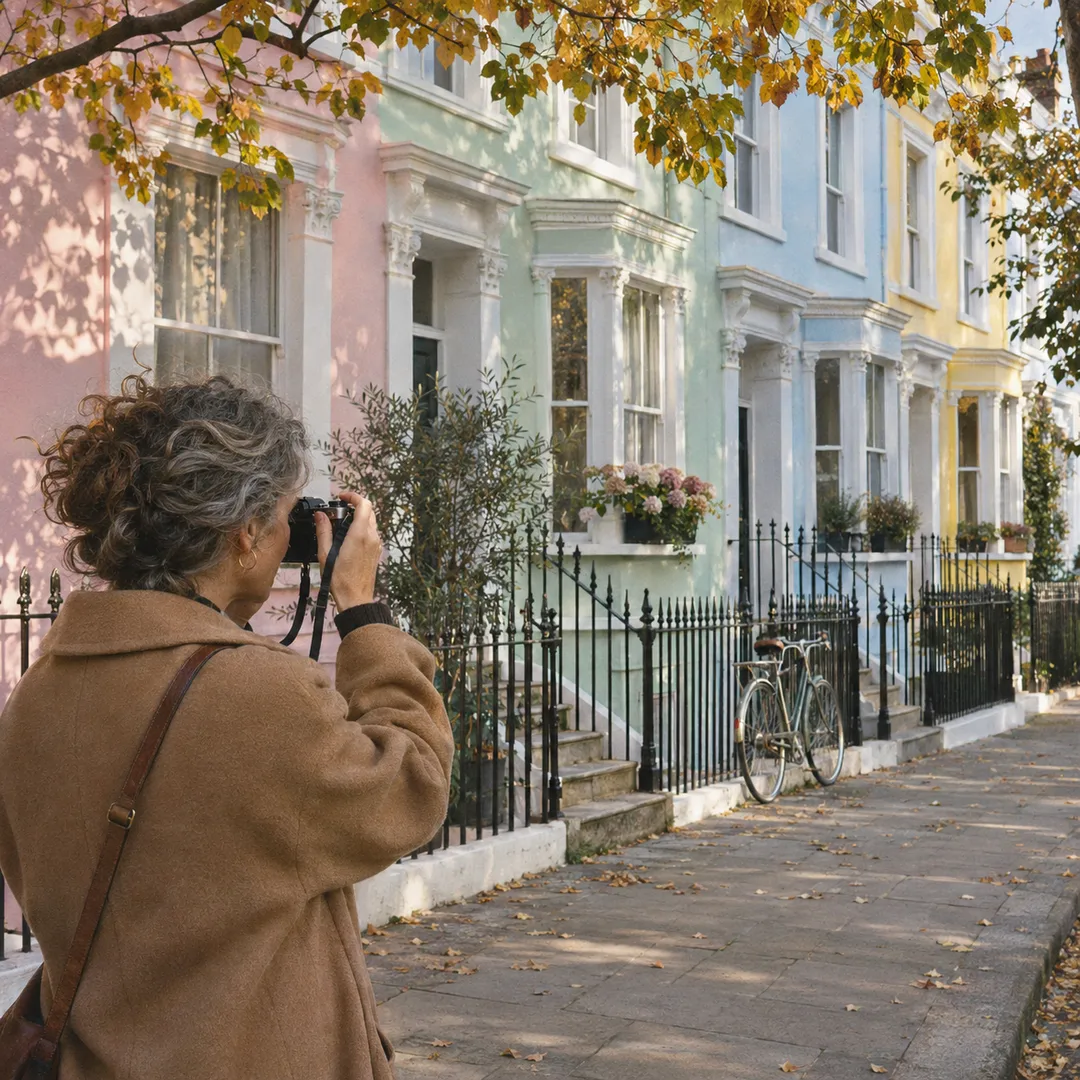
Notting Hill Neighborhood Walking Guide on a Weekday Morning
Visiting Notting Hill? Go on a weekday morning: this neighborhood walking guide links coloured terraces, a lost racecourse hill and a calm Portobello Road.
Ruth had seen Notting Hill twice before, both times on a Saturday, both times shoulder to shoulder with thousands of people on Portobello Road. On her third trip to London she tried something different: a Tuesday morning, a film camera with one roll, and no plan to buy anything. This neighborhood walking guide is the route she walked, and it shows a neighbourhood that is calmer, stranger and more interesting than the market day version most visitors meet.
Why a Weekday Morning Changes Everything
On Saturdays, Portobello Road becomes one of the most crowded streets in London, and the side streets fill with people looking for the coloured houses they saw online. On a weekday morning the same streets belong to residents again. Delivery vans, school runs, dog walkers, a shopkeeper sweeping the step. Ruth could stand on a corner for a full minute to wait for the light without anyone stepping into her frame.
The light is the other reason. In autumn the sun stays low all morning, and it rakes along the painted terraces from the side, which brings out the colours without washing them flat. By early afternoon the tall houses throw the narrower streets into shade. If you are coming to take photographs, arrive early and work towards the market end as the morning goes on.
There is a small courtesy worth keeping in mind. These are people's homes, and the most photographed doors get a lot of attention. Ruth shot from the pavement, never climbed steps, and moved on when someone was coming out. A quick nod to a resident goes a long way here, and it is part of why the neighbourhood still feels like a neighbourhood on a quiet morning.
The Coloured Terraces Without the Queue
Ruth started near the top of Portobello Road, where the rows of pastel terraces are at their most photogenic: pink beside mint beside pale blue, each house painted by a different owner over the years. The colours are a fairly recent tradition, as residents brightened up what had been grimy, divided houses in the decades after the war. It gives the area its signature look today.
Rather than chasing a single famous house, she walked slowly along the smaller residential streets between Portobello Road and Westbourne Grove, looking for combinations she liked. A lemon front with a black door. A row of three shades of blue. Mews lanes off these streets often have their own colour runs, with converted stables painted in soft greys and greens, and window boxes still in bloom in early autumn.
For anyone using a phone rather than film, the same rule applies: choose a short stretch and let the colours stack in the frame rather than isolating one door. Step across the road for a wider shot, and wait for a cyclist to pass for a little life in the picture. On a weekday you will have time to try a few angles without anyone waiting behind you.
The Hill Where London Tried to Build a Racecourse
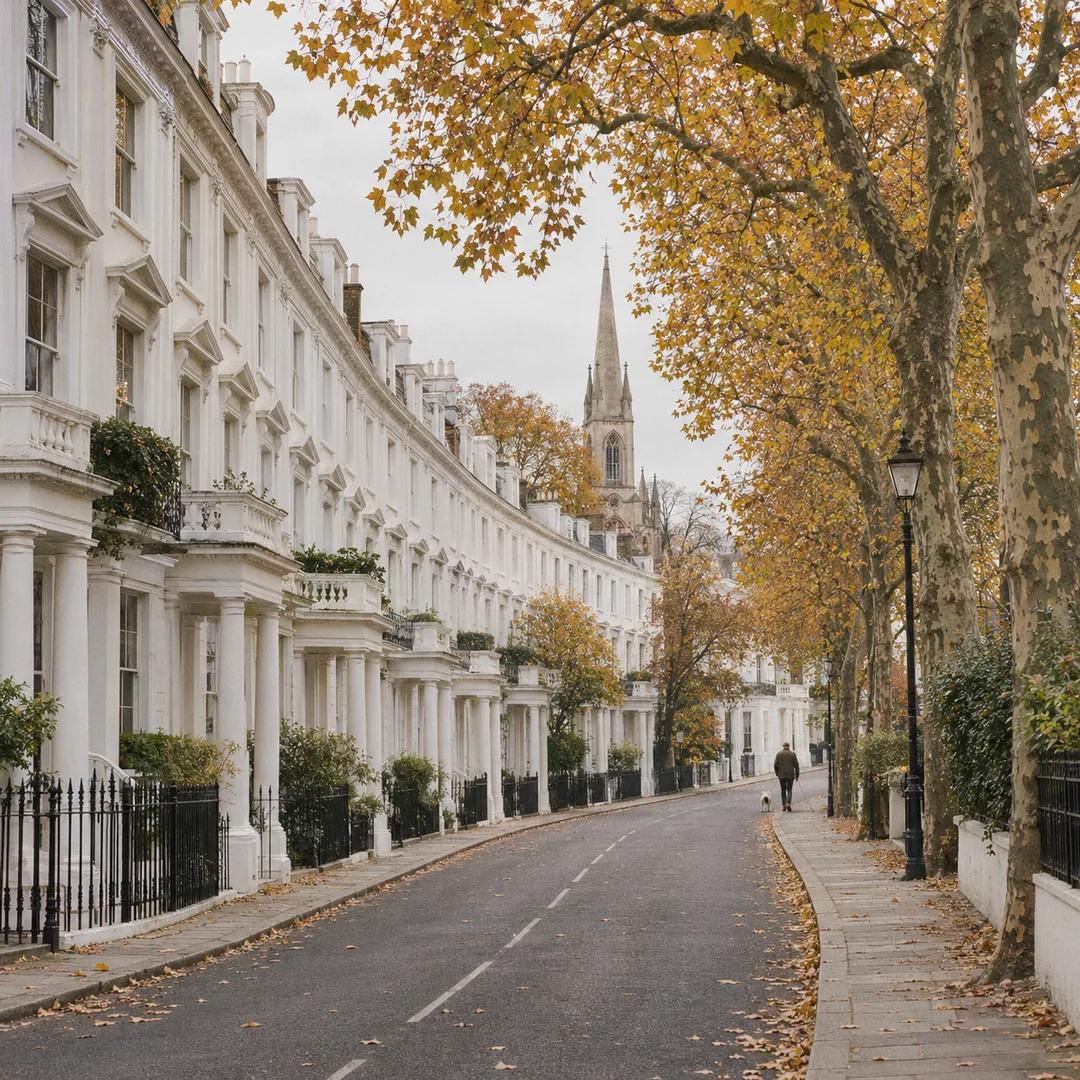
From the terraces, Ruth climbed west into the Ladbroke estate, the area of grand curving crescents and private communal gardens behind the houses. At its highest point stands St John's Church, on the top of the actual hill in Notting Hill. The curving streets around it trace the outline of an old racecourse, the Hippodrome, which was built on these fields and failed within a few years because the heavy clay soil turned the track to mud.
Once you know the story, the shape of the neighbourhood makes sense. Lansdowne Crescent and the streets around it sweep around the hill in long arcs, because the developers who came after the racecourse laid out their houses along the old lines. Ruth walked the full curve slowly, photographing the white stucco fronts and the church spire appearing and disappearing between the trees.
The communal gardens behind the crescents are private to residents, so you will only glimpse them through gaps between houses and over railings. That is part of the charm. Walk quietly here, keep to the pavements, and enjoy one of the calmest corners of west London, just a few minutes uphill from a street that will be packed with people again by Saturday.
Portobello Road at Its Own Pace
Ruth came back down to Portobello Road for the second half of the morning. On a weekday the antique arcades at the southern end are mostly quiet, with a few dealers open and the stalls folded away, but the street itself is easy to walk. The fruit and vegetable stalls further north trade on weekdays, and the long run of cafes and small shops gives you places to stop.
Walking it end to end on a quiet day is a good way to understand its shape. The upper, posher end with its antiques, the middle with food and everyday shops, and the far end under the Westway flyover, where the market turns to vintage clothes and second-hand bits on its busier days. Ruth shot a frame of the flyover, which is as much a part of the area's story as the pastel houses.
If you want the antiques experience, come back on a Saturday very early, before the crowds. But for a first proper look at the street, the quieter weekday version is more rewarding, because you can actually see the buildings and talk to the people who work there without being swept along.
Carnival, Film Fame and the Neighbourhood Behind Them
Notting Hill is famous for two things that can hide the place itself: the romantic comedy that sent visitors hunting for a blue door, and the Carnival that fills the streets every August bank holiday. The Carnival grew out of the Caribbean community who settled here after the war, and it is the deeper story of the area, a celebration that began as a response to hard times and became one of the largest street festivals in Europe.
Ruth's walk passed some of the streets the Carnival processions use, and it is worth noting how ordinary they are on a Tuesday. If you want to understand the neighbourhood, pair your walk with a little reading about Carnival history, and look for murals and community spaces under the Westway that keep that story visible all year round.
The film is a lighter thread. Fans still look for its doors and shops, and that is fine, but the real pleasure of Notting Hill is not in matching locations. It is in the mix: grand stucco crescents, painted terraces, a working market, and a strong community history, all within a short walk of each other.
Practical Notes for a Weekday Walk
Allow about two and a half hours, including a coffee and the climb to the church. The hill is gentle but real, so wear comfortable shoes. Start at the top of Portobello Road around mid-morning for good side light on the terraces, then work south. Bring a bag with room for a pastry if you stop at the market end.
If you want to build a different route nearby, open the Karpo APP and ask for quiet residential streets or local markets around where you are staying. Use it to plan the next morning walk while the light is still on your side.
Ask Karpo for more information.
Keep reading
- Knightsbridge Festive Shop Window Walk Planner: Dusk Loop
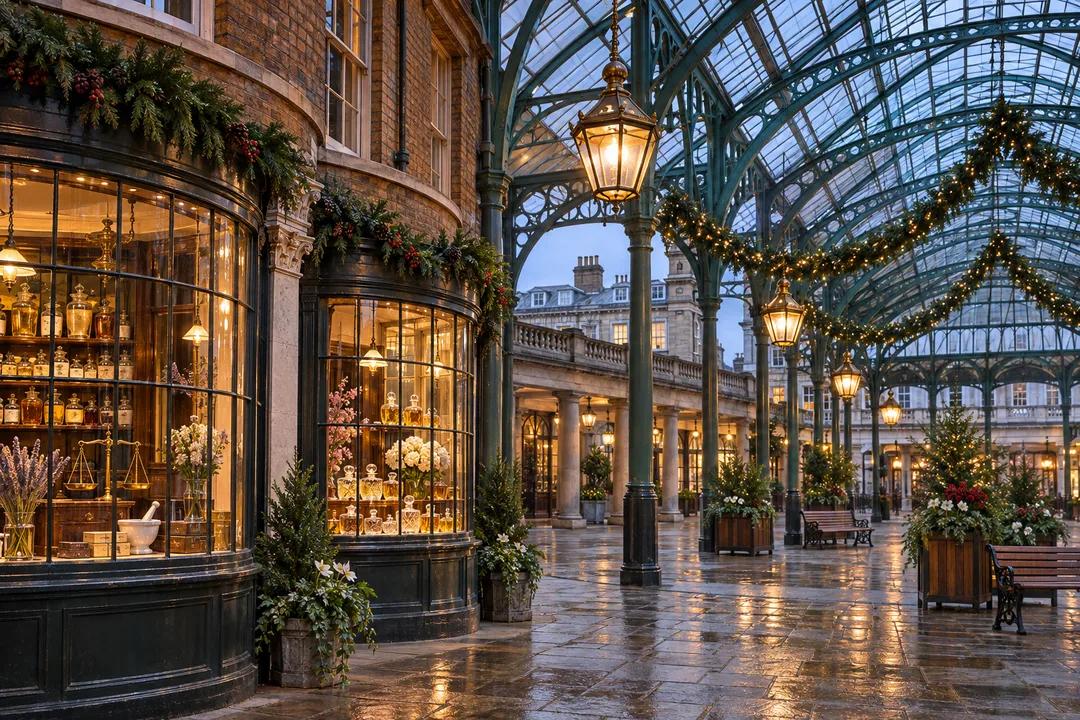 Covent Garden Festive Shop Window Walk Planner: Night Loop
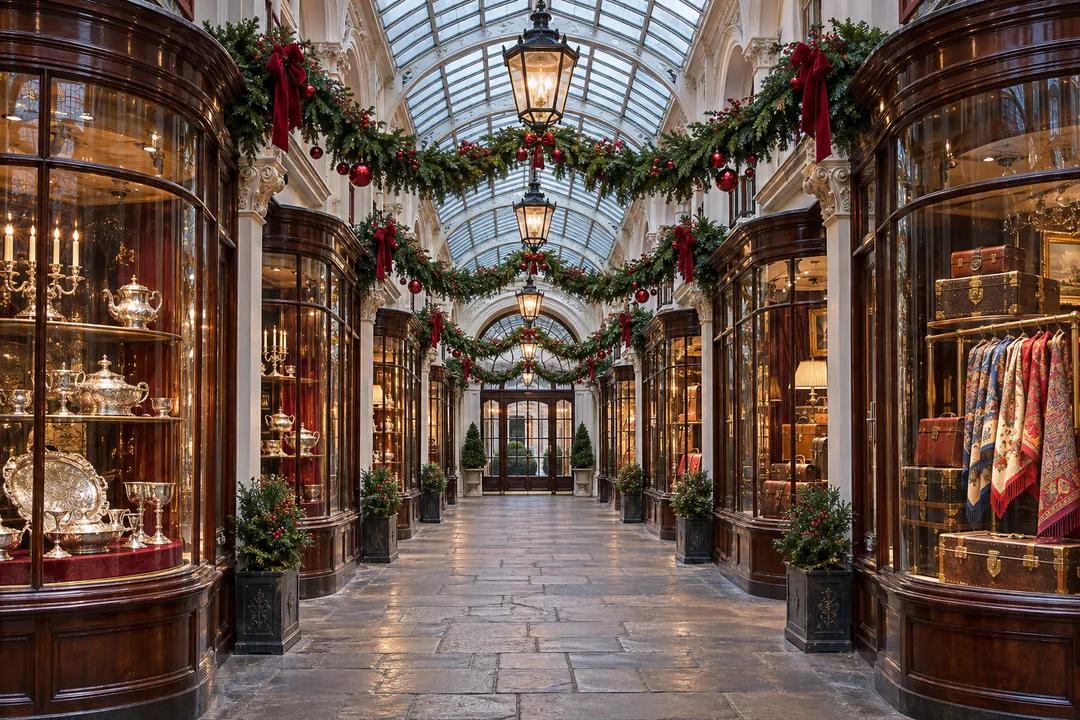 Mayfair Festive Shop Window Walk Planner: Arcade Dusk Loop