 Knightsbridge Festive Shop Window Walk Planner: Dusk Loop
Neighborhood Guides
Covent Garden Neighborhood Walking Guide to Hidden Courts
Seen the piazza already? This Covent Garden neighborhood walking guide follows gas-lit courts, Seven Dials, a ballet bridge and a quiet community garden.
Jo and Mark come down from Manchester every autumn for a long weekend in London, and Covent Garden is always on the list. After five trips they knew the piazza by heart: the market hall, the street performers, the busy shops. This year they wanted to see what sits behind it. This neighborhood walking guide is the route they pieced together, a loop of narrow courts, old lanes and quiet corners that most visitors walk straight past.
Leave the Piazza by the Back Door
The piazza is the obvious heart of Covent Garden, and it is a good place to start, but Jo and Mark made a rule for this walk: no lingering in front of the market hall. Instead they walked around the back of St Paul's Church, known as the actors' church, and into its walled garden, a calm green space hidden from the crowds just a few metres away.
The church faces the piazza with a grand portico, but its real entrance is at the back, through the garden. It has been linked with the theatre world for centuries, and memorials to actors and performers line its walls inside. Even a few minutes on a bench here sets the tone for the rest of the walk: slower, quieter, more interested in what is around the corner than what is in the centre.
From the garden, slip out through the side gate towards Bedford Street and the narrow lanes beyond. Most people go back the way they came. Taking a different exit is the first small step into the hidden side of the neighbourhood, where the streets get smaller and the buildings older.
A Gas-Lit Court That Looks Unchanged
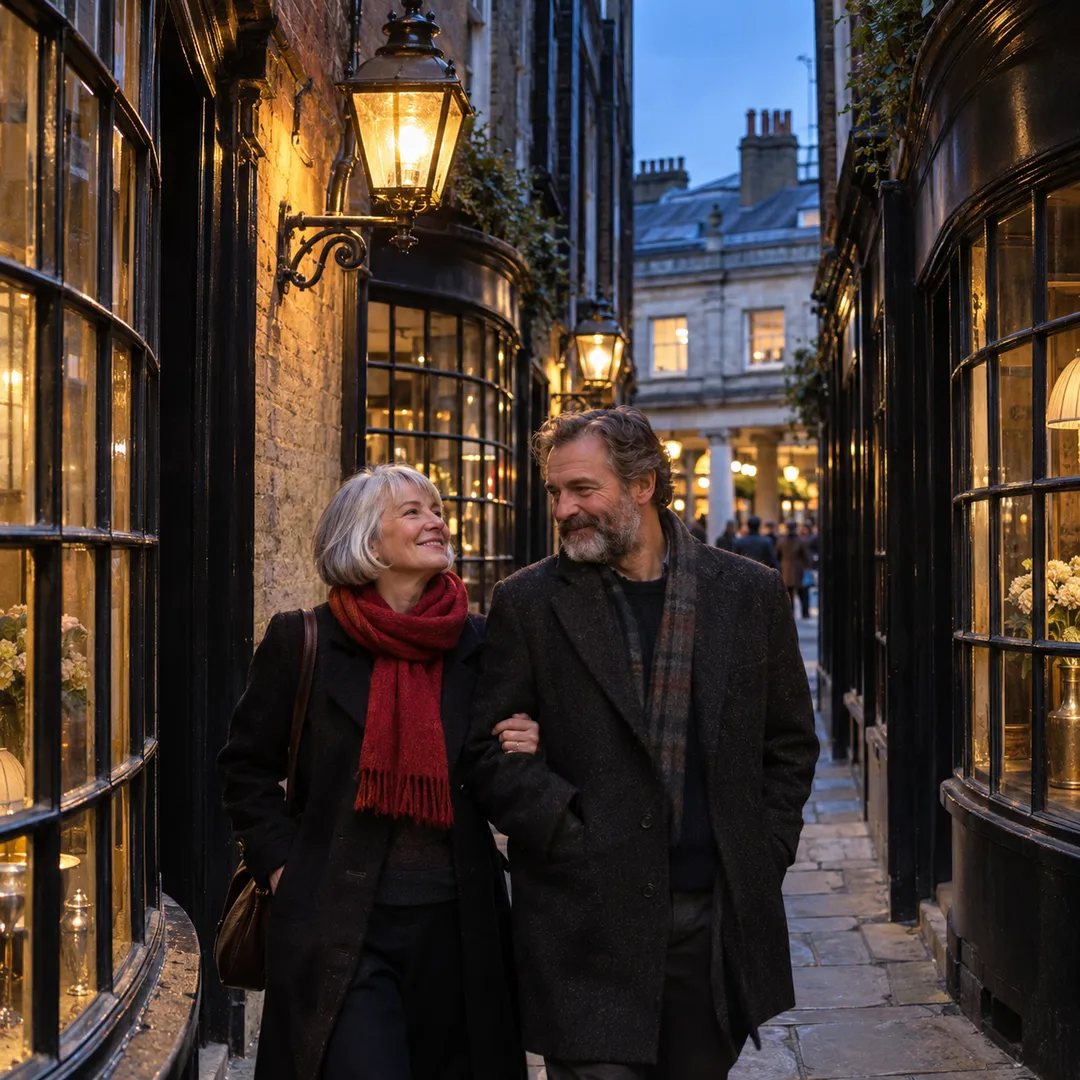
A few streets west, between St Martin's Lane and Bedford Street, lies Goodwin's Court, a very narrow passage lined with a row of black bow-fronted Georgian windows and old iron lamps. It feels like a film set, and in fact it has been used as one, but people still live and work here. On a dark autumn evening, with the lamps glowing, it is one of the most atmospheric corners of central London.
Jo and Mark arrived at dusk, which is the right time. The light from the lamps catches the old glass and the flagstones, and if you are lucky the passage is almost empty. Walk through slowly, keep your voice down, and take your photograph from one end rather than standing in front of anyone's door. The court is short, so it only takes a minute, but it is worth the detour.
Nearby Cecil Court, a pedestrian lane of small specialist shops selling old prints, maps and collectables, makes a natural pair with it. Browse the windows, and if something catches your eye, step inside. The shops here are quiet and personal, and the owners are usually happy to talk about what they sell.
Rose Street and the Pub With a Rowdy Past
Back towards the centre, Jo and Mark found Rose Street, a narrow lane that runs between Garrick Street and Floral Street. At its corner stands the Lamb and Flag, one of the oldest pubs in the area, a timber-framed building with a reputation that was once very different. In earlier centuries the lane was known for bare-knuckle fights, earning the pub a grim nickname, the Bucket of Blood.
Today it is a cosy, crowded local, with drinkers spilling into the alley on mild evenings. The poet John Dryden was set upon by hired thugs in this lane, an attack said to have been ordered by an offended rival, and the story still gets told inside. It is a good place to stop for a drink and imagine what this part of London was like before the theatres and boutiques.
If you prefer a quieter break, walk on along Floral Street instead. It is a narrow lane of fashion shops with a calm, almost residential feel compared with the piazza, and it leads to one of the most unusual sights on the walk, hanging high above your head.
The Ballet Bridge and the Seven Dials
Halfway along Floral Street, look up. A twisting bridge of glass and aluminium links two buildings across the lane, connecting the Royal Ballet School with the Royal Opera House. It is called the Bridge of Aspiration, and it lets young dancers cross to rehearse without stepping outside. Jo stood under it for a while, hoping to see someone walk across, and she did.
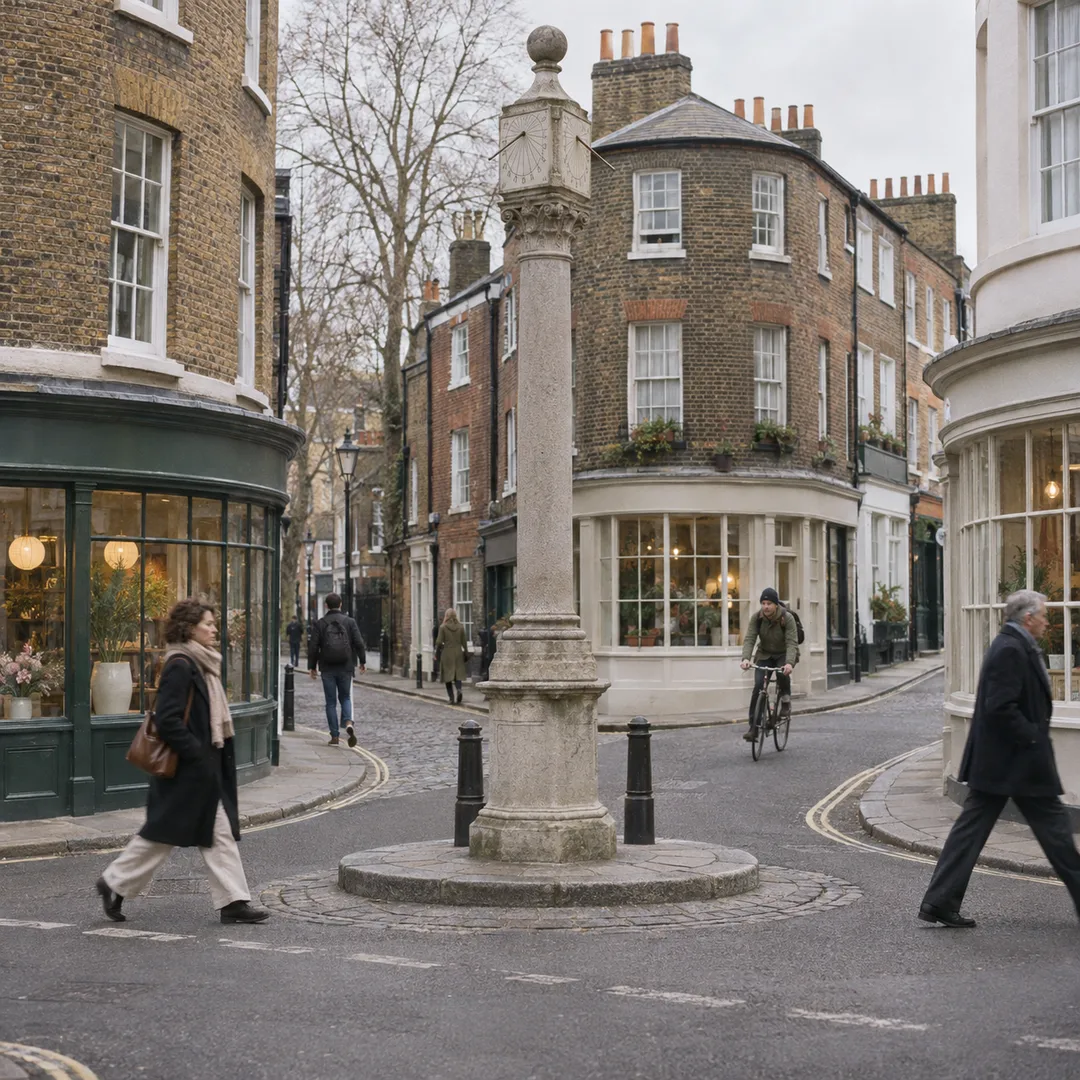
From there, head north to Seven Dials, where seven streets meet around a tall stone pillar. The column carries six sundials, and the pillar itself forms the seventh. The original was removed long ago and the current one is a faithful copy, but the circle around it still has the feel of a village crossroads, with shops, cafes and theatres facing in every direction.
Seven Dials is easy to get lost in, which is half the fun. Pick one of the seven streets at random and follow it for a block or two. Jo and Mark tried three before settling on the one that led them into the next stop, a tiny courtyard painted in the brightest colours they had seen all day.
Neal's Yard and a Community Garden to Finish
Neal's Yard is a small triangular courtyard hidden between Short's Gardens and Monmouth Street, entered through narrow passages. Its walls are painted in bold blues, oranges and pinks, window boxes overflow with plants, and small cafes and health food shops fill the ground floors. It has been a centre for alternative living in central London for decades, and it still has that easy, cheerful mood.
To finish the walk, Jo and Mark found the Phoenix Garden, a small community garden on a former car park behind St Giles. It is run by volunteers, full of wildlife-friendly planting, and a lovely surprise in such a busy part of the city. They sat on a bench, watched the birds, and agreed this was their favourite corner of the whole trip.
If the garden is closed, as it can be on some evenings, walk south back to the piazza through the smaller lanes. By now you will see the familiar square differently, as just one part of a much bigger, older and stranger neighbourhood.
Practical Notes for the Hidden Courts Walk
Allow two hours at an easy pace, longer if you stop for a drink. The route is flat and compact, but some passages are narrow and busy at peak times. Dusk is the best time for the gas-lit courts. Wear shoes that cope with flagstones and cobbles, and keep valuables close in crowded spots.
If you want to explore other hidden corners of London, open the Karpo APP and ask for quiet courtyards or old passages near Covent Garden. Use it to shape a loop around your next trip, and save the piazza for a quick look on the way out.
Ask Karpo for more information.
Keep reading
- Knightsbridge Festive Shop Window Walk Planner: Dusk Loop
 Covent Garden Festive Shop Window Walk Planner: Night Loop
 Mayfair Festive Shop Window Walk Planner: Arcade Dusk Loop