 Knightsbridge Festive Shop Window Walk Planner: Dusk Loop
Neighborhood Guides

Stoke Newington Food Market Grazing Route for Home Cooks
A Stoke Newington food market grazing route for home cooks: taste on Church Street, shop the high street grocers, then rest in Clissold Park before cooking.
This Stoke Newington food market grazing route is built for people who cook. You eat a little, notice what made it taste that way, and then buy the ingredients so you can try it again in your own kitchen. Stoke Newington suits that habit unusually well: Church Street has bakeries and delis with a village pace, while the high street running down towards Dalston is lined with Turkish and Kurdish grocers, grills and bakeries that open early and stay busy. Clissold Park sits between the two as a place to sit down and compare notes.
Taste First, Shop Second
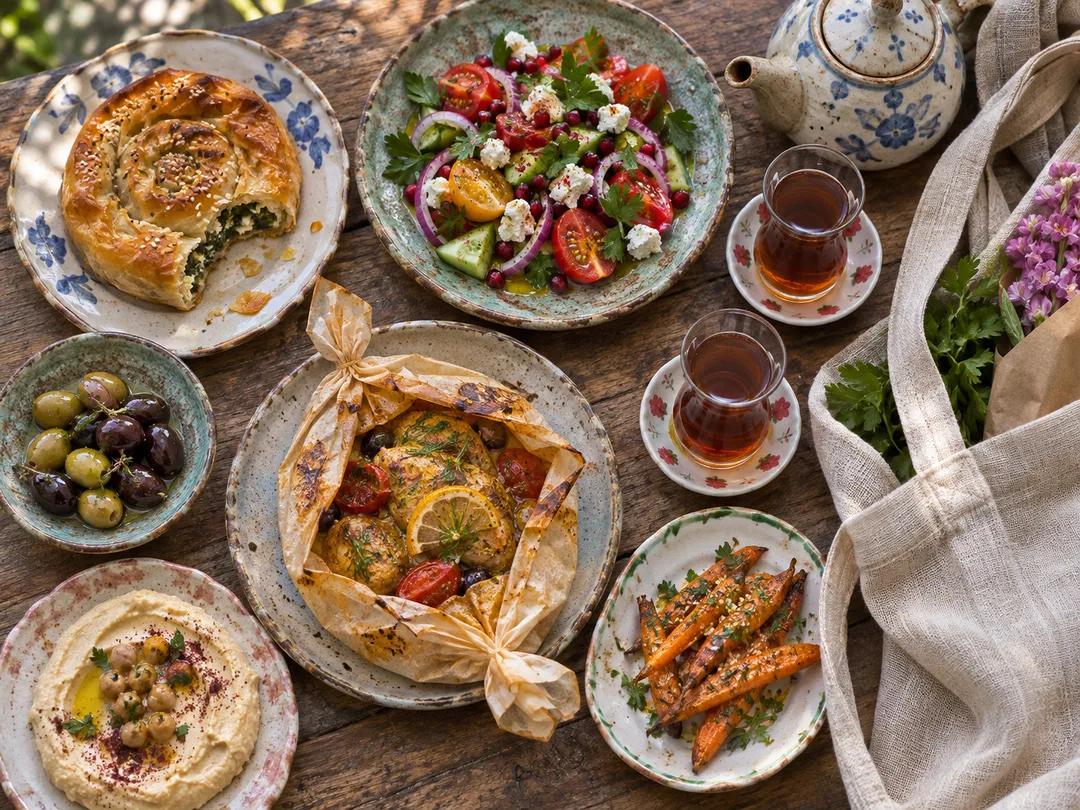
The rule that makes this route work is simple. You do not buy anything heavy until you have eaten something that shows you why it is worth carrying. A flaky pastry tells you what kind of butter a bakery trusts. A grilled wrap from the high street tells you how much sumac, pul biber and parsley the cooks use. Once you know the flavour you want, the shopping half of the walk becomes focused instead of random.
Bring two bags: a small one for food you eat on the move and a sturdy tote for groceries. Leave the tote empty until the second half. Home cooks tend to fill a bag in the first shop they enjoy and then spend the rest of the walk carrying jars, which is exactly what you want to avoid on a route meant for grazing.
Church Street in the Morning
Start at the Church Street end, where the pace is slower and the shopfronts feel more like a market town than an inner London road. This is the place for a warm pastry, a slice of something baked that morning, or a small coffee taken at a window counter. Watch what locals order and how they carry it; many treat the street as a breakfast walk rather than a sit-down stop.
Keep this first bite modest. You are going to eat several more things, and the best way to judge a bakery is by one item you know well, such as a plain croissant or a simple bun. If it is good, note the bakery name in the Karpo APP so you remember it on a later visit, and keep walking towards the park while you finish it.
A Bench in Clissold Park
Clissold Park is the natural halfway point. The old house on the rise, the ponds and the wide lawns give you somewhere to stop without needing a table. Find a bench, finish whatever you carried from Church Street and decide what the afternoon is for. Do you want to cook a grilled dish tonight, a slow stew this weekend, or simply restock the spice drawer?
Your answer shapes the second half. Tell Karpo what you plan to cook and how much you are willing to carry, and ask for nearby grocers and bakeries that suit it. Karpo can suggest places and an order that keeps the walk short, but the real choosing happens when you look at the shelves and talk to whoever is behind the counter.
Down the High Street for Grills and Bread
Leaving the park towards the high street changes the mood. Smoke from charcoal grills, trays of fresh flatbread and crates of herbs outside the grocers make it a different kind of food street, louder and more practical. Order one small grilled item or a lahmacun to eat standing up, and pay attention to the salad and pickles served alongside, because that is often where the clearest lesson for a home cook is hidden.
After eating, step into a grocer and look for what you just tasted. Bunches of flat-leaf parsley and dill, jars of pepper paste, bags of bulgur, blocks of white cheese, dried mint and chilli flakes are usually easy to find. Ask a staff member which pepper paste they cook with at home. That one conversation is often worth more than any recipe you saved online.
What Is Worth Carrying Home
Prioritise ingredients that are hard to find in a supermarket and easy to carry. Spices, pastes, dried herbs and good olive oil travel well. Fresh bread is worth buying near the end so it is still soft when you get home. Leave heavy items such as large bags of rice or tins for another trip unless you came by car. Fragile fruit, like ripe figs or pomegranates in season, should sit at the top of the tote.
An honest tip: skip the giant mixed baklava box if you are already full. It is tempting, but a few pieces from a smaller tray taste just as good and will not be crushed by the jars underneath. If you want a sweet ending, eat one piece on the walk and buy a handful for later instead of a whole presentation box.
Turning the Route Into Dinner
The point of a cook's grazing route is that it ends in your kitchen. Before you leave the high street, save a short note in Karpo listing what you ate, what you bought and what you plan to make. Next time you can ask for a similar walk built around a different dish, maybe a slow lamb stew in winter or a big herb salad when the weather warms.
If you live nearby, repeat the loop in a different order. Start with the grills, finish with pastries on Church Street, and see how the experience changes when you shop first. You will start to recognise which grocers have the freshest herbs on which days, and the route stops being a one-off outing and becomes part of how you cook every week.
Small Plans for Rain, Crowds and Company
Rain is the only real threat to this walk, because the park pause stops being pleasant. On a wet day, swap the bench for a café table on Church Street and shorten the high street section to one grill and one grocer. Abney Park, the overgrown old cemetery near the high street, is beautiful in drizzle, but you will want both hands free for an umbrella there.
If you bring a friend, split the shopping list instead of shopping together. One person looks for spices and pastes, the other handles bread and herbs, and you meet at the next corner to swap notes. It keeps the walk moving, avoids crowding narrow aisles, and gives you two kitchens' worth of ideas from the same stretch of north London.
Ask Karpo for more information.
Keep reading
- Knightsbridge Festive Shop Window Walk Planner: Dusk Loop
 Covent Garden Festive Shop Window Walk Planner: Night Loop
 Mayfair Festive Shop Window Walk Planner: Arcade Dusk Loop