 Bermondsey Toastie Lunch Cafe Picker: Viaduct Walks
Restaurants
Borough Cornish Pasty Lunch Picker for a Visiting Grandad
Showing a Cornish relative around Borough? This cornish pasty lunch picker explains how to judge a proper pasty, order well and eat it by Southwark Cathedral.
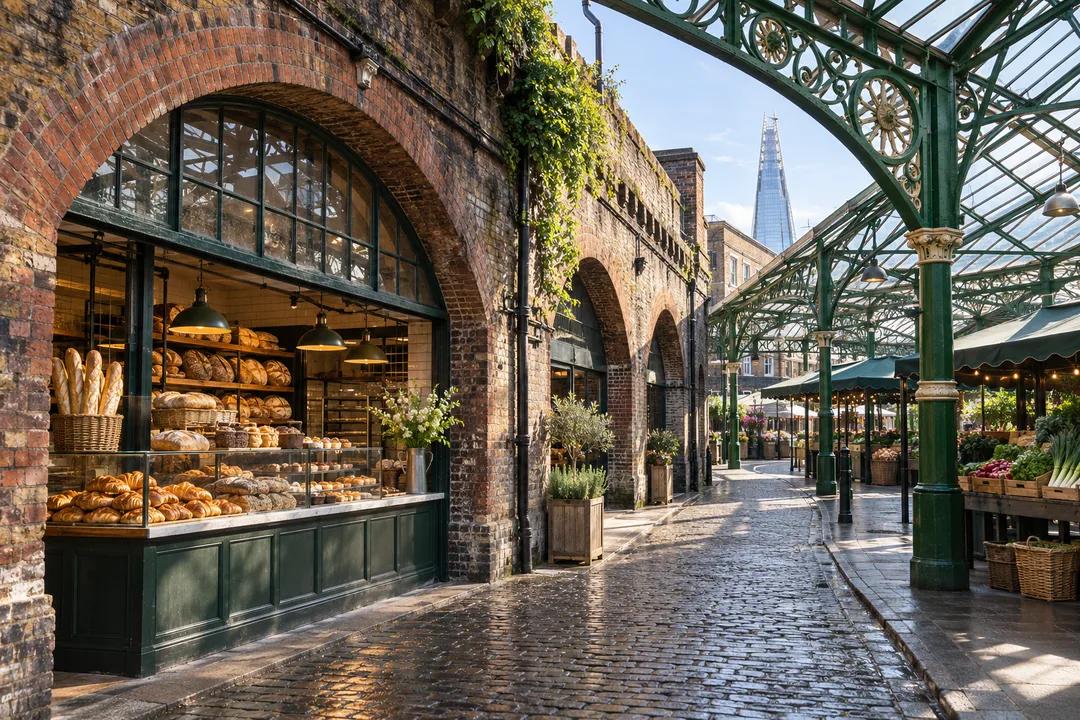
Granddad Peter grew up near Redruth and has eaten pasties for nearly eighty years, so when he came up to London to visit his granddaughter Jess, lunch became a test. He wanted to see whether a city that had never mined a scrap of tin could make a pasty worth the name. Borough, with its market and food stalls tucked under railway arches, was the obvious arena. This cornish pasty lunch picker follows how they chose, what Peter looked for and where they finally sat down to eat.
What a Cornishman Means by a Proper Pasty
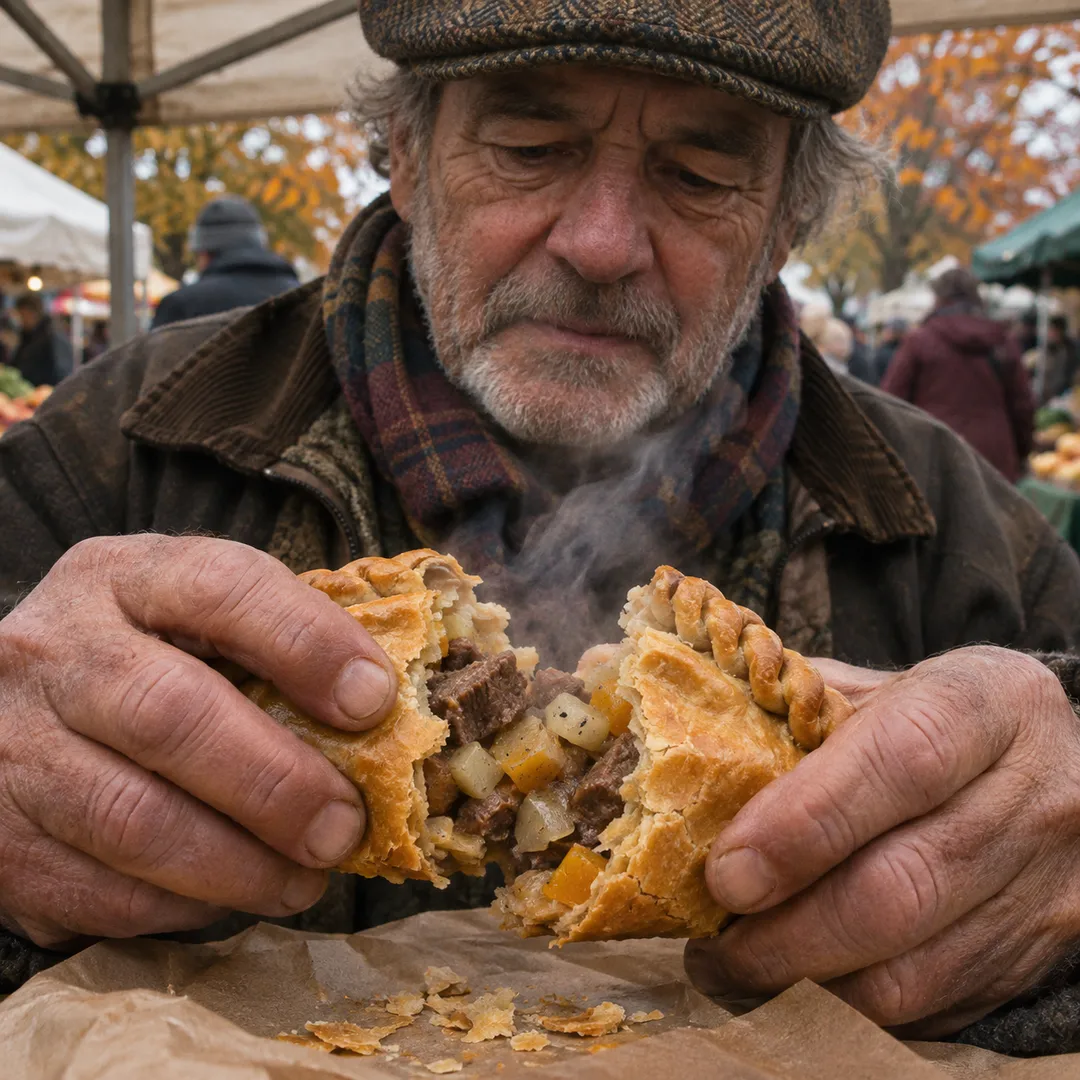
For Peter, a proper pasty is not simply meat in pastry. The traditional Cornish filling is beef, potato, swede and onion, cut into rough chunks rather than minced, seasoned with salt and plenty of pepper, then sealed raw inside the pastry so everything cooks together and makes its own gravy. In Cornwall, swede is often called turnip, which confuses visitors and delights locals. Peter used the word on purpose, to see who at the stalls understood him.
There is also a legal side. Since 2011, the name Cornish pasty has carried protected status in the UK and Europe, which means a pasty sold under that name has to be made in Cornwall to the traditional recipe, with a D shape and a crimp along one side. Many London bakers sell excellent pasties without using the protected name, and Peter was fair about it. He judged the pastry, the filling and the gravy, not just the label on the shelf.
Reading the Stalls Around Borough
Borough rewards a slow first lap. Jess suggested walking the whole market once before buying anything, and Peter agreed, partly because it gave him time to study pastry from a distance. The first thing he looked at was colour. A good pasty should be deep golden, glossy from an egg wash, with no pale undercooked patches near the crimp. He also looked for pasties that seemed recently baked rather than stacked high and left to go limp in a warming cabinet.
The second clue was weight. A proper pasty feels heavy for its size, because the filling is packed tightly with vegetables and meat. Peter quietly lifted one with the paper bag and nodded. The third clue was the crimp itself: a neat rope of folded pastry along the side, firm enough to hold. A crimp running over the top, he explained with a grin, belongs to Devon, and everyone in Cornwall has an opinion about that.
Ordering Without Embarrassing Anyone
Jess worried her grandfather would lecture the stall staff, but ordering turned out to be simple and friendly. Ask what the traditional filling is and whether the pasty was baked this morning. If you have a vegetarian in the group, most pasty sellers offer a cheese and onion or vegetable version alongside the beef. Peter chose the traditional one; Jess tried a cheese and leek pasty so they could swap halves and compare.
Ask for the pasty in a paper bag rather than a box, because that is how it is meant to be eaten: held in the hand, bitten from one end and finished down to the last corner. Grab a few extra napkins, as the gravy can escape when you break through the crust. Peter refused a knife and fork on principle and told Jess that anyone who uses cutlery on a pasty has never been hungry at the end of a shift.
The Miners' Story Behind the Crust
Peter told the story every Cornish family tells. Pasties became the working lunch of tin and copper miners because they travelled well, stayed warm for a long time wrapped in cloth and could be eaten without plates far underground. Folk tales say the thick crimp served as a handle that miners could hold with dirty hands and then throw away, and that wives marked initials on one corner so each man found his own pasty at crib time.
Historians argue about how much of this is literal truth, but the stories are part of the pleasure. Jess admitted she had never heard about the initials before, and Peter seemed happier explaining that than eating. That is the hidden value of a pasty lunch with someone from Cornwall: you are not just choosing food, you are being handed family history between bites.
Eating in the Shelter of Southwark Cathedral
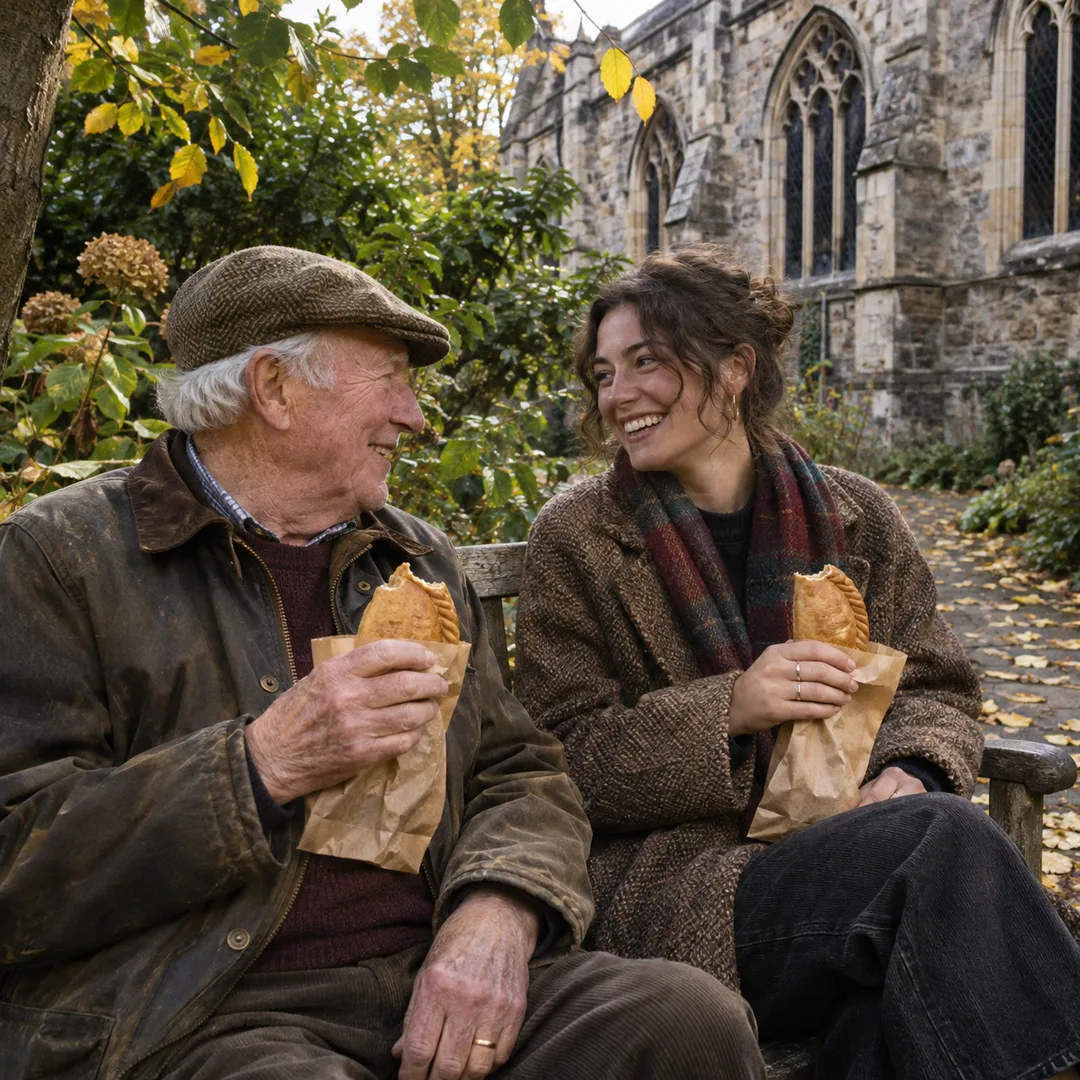
Borough Market is busy and noisy at lunchtime, so the pair took their pasties a short walk away to the churchyard garden beside Southwark Cathedral. The cathedral has stood near the southern end of London Bridge in one form or another for centuries, and its small green space offers benches, trees and a calmer mood just steps from the crowds. On a cool November day, a hot pasty there felt like holding a hand warmer.
Peter ate slowly and gave his verdict in stages. The pastry was flaky enough, the swede was properly sweet and the pepper was bold, though he thought the gravy could have been richer. Jess scored her cheese and leek pasty higher than his beef one, which caused a long, cheerful argument. Pigeons gathered quickly, so keep your bag closed and your crumbs under control.
A Riverside Stroll to Settle Lunch
After lunch, a gentle walk west along the Thames helped the pasties settle. The riverside path passes the replica of the Golden Hinde, the ship Sir Francis Drake sailed around the world, moored in a tiny dock surrounded by old warehouse walls. Peter pointed out that Drake was a Devon man and therefore not to be trusted on pasty matters, which made Jess laugh loudly enough that a tour group turned round.
Further on, the path opens to wide views across the river, with plenty of benches for anyone who needs a rest. Peter liked watching the barges and river boats, and the slow pace suited a man in his late seventies. A coffee stop on the way back gave them time to rank the morning's pasties and plan which stalls to try on his next visit.
Making It Easy Next Time
If you are hosting someone from Cornwall, or simply want a good pasty lunch near Borough, plan a little before you set off. The Karpo APP can suggest pasty and bakery stops around Borough and quiet places to sit nearby, based on what you tell it about your group. Mention that you have an older visitor who prefers a bench to standing room, or a vegetarian who needs a meat-free option, and the shortlist will reflect it.
Share the shortlist with your guest the night before so they can start forming opinions early, because a Cornish relative will form them anyway. Then give yourself an unhurried morning, walk the market once, trust the heavy golden pasty over the pale light one, and eat it in your hands. Peter went home to Cornwall with a grudging compliment for London and a promise to bring Jess a real one next time.
Ask Karpo for more information.
Keep reading
- Bermondsey Toastie Lunch Cafe Picker: Viaduct Walks
 Shoreditch Toastie Lunch Cafe Picker: Studio Breaks
 Borough Toastie Lunch Cafe Picker: Arch Griddles to Order