 Notting Hill Budget Lunch Route Planner: Golborne Road Cafes
Restaurants
Borough Toastie Lunch Cafe Picker: Arch Griddles to Order
Pick a Borough toastie lunch cafe by comparing railway-arch iron griddles with Southwark Street courtyard bakeries. Order half-cut sourdough melts before noon.
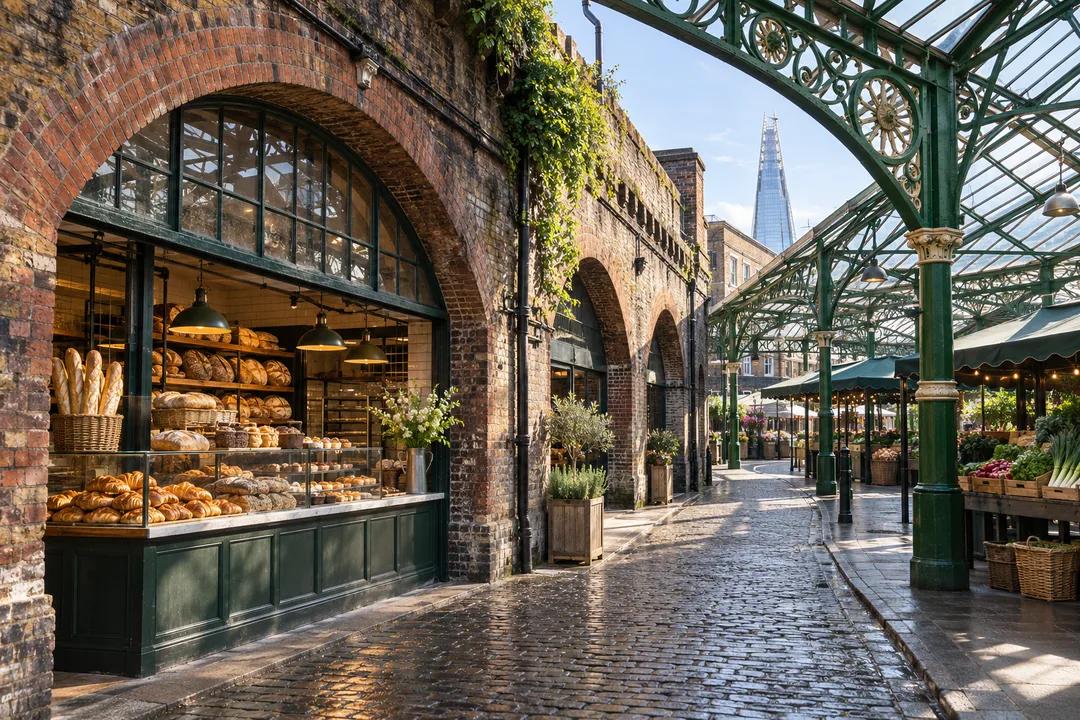
Heavy cast-iron weights hiss against buttered sourdough under the green wrought-iron canopy near Bedale Street, sending a wave of toasted leek, white onion, and sharp West Country cheddar into the cool damp air beneath the railway viaduct. Using a toastie lunch cafe picker in Borough comes down to deciding within two minutes whether you want a standing open-griddle press eaten warm from brown butcher paper or a ceramic-plate sit-down table along Southwark Street where you can rest a canvas portfolio bag. My architectural model-maker friend Maya works in a timber-beamed studio off Thrale Street, and when her cousin Owen rode the train up from Somerset on a drizzly Tuesday, we mapped out a midday circuit that dodged the main tourist crush while testing both styles of melted lunch.
Cast-Iron Viaduct Griddles Versus Sit-Down Southwark Bakery Counters
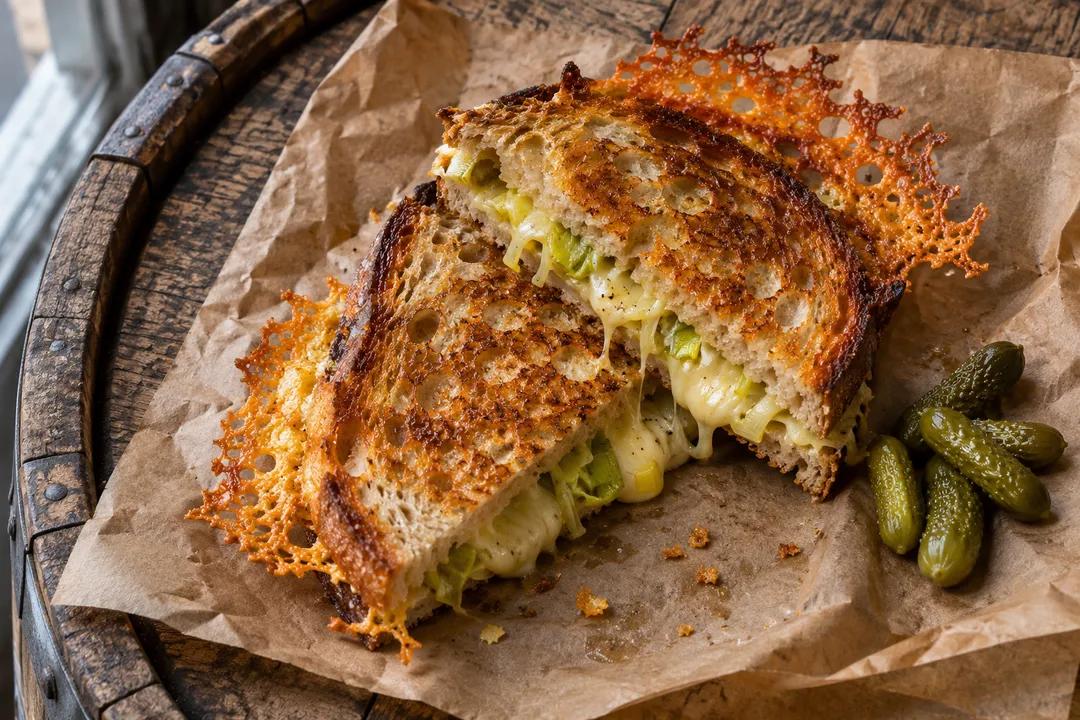
Borough splits its hot sandwich culture into two distinct physical setups separated by the overhead rumble of Southeastern commuter trains. Directly beneath the brick viaducts between Stoney Street and Bedale Street, dairy-counter stalls and arch cafes work off wide, flat cast-iron planchas open to the lane. Bakers stack thick slices of long-fermented country sourdough filled with raw diced leek, white onion, garlic chives, and a coarse grating of unpasteurized cheddar, Ogleshield, and Alpine-style mountain curd. Because the sandwiches are pressed beneath ribbed iron weights right in front of the queue, rendered butter pools around the crust and crisps into a lacy, bronze frico skirt that snaps cleanly when you bite through the corner.
Step two blocks south or west toward Southwark Street and Borough High Street, and the rhythm shifts from standing paper-sleeve lunches to indoor wooden booths and glass-fronted espresso counters. Here, kitchen teams assemble closed-tin white bloomer and seeded rye melts layered with slow-braised ham hock, wholegrain mustard, pickled walnut, or nutty Comté. Instead of an outdoor griddle sear, these cafes use heavy twin-plate panini presses or salamander broilers, serving the sandwich halved on warmed stoneware plates alongside dressed bitter leaves and tart gherkins. Maya chooses the viaduct griddles when she has twenty minutes between laser-cutting runs, and picks the Southwark Street tables whenever Owen brings fragile architectural drawings that need a dry table away from umbrella drip.
Reading the Bread Crumb, Cheese Blend, and Pickle Balance
A proper midday toastie lives or dies by structural balance between loaf density and fat release. Open-crumb sourdough with a blistered, chewy crust holds up to high-moisture cheeses like washed-rind Somerset curds or young Fontina without turning soggy in the center. When you peer at a counter display stack before ordering, check whether the kitchen grates its cheese into loose ribbons rather than laying down thick cold slabs. Grated blends trap small air pockets that melt evenly before the exterior bread chars, whereas thick uncut blocks often leave a cool core while the outer crumb darkens too fast on the hot iron.
Acid and allium cuts are what keep a rich dairy lunch from feeling heavy halfway through the second half. The strongest Borough counters fold finely minced shallots, Dijon mustard, or vinegar-rinsed capers straight into the cheese mix so every mouthful carries a bright counterpoint. If you are ordering a meat-heavy special—such as salt-beef brisket with Swiss curd or Wiltshire ham with aged Red Leicester—ask for a small pot of cornichons or pickled silverskin onions on the side. Skip ordering a heavy double-béchamel croque monsieur if you plan to eat while walking toward the river; the top cream sauce sticks to paper wrappers and cools into a thick coat before you reach the embankment, so save béchamel-topped slabs for an indoor table with a knife and fork.
Midday Queue Timing and Wet-Weather Seating Strategy
Lunchtime foot traffic around Borough Market builds in two predictable waves: early gallery walkers and sightseers cluster near the High Street entrance just before noon, while nearby engineering and design offices empty out simultaneously thirty minutes later. If you arrive during that middle window, bypass the central Three Crown Square aisles altogether and enter via Park Street or Rochester Walk. The side passages shave several minutes off the walk and bring you straight to the perimeter coffee bars and bakery hatches without squeezing past slow-moving photography groups.
When you order at a busy griddle counter, keep your payment card ready and step two paces to the side of the collection rail so people behind you can see the chalked daily specials. Always ask the server to slice the toastie diagonally in half before wrapping it in greaseproof paper; a diagonal cut lets excess steam escape from the middle so the bottom crust stays crisp during a five-minute walk to a bench. If the standing barrel tables under the green market roof are three-deep, do not hover in the narrow passageway where porters push wheeled cheese trolleys. Instead, tuck the warm parcel inside your coat flap and walk ninety seconds east to a sheltered bench.
Pairing Your Melt With Filter Coffee, Cider, or Shrub Sodas
Washing down melted cheddar requires a drink with enough acidity or roast bitterness to clean the palate. Along Stoney Street and Park Street, independent roasters pull bright, washed Ethiopian and Colombian filter coffees whose citrus notes cut right through buttered sourdough. If you prefer espresso with milk, order a short cortado or piccolo rather than a large foamy latte; too much steamed milk on top of a triple-cheese toastie leaves you sluggish for the rest of the afternoon.
On a relaxed Friday lunch or when hosting an out-of-town relative like Owen, look for cafes and market counters pouring dry, still Herefordshire draught cider or small-batch botanical apple shrubs mixed with sparkling water. The tannic apple skin and sharp malic acid act just like a white wine pairing in an Alpine fondue room. Several Southwark bakeries also brew loose-leaf Earl Grey and toasted genmaicha in cast-iron pots, which pair remarkably well with savoury mushroom, thyme, and gruyère toasties when a cold wind sweeps off the Thames.
Three Quiet Pocket Routes for Eating and Walking After Lunch
Once you have a warm paper-wrapped toastie in hand, the calmest place to sit is the south churchyard of Southwark Cathedral, tucked just behind the market stalls. Low stone walls and wooden benches face a neat herb garden planted with rosemary, sage, and lavender, while the gothic nave blocks the noise of Borough High Street. After finishing the last crisp corner of cheddar frico, walk west down Clink Street beneath the dark brick canyon of Victorian warehouses, pausing to look up at the thirteenth-century stone rose window frame of Winchester Palace.
For an inland route away from the river breeze, head south across Southwark Bridge Road into Red Cross Garden, a restored Victorian pocket park laid out by social reformer Octavia Hill. Its tiled cottage facade, small footbridge over a lily pond, and covered wooden bandstand offer dry seating even when a sudden London shower passes over. Open the Karpo APP while you finish your coffee there to compare nearby bakery counters, filter for indoor courtyard seating, or spot an alternative toastie kitchen toward Flat Iron Square and Bermondsey if your first-choice griddle has sold out of sourdough loaves.
Ask Karpo for more information.
Keep reading
- Notting Hill Budget Lunch Route Planner: Golborne Road Cafes
 Camden Budget Lunch Route Planner: Lock or Drummond Street
 Brixton Budget Lunch Route Planner: Covered Arcades When Wet