 Bermondsey Toastie Lunch Cafe Picker: Viaduct Walks
Restaurants
Notting Hill Caribbean Lunch Spot Picker Beyond Carnival
Visiting Notting Hill outside Carnival? Pick a Caribbean lunch, order roti or jerk with confidence, then trace the parade streets and the area's history.
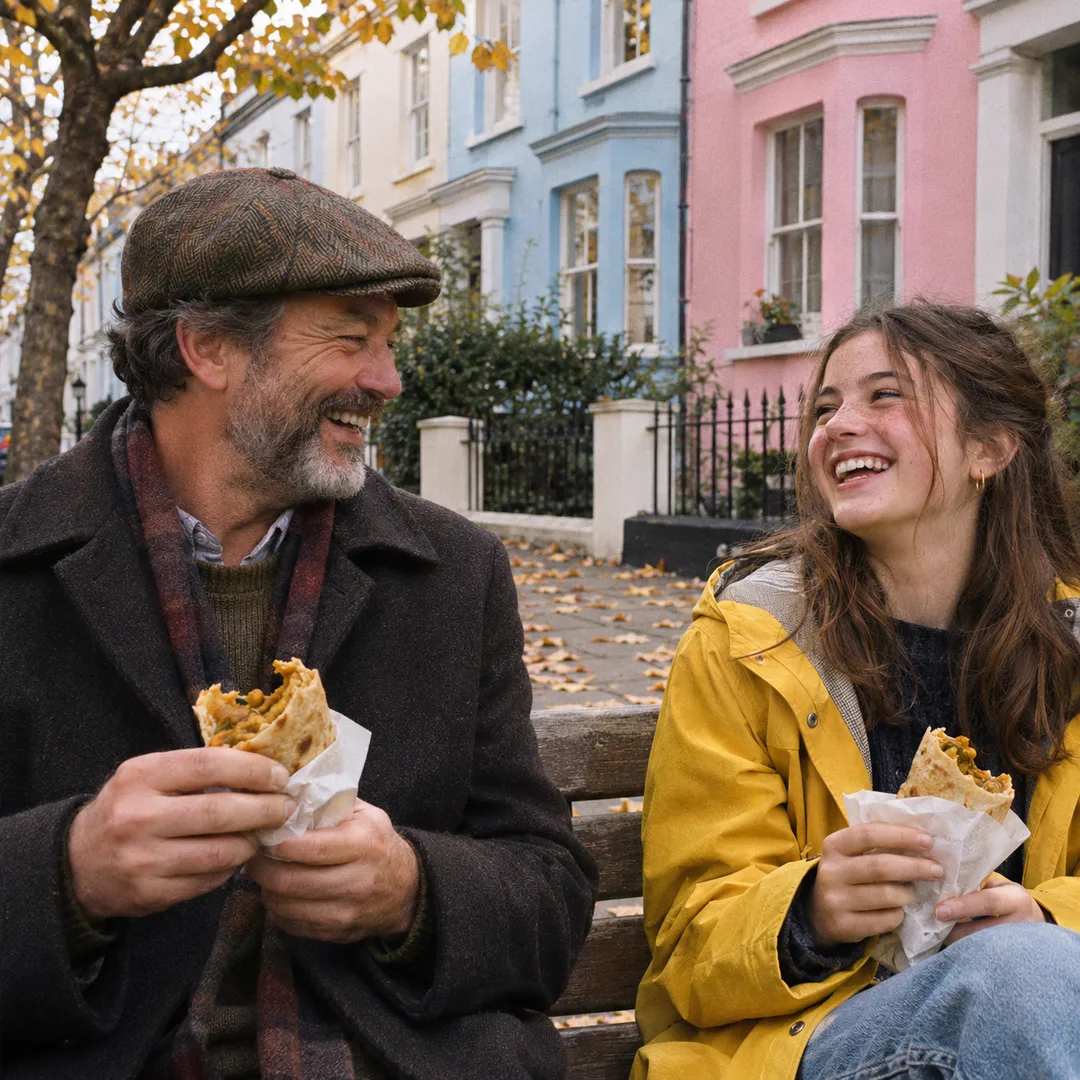
Most visitors meet Caribbean Notting Hill once a year, packed shoulder to shoulder on Carnival weekend with jerk grills glowing beside the floats. Come back on an ordinary weekday in November and the same streets are calm, the steel pan bands are rehearsing indoors, and a Caribbean lunch becomes a chance to understand where the festival came from. This guide is for anyone who wants to taste the food without the crowds and walk the route that turned a neighbourhood into a celebration.
Where the Carnival Story Begins
Notting Hill became a home for Caribbean families in the years after the war, when many newcomers could only find rooms in crowded, run-down houses in this part of West London. Life was hard, and in the late fifties the area saw violent racist attacks. In response, the Trinidadian activist Claudia Jones organised an indoor Caribbean carnival to lift spirits and show the city the beauty of island culture.
A few years later a local community worker organised a street festival for neighbourhood children, and steel pan players joined in. From those beginnings grew the Notting Hill Carnival, now one of the largest street festivals in Europe. Eating Caribbean food here outside August is a way of tasting the everyday cooking that kept those families going, long before the parade became famous around the world.
What to Eat When the Floats Are Gone
Out of season, Notting Hill's Caribbean lunch is quieter and more varied than the Carnival grill stalls suggest. Trinidadian roti is a favourite, a soft flatbread wrapped around curried chicken, goat or chickpeas with potato. Doubles, another Trinidadian classic, are two small fried breads filled with curried chickpeas and tamarind sauce, a light lunch that you can eat standing up in a few bites.
Jamaican plates also appear across the area: jerk chicken, brown stew chicken in a dark, sweet gravy, curry goat and escovitch fish, served with rice and peas or hard food. If you visited during Carnival and ate jerk from a drum grill on the street, try something different this time. A curry roti or a brown stew plate shows a gentler, slower side of island home cooking.
Ordering Roti and Jerk Like a Regular
When ordering roti, you usually choose the filling first and then decide between bone-in or boneless meat. Regulars often ask for boneless when eating on the go, since a roti with bones is messy to manage on a bench. If you like heat, ask for pepper sauce, but add a little at a time. Trinidadian pepper sauce is fierce and often stronger than it looks in the bottle.
For jerk, ask whether the chicken is leg or breast and choose leg for juicier meat. Order rice and peas or festival on the side, and a little coleslaw to cool the spice. One honest suggestion: skip ordering several mains for one person. Caribbean portions are large, and a single roti or plate is almost always enough for a full lunch with room for a cake slice afterwards.
Who You Will Share the Counter With
The lunchtime crowd in Notting Hill is a mix of old and new. Older Caribbean residents who have lived here for decades stop for their regular order and a chat. Mas band members, who spend months making costumes for the parade, sometimes drop in between workshop sessions with glitter still on their sleeves. Office workers and tourists who have wandered up from Portobello Road complete the picture.
There is a quiet courtesy to observe. Many of these kitchens are small family businesses where the cook is also the server, so be patient when the line moves slowly. Do not take photographs of other diners without asking. If an older customer starts telling you about Carnival in the early days, listen. Those stories are part of what makes lunch here feel different from anywhere else in London.
A Slow Walk Along the Parade Route
After lunch, trace part of the Carnival route on foot. Walk up Ladbroke Grove, where the floats roll past in August, and imagine the sound systems stacked on every corner. Turn into All Saints Road, once home to the Mangrove restaurant, a Caribbean meeting place whose owner and supporters stood trial after a protest against police harassment. Their case became a landmark in the fight for racial justice in Britain.
Continue to Portobello Road, which on a weekday is calm enough to enjoy the antique shops and pastel houses. Under the Westway flyover, look for murals, community spaces and the open ground where markets and skate sessions gather. The contrast between the grand stucco terraces and the concrete motorway tells the story of how the area changed over the last century. If the weather turns, duck into one of the small bakeries along the way for a slice of black cake or a coconut drop and a hot cup of ginger tea. Then carry on toward Westbourne Park, where the streets grow quieter and the grand houses give way to the estates where many Caribbean families settled, and where Carnival still finds many of its volunteers.
Steel Pan, Mas Camps and Off-Season Culture
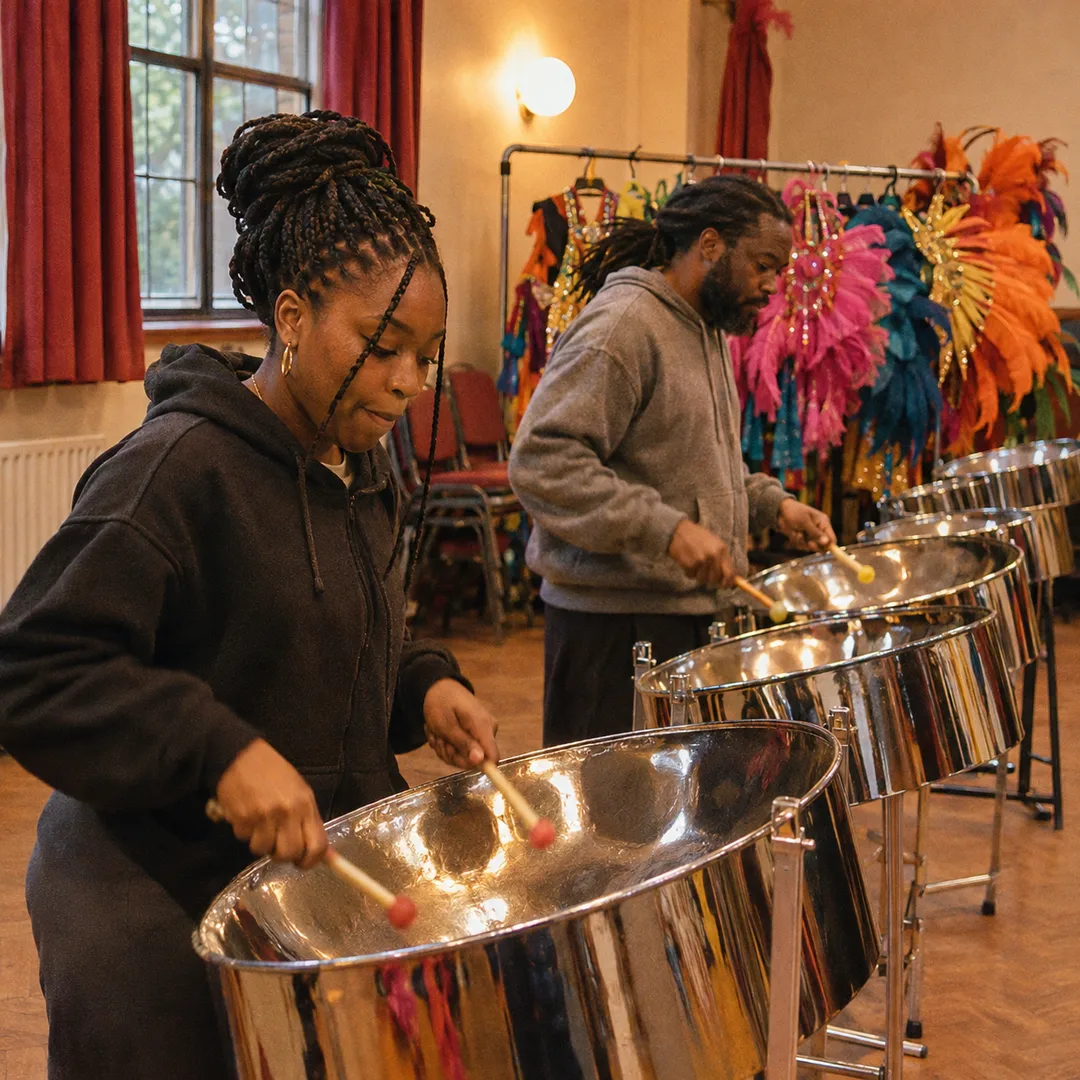
Carnival never really stops in Notting Hill. Through autumn and winter, steel bands rehearse in community halls, and mas camps work on next year's costumes. Some groups hold open rehearsals or workshops, and if you hear the ringing sound of pans from a side street, follow it. Stand at the back, listen quietly and ask afterwards whether visitors are welcome to watch.
Some local churches and community centres host Caribbean events through the year, including talks, food fairs and remembrance days for the Windrush generation. Asking at a Caribbean counter is often the easiest way to hear what is happening. A lunch that starts with a curry roti can easily end with an invitation to hear a steel band practise for the next Carnival.
Planning Your Off-Season Caribbean Lunch
Pick a dry weekday for the calmest experience, and arrive early in the lunch hour, when the trays are fullest and the cooks have time to talk. If one place is very busy, walk a few minutes to another rather than waiting in the cold, since Notting Hill and the streets north of the Westway have several Caribbean kitchens close together. Saturday is livelier but noisier, with the market drawing large crowds.
The Karpo APP can help you shortlist Caribbean lunch spots around Notting Hill and nearby Ladbroke Grove before your visit, then compare which ones suit a quick roti or a longer sit-down plate. Save a few and match them to your walk. Come back in August if you can, but you may find that the quieter months tell you more about the people behind the parade.
Ask Karpo for more information.
Keep reading
- Bermondsey Toastie Lunch Cafe Picker: Viaduct Walks
 Shoreditch Toastie Lunch Cafe Picker: Studio Breaks
 Borough Toastie Lunch Cafe Picker: Arch Griddles to Order