Little Tokyo is where Los Angeles folds Japanese American history into a compact walk, and sushi is often the word that gets people there. But the neighborhood is bigger than one meal. Around the Japanese American National Museum, Fugetsu-Do, Sushi Gen, and Daikokuya, you can spend hours moving between plazas, storefronts, menus, and a century of street-level memory. This guide keeps the focus on what is free, what is worth a line, and when to show up so the block feels alive instead of crowded.
Karpo turns this into a step-by-step Little Tokyo walk with the best sushi window, the mochi timing that saves you from a sold-out case, and the cleanest path between stops. Next: the route.

Start On The Plaza
The Japanese American National Museum is the cleanest starting point because it frames Little Tokyo as lived history, not just a food crawl. Its galleries and courtyard anchor the district with context, and the surrounding blocks make clear why this neighborhood still matters: family-run businesses, memorial markers, and contemporary art sitting in the same walking radius. Even if you never step inside, the exterior and plaza give you a sense of the scale and memory that hold the rest of the day together.
The best free move here is to arrive early enough to look around without shoulder-to-shoulder lunch traffic. Locals use the museum plaza as a reset point, then fan out toward First Street and the cross streets that tie old and new Little Tokyo together. Keep your voice low in exhibit areas, do not treat the plaza like a shortcut during events, and read the signage before drifting in and out. The reward is a calmer start, which matters once the food lines begin to stack.
Sushi Gen As Street Theater
Sushi Gen is one of the neighborhood's clearest signals that sushi in Little Tokyo is both a destination and a habit. People come for classic fish, clean execution, and a lunch room that runs with confident speed. If you do sit down, arrive with a decision already made; the staff and the room move fast, and no one benefits from a long internal debate at the front. Even from the sidewalk, the scene tells you a lot about the district: regulars, office workers, tourists, and locals all reading the same line.
That line is the part most visitors underestimate. On weekdays, the calmer window usually opens after the first lunch rush; on weekends, locals know to come early or accept a later lunch when the room loosens. If you are ordering, keep it simple and let the fish do the work. If you are only passing by, watch how the queue settles. The neighborhood etiquette is to stand ready, not wander off and hold up the flow for everyone else behind you.
Mochi As The Quiet Detour
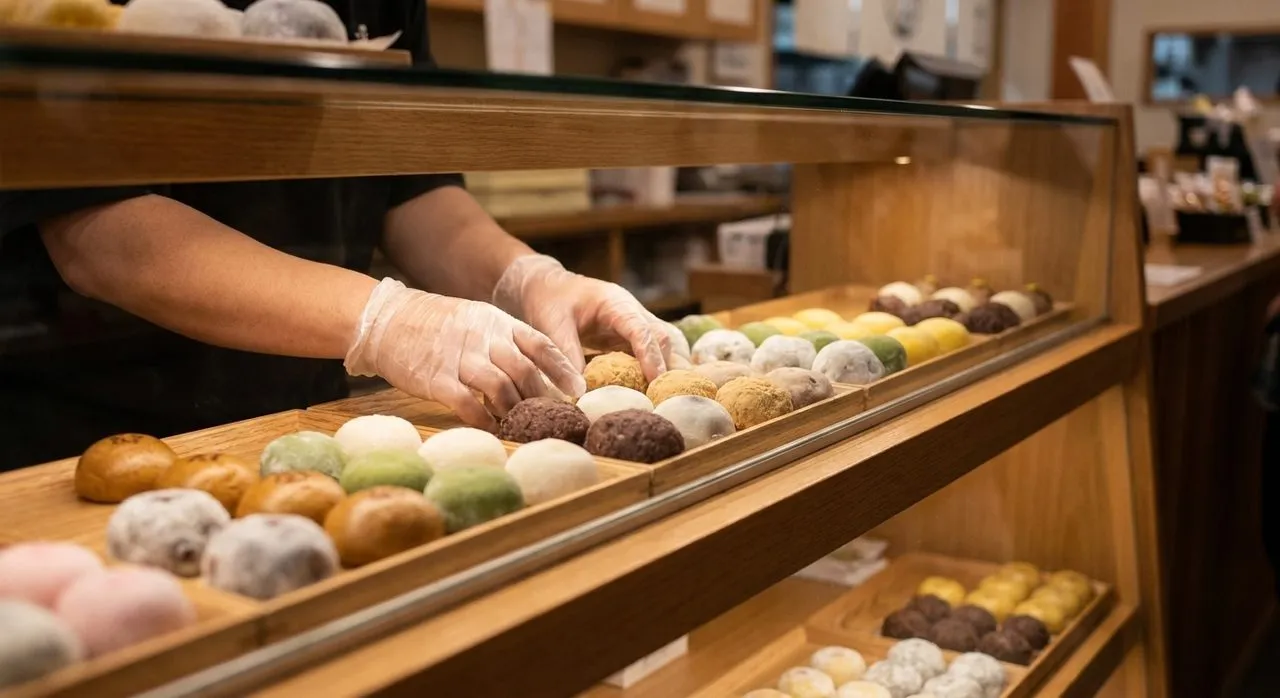
Fugetsu-Do is where Little Tokyo gets softer around the edges. The century-old confectionery is known for mochi and manju, but it also works as a free stop because the display case is part of the experience. The scale is small, the colors are precise, and the pace is slower than the lunch counters around it. Step in to see what is seasonal, ask what is moving fastest, and treat the visit like a neighborhood habit rather than a souvenir run. This is the place that turns a food search into memory.
The practical trick is to go before the late-day slump, when popular pieces are more likely to be gone and the case looks less varied. Locals know that the good stuff disappears earlier than casual visitors expect, especially on busy weekends and around holidays. If you are buying, order quickly, keep the line moving, and carry the box flat so the mochi stays neat. If you are not buying, still pause long enough to register how much of Little Tokyo's identity lives in a sweet that needs almost no explanation.
Daikokuya And The Sidewalk Crowd
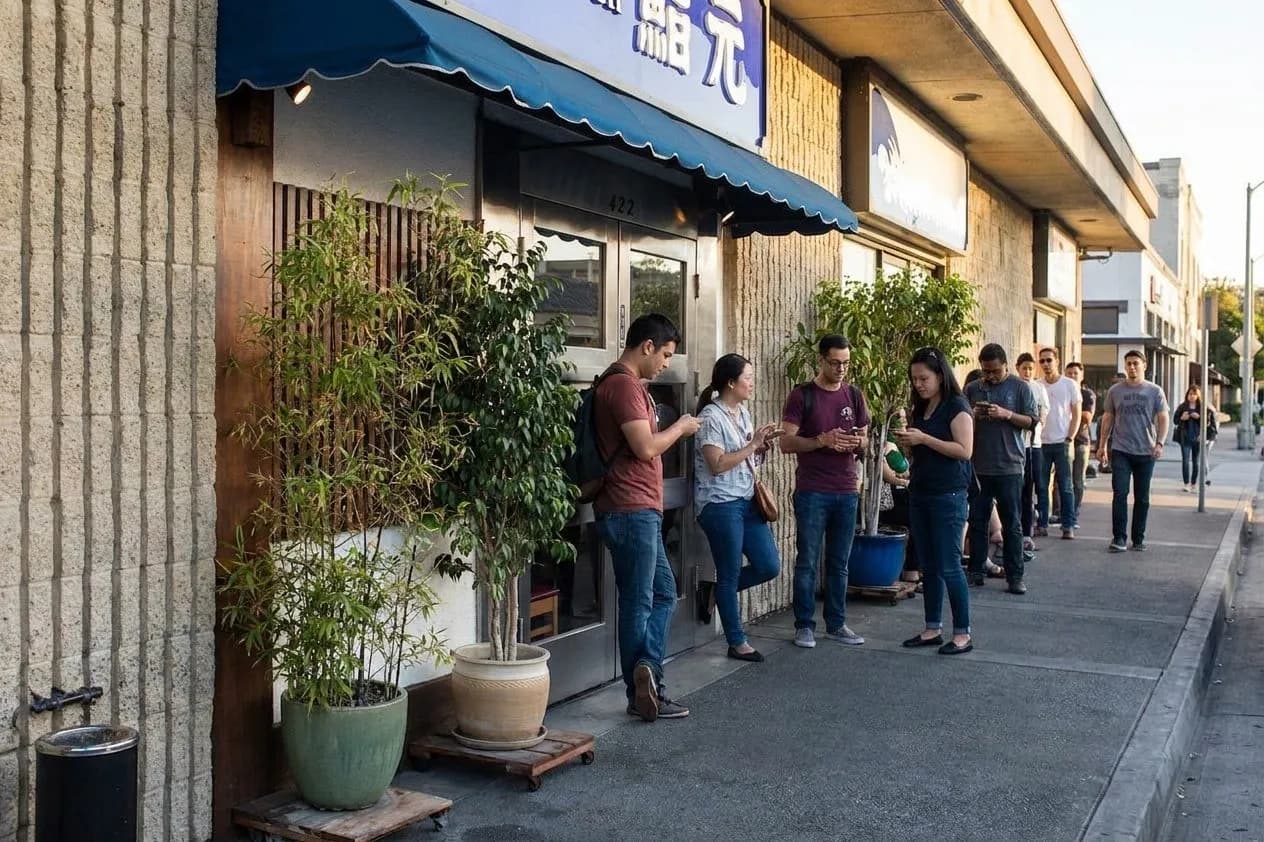
Daikokuya is the block's other kind of magnet, the one that pulls ramen fans into a neighborhood often searched for sushi first. That matters, because Little Tokyo works best when you let one famous craving lead to the next stop. The line outside is part of the theater: people checking menus, comparing notes, and deciding whether to wait. If you do plan to eat, know your order before you reach the front. If you only have time to observe, the sidewalk itself becomes a useful viewing platform.
The surrounding stretch is one of the easiest places to see how Little Tokyo stays active between museum visits and dinner. Lunch crowds give way to late-afternoon walkers, and the room changes from work break to evening stop without much ceremony. Sit, slurp, leave room for the next diner, and do not linger at the counter once you are done. The whole point is momentum. This is a neighborhood that rewards people who read the room quickly, then make space for the next person in line.
End On The Heritage Loop
The best final pass is a slow loop that stitches JANM, Fugetsu-Do, Sushi Gen, and Daikokuya into one walkable circuit. That is where the article's little thesis lands: sushi in Little Tokyo is not just a menu item, it is a neighborhood keyword, a way visitors locate the district's center of gravity. You can spend most of the day free by using the museum plaza, storefront windows, public art, and the street grid as your guide. Then choose one paid stop when you are ready.
If you only have one afternoon, build it around the hours when the district is most legible: late morning to midafternoon for museum calm and storefront browsing, then toward lunch for the food-line drama. The route works in either direction, but the neighborhood reads best on foot, at human speed, with time to stop for murals and signs between bites. Little Tokyo is compact enough to reward detours and old enough that every block carries a layer of memory. That is the real free thing.
Practical notes
Little Tokyo is easiest on foot, and the whole loop fits a half day if you move with the lunch rhythm. Start at JANM for context, then drift to Fugetsu-Do before the sweets case thins out, swing past Sushi Gen for the line-and-lunch theater, and end near Daikokuya if you want ramen instead of a second sushi stop. Parking can be the most annoying part of the day, especially on weekends, so transit or rideshare saves patience. If you want the quietest version of the walk, go on a weekday morning; if you want the neighborhood at full volume, arrive before noon and accept that the best tables and mochi go fast.
Tags: #losangeles #littletokyo #sushi #mochi #ramen #japaneseculture #japanesamericanhistory #walkingtour #freeactivities #museumguide #foodguide #dtla #cityguide
All trademarks are the property of their respective owners.
Ask Karpo first
Ask Karpo for the latest Little Tokyo openings, a live walking route between these four anchors, or a low-wait version of the day built around your arrival time. I can keep it public-only, skip anything that needs reservations, and steer you toward the calmest block order so you spend more time walking and less time guessing.