 Where to Eat Near Penn Station That Isn't a Chain
US Open 2026

Lioness Season 3 Viewing Hotel Day Rooms US Open
How Queens hotel day rooms, lobby rest stops, and flexible check-in windows help US Open visitors pace long tournament days between sessions, transit connections…
When the US Open returns to Flushing Meadows in late August, thousands of tennis fans will navigate a rhythm that doesn't fit a typical hotel overnight: an early-morning match followed by a five-hour gap before the evening session, a midday break between doubles and singles, or a long layover after a rain delay pushes the schedule into flux. That's where the growing practice of hotel day rooms—short-stay rest spaces, lobby lounge access, and flexible same-day check-in—becomes a practical tool for tournament travelers who want a quiet place to recharge, freshen up, or simply sit in air conditioning without surrendering their bags to a locker or camping on a park bench. Across Queens, especially along the 7 train corridor from Flushing to Long Island City, a handful of hotels have begun offering day-use options or welcoming walk-in guests to lobby seating, restrooms, and café corners, turning the in-between hours of a US Open visit into a more comfortable, less exhausting experience.
Text Karpo with your US Open session time and Queens starting point, and we’ll turn this Hotel lobbies offering day-use rest rooms for tournament travelers into a practical local plan.
Why US Open schedules create midday gaps
The US Open runs daily sessions—day and evening—but not every ticket grants all-day access, and not every visitor wants to spend ten consecutive hours in the sun. A typical day session might wrap by 2 p.m., leaving a long window before an evening match at 7 p.m. Rain delays, match length variability, and the tournament's multi-court format mean that even ticket holders with flexible grounds passes may find themselves with unexpected downtime. Flushing Meadows Corona Park offers shade, picnic areas, and the Queens Museum, but on a hot September afternoon, the appeal of a cool, quiet indoor space with a restroom, a place to charge a phone, and a comfortable chair is hard to overstate. That's the gap hotel day rooms are designed to fill.
What a hotel day room actually offers
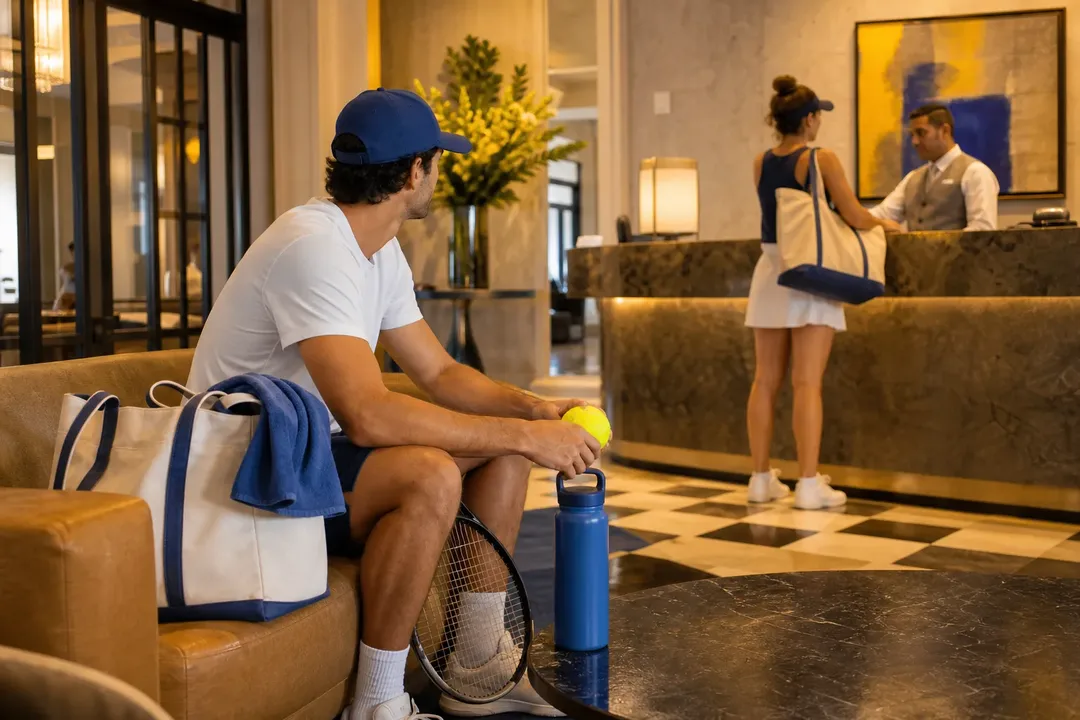
A day room is typically a standard guest room rented for a block of daytime hours—often four to eight hours—without an overnight stay. Some hotels offer this as a bookable option during major events; others provide lobby or lounge access to walk-in guests who aren't checking in overnight but need a rest stop. The amenities vary: a private room with a bed, bathroom, and climate control is the premium version; a lobby armchair near a café, a public restroom, and a place to leave a small bag with the concierge is the budget-friendly alternative. Either way, the goal is the same: a pause that doesn't require leaving Queens, schlepping back to Manhattan, or spending the afternoon in a crowded food court. For families with young children, older adults, or anyone managing heat sensitivity or mobility concerns, this kind of flexibility can make the difference between a manageable day and an exhausting one.
Where to look along the 7 train corridor
The 7 train is the primary transit artery for US Open visitors, running from Times Square through Long Island City, Woodside, Jackson Heights, Corona, and Flushing, with the Mets–Willets Point stop serving the tournament grounds. Hotels cluster at both ends of this line: near the Flushing Main Street terminus, where you'll find mid-range chains and independent properties catering to international travelers, and in Long Island City, where newer hotels serve the Manhattan-adjacent business and leisure market. Both neighborhoods are within a 10- to 20-minute train ride of the US Open, and both offer a range of lobby environments—some bustling, some quiet—that can accommodate a midday rest. Corona and Jackson Heights, closer to the tournament, have fewer hotels but more cafés, libraries, and community spaces that serve a similar function for visitors willing to trade privacy for accessibility.
How to ask about day-use options
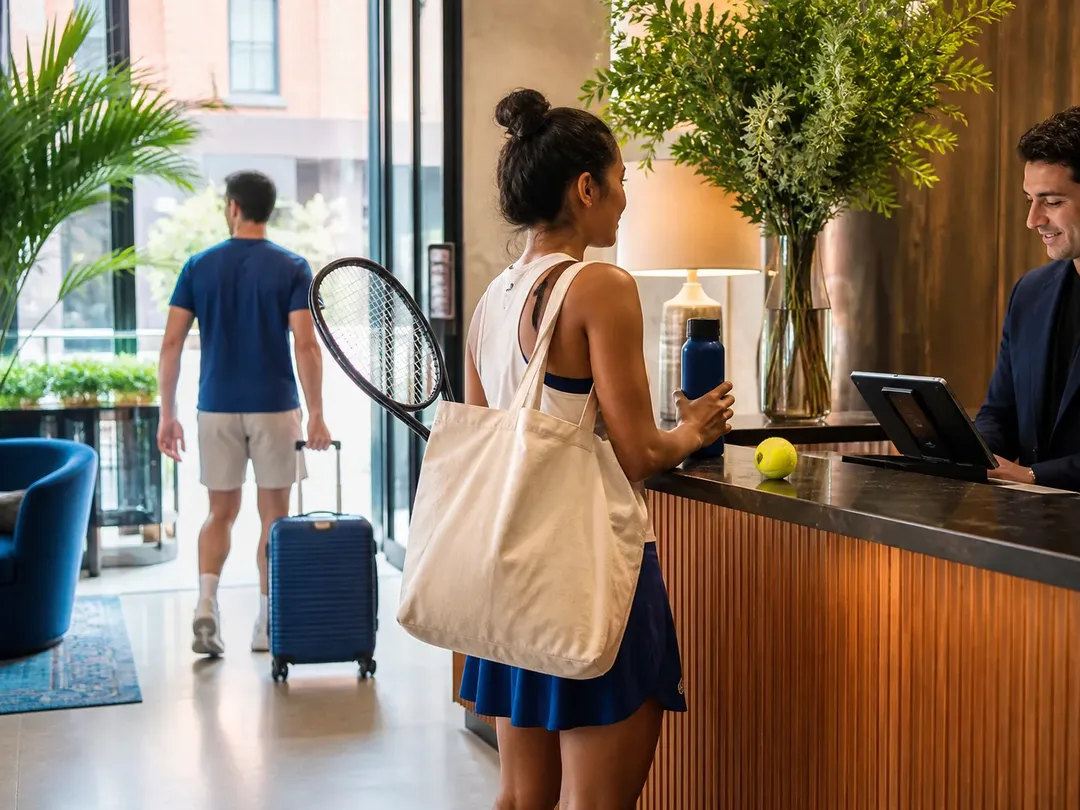
Not every hotel advertises day rooms, but many will accommodate the request if you call ahead or ask at the front desk. The key is to be specific: explain that you're attending the US Open, have a gap between sessions, and are looking for a quiet place to rest for a few hours. Some properties may offer a discounted rate on an unsold room; others may simply welcome you to use the lobby, café, or business center as a courtesy. If you're booking in advance, search for "day use hotel" or "hourly hotel" along with the neighborhood name, and confirm the exact hours, check-in process, and any restrictions on luggage or amenities. If you're walking in, aim for mid-morning or early afternoon, when front-desk staff are less busy and rooms are more likely to be available before the evening check-in rush.
Alternatives: libraries, museums, and park pavilions
If a hotel day room isn't in the budget or availability is tight, Queens offers several free or low-cost indoor rest stops. The Queens Public Library has branches in Flushing, Corona, and Jackson Heights, all with air conditioning, seating, restrooms, and Wi-Fi. The Queens Museum, located within Flushing Meadows Corona Park, is a short walk from the US Open grounds and offers gallery seating, a café, and restrooms; admission is suggested donation, and the space is rarely crowded on weekday afternoons. The park itself has pavilions, shaded benches, and the Unisphere plaza, though these are outdoor spaces and offer limited relief on hot days. For a café rest stop, Flushing's downtown has dozens of options—bubble tea shops, bakeries, and dim sum spots—where you can linger over a snack and recharge your phone without pressure to leave.
Timing your rest around transit and sessions
The 7 train runs frequently during US Open weeks, but crowding peaks before day sessions (around 10 a.m. to noon) and before evening sessions (around 5 to 7 p.m.). If you're planning a midday hotel rest, aim to leave the tournament grounds by 1 or 2 p.m., rest for three to four hours, and return by 6 p.m. to avoid the worst of the rush. This rhythm also aligns with the natural lull in Flushing's restaurant and café scene, when tables are easier to find and the neighborhood feels less hectic. If you're staying overnight in Queens, consider booking a hotel with late checkout or early check-in flexibility, so you can use the room as a home base across multiple days without needing to pack and unpack each morning.
Practical notes for day-room planning
- Call hotels directly a few days before your visit to ask about day-use availability and rates; third-party booking sites rarely list these options.
- Confirm whether the rate includes access to amenities like the gym, pool, or business center, and whether you'll receive a key card or lobby-only access.
- Pack a small bag with essentials—phone charger, water bottle, snack, change of shirt—so you can travel light between the tournament and your rest stop.
- Check the hotel's location relative to the 7 train; a five-minute walk from the station is manageable, but a 15-minute walk in the heat may negate the benefit of the rest.
- If you're using a lobby or café as a rest stop, buy a drink or snack as a courtesy, and be mindful of peak check-in times when seating may be limited.
- Review the US Open's prohibited-items list before you leave the tournament; you won't be able to bring large bags, outside food, or certain electronics back through security.
- Consider pairing your rest stop with a quick meal in Flushing or Jackson Heights, where you'll find a wider range of affordable, high-quality food than inside the tournament grounds.
Why this matters for 2026 planning
The 2026 US Open will follow the same late-August schedule, the same Flushing Meadows venue, and the same transit patterns that have defined the tournament for decades. What's changing is visitor awareness: more people are learning that a long event day doesn't have to mean marathon endurance, and that Queens offers the infrastructure—hotels, transit, cafés, parks—to support a more flexible, comfortable visit. Whether you're a first-time attendee planning around a single marquee match or a tennis devotee attending multiple sessions across a week, knowing that a midday rest is possible, affordable, and close by can reshape how you think about the day. It's not about luxury; it's about sustainability, especially in the heat and crowds of a New York September.
Tags: #USOpen2026 #Queens #FlushingMeadows #KarpoFinds #Karpo #lioness #NewYorkLocal #TennisTravel #NYCLocalLife #TennisTravel
Sources consulted: usopen.org — Official event schedule · usopen.org — Official visitor A-Z guide · usopen.org — Official transportation directions · usopen.org — Official prohibited-items guide · MTA — Official US Open transit guide · NYC Parks — Flushing Meadows Corona Park · NYC Tourism — Queens · NYC Health — Food Safety
All trademarks are the property of their respective owners.
Ask Karpo first
Want to know what is actually open, how to time the trip, and where to pause around Queens? Ask Karpo for the latest public US Open context, a respectful visitor plan, and a live route around Flushing Meadows before you head out.
Ask Karpo for more information.
Keep reading
- Where to Eat Near Penn Station That Isn't a Chain
 Andytown Coffee in the Outer Sunset: The Snowy Plover Explained
- Best Things to Do in Chicago: What the City Gives Away