 Where to Eat Near Penn Station That Isn't a Chain
US Open 2026
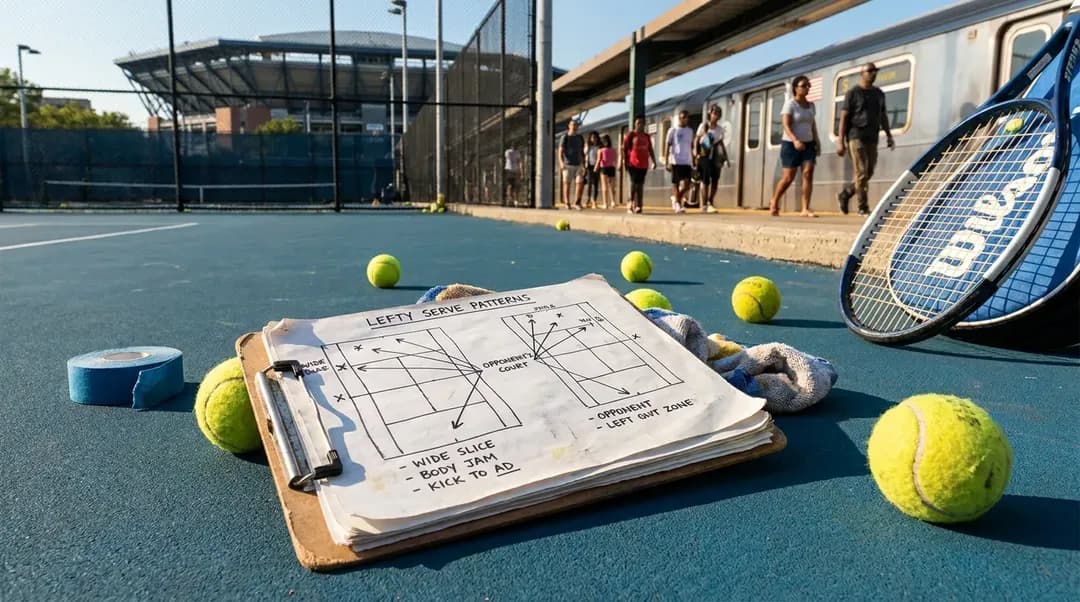
Lefty Serve Patterns That Trouble US Open Opponents
Left-handed serve patterns can stretch right-handed returners into awkward positions and create fast forehand attacks on hard courts.
When a left-hander serves well on a hard court, the returner is not only reacting to speed. The more difficult problem is direction: the ball curves away from the returner’s usual read, lands with a different spin profile, and can pull the first contact point outside a comfortable hitting lane. At the US Open, where hard-court timing rewards early control, that small displacement can shape the whole point. A wide lefty serve may not need to be an ace. If it makes the returner block from a stretched stance, the server can step forward and use the next forehand before the rally becomes neutral. The pattern is familiar because it is efficient: serve wide, force a predictable return, strike into space, then make the opponent defend while still recovering.
Text Karpo for a current, low-friction plan for lefty serve patterns that trouble us open opponents—including timing, route checks, and practical options that fit your day.
Why Lefty Spin Matters
Most returners face more right-handed serves than left-handed serves, so their first movement is often trained by repetition. Against a lefty, the slice bends the other way. A right-handed returner who expects the ball to hold its line can find the contact point drifting farther away after the bounce. On a hard court, that skid can be especially punishing because the ball arrives quickly enough to make late footwork visible.
The left-handed server is trying to disturb balance more than simply win with pace. A returner reaching across the body or leaning outside the sideline usually has fewer choices. Driving down the line becomes harder, changing direction carries risk, and the safest reply often floats back crosscourt. That is the opening the server wants.
The pattern is not automatic. A sharp returner can step in, shorten the swing, and meet the serve before it gets too wide. But the lefty advantage is that even a solid return may be struck from an uncomfortable base. The server begins the point by asking the receiver to solve movement, spin, and scoreboard pressure at once.
The Wide Serve Trap
The wide serve is the foundation because it turns the service box into an angle. From the deuce court, a left-hander can slice the ball toward a right-hander’s forehand and pull the receiver away from the middle. From the ad court, the same shape often attacks the right-hander’s backhand and opens the court for the server’s first groundstroke.
The trap works because the receiver must protect several lanes. If the returner starts too wide, the server can go body or down the middle. If the returner guards the middle, the wide serve has room to escape. At top speed, one false step before the split step can decide whether the receiver returns from balance or from a lunge.
- A wide serve can pull the returner beyond the singles sideline even when the ball lands safely inside the service box.
- A stretched return often travels crosscourt because redirecting the ball from that position is difficult.
- A predictable crosscourt reply lets the server prepare the forehand before the ball arrives.
- Even a deep return may leave the receiver late recovering to the open court.
For spectators, the clearest cue is not only where the serve lands. Watch where the returner is standing when the server hits the second shot. If the receiver is still outside the court, the serve has already changed the geometry of the point.
Ad Court Pressure Points
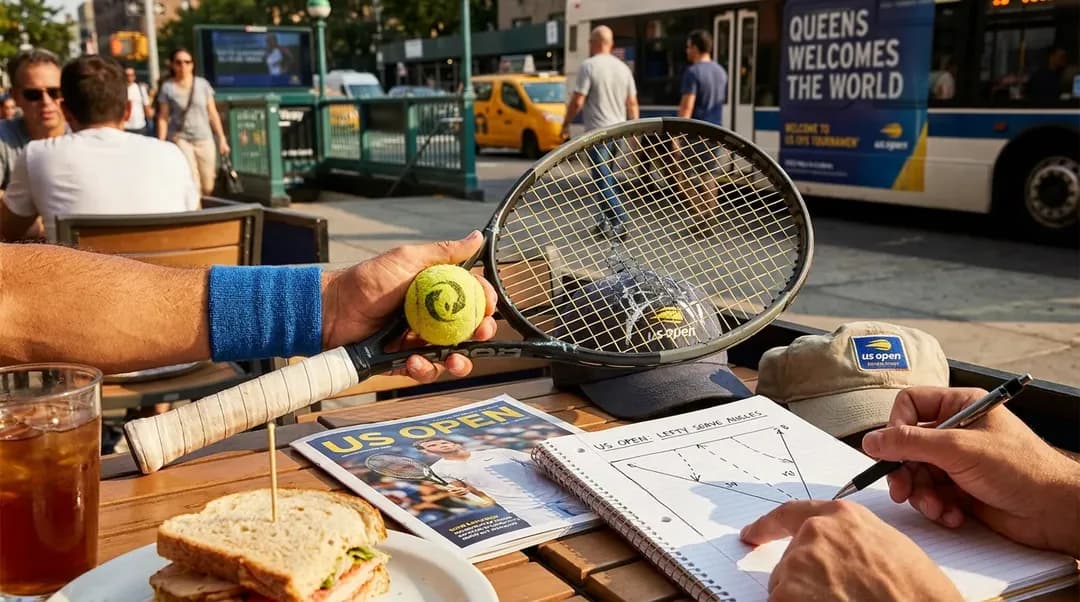
The ad court gives a left-handed server one of the sport’s most valuable patterns. Many break points, advantage points, and game points are played from that side, so a reliable wide serve there carries both tactical and emotional weight. The returner knows the pattern may come, but knowing is not the same as neutralizing it.
Against a right-handed returner, the ad-court wide serve often bends toward the backhand and away from the center. The contact can become awkward even for a strong backhand. The hips may open too early, the outside leg may slide away from the ball, and the racket face has to stay firm while the body is moving sideways. A chipped return can sit up. A driven return can lose margin. A guessed return can leave the receiver stranded.
Returners answer with positioning. Some stand wider to close the angle and accept more exposure down the T. Some step forward to take the serve early, accepting a rushed swing. Others retreat to buy time, but that can give the server a larger court for the follow-up. Each answer gives something back, which is why the ad-court lefty serve remains effective even when it is expected.
Forehand After Serve
The serve creates the advantage, but the forehand usually decides whether the advantage becomes a won point. Left-handed players who trouble opponents on hard courts often pair the wide serve with a first-strike forehand to the open side. If the return is short or central, the server can step around it and hit before the receiver recovers.
The best versions of the pattern are organized: serve, land, recover, split, then strike. A server who falls too far toward the sideline after serving wide can leave the middle exposed. A balanced landing keeps the server ready for the common crosscourt block and for the occasional return down the line.
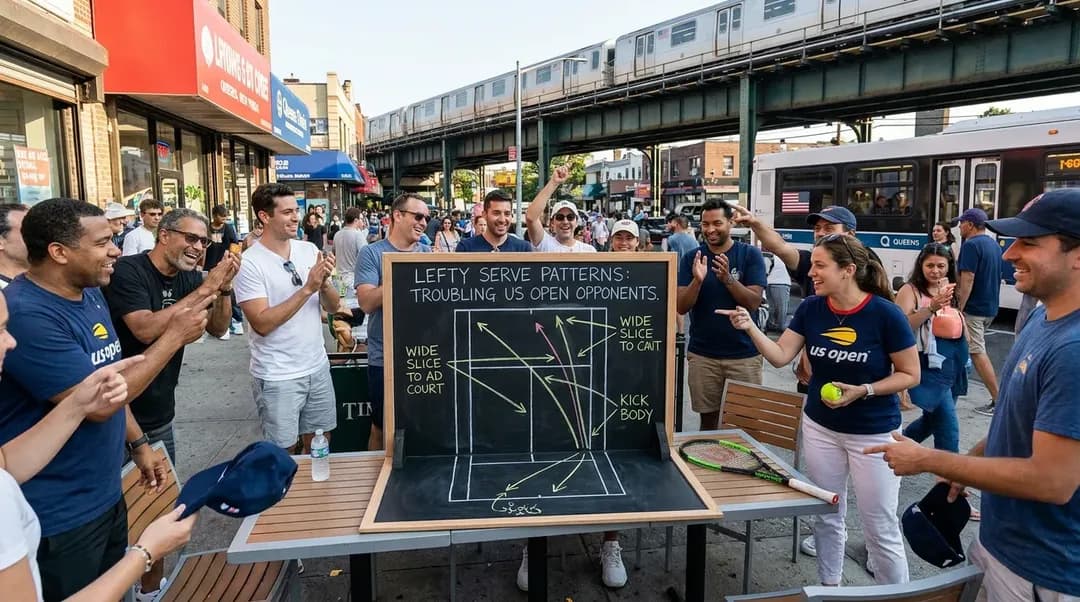
The follow-up forehand is not always the same shot. If the returner remains wide, the server can hit into the open court. If the receiver sprints too hard toward the middle, the server can go behind. If the return lands deep, the server may choose a heavy, safer forehand to the backhand corner instead of forcing a winner.
- Inside-out forehand into space when the receiver is still outside the court.
- Inside-in forehand behind a returner who over-recovers.
- Heavy forehand to the backhand corner when control matters more than immediate finish.
The returner’s best counter is to make that second shot uncomfortable. A deep return through the middle can jam the server’s feet and reduce the forehand angle. A firm return down the line can punish a server leaning toward the expected crosscourt ball. A low slice can force the server to lift rather than drive. When those replies land, the rally resets and the lefty pattern loses some of its bite.
Practical Notes
Advice for watching: follow the returner’s first step, contact point, and recovery path rather than the serve speed alone. The pattern is working when the receiver returns while moving away from the center and the server’s next forehand is struck from balance.
For “Lefty Serve Patterns That Trouble US Open Opponents,” the useful 2026 calendar anchor is August 23 through September 13, with singles main-draw play beginning August 30. Check current official tournament, ATP, and WTA information before relying on schedules or player details. Before acting on “Lefty Serve Patterns That Trouble US Open Opponents,” recheck the official security page; its current limit is one searchable bag per guest, no larger than 12 by 12 by 16 inches.
Tags: #USOpen2026 #Tennis #NewYork #Queens #FlushingMeadows #USOpenGuide #TennisFans #SportsTravel #NYCEvents #HardCourt #KarpoFinds #Karpo
Sources consulted: usopen.org — Official reference · wtatennis.com — Official reference · atptour.com — Official reference
All trademarks are the property of their respective owners.
Ask Karpo first
Want to know what is confirmed, when to show up, and what is actually open to the public? Ask Karpo for the latest US Open updates and a practical New York plan for lefty serve patterns that trouble us open opponents.
Ask Karpo for more information.
Keep reading
- Where to Eat Near Penn Station That Isn't a Chain
 Andytown Coffee in the Outer Sunset: The Snowy Plover Explained
- Best Things to Do in Chicago: What the City Gives Away