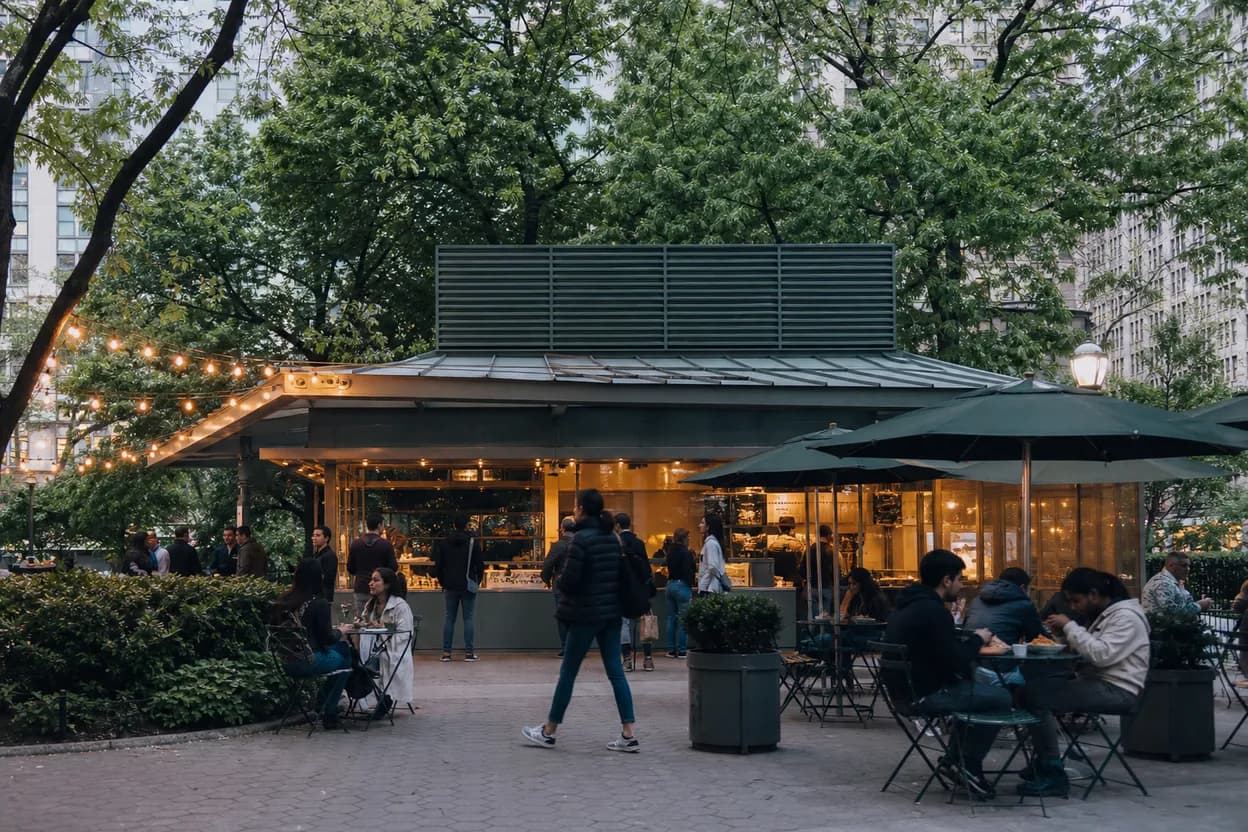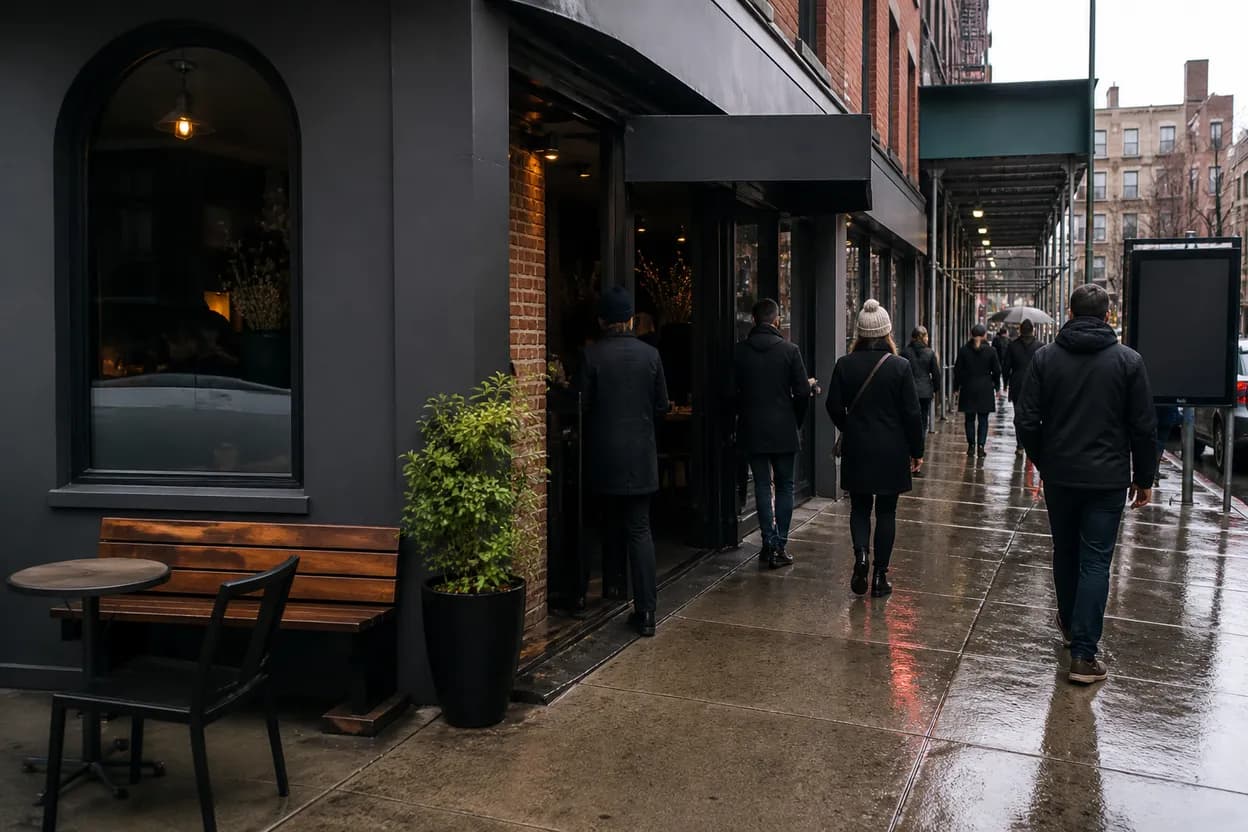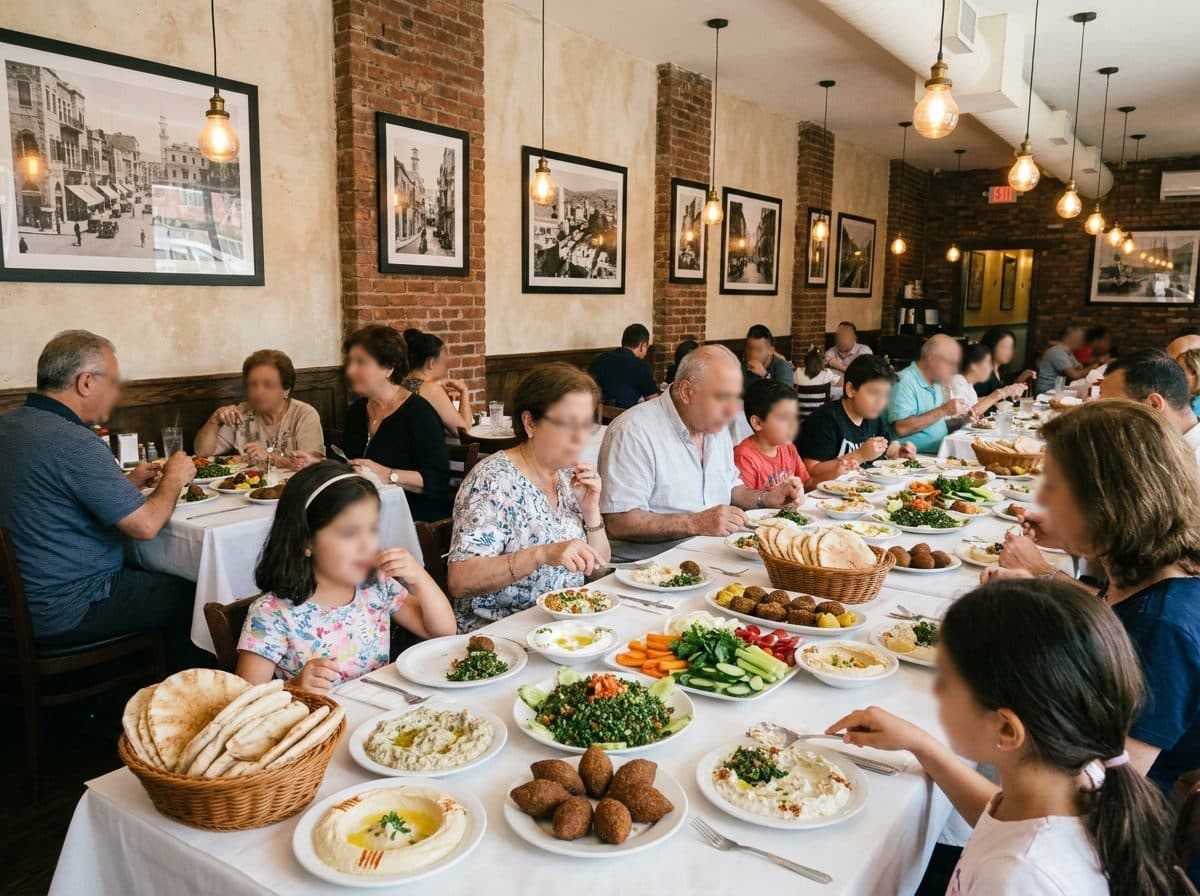
The door swings open on Fifth Avenue and the smell arrives first—charcoal, garlic, warm bread pulled seconds ago from the oven. Tanoreen has anchored this corner of Bay Ridge since 1998, a neighborhood institution where the meze service unfolds in the old rhythm, plates arriving in waves, bread replenished before anyone thinks to ask. Three generations sit together at the long tables near the back, the kind of scene that makes first-timers understand why regulars have been coming here for decades.
The Room That Grew With the Neighborhood
The dining room stretches deeper than the modest storefront suggests. High ceilings, cream walls hung with framed calligraphy, tables that accommodate both a couple splitting appetizers and extended families marking graduations or homecomings. The space expanded over the years, absorbing the adjacent unit, but the original intimacy remains—a function of the pacing, the way servers remember faces, the unhurried tempo of a meal that refuses to be rushed. Weeknight crowds skew local: Bay Ridge families, Arab American regulars who've watched the menu evolve while the fundamentals stayed true. Weekend evenings pull a wider net—Manhattanites who made the R train trek, food writers chasing a lead, couples from neighboring Sunset Park who heard about the lamb.
The kitchen, visible through a half-wall near the back, operates with the efficiency of long muscle memory. Flatbreads emerge in steady rotation. The grill station holds court over skewers and whole fish. Nothing about the setup announces itself, but the output—the texture of the hummus, the char on the kafta—speaks to decades of repetition and refinement.
How the Meze Service Unfolds
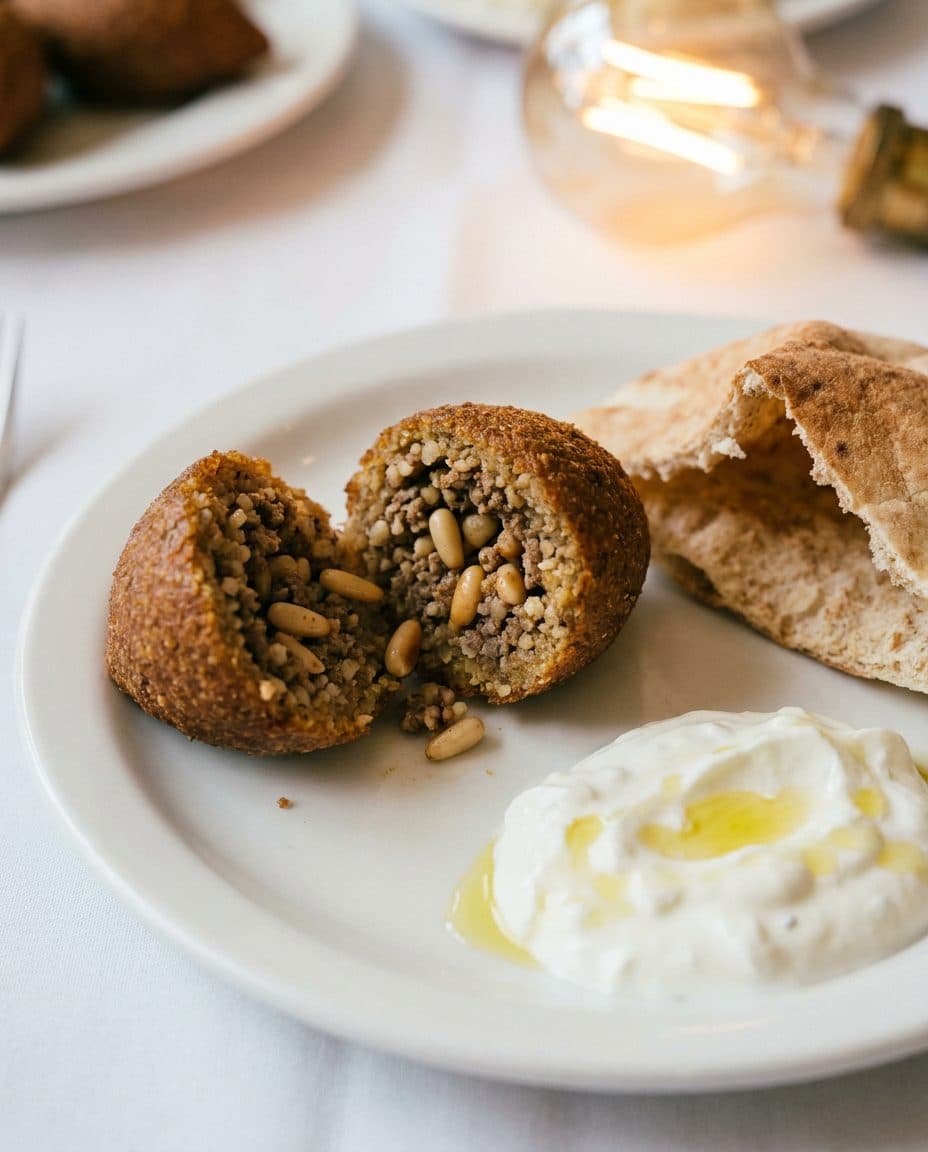
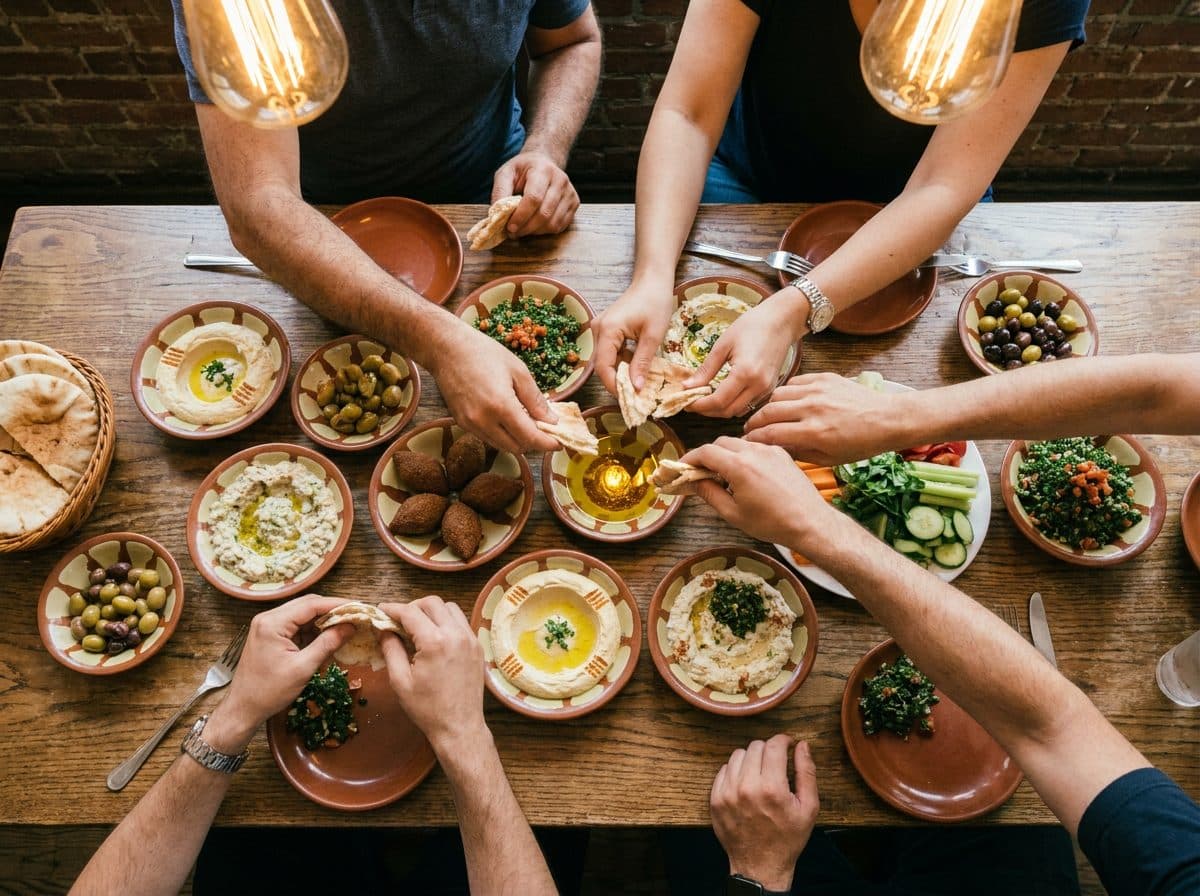
The meal begins whether anyone orders it or not. Warm pita arrives, sometimes two kinds, the thinner markouk and the thicker rounds meant for tearing and scooping. Then the parade: baba ghanoush with a faint smokiness that lingers, tabbouleh cut so fine the parsley almost dissolves, hummus that manages to be both creamy and somehow weightless. The rhythm is old-world—small plates meant for sharing, no one dish dominating, the table filling incrementally until there's barely room for the entrées that follow.
Kibbeh appears in multiple forms. The raw version—kibbeh nayeh—arrives for those who know to order it, seasoned lamb mixed with bulgur and served with a drizzle of olive oil, meant to be scooped with bread in small, deliberate bites. The fried kibbeh, torpedo-shaped and golden, offers the same flavors encased in a crisp shell, the kind of textural contrast that makes sense of why this dish has endured across generations and geographies.
The meze keeps coming even after the main orders land. A server might drop an extra plate of pickled turnips or a small bowl of olives without ceremony, the kind of gesture that signals abundance without waste, hospitality without performance.
The Dishes That Define the Return Visit
The lamb shank, braised until the meat pulls apart with a fork, sits in a pool of sauce that begs for more bread. Whole branzino, grilled with lemon and garlic, arrives head-on, the kind of presentation that requires navigating bones and rewards the effort. Vegetarians find more than token options—the moussaka layered with eggplant and chickpeas, the stuffed grape leaves that manage to avoid the canned metallic note that plagues lesser versions.
But the menu's depth reveals itself in the less obvious corners. The foul mudammas, a fava bean stew served warm with olive oil and lemon, occupies the breakfast-and-lunch section but works any time of day for those who know. The fattoush, a salad built on fried pita chips that soften slightly in the sumac dressing, arrives massive, easily feeding three despite being listed as a starter. The kunafa, a cheese pastry soaked in syrup and topped with pistachios, is the dessert that converts the skeptical, sweet but not cloying, with a textural complexity that justifies the sugar.
The Crowd That Gathers for Match Days
When major tournaments roll around—World Cup, continental championships—the dining room takes on a different energy. Families claim tables hours before kickoff, the television mounted near the bar becomes the focal point, and the usual hum of conversation crescendos into collective groans and cheers. The Arab diaspora community treats these gatherings as extensions of living rooms, multi-generational affairs where kids dart between tables and elders nurse coffee long after the final whistle.
Even outside tournament windows, the room carries a convivial weight. Strangers at adjacent tables fall into conversation over shared dishes. A regular at the bar—yes, there's a small bar tucked near the entrance, easy to miss—might offer a newcomer a primer on what to order. The staff navigates the controlled chaos with a grace that suggests they've seen every permutation of large party, last-minute addition, and dietary restriction.
What the Kitchen Does Differently
Tanoreen's longevity isn't just about consistency—it's about the small calibrations that happen invisibly. The spice blends shift slightly with the seasons, the sourcing adjusts to what's best at the market, the menu rotates specials that test ideas before they become permanent fixtures. The chef, who has been at the helm since the beginning, maintains a balance between tradition and the kind of subtle innovation that doesn't alienate purists.
The bread program alone sets the place apart. Many Middle Eastern restaurants treat bread as an afterthought, a vehicle for dips. Here, the markouk—a paper-thin flatbread—arrives still steaming, with a faint char from the saj griddle. It's meant to be torn and wrapped around bites of meat or folded into makeshift pockets for salad. The attention to this one element signals the broader philosophy: every component matters, even the ones taken for granted.
The kitchen also accommodates without compromising. Vegan versions of classic dishes appear on request, not as pale imitations but as considered alternatives. The staff knows which dishes contain dairy, which can be made gluten-free, which spice levels can be adjusted without losing the dish's integrity. It's the kind of flexibility that comes from decades of serving a diverse neighborhood.
Practical Notes
Tanoreen sits on Fifth Avenue in the heart of Bay Ridge, a few blocks from the R train's Bay Ridge Avenue stop. The walk from the subway cuts through a stretch of the neighborhood dense with Middle Eastern bakeries, grocers, and cafes—context that makes the destination feel less like an isolated gem and more like part of a broader ecosystem. Street parking exists but requires patience on weekend evenings; the train remains the surest bet.
The restaurant operates seven days, lunch through dinner, with weekend brunch service that draws a loyal following. Reservations are accepted and recommended for parties of four or more, especially Friday and Saturday nights. Walk-ins usually find space at the bar or can expect a wait that rarely exceeds thirty minutes, even during peak hours. The staff keeps a list and texts when tables open, allowing for a stroll down Fifth Avenue rather than a cramped wait by the door.
Cash and cards both work. The check for a full meze spread and entrées for two typically lands in the mid-range—not cheap, but generous portions mean leftovers are likely. Takeout and delivery have become a significant part of the operation, but the experience loses something in translation; this is food meant to be eaten as it arrives, warm and communal.
Tags: #BayRidge #LebaneseCuisine #MezeSpread #MiddleEasternFood #FamilyRestaurant #BrooklynEats #FifthAvenue #Kibbeh #AuthenticFlavors #NeighborhoodGem #ThreeGenerations #NYCDining #CommunalDining #PullUpAChair #Tanoreen
Sources consulted: eater.com · timeout.com · infatuation.com
All trademarks are the property of their respective owners.
Ask Karpo first
Want to know the proper order for meze and what those unlisted family dishes might be?
Ask Karpo for the family-style ordering guide, what to request that's not on the menu, and how the grandmother decides the daily specials before you head out.