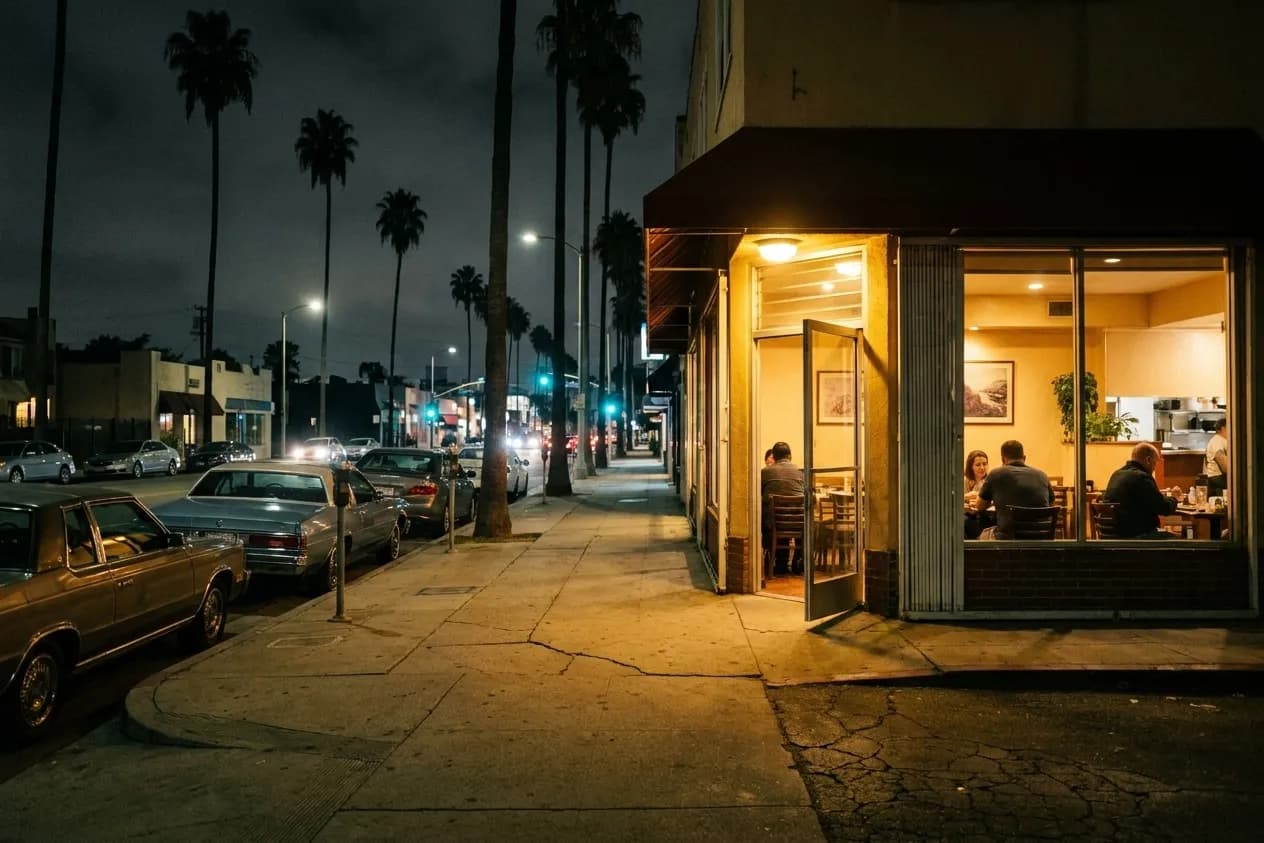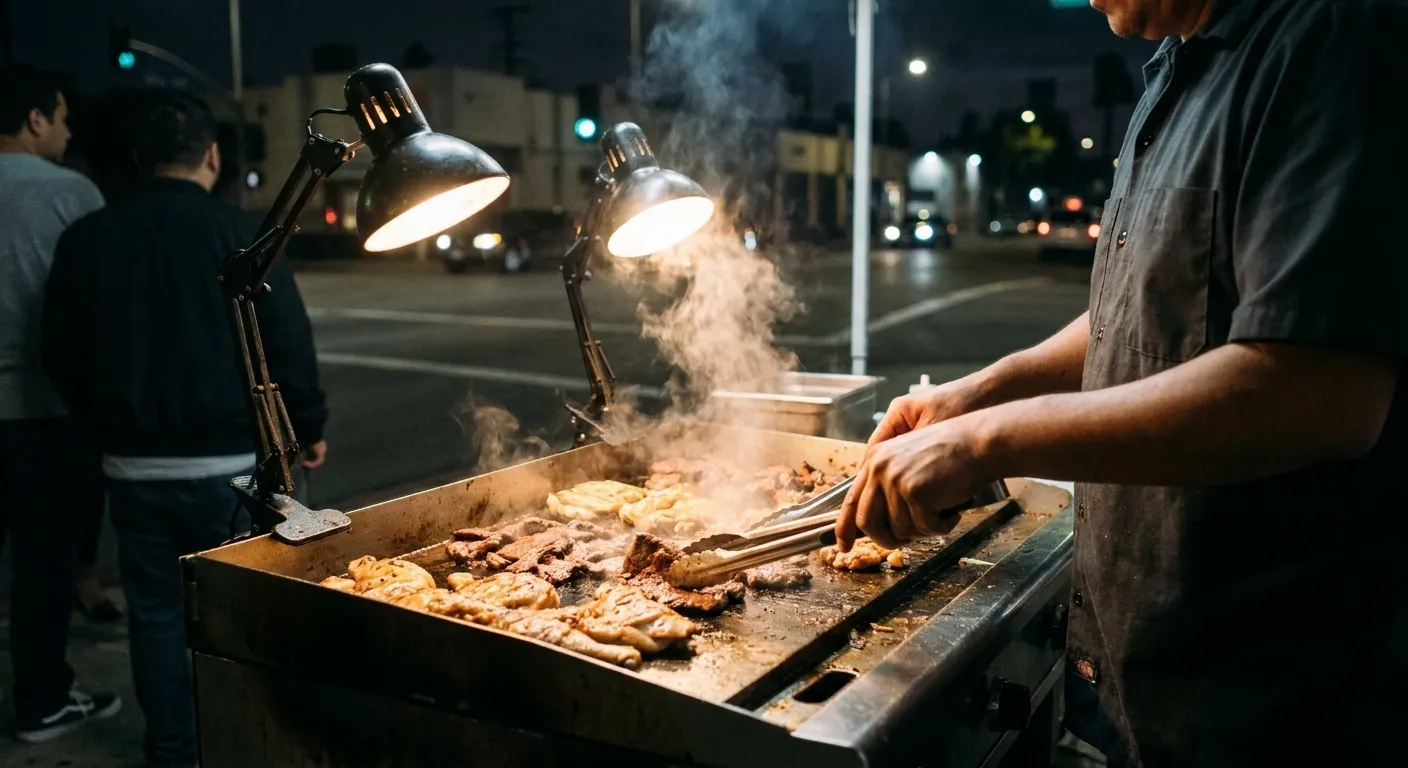
There is a specific hour in Los Angeles, somewhere after midnight, when the best food in the city is being cooked on folding tables on pavements in a dozen neighbourhoods, by people who set up at nine and will break down at three. Anyone looking for the best tacos in Los Angeles after dark is looking at a system that has no listings, no fixed addresses in many cases, and a quality ceiling higher than almost anything with a lease.
Stands move and sell out without notice. Ask Karpo who is set up near you tonight.
The corridors that run late
Boyle Heights, East LA and the boulevards running east from downtown are the densest and the latest. South LA along several major avenues is the second cluster. The San Fernando Valley has its own along a handful of commercial streets. And Koreatown, while known for other things, has stands operating late on its periphery.
The pattern is consistent and worth understanding: late food follows night-shift work. Where there are people finishing at midnight, there is someone cooking at midnight. This is why the stands are not near the bars — they are near the warehouses, the hospitals and the neighbourhoods where people work unsociable hours.
Reading a trompo
The vertical spit of marinated pork is the centrepiece of the al pastor stand and it is also the best diagnostic tool available. You want the outer layer dark and glistening, the spit visibly turning, and the cook shaving directly onto the tortilla. A spit that is pale, static, or being carved from at the base only means low turnover, and low turnover at one in the morning means the meat has been there a while.
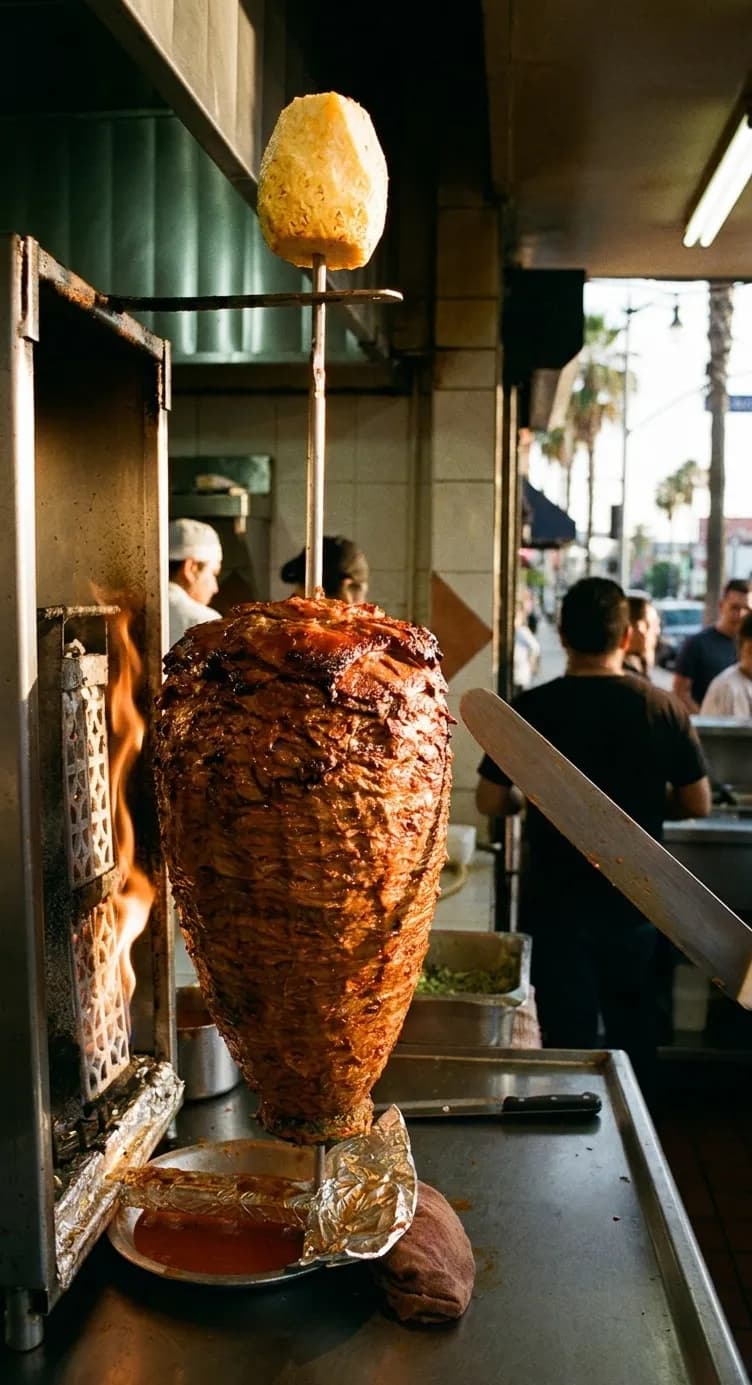
The pineapple on top is traditional and functional — the juice runs down and the cook flicks a piece onto the taco with the knife. It is also a decent proxy for whether the operation is doing it properly rather than reheating pastor from a pan, which is common and considerably worse.
The other things worth ordering
Suadero, which is beef cooked slowly in fat, is the connoisseur's order at these stands and is frequently better than the pastor. Buche and tripa if you like offal, and the stands that do them well are usually the stands that do everything well. Quesatacos and mulitas — with cheese, griddled — are the substantial option and the correct one if this is dinner rather than a fourth meal.
Consomé is the thing most people miss. Many stands doing birria or barbacoa will give you a cup of the broth, and at one in the morning it is the single best thing on offer. Ask; it is usually free or a dollar and it is rarely advertised.
How the stands actually operate
Most set up on the same corner most nights, but not every night, and weather, permits and supply all interrupt. They run until they sell out, which on a good Saturday can be one thirty and on a slow Tuesday can be three. Cash is standard, though card readers have become common. And the good ones have a queue that does not shrink, which is the reliable signal.
They are also, in a real sense, the city's public space. The queue at a stand at one in the morning contains people from every part of the neighbourhood, standing around eating off paper plates on the pavement, and that is not incidental — it is the reason a lot of people go, over and above the food.
Salsa, and how to approach it
The salsa tray is where a stand distinguishes itself. Three or four options, at least one of them properly hot, usually a green and a red, sometimes a smoky chile de árbol that is the best thing there. Ask which is hottest rather than guessing; the answer is given straight and it is a normal question.
Take the onion, the coriander, the lime and the radish. They are there for a reason — the acid and the raw allium cut the fat, which is what makes it possible to eat four of these at one in the morning. Skipping them produces a heavier and less balanced taco, and it is the most common thing visitors get wrong.
Practicalities
Bring cash, bring small notes, and do not expect anywhere to sit. Park legally and pay attention to the street-sweeping and permit signs, which are enforced with enthusiasm here even at two in the morning. And plan how you are getting home before you start the evening, because transit has stopped and the stands are rarely near anything else that is open.
One last thing: order in stages. Two tacos, eat them, then decide. The stands cook to order and a second round takes ninety seconds, and it is a much better meal than ordering six at once and eating the last two cold while standing on a pavement. Everyone who does this regularly orders twice.
Stands versus trucks versus late taquerias
Three different things worth distinguishing. The pavement stand is the most likely to be exceptional and the least likely to still be there next month. The truck is a middle case — a fixed kitchen, a regular pitch, hours posted somewhere online, and generally a broader menu. The late taqueria is the reliable fallback: a room, tables, a bathroom, and consistent hours.
The right choice depends on what the evening needs. Six people at one in the morning in November want the taqueria. Two people who have been meaning to try a particular stand want the stand. Treating them as interchangeable is how a group ends up standing on a cold pavement waiting forty minutes for food they could have sat down with.
Tags: #LosAngeles #TacosLA #LateNightLA #TacoStand #AlPastor #BoyleHeights #EastLA #StreetFood #BestTacosLA #LAEats #AfterDark #SoCal #LateNightEats
All trademarks are the property of their respective owners.
Ask Karpo first
Ask Karpo which taco stands and trucks near you in Los Angeles are open right now, how late they run, and whether they take cards.