Historic Filipinotown is where Los Angeles’ Filipino food story feels most alive after dark. This is not a neat, single-venue dinner district; it is a loose, walkable night built from smoke, skewers, cocktails, and the kind of rooms that feel discovered rather than marketed. The neighborhood sits close enough to downtown, Echo Park, and Koreatown to catch everyone’s attention, but it still runs on local habits. That makes it perfect for a food-first night out when you want the places people actually talk about, not the places with the loudest signage.
Karpo lines up the best sequence, the smartest timing, and the low-friction order at each stop. Use this when you want a Filipino-food night that feels current, not crowded.

Why This Night Works
Historic Filipinotown is built for a night that starts with food and ends with a drink, or the other way around. The neighborhood is compact enough that you can move by short rideshare hops or a brisk walk, but varied enough that each stop gives you a different version of Filipino Los Angeles: street smoke, backyard barbecue, and a more polished bar room. That range is why the area has moved from hidden-gem shorthand into something closer to a proper food destination. It still feels local, though, which matters.
The best version of this crawl is not maximalist. It is one skewer, one smoker stop, one cocktail room, with enough room between them to notice the neighborhood itself. Temple, Bellevue, and the blocks around them reward people who are willing to slow down and not treat dinner like a checklist. If you come expecting a single famous plate, you will miss the point. The real draw is the way each place handles the same cuisine differently, and how naturally they fit an after-dark plan.
Start With Dollar Hits
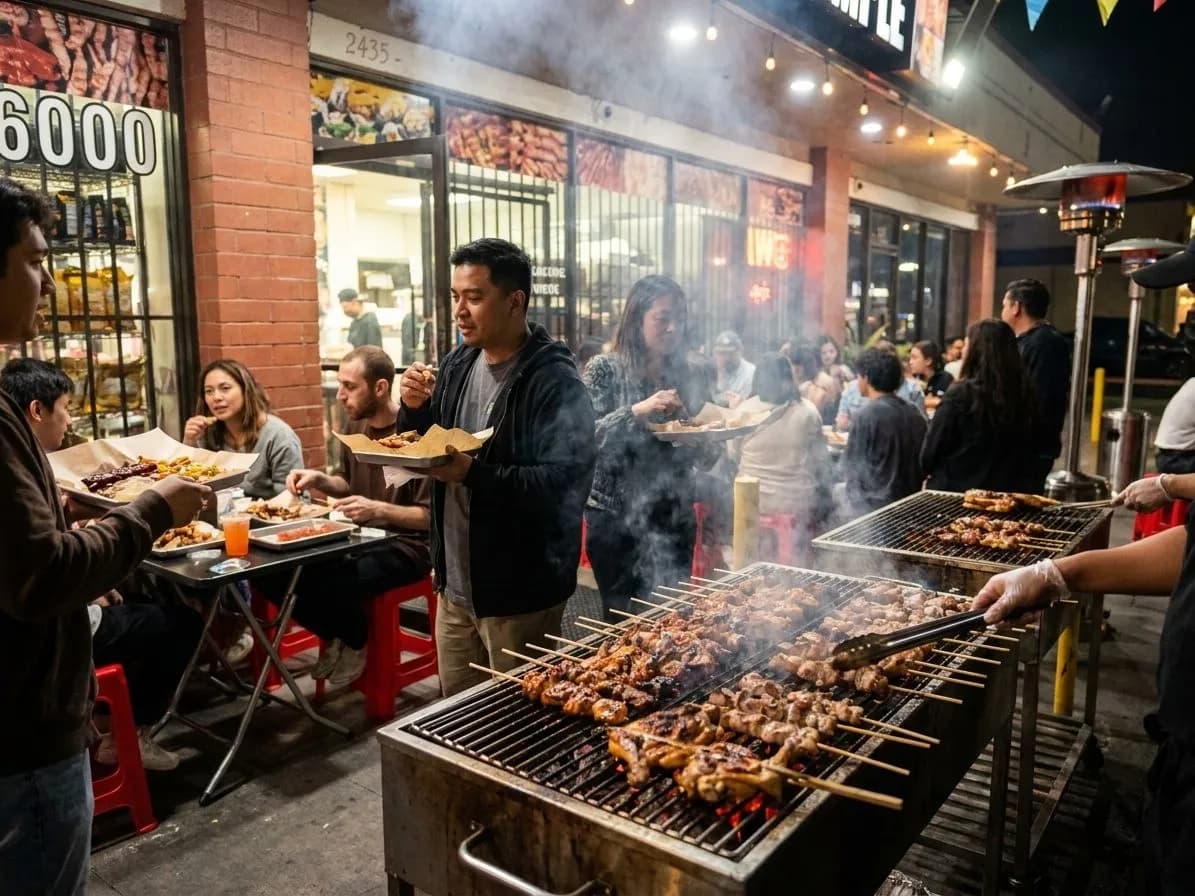
Dollar Hits is the neighborhood’s most immediate hit of energy. The draw is straightforward: Filipino street-food skewers, grilled in batches, with the kind of no-nonsense setup that makes you feel like you have stumbled into a local ritual rather than a polished restaurant visit. Go for a mix so you can compare textures instead of just committing to one thing. Fish balls, pork skewers, and other grill favorites are the move when you want the quick, salty, smoky bite that sets the tone for the rest of the night.
There is etiquette here, and it is simple: know what you want, move with the line, and do not treat the stand like a leisurely table-service spot. The grill is part of the theater, so watch what is moving fastest and order accordingly. If you arrive too late in the evening, you may find the line calmer but the tray less full, which is why regulars tend to time this stop early. It is the kind of place where one extra round is often smarter than over-ordering at once.
Make The Smoke Stop Count
The Park’s Finest is where Filipino food stretches into a bigger Los Angeles barbecue idea without losing its roots. This is the stop for smoked meats, heavier plates, and the comfort of a table that can handle a proper spread. It works especially well as the anchor meal if you are bringing friends, because the menu rewards sharing and a little strategy. Think of it as the night’s midpoint: enough substance to slow the pace, enough flavor to make the rest of the crawl feel earned rather than random.
Locals tend to approach this kind of meal with discipline. Split the meats, make room for sides, and do not skip the parts that round out the plate, because the whole point is balance. The dinner rush can make the room feel fuller and louder, so if you want a more relaxed sit-down, come before the main wave or toward the back half of the evening. This is also where people remember that Filipino food in Los Angeles is not just lunch food or family-party food anymore.
Save Room For Petite Peso
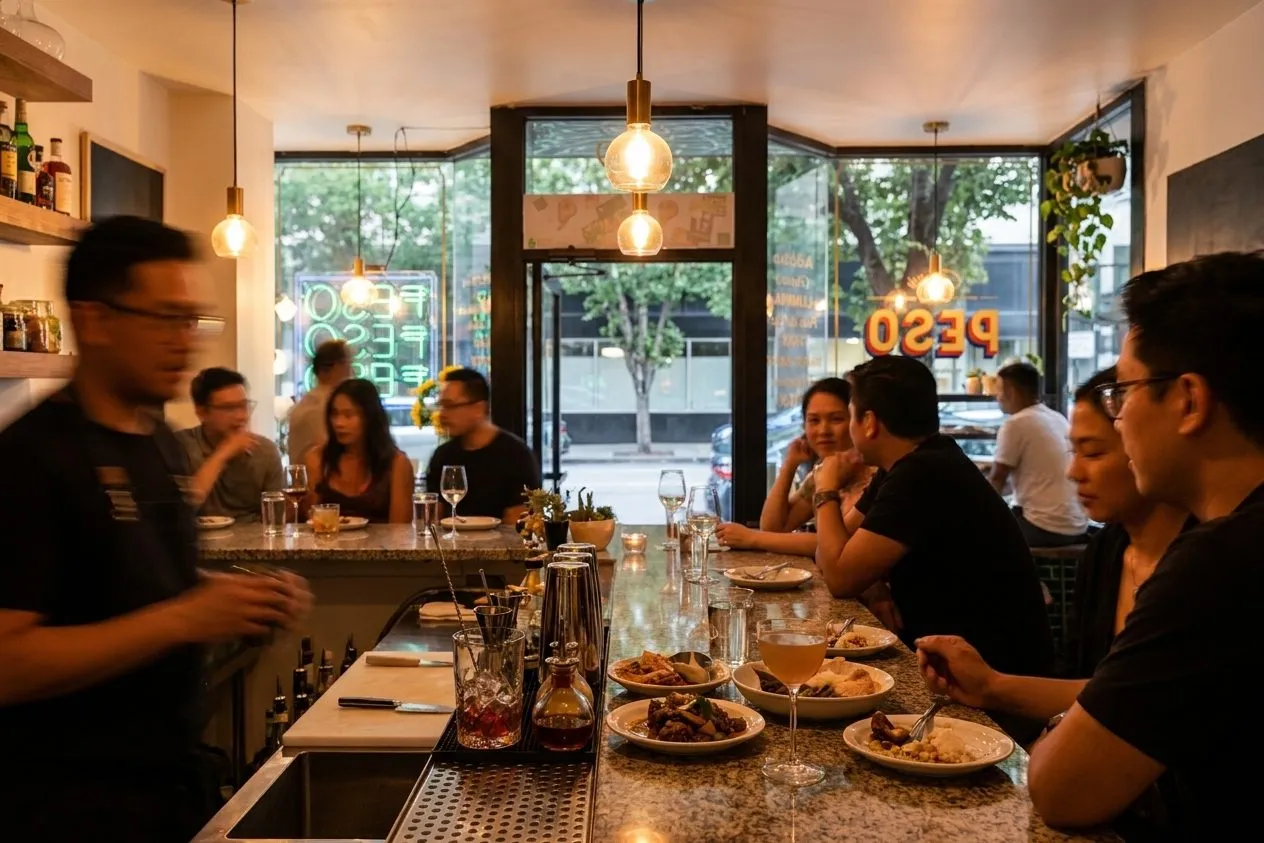
Petite Peso gives Historic Filipinotown its more intimate, bar-forward finish. The room feels smaller, more deliberate, and more tuned to people who want a polished night without losing the neighborhood thread. This is where the crawl shifts from open-air heat and barbecue smoke into something more composed, with drinks and snacks that let the night settle. It is a useful reminder that Filipino flavors in Los Angeles are not only being preserved; they are being translated into a sharper, contemporary after-dark language.
Because the space is compact, the smartest move is to treat it like a destination rather than a casual drop-in. Get there ready to order, and do not assume the night will unfold slowly just because the room looks relaxed. If you are coming on a busy weekend, earlier is easier; later means more competition for seats and more waiting around the bar. That tightness is part of the appeal, though. It makes the place feel discovered, which suits the neighborhood’s current moment.
How To Read The Neighborhood
The bigger story here is that Historic Filipinotown now feels like a real night-out district, even if it still lacks the obvious polish of bigger entertainment corridors. That is what makes it appealing. You are not dealing with a scripted dining strip; you are moving through a neighborhood where each venue has its own tempo and personality. The food is the entry point, but the atmosphere is what keeps people talking about the area as a hidden gem that has started to surface in plain sight.
If you want to do it right, think in sequences rather than destinations. Fast, smoky, and casual at Dollar Hits; fuller and more social at The Park’s Finest; compact and stylish at Petite Peso. That progression creates a night with momentum, which is better than bouncing around without a plan. It also reflects how the neighborhood actually works after dark: a little improvised, a little spaced out, and much better when you let the places lead the rhythm instead of forcing one.
Practical notes
Plan for parking friction and the usual Los Angeles tradeoff: the neighborhood is easy to reach, but the best version of the night comes when you are willing to park once and move lightly. Rideshare makes the crawl simpler, especially if you want a drink at Petite Peso. If you are driving, keep the route short and avoid stacking all three stops too tightly; the neighborhood rewards breathing room. Eat the grill first if you want the loudest energy, then move toward the smoke and the bar. Weeknights feel looser, while weekend evenings bring the truest buzz and the longest waits.
Tags: #losangeles #historicfilipinotown #filipinofood #barsandnightsout #foodcrawl #latenightla #hiddengem #neighborhoodguide #dollarhits #theparksfinest #petitepeso #eastlaeats #ladining
Please drink responsibly. Must be of legal drinking age.
All trademarks are the property of their respective owners.
Ask Karpo first
Want the freshest Filipino-food night in Los Angeles? Ask Karpo for the latest local openings, the best time to hit each stop, and a clean walking or rideshare route through Historic Filipinotown—built only from public info and current neighborhood patterns.