 Haaland Has Seven Goals and Norway Runs Entirely Through Him
⚽️2026 FIFA WORLD CUP
Lamine Yamal’s World Cup Final Marked Football’s New Era
The 19-year-old champion and 39-year-old Lionel Messi turned Spain versus Argentina into a rare meeting between football’s present and its possible future.
Lamine Yamal became a World Cup champion at 19 when Spain beat Argentina 1–0 after extra time on July 19, 2026. Across the field stood Lionel Messi, 39, the figure who defined much of the previous two decades of elite football. The final did not officially transfer a crown from one player to another, and it did not confirm Messi’s retirement. It did something more interesting: it placed two radically different stages of a football life inside the same match, with the younger star leaving East Rutherford as champion.
Want the generational story without the rumor spiral? Text Karpo for a personalized Yamal-and-Messi highlight list, the confirmed context behind their famous photo, and a New York City plan for watching the final’s best moments with friends.
The Age Gap Made the Final Feel Historic
Messi and Yamal were separated by twenty years on final day. That gap created an immediate narrative because football rarely arranges such a clean visual contrast at the last match of its biggest tournament. Messi entered as a World Cup winner and global reference point. Yamal arrived as one of Spain’s most dangerous wide attackers, already carrying the attention that follows a prodigy, but still young enough for his career to be described mostly in future tense.
Age alone does not make one player the replacement for another. They play differently, developed in different teams and entered international football under different tactical demands. The useful comparison is about time, not imitation. Messi showed what a complete era looks like when it reaches another final. Yamal showed how early the next era can begin. Their presence made the match feel larger than Spain against Argentina because viewers could see football memory and football possibility sharing the same field.
The Baby Photo Became More Than an Internet Curiosity
The connection between the two players existed in public imagery long before the final. In 2007, a 20-year-old Messi appeared in a charity calendar photo shoot with Yamal, then an infant. The images resurfaced years later and became one of football’s most irresistible coincidences: an established young Barcelona star bathing a baby who would eventually face him in a World Cup final. The Associated Press traced the images to a charity calendar project rather than a private friendship or staged prediction.
That context matters because viral posts often turn coincidence into mythology. Messi did not select the infant as his successor, and the photo did not forecast a final. Its power comes from what nobody in the room could have known. By 2026, the image connected two careers across nearly two decades and gave fans a tangible way to understand the speed of sporting time. One player had traveled from prodigy to champion to veteran; the other had traveled from the calendar photograph to the same final stage.
Yamal’s Threat Was Real Even Without the Winning Goal
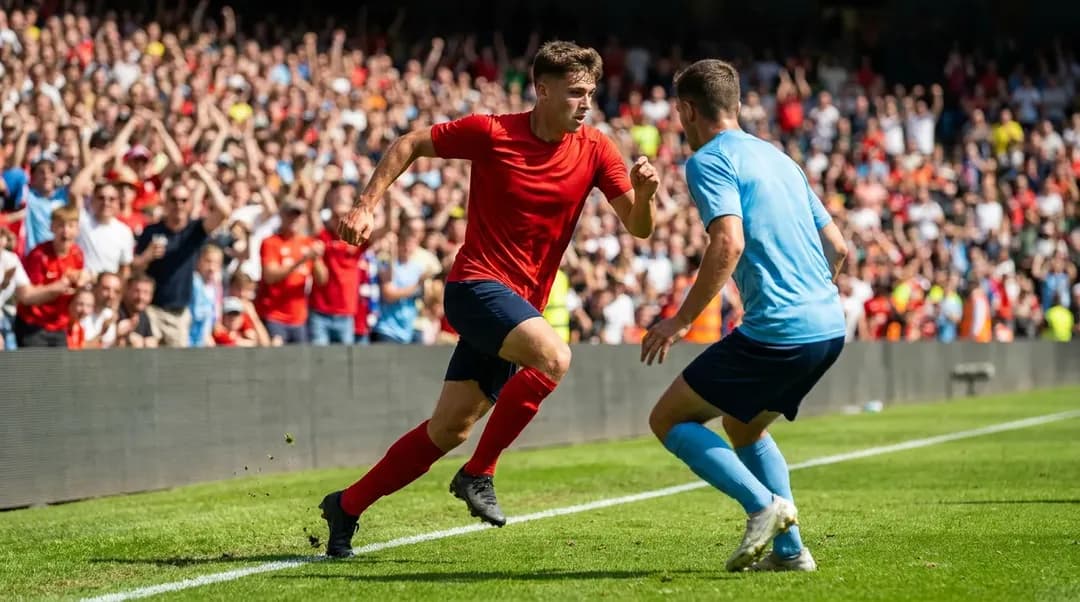
Ferran Torres scored Spain’s winner in the 106th minute, so Yamal did not own the final’s decisive touch. He still represented a constant problem on the right side. His value begins with the defender’s uncertainty: step close and risk being beaten, back away and allow him to carry the ball toward a shooting or passing lane. The Associated Press match report noted that Emiliano Martínez stopped efforts from Yamal as part of his record night in Argentina’s goal.
A young attacker does not need to score to alter the geometry of a match. When defenders shade toward Yamal, space changes elsewhere. A midfielder may receive with less pressure, an overlapping runner may pull the line wider, or the far-side attacker may find a weaker defensive handoff. Spain’s broader control came from the whole team, but Yamal’s one-on-one threat helped make that control uncomfortable. Argentina could not treat his side as a safe place to rest.
Messi’s Final Should Not Be Turned Into a False Farewell
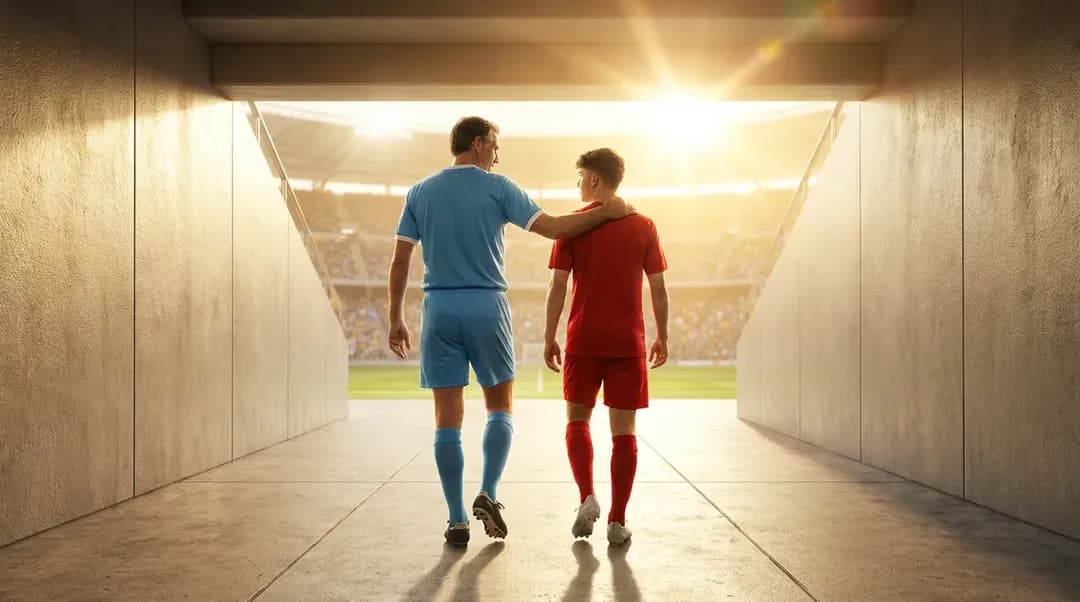
Search interest surged around whether Messi was retiring, but the final result alone cannot answer that question. A loss, an emotional walk from the field or a generational matchup is not an official retirement announcement. Responsible coverage should separate what happened from what fans imagine might happen next. Messi played in the final, Argentina lost after extra time and his international future remained a subject requiring direct confirmation from the player or team.
Avoiding a false farewell does not reduce the emotional weight of the night. Messi had already achieved the World Cup victory that defined Argentina’s 2022 campaign. Returning to another final at 39 extended the story beyond the ending many fans expected. The 2026 loss may become his last World Cup match, or it may not; that depends on decisions not contained in the scoreline. The honest version is powerful enough without converting uncertainty into a headline fact.
What a Generational Handover Actually Looks Like
Sport rarely offers a formal ceremony in which one star hands responsibility to the next. The process is distributed across matches, injuries, tournaments and public attention. A younger player begins receiving the ball in the moments once reserved for veterans. Teammates trust him with difficult decisions. Opponents adjust their plans around him. Fans search his name after the whistle. Yamal’s final fits that pattern because he was not present as a mascot for the future; he was an active tactical problem in a championship match.
The handover also belongs to teams, not only celebrities. Spain’s victory came through structure, depth and collective patience. Pau Cubarsí won the Best Young Player award, Rodri took the Golden Ball and Unai Simón earned the Golden Glove. Yamal was part of a generation rather than a solo inheritance. That may be the most important contrast with the temptation to frame every era around one name. The future Spain presented in 2026 had several leaders and several ways to win.
How to Watch the Final Through Yamal’s Movement
On replay, watch what happens before Yamal receives the ball. Does he stay wide enough to isolate the fullback? Does he move inside to open the lane for a teammate? How many Argentina players turn their bodies toward him? Then follow the next pass rather than waiting for a dribble. His influence may appear in the space created for someone else. This is the difference between watching a young star for highlights and watching how a finalist uses a young star to organize attacks.
Compare that with Messi’s starting positions when Argentina regained possession. Messi often needed the first pass to arrive cleanly before Spain’s midfield recovered. When it did not, his influence was pushed farther from goal. The comparison is not about who ran more or who tried more tricks. It is about team conditions. Spain repeatedly delivered Yamal the ball in attacking structure; Argentina struggled to deliver Messi the same platform. The generational image was individual, but the tactical reality was collective.
A New Era Can Begin Before the Old One Ends
The cleanest lesson from the final is that sporting eras overlap. Messi did not need to disappear for Yamal to become a champion, and Yamal did not need to reproduce Messi’s career for the matchup to matter. One player carried the authority of everything already achieved. The other carried the possibility of what might follow. Spain’s victory made that contrast impossible to ignore, but it did not turn it into a simple replacement story.
Yamal left with the trophy, a global audience and years of expectation ahead. Messi left without the title but with his place in football history unchanged. The next era will be shaped by what Yamal and his generation do after the celebration, not by one symbolic photograph or one final. Still, July 19, 2026 offered the rare image fans will keep: football’s most familiar modern star and one of its brightest new champions meeting at the exact point where their timelines crossed.
Tags: #WorldCup2026 #LamineYamal #LionelMessi #Spain #Argentina #WorldCupFinal #FootballHistory
All trademarks are the property of their respective owners.
Ask Karpo First
Ask Karpo for a Yamal-and-Messi final recap that separates confirmed facts from rumors, then turn it into a football watch plan, celebration stop or group day in New York City.
Ask Karpo for more information.
Keep reading
- Haaland Has Seven Goals and Norway Runs Entirely Through Him
 World Cup Trophy Ceremony Timing Medals and Postmatch Celebrations
 Olise and France's Attack: The Semifinal Tactical Question